this week in film and television

SUMMER AT SEA

Be prepared to get swept away by summer film festival at Metrograph

SUMMER AT SEA
Metrograph
7 Ludlow St. between Canal & Hester Sts.
July 5 – September 2
212-660-0312
metrograph.com/film

It’s easy to get swept away by Metrograph’s “Summer at Sea,” a two-month festival of nineteen films set at the beach, on the ocean, and poolside. Among the wide-ranging works being shown are Agnès Varda’s La Pointe Courte, Christian Petzold’s Afire, Federico Fellini’s And the Ship Sails On, Chris Sanders and Dean DeBlois’s Lilo & Stitch, Luchino Visconti’s Death in Venice, Jacques Deray’s La Piscine, and Lina Wertmüller’s Swept Away . . . by an Unusual Destiny in the Blue Sea of August. Below is a closer look at several of the movies.

In addition, on July 20, Metrograph will be hosting its annual Summer Book Fair, this year honoring the late dance critic, literary editor, and publisher Robert Gottlieb, who passed away in June 2023 at the age of ninety-two. Gottlieb worked with such authors and celebrities as John Cheever, Doris Lessing, Chaim Potok, Salman Rushdie, John le Carré, Ray Bradbury, Michael Crichton, Toni Morrison, Bill Clinton, Nora Ephron, Katharine Hepburn, Lauren Bacall, Liv Ullmann, Paul Simon, Bob Dylan, and, most famously, Robert Caro; his longtime collaboration with Caro was documented in the terrific 2022 film Turn Every Page: The Adventures of Robert Caro and Robert Gottlieb. The fair will feature more than five hundred film books owned by Gottlieb, which will be availabie for sale, each one stamped with a seal certifying “From the Library of Robert Gottlieb.”

Father (David Niven) and daughter (Jean Seberg) have a little talk in lush Otto Preminger melodrama

BONJOUR TRISTESSE (Otto Preminger, 1958)
Metrograph
Friday July 5, 4:45
Sunday July 7, 12:20
Sunday July 14, 7:30
metrograph.com/film

Douglas Sirk would surely be proud of Otto Preminger’s wickedly obsessive 1958 melodrama, Bonjour Tristesse. Based on the 1954 novel by eighteen-year-old author Françoise Sagan, the film, whose titles translates as “Hello, Sadness,” stars Jean Seberg as Cécile, a seventeen-year-old girl on the cusp of womanhood, a child-adult living the good life while beginning to enjoy the pleasures of drinking, smoking, and sexual desire. She and her wealthy father, Raymond (a dapper David Niven), have moved into a posh villa on the French Riviera for the summer, where the widowed Raymond attempts to balance his time with serious fashion queen Anne Larsen (Deborah Kerr) and flighty young blonde Elsa (Mylène Demongeot). A selfish cad who considers only himself, Raymond is soon in deep water when the two women find out about each other. Meanwhile, Cécile tosses aside her studies in order to flirt with twenty-five-year-old neighbor Philippe (Geoffrey Horne) and other older men who quickly fall in love with her relatively carefree lifestyle, one that seemingly can only end in trouble.

Written by Arthur Laurents (Anastasia, The Way We Were), beautifully photographed in color (in Saint-Tropez) and black-and-white (in Paris) by Georges Périnal (Rembrandt, The Fallen Idol), and featuring costumes by Givenchy and jewelry by Cartier, Bonjour Tristesse examines love, lust, power, style, and jealousy, directed with an iron fist by Preminger, who often yelled at and embarrassed Seberg on-set in order to influence her performance. But at the heart of the film is the risqué relationship between Raymond and Cécile, one that more than hints at incest.

Sam Shakusky (Jared Gilman) and Suzy Bishop (Kara Hayward) are on the run in Wes Anderson’s delightful Moonrise Kingdom

MOONRISE KINGDOM (Wes Anderson, 2012)
Friday July 5, 5:00
Saturday July 6, 2:45
Wednesday July 10, 3:30
metrograph.com/film

In such unique films as Rushmore, The Royal Tenenbaums, and The Darjeeling Limited, black-comedy master Wes Anderson has created a bizarre collection of characters who seem to live in their own alternate realities. In Moonrise Kingdom, Anderson has once again assembled an oddball assortment of men, women, and children in a terrifically clever and entertaining fairy tale all its own. Tired of being abused by his fellow Khaki Scouts and dismissed by his foster parents, twelve-year-old orphan Sam Shakusky (Jared Gilman) runs away from Camp Ivanhoe on the island of New Penzance, much to the chagrin of dedicated scout master Randy Ward (Edward Norton). Meanwhile, twelve-year-old loner Suzy Bishop (Kara Hayward) is fed up with her life as well, which she mostly spends listening to Benjamin Britten, reading fairy tales (fictitious stories made up by Anderson), watching the world through a pair of ever-present binoculars, and despising her parents (Bill Murray and Frances McDormand). Afraid of what might have happened to the children, the local police officer, Captain Sharp (Bruce Willis), gets involved, as does a stern woman from social services (Tilda Swinton) and, eventually, a very different kind of scout, Cousin Ben (Jason Schwartzman).

The proceedings are overseen by a narrator (Bob Balaban) who ends up being more than just an omniscient presence. Moonrise Kingdom is an absolute gem of a film, an exciting, original tale about growing up told in a fabulously funny deadpan manner that combines slapstick humor with wildly ironic elements, filled with the endless wonders of childhood, although it is most definitely not for children. Newcomers Gilman and Hayward appear wise beyond their years in the lead roles, with outstanding support from an all-star cast, most prominently Norton as the by-the-book scout master on a mission. Written by Anderson with Roman Coppola, the film also features a lovely score by Alexandre Desplat.

Summer with Monika

Harry (Lars Ekborg) and Monika (Harriet Andersson) run away to start a new life in Summer with Monika

SUMMER WITH MONIKA (SOMMAREN MED MONIKA) (Ingmar Bergman, 1953)
Metrograph
Friday July 5, 7:10
Saturday July 6, 5:00
Thursday July 11, 4:15
metrograph.com/film

Swedish director Ingmar Bergman shocked the film world in 1953 with the controversial Summer with Monika, the tale of two young lovers who run away from their families and go on a brief but intense sexual adventure. The film featured full-frontal nudity by Harriet Andersson, with whom Bergman had a short relationship; the movie was actually edited down by distributor Kroger Babb to focus on the sex and nudity, renaming it Monika, the Story of a Bad Girl! and marketing it to US audiences as an exploitation picture. But Film Forum is screening the superb original version as part of its five-week centennial celebration of Bergman’s birth. Based on the 1951 novel by Per Anders Fogelström, Summer with Monika takes place in a working-class area of Stockholm, where Harry (Lars Ekborg) and Monika (Harriet Andersson) toil away in a glassware factory. Harry lives with his ailing father (Georg Skarstedt), while Monika sleeps in her family’s kitchen. Both teens are bored with their already dull and unfulfilling lives. So when they meet in a café, the bold, forward Monika lures the shy, fragile Harry into what begins as a summer of fun, as they steal Harry’s father’s boat and head out to their own private hideaway, but ends up as something very different. Bergman boils down an entire relationship — courtship, romance, children, breakup, in a way a precursor to his later epic, Scenes from a Marriage — into ninety-seven sharp, intuitive moments, turning clichéd plot twists into subtle statements on life and family. Cinematographer Gunnar Fischer shoots the film in a dark, gloomy black-and-white, with stark close-ups — Monika stares directly into the camera at one point, challenging the audience — and long shots of water and nature, while Erik Nordgren’s score is kept spare, with Bergman favoring natural sound and light.

Summer with Monika

Harriet Andersson stars as a fierce, independent spirit in Ingmar Bergman’s Summer with Monika

Andersson, who would go on to make many more films with Bergman, including Sawdust and Tinsel, Smiles of a Summer Night, Cries and Whispers, and Fanny and Alexander, is enticing as Monika, who doesn’t mind stepping on people’s souls while asserting herself as an independent woman, while Ekborg, who had a small part in Bergman’s The Magician, shows plenty of vulnerability as Harry, who wants to do the right thing and is ready to at least try to be a grown-up when things get complicated. The film is still shocking after all these years, and still rings true. “I want summer to go on just like this,” Monika says. But there are always other seasons, and more summers, to come.

David Hockney

David Hockney works on his masterpiece in Jack Hazan’s A Bigger Splash

A BIGGER SPLASH (Jack Hazan, 1974)
Metrograph
Monday, July 8, 4:00pm
metrograph.com

In June 2019, Metrograph premiered a 4K restoration of Jack Hazan’s pivotal 1974 A Bigger Splash, a fiction-nonfiction hybrid that was a breakthrough work for its depiction of gay culture as well as its inside look at the fashionable and chic Los Angeles art scene of the early 1970s. In November 2018, David Hockney’s Portrait of an Artist (Pool with Two Figures) sold at auction for $90.3 million, the most ever paid for a work by a living artist. A Bigger Splash, named after another of Hockney’s paintings — both are part of a series of canvases set around pools in ritzy Los Angeles — takes place over three years, as the British artist, based in California at the time, hangs out with friends, checks out a fashion show, prepares for a gallery exhibition, and works on Portrait of an Artist (Pool with Two Figures) in the wake of a painful breakup with his boyfriend, model, and muse, Peter Schlesinger, who is a key figure in the painting.

It’s often hard to know which scenes are pure documentary and which are staged for the camera as Hazan and his then-parter, David Mingay, who served as director of photography, tag along with Hockney, who rides around in his small, dirty BMW, meeting up with textile designer Celia Birtwell, fashion designer Ossie Clark, curator Henry Geldzahler, gallerist John Kasmin, artist Patrick Procktor, and others, who are identified only at the beginning, in black-and-white sketches during the opening credits. The film features copious amounts of male nudity, including a long sex scene between two men, a group of beautiful boys diving into a pool in a fantasy sequence, and Hockney disrobing and taking a shower. Hockney’s assistant, Mo McDermott, contributes occasional voice-overs; he also poses as the man standing on the deck in Portrait of an Artist (Pool with Two Figures), only to be replaced by Schlesinger later. There are several surreal moments involving Hockney’s work: He cuts up one painting; Geldzahler gazes long and hard at himself in the double portrait of him and Christopher Scott; and Hockney tries to light the cigarette Procktor is holding in a painting as Procktor watches, cigarette in hand, mimicking his pose on canvas. At one point Hockney is photographing Schlesinger in Kensington Gardens, reminiscent of Michelangelo Antonioni’s Blow-Up, which questions the very nature of capturing reality on film.

Hockney was so upset when he first saw A Bigger Splash, which Hazan made for about twenty thousand dollars, that he offered to buy it back from Hazan in order to destroy it; Hazan refused, and Hockney went into a deep depression. His friends ultimately convinced him that it was a worthwhile movie and he eventually accepted it. It’s a one-of-a-kind film, a wild journey that goes far beyond the creative process as an artist makes his masterpiece. Hockney, who will turn eighty-six on July 9, has been on quite a roll of late. He was the subject of a 2016 documentary by Randall Wright, was widely hailed for his 2018 Met retrospective, saw one of his paintings set an auction record, and had a major show at the Morgan Library in 2020-21, “David Hockney: Drawing from Life.” In addition, Catherine Cusset’s novel, Life of David Hockney, was published in 2019 in English, a fictionalized tale that conceptionally recalls A Bigger Splash.

BEFORE MIDNIGHT

Jesse (Ethan Hawke) and Celine (Julie Delpy) are back together again in Richard Linklater’s Before Midnight

BEFORE MIDNIGHT (Richard Linklater, 2013)
Metrograph
Friday July 12, 4:15
Saturday July 13, noon
metrograph.com/film

Unable to resist revisiting the characters who first fell in love in 1995’s Before Sunrise and again in 2004’s Before Sunset, Ethan Hawke and Julie Delpy reprise their roles as Jesse and Celine, respectively, in Richard Linklater’s absolutely wonderful Before Midnight. The couple first met on a train to Vienna in 1994, talking at length about their hopes and desires and planning on getting together in six months’ time, but they don’t reconnect for another nine years, when Celine comes to one of Jesse’s book signings in Paris. In real time, they walk around the City of Light, catching up on what has happened in their lives as Jesse prepares to take a plane back home to his wife and son. And now another nine years have passed, and Jesse and Celine are living together, the parents of twins (Charlotte and Jennifer Prior). As the film opens, the divorced Jesse is putting his teenage son, Hank (Seamus Davey-Fitzpatrick), on a plane after having spent the summer together in Greece. What follows is a marvelous fourteen-minute scene of Jesse driving down a mountain road as he and Celine essentially let the audience know what has occurred over the last nine years: They have twin girls (sleeping in the back), Celine has been offered an important environmental job, and Jesse is considering moving to Chicago to be closer to Hank. They return to a country estate owned by Patrick (award-winning cinematographer Walter Lassally, making his acting debut at the age of eighty-six), who is hosting an outdoor lunch with a group of friends (including French actress Ariane Labed, coproducer and filmmaker Athina Rachel Tsangari, and Xenia Kalogeropoulou, who came out of retirement to appear in her first picture since 1985). They all talk of life and love, with Celine being particularly charming. But when Jesse and Celine go off to a hotel room for what is supposed to be a romantic rendezvous, some things are said and truths revealed that complicate things.

Cowriters Julie Delpy and Ethan Hawke explore life and love in Greece in third film about Celine and Jesse

Cowriters Julie Delpy and Ethan Hawke explore life and love in Greece in third film about Celine and Jesse

As with the first two films, Before Midnight consists of long takes of Jesse and Celine discussing their past, present, and future as cowriters Linklater (Slacker, Dazed and Confused), Delpy, and Hawke, who were nominated for an Oscar for their script for Before Sunset, continue to explore these engaging characters; both the dialogue and the acting have matured with an intelligent grace and elegance that are captivating. The couple wanders around Messinia examining their lives as only fortysomethings can, trying to figure out whether what they have is what they want. The central focus, though, once again is time, whether it is the years Jesse and Celine have spent together, the time they have left, time as a concept in Jesse’s semiautobiographical novels, or Jesse making a joke about being a time traveler. It’s been eighteen years since we first met Jesse and Celine, and we’ve grown eighteen years older too, lending fascinating perspectives that can’t help but force us to take a look at our own lives as well. The trilogy is America’s version of François Truffaut’s Antoine Doinel series, filled with humor, lyricism, and an inherent understanding of twenty-first-century realities. Will there be a fourth film? As of now, the principals aren’t saying because they just don’t know, but Before Midnight ends on just about the perfect ambiguous note.

A SUMMER’S TALE

Margot (Amanda Langlet) and Gaspard (Melvil Poupaud) contemplate love and friendship in Éric Rohmer’s A Tale of Summer

A TALE OF SUMMER (CONTE D’ÉTÉ) (Éric Rohmer, 1996)
Friday, July 26, 2:00
Sunday, July 28, 11:30 am
metrograph.com

French New Wave auteur Éric Rohmer’s 1996 A Tale of Summer, the third of his seasonal 1990s stories following A Tale of Winter and A Tale of Springtime and preceding the finale, A Tale of Autumn, is a bittersweet romance about the follies of young love. In a seaside Breton resort town in the 1970s, musician and mathematician Gaspard (Melvil Poupaud) awaits the arrival of his girlfriend, Lena (Aurélia Nolin), who has not been answering his phone calls or returning his letters. He strikes up a perhaps platonic relationship with waitress-ethnologist Margot (Amanda Langlet), whose boyfriend is off in the Peace Corps. When Gaspard makes a move on Margot, she instead encourages him to go out with the free-spirited Solene (Gwenaëlle Simon). Soon Gaspard finds himself lost among three beautiful women, forced to make choices that he’s clearly not ready for.

Strikingly photographed by Rohmer favorite Diane Baratier in a subdued, ’70s-style palette, A Tale of Summer is a charmingly insightful and frustrating exploration of young love, desire, and commitment in which a group of attractive twentysomethings are caught between just wanting to have some fun and plotting out their future. It’s ironic that Gaspard is a mathematician, as he seems to have trouble as soon as he gets to the number three. Meanwhile, it’s appropriate that the ever-wise and knowing Margot (played with a captivating and alluring ease by Pauline at the Beach star Langlet) is an ethnologist, as she carefully studies Gaspard and others as she makes her way through life. Rohmer made A Summer’s Tale when he was seventy-five; the former editor of Cahiers du cinéma would go on to direct four more films before his death in 2010 at the age of eighty-nine. After eighteen years, A Tale of Summer, which premiered at Cannes in 1996, finally got its U.S. theatrical release in 2014 in a new HD restoration, and it is always a lovely way to continue the summer movie season.

CHRONICLES OF A WANDERING SAINT

Argentine writer-director Tomás Gómez Bustillo’s Chronicles of a Wandering Saint is a glowing debut

CHRONICLES OF A WANDERING SAINT (Tomás Gómez Bustillo, 2023)
IFC Center
323 Sixth Ave. at West Third St.
Opens Friday, June 28
212-924-7771
www.ifccenter.com
www.chroniclesofawanderingsaint.com

About thirty-five minutes into Tomás Gómez Bustillo’s gorgeous, elegiac debut feature, Chronicles of a Wandering Saint, a meditative dark comedy on love, faith, and the afterlife, a deeply sad tragedy occurs and the credits begin to roll. But just as the protagonist is reborn at that moment, so is the film itself.

In a small, religious Argentina town, Rita (Mónica Villa) spends much of her time at Saint Rita church, either praying with her three friends, Viviana (Noemí Ron), Beba (Silvia Porro), and Alicia (Ana Silvia Mackenzie), or cleaning, mopping the floors until they glisten. She and her husband, Norberto (Horacio Marassi), live a simple life; they have no children and don’t travel. While Norberto still has a lust for life, Rita looks tired. When Norberto suggests that they go back to the waterfalls they visited on their honeymoon forty years earlier, Rita doesn’t understand why.

“Well, the waterfalls are still the exact same,” she says. He responds, “But we’re not.”

Rummaging through the church basement, Rita comes upon an object she believes to be a statue of Saint Rita, missing for thirty years. Before even seeing it, Father Eduardo (Pablo Moseinco) declares it must be a miracle. However, when, after further research, Rita realizes it’s not Saint Rita, she and Norberto decide to fake it, proceeding with her claim nonetheless. It all goes well, until it doesn’t. But that’s only part of this tender and touching magical realism tale.

Chronicles of a Wandering Saint is built around the concept of a spiritual glow, as stated in Proverbs 13.9: “The light of the righteous shines brightly, but the lamp of the wicked is snuffed out.”

Early on, Rita is cleaning the floor of the church, and Beba tells her, “Quit mopping so much or those shiny floors will end up blinding us.” Several parishioners gather in the back and sing, “The light from your shining face will illuminate all the paths that lead to eternity.” And when people die, they eventually transform into a blinding white light; one person is actually reincarnated as a lightbulb. In one of the most surreal moments, Luchito (Iair Said), now a moth, can’t keep away from Quique (Mauricio Minetti), a bulb over a woman’s front door.

The film is reminiscent of Apichatpong Weerasethakul’s 2010 Uncle Boonmee Who Can Recall His Past Lives, which is another fascinating integration of the human, animal, and spirit worlds. Bustillo maintains a similar slow pace but adds hilarious scenes beautifully photographed by Pablo Lozano, with spectacular production design by Doriane Desfaugeres, wonderful costumes by Margarita Franco, and a gentle, melancholic score by Felipe Delsart. The film is composed of still shots; the camera moves only once, zooming in on a piano, an instrument we later learn that Rita’s mother played.

When Norberto and Rita are in their kitchen talking about the waterfalls, they are both wearing yellow raincoats, the color echoed in the scrambled eggs and lemon wedge on their plates and the spray bottle on the table. Through the door is an old television set, furthering the idea that the couple, and the other parishioners, are living in an uncluttered, old-fashioned past despite Rita’s use of Facebook and a smartphone. Their old car has a cassette player; when she’s driving, Rita puts on a homemade mix tape that includes a dance-pop cover of Bryan Adams’s “Heaven.”

A shot of Rita sitting alone in a tiny bus shelter, looking downtrodden, surrounded by green grass and trees, a light pole rising behind her, is stunning; next to the shelter is a sign pointing out three nearby locations, but right then Rita has nowhere to go, unsure of which path to take. Not even the book she was reading about el Camino de Santiago, detailing the popular Christian pilgrimage itinerary, can help her now.

Villa (Wild Tales, The Holy Girl) is mesmerizing as Rita, a pious, devoted woman who wants to live up to her namesake. Her performance, especially her eyes, recalls Fellini wife and muse Giuletta Masina, who lit up such films as Nights of Cabiria and La Strada. Rita is not seeking much out of life, only a miracle. But as Norberto tells her, “If you want it to be a miracle, then it is.”

The multi-award-winning Chronicles of a Wandering Saint runs June 28 – July 11 at IFC Center; the LA-based Bustillo will be on hand for Q&As on Friday and Saturday at 7:05, joined by executive producer Samir Oliveros, producers Gewan Brown and Amanda Freedman, and moderators Taylor A. Purdee and Isabel Custodio.

Oh, one last note: Beware those unexpected sneezes. . . .

[Mark Rifkin is a Brooklyn-born, Manhattan-based writer and editor; you can follow him on Substack here.]
VISIONARY AUTEURS: FIVE DECADES OF MK2

LE BONHEUR

François (Jean-Claude Drouot) tries to convince Thérèse (Claire Drouot, his real-life wife), that he has plenty of happiness to spread around in Le Bonheur

LE BONHEUR (HAPPINESS) (Agnès Varda, 1965)
Metrograph
7 Ludlow St. between Canal & Hester Sts.
Wednesday, June 19, 8:15
Thursday, June 20, 5:30
Series continues through July 4
metrograph.com/film

Metrograph is celebrating the fiftieth anniversary of the family-run independent film company mk2, founded in 1974 by Marin Karmitz, with “Visionary Auteurs: Five Decades of mk2,” consisting of screenings of nearly two dozen works, from such directors as Louis Malle, Claude Chabrol, Marcel Carné, the Dardenne brothers, Jean-Luc Godard, Wim Wenders, Hong Sang-soo, and Menahem Golan. On June 16, 19, and 20, Metrograph will show a classic from French Nouvelle Vague filmmaker Agnès Varda.

In 1965, Varda said about her third film, Le Bonheur, which translates as Happiness: “Happiness is mistaken sadness, and the film will be subversive in its great sweetness. It will be a beautiful summer fruit with a worm inside. Happiness adds up; torment does too.” That is all true nearly fifty years later, as the film still invites divided reaction from critics. “Miss Varda’s dissection of amour, as French as any of Collette’s works, is strikingly adult and unembarrassed in its depiction of the variety of love, but it is as illogical as a child’s dream,” A. H. Weiler wrote in the New York Times in May 1966. “Her ‘Happiness,’ a seeming idyll sheathed in irony, is obvious and tender, irresponsible and shocking and continuously provocative.” All these decades later, the brief eighty-minute film is all that and more, save for the claim that it is illogical. In a patriarchal society, it actually makes perfect, though infuriating, sense.

François and Émilie (Marie-France Boyer) seek out their own happiness in Nouvelle Vague classic

François and Émilie (Marie-France Boyer) seek out their own happiness in Nouvelle Vague classic

French television star Jean-Claude Drouot (Thierry La Fronde) stars as the handsome François, who is leading an idyllic life with his beautiful wife, Thérèse (Claire Drouot), and their delightful kids, Pierrot (Olivier Drouot) and Gisou (Sandrine Drouot), in the small, tight-knit Parisian suburb of Fontenay. While away on a job, François meets the beautiful Émilie (Marie-France Boyer), a postal clerk who connects him to his wife via long-distance telephone, flirting with him although she knows he is happily married. And despite being happily married, François returns the flirtation, offering to help with her shelves when she moves into an apartment in Fontenay. Both François and Émilie believe that there is more than enough happiness to go around for everyone, without any complications. “Be happy too, don’t worry,” Émilie tells him. “I’m free, happy, and you’re not the first,” to which he soon adds, “Such happiness!” And it turns out that even tragedy won’t put a stop to the happiness, in a plot point that angered, disappointed, confused, and upset many critics as well as the audience but is key to Varda’s modern-day fairy tale.

The beauty of nature plays a key role in LE BONHEUR

The beauty of nature plays a key role in Le Bonheur

Le Bonheur is Varda’s first film in color, and she seems to have been heavily influenced by her husband, Jacques Demy (The Umbrellas of Cherbourg, The Young Girls of Rochefort), bathing the film in stunning hues that mimic Impressionist paintings, particularly the work of Pierre-Auguste Renoir, in a series of picnics and flower-filled vases. In a sly nod, at one point a black-and-white television is playing the 1959 film Le Déjeuner Sur L’herbe (“Picnic on the Grass”), which was directed by Jean Renoir, one of Auguste’s sons, and also deals with sex, passion, procreation, and nature. Le Bonheur also features numerous scenes that dissolve out in singular blocks of color that take over the entire screen. Cinematographers Claude Beausoleil and Jean Rabier shoot the film as if it takes place in a candy-colored Garden of Eden, all set to the music of Mozart, performed by Jean-Michel Defaye. Varda doesn’t allow any detail to get away from her; even the protagonists’ jobs are critical to the story: François is a carpenter who helps builds new lives for people; Thérèse is a seamstress who is in the midst of making a wedding gown; and Émilie works in the post office, an intermediary for keeping people together. As a final touch, François, who represents aspects of France as a nation under Charles de Gaulle, and his family are played by the actual Drouot clan: Jean-Claude and Claire are married in real life (and still are husband and wife after more than fifty years), and Olivier and Sandrine are their actual children, so Le Bonheur ends up being a family affair in more ways than one.

Zhao Tao

Qiao (Zhao Tao) how her life is turning out in Jia Zhang-Ke’s Ash Is Purest White

ASH IS PUREST WHITE (Jia Zhang-Ke, 2018)
Friday, June 28, 10:30
Saturday, June 29, 9:15
Thursday, July 4, 9:15
metrograph.com/film
www.ashispurestwhitemovie.com

Jia Zhang-Ke reaches into his recent past, and China’s, in his elegiac Ash Is Purest White. In the film, which screens at Metrograph June 28 and 29 and July 4, the Sixth Generation writer-director’s wife and muse, Zhao Tao, stars as Qiao, a combination of the characters she played in Jia’s 2002 Unknown Pleasures and 2006 Still Life. It’s the spring of 2001, and Qiao is living in style with her handsome, ultracool jianghu boyfriend, well-respected local gangster Guo Bin (Liao Fan). She runs a gambling parlor, where she asserts her power with men who are in awe of her. But when a rival gang attacks Bin and Qiao pulls a gun, their lives take a series of unexpected turns as the story moves first to 2006 and then to 2018, when things are decidedly, and sadly, different for both of them in a China that has changed as well.

Liao Fan

Things are about to change for Guo Bin (Liao Fan) in Ash Is Purest White

As in many of his fiction works, Jia includes documentary elements as he touches upon China’s socioeconomic crisis, primarily exemplified by the Three Gorges Dam project, which led to the displacement of families and the literal disappearance of small communities. Working with a new cinematographer, Eric Gautier, who has lensed films for Olivier Assayas, Walter Salles, Leos Carax, Alain Resnais, and Arnaud Desplechin, among others — his longtime cameraman, Yu Lik-Wai, was unavailable — Jia incorporates general footage he shot between 2001 and 2006 of everyday people and architecture that underscores China’s many changes. There are many gorgeous shots of towns and cities, at one point bathed in white volcanic ash, with costumes of bright yellow, red, and blue, as Gautier goes from digital video to Digibeta, HD video, film, and the RED Weapon camera to add distinct textures. (Jia took the title from what was supposed to be Fei Mu’s last work, which was later made by Zhu Shilin.)

Qiao and Bin try to go back, but little is the same, except for some of their old friends, who are still trying to hold on to the way things were. Zhao (A Touch of Sin, Mountains May Depart) is slow and deliberate as Qiao, her wide eyes telling a story all their own as she wrestles with disappointment, searching for some meaning in her life, while Fan (The Final Master; Black Coal, Thin Ice) is bold and forceful as a proud, powerful man who undergoes a radical shift. “The city is developing fast. It’s ours for the taking,” Bin says early on. But in Jia’s moving, heartfelt epic, there’s nothing for them to grab on to anymore.

[Mark Rifkin is a Brooklyn-born, Manhattan-based writer and editor; you can follow him on Substack here.]
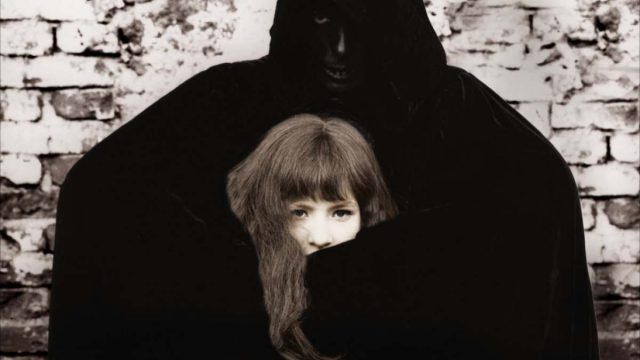
FILM SCREENING & CONVERSATION WITH DIRECTOR: 76 DAYS

Two essential healthcare workers take a much-deserved brief break in a Wuhan hospital in 76 Days

76 DAYS (Hao Wu, Weixi Chen, and Anonymous, 2020)
China Institute in America
100 Washington St. (use 40 Rector St. entrance)
Wednesday, June 20, $12, 6:00
chinainstitute.org/events
www.76daysfilm.com

The prospect of sitting through a ninety-minute documentary about essential healthcare workers in four hospitals in Wuhan fighting in the early days of Covid-19, during the city’s seventy-six-day lockdown, might seem daunting. But what could have been a difficult, emotional, and political roller coaster about fear and anger, government lies and finger pointing turns out to be a deeply affecting film that celebrates our most basic hopes and humanity.

Chinese director Hao Wu was researching a film about pandemics when, in mid-February, he came upon footage being shot by a pair of reporters in Wuhan, Weixi Chen and a man who has decided to remain anonymous. They had been given full access to four hospitals, where they followed doctors, nurses, patients, and family members for several months. There are no talking heads, and no one speaks directly to the camera; instead, 76 Days offers a fly-on-the-wall perspective that manages to be as uplifting as it is frightening.

The film opens like a sci-fi thriller, as an unidentified group of people in head-to-toe protective gear that includes light-blue masks, long face shields, white Hazmat suits, and blue footies comforts a distraught colleague who is prevented from saying goodbye to her father, who has just died from the novel coronavirus. Near the end of the scene, one of her coworkers tries to calm her down, saying, “We don’t want to see you in distress or pain. What will we do if you fall sick? We all have to work in the afternoon.” Moments later, sick people are banging on a door of the hospital to be let in, like a crowd trying to escape a coming zombie apocalypse, while two workers decide who to admit first. Those exchanges set the stage for the rest of the film, in which doctors and nurses go about their business with a relatively relaxed demeanor, displaying endless empathy and compassion as they care for scared patients with uncertain futures.

Wu focuses on a few specific cases that serve to represent the crisis as a whole, following an elderly couple who both have the virus and are not permitted to see each other even though they are on the same floor, and a young couple who are forced to quarantine in their apartment after the woman gives birth to a baby girl, unable to see their newborn for two weeks. While the nurses fall in love with the infant, who must stay in an incubator and whom they name Little Penguin, the workers have their hands full with the old man, who constantly tries to leave the hospital and doesn’t seem capable of wearing his mask correctly, if at all.

Doctors and nurses in Wuhan care for Covid patients, displaying empathy and compassion during seventy-six-day lockdown

The genuine kindness and concern displayed by the hospital employees is, well, infectious. They are risking their lives at every moment; each encounter is fraught with the possibility that they could contract the virus even with all the PPE. It’s hard not to cringe when they feed the old man, wipe the face of the infant, or use a patient’s phone to call a relative with news, because the reality is that people die from this disease, and Wu is not afraid to show that. It’s a riveting film that immerses you in this global emergency that started right there, at that time; if this doesn’t make you wear a mask, wash your hands, observe social distance protocols, and avoid gathering with others indoors, I don’t know what will.

We also see the empty streets and highways of Wuhan, a city of eleven million people, deserted, with signs advising, “Staying home makes a happy family.” All the action is happening in the hospitals, where the doctors and nurses bond with themselves and the patients, decorate their white Hazmat suits with drawings and sayings (“Clay Pot Chicken: I miss you”), and caution everyone to “be extra vigilant.” The crisis may be over, but those are still words to live by. Winner of the Best Cinematography award at DOC NYC 2020 and nominated for a Best Documentary Gotham Award, 76 Days is screening June 20 at 6:00 at China Institute and will be followed by a Q&A with Wu and film scholar Karen Ma.

[Mark Rifkin is a Brooklyn-born, Manhattan-based writer and editor; you can follow him on Substack here.]

THE EPHEMERAL CINEMA OF SAM GREEN

Sam Green and Yo La Tengo will team up for live documentary at Alice Tully Hall

LINCOLN CENTER’S SUMMER FOR THE CITY: THE EPHEMERAL CINEMA OF SAM GREEN
Alice Tully Hall
1941 Broadway at Sixty-Fifth St.
June 13-16, choose-what-you-pay ($5 minimum)
www.lincolncenter.org
32sounds.com

Lincoln Center’s Summer for the City heads indoors for the three-part series “The Ephemeral Cinema of Sam Green,” consisting of a trio of documentaries by the American filmmaker featuring on-site narration by Green and live music.

On June 13 at 7:30, JD Samson and Micheal O’Neill will be performing Samson’s score to 2022’s 32 Sounds, with the audience listening on headphones that will be distributed at the theater. On June 14 at 4:00 and 8:00, Kronos Quartet (David Harrington, John Sherba, Hank Dutt, Paul Wiancko) will be on hand to accompany 2018’s A Thousand Thoughts, which Green wrote and directed with Joe Bini about the history of the group. And on June 16 at 7:30, local faves Yo La Tengo (Ira Kaplan, Georgia Hubley, James McNew) will play along with 2012’s The Love Song of R. Buckminster Fuller, which explores the career of the twentieth-century futurist.

Sam Green delves into how we listen and connect with humanity and nature in 32 Sounds

32 SOUNDS (Sam Green, 2022)
Alice Tully Hall
Thursday, June 13, choose-what-you-pay ($5 minimum), 7:30
www.lincolncenter.org
32sounds.com

Sam Green’s 32 Sounds might be about how we hear the world, but it’s also filled with a barrage of stunning visuals that, combined with the binaural audio, creates a unique and exciting cinematic journey.

Green was inspired by his relatively new friendship with experimental composer and musician Annea Lockwood, which blossomed over Skype during the pandemic, and by François Girard’s 1993 biographical anthology Thirty Two Short Films About Glenn Gould, in which Colm Feore portrays the Canadian classical pianist most famous for his interpretations of such Bach works as the Goldberg Variations. In 32 Sounds, Green teams with composer, DJ, and musician JD Samson, from such bands as Le Tigre and MEN, to present ninety-five minutes of remarkable delicacy and insight.

The film is best experienced on headphones, which is how it is being shown at Alice Tully Hall, with specially customized headphones with the audio mixed live inside the theater. The sound was recorded binaurally, so the audience can hear speech and movement as if it’s to your left or right, behind you, far away, or close up.

In 32 Sounds, Princeton professor and scientist Edgar Choueiri introduces us to Johann Christoff, a recording device shaped like a human head that “captures sound exactly how you hear it.” Similar technology has been used for such theatrical presentations as The Encounter and Blindness. Hollywood veteran and two-time Oscar winner Mark Mangini (Dune, Mad Max: Fury Road) designed the sound for the film, immersing the viewer into what feels like a three-dimensional universe.

The film kicks off with Green and Samson in a playful scene that sets the stage for what is to follow. “This is a little bit of an odd movie in that we’re going to ask you to do some things,” Green explains. “Simple things, like close your eyes. If you don’t want to do them, don’t worry about it. But the truth is, the more you give yourself to the experience” — Samson then cuts in, finishing, “the more you get out of it.”

The first sound Green explores, appropriately enough, is of the womb, recorded by former midwife Aggie Murch, whose husband is Oscar-winning film editor and sound designer Walter Murch (Apocalypse Now, The English Patient, The Conversation). Over a purplish white screen with no figuration, Green discusses Walter Murch’s 2005 essay “Womb Tone,” in which Murch writes, “Hearing is the first of our senses to be switched on. . . . Although our mature consciousness may be betrothed to sight, it was suckled by sound, and if we are looking for the source of sound’s ability — in all its forms — to move us more deeply than the other senses and occasionally give us a mysterious feeling of connectedness to the universe, this primal intimacy is a good place to begin.”

Green then jumps from birth to death, taking out old cassette tapes of voice messages he has saved from decades past, telling us how “they hold the voices of so many people I’ve loved who are gone. I was wondering, How does that work? How does a little piece of eighth-of-an-inch magnetic tape hold a person? Make it seem like they are alive and in front of you more than any photo or piece of film ever could. I was wondering if sound is somehow a way to understand time, and time passing, and loss, and the ephemeral beauty of the present moment, all the things that I keep coming back to in my movies.”

He meets with Cheryl Tipp, curator of Wildlife and Environmental Sounds at the British Library Sound Archive, who shares the poignant and heartbreaking story of the mating call of the Hawaiian bird the moho braccatus. Lockwood, the subject of a short companion film Green directed, demonstrates how she has recorded the sound of rivers for fifty years, after gaining notoriety for her burning-piano installations.

Foley artist Joanna Fang reveals how she creates sound effects for films using unusual items in her studio, from a bowling ball to a wet cloth. “Art can elevate a truth beyond what is feasibly there,” she says. “And if we pull it off right, hopefully the emotional experience of hearing it and being part of it is enough to make you fully accept the poetry of what you’re hearing. Because isn’t that what we’re all trying to do, trying to take what we’re feeling on the inside and show it to somebody else, or let them listen to it, and have them feel the same way we do?”

Black revolutionary and fugitive Nehanda Abiodun listens to a tape of McFadden & Whitehead’s “Ain’t No Stopping Us Now,” transporting her to another place and time. Poet and cultural theorist Fred Moten marvels about “ghost sounds” of his relatives. Bay Area military veteran and environmental journalist Harold Gilliam postulates about sleep and foghorns in the context of “being part of this total community of life and nonlife on Earth.” Lebanese artist and musician Mazen Kerbaj recalls being able to make sound art during bombings when others were trapped in their homes or dying.

Green gives examples of recording “room tones,” a documentary process in which the subject is silent for thirty seconds as the sound recordist grabs the natural sound in order to help with later editing. It’s fascinating watching Philip Glass, Laurie Anderson, Rebecca Solnit, and others sit or stand uncomfortably as they wait, and we wait; we are not used to seeing such stagnation in a motion picture.

Annea Lockwood has been recording rivers for more than fifty years

Deaf sound artist Christine Sun Kim uses ASL to describe vibration and how she was taught when she was a child that sound was not part of her life, a concept that infuses her art. “I realized that sound is like money, power, control; it’s social currency,” she explains.

Along the way Green also looks at inventor Thomas Edison, polymath Charles Babbage, electronics engineer Alan Blumlein, and a classic Memorex commercial starring Ella Fitzgerald. We see and hear Glass playing piano, church bells ringing in Venice, Don Garcia driving through the city in his red Mazda blasting Phil Collins’s “In the Air Tonight,” and John Cage performing 4’33” outdoors. A Zamboni cleans the ice at a hockey rink. A cat purrs. Evel Knievel jumps over obstacles on his motorcycle. Samson blasts away on a whoopee cushion. Danny drives his Big Wheel through the empty halls of the Overlook Hotel in The Shining. Different groups dance to Donna Summer’s “I Feel Love.”

Oscar nominee Green (The Weather Underground, A Thousand Thoughts) edited the documentary with Nels Bangerter; the new, sharp cinematography is by Yoni Brook. The visuals range from a deluge of quick cuts of archival footage to nearly blank screens when Green asks the audience to close their eyes and just listen.

While the film is a technical marvel, it also becomes deeply emotional, as Green and several subjects listen to recordings of friends and family no longer with us, something you can’t get out of a photo album. It made me think of the messages I had saved on my answering machine of my mother, who passed away in 2017; while I try to avoid hearing them — they used to pop up after I went through new messages, sending me screaming into another room — it is comforting to know that they exist, that I can hear her whenever I need to. Such is the power of sound.

[Mark Rifkin is a Brooklyn-born, Manhattan-based writer and editor; you can follow him on Substack here.]
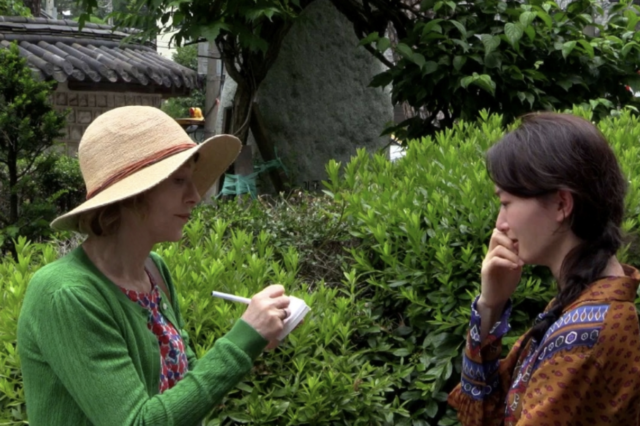
LYNNE SACHS: FROM THE OUTSIDE IN

Lynne Sachs retrospective at DCTV features screenings, Q&As, and an interactive workshop (photo by Oscar Fernandez)

LYNNE SACHS: FROM THE OUTSIDE IN
DCTV Firehouse Cinema
87 Lafayette St.
June 7-11, $16-$20, series pass with monograph $80
212-966-4510
www.dctvny.org

Experimental filmmaker Lynne Sachs took her first video class at DCTV in 1984; she and DCTV Firehouse Cinema are celebrating this fortieth anniversary with “Lynne Sachs: From the Outside In,” a five-day retrospective with seven programs comprising two dozen of her works, from 1983’s Ladies Wear to 2024’s Contractions and the world premiere of We Continue to Speak, from the three-minute The Small Ones (2007) and The Jitters (2024) to the eighty-three-minute Tip of My Tongue (2017). Sachs will be at every program, participating in Q&As and an interactive workshop; among her special guests are Tom Day, Sam Green, Tabitha Jackson, Naeem Mohaiemen, Lizzie Olesker, Accra Shepp, and her brother Ira Sachs.

“I walked into Downtown Community TV (DCTV) in 1984 thinking I needed to take some classes on how to make a documentary film. I was twenty-two years old and open to any possibility, any guidance, and totally impressionable,” Sachs said in a statement. “From that moment on, I learned to challenge every conventional expectation about working with reality. As I continue to explore the connections between the body, the camera, and the materiality of film itself, I reflect on those early experiences that taught me to reflect upon my own relationship to the people, places, and events I continue to witness as a filmmaker.”

The Memphis-born, Brooklyn-based auteur is an open book in her films, melding the personal and the political. In the grainy Ladies Wear, she photographs Ira on the New York City subway as he applies polish to his nails and sneakers. In 2013’s Your Day Is My Night, she documents a group of Chinese immigrants crammed into a closetlike apartment in Chinatown, where they ponder the differences between their lives in America and their native country and wonder if they made the right choice in coming here; there’s a fascinating kind of intervention when a young Puerto Rican woman moves in with them. In The Small Ones, Sachs shares the story of her Hungarian cousin Sandor Lenard, who during WWII in Italy was tasked with “washing, measuring, and cementing the bones of American dead.” His straightforward narration is accompanied by abstract images of war and slow-motion home movies of children at a birthday party. In 2021’s Maya at 24, Sachs depicts her daughter, Maya, at ages six, sixteen, and twenty-four.

Lynne Sachs takes a revealing look at her dad in Film About a Father Who

Lynne Sachs takes a revealing look at her dad in Film About a Father Who

Sachs offers a unique perspective of 9/11 in Tornado (2002), her fingers ruffling through ripped paper that floated across to Brooklyn. In the seven-minute Swerve, artist and curator Emmy Catedral, blaqlatinx multidisciplinary artist ray ferreira, director and cinematographer Jeff Preiss, film curator and programmer Inney Prakash, and actor Juliana Sass recite excerpts from Pilipinx poet Paolo Javier’s O.B.B. in a Queens park; words occasionally appear on the screen, including “free emptiness,” “unknown thoroughfare,” and “hum your savage cabbage leaf.” Investigation of a Flame (2001) explores the true story of the Catonsville Nine through archival footage and new interviews, with one member decrying “the obscenity and the insanity” of the US government’s actions, “which are growing more and more obscene and insane.”

“I’ve been in awe of Lynne’s fearlessness and desire to create, make meaning, rip apart, and piece together,” DCTV Firehouse Cinema director of programming Dara Messinger said. “I see her as the epitome of an indelible artist who is driven by curiosity and empathy — not fame, industry demands, or commercial algorithms. And I appreciate her sincere gratitude to her collaborators and to DCTV, honorably looking back but always steps ahead. Good documentary filmmaking cannot happen in a vacuum.”

“I don’t believe that childhood is swathed in innocence,” Sachs writes in e•pis•to•lar•y: Letter to Jean Vigo (2021), which contains footage from January 6 and Peter Brook’s 1963 Lord of the Flies. In The Jitters (2024), she cavorts with her partner, Mark Street, and three pet frogs and a cat. She takes a revealing look at the patriarch of her seemingly ever-expanding family in Film About a Father Who (2020). In And Then We Marched (2017), Sachs speaks with Sophie D., her seven-year-old neighbor, over archival footage of suffragists and shots of the 2017 Women’s March for equality.

Sachs shares her real to-do lists in A Year in Notes and Numbers (2017) while tracking her cholesterol, bone density, weight, glucose level, platelet count, and total protein. In Carolee, Barbara and Gunvor (2018), she visits cutting-edge artists Carolee Schneemann in New Paltz, Barbara Hammer in New York City, and Gunvor Nelson in Sweden. In an essay Sachs wrote about the four-minute 1987 silent short Drawn and Quartered, depicting a naked man and woman divided into four frames, exploring the tacit nature of the human body, Sachs explained how she felt at the film’s San Francisco premiere: “Within those few painful minutes, the crowd went from absolute silence, to raucous laughter, and back to an exquisite quiet. I was shaking.” You can expect all that and more over these five days at DCTV; below is the full schedule.

Lynne Sachs’s poetic short Swerve moves to the rhythm of Queens

Friday, June 7, 7:00
Performing the Real, followed by a Q&A with Lynne Sachs and Lizzie Olesker, moderated by Sam Green and with special guest poet Paolo Javier: Fossil (1986), The Washing Society (codirected with Lizzie Olesker, 2018), Swerve (2022)

Saturday, June 8, noon
Frames and Stanzas: An Artist Talk and Workshop, including A Biography of Lilith (1997), Starfish Aorta Colossus (2015), and Visit to Bernadette Mayer’s Childhood Home (2020)

Saturday, June 8, 4:00
It’s a Hell of a Place, followed by a Q&A with Lynne Sachs, moderated by Margaret Rhee: Ladies Wear (1983), Tornado (2002), and Your Day Is My Night (2013)

Saturday, June 8, 7:00
Fightless, followed by a Q&A with Lynne Sachs, moderated by Naeem Mohaiemen: The Small Ones (2007), The Task of the Translator (2010), e•pis•to•lar•y: Letter to Jean Vigo (2021), and Investigation of a Flame (2001)

Lynne Sachs hosts an unusual fiftieth birthday party in Tip of My Tongue

Sunday, June 9, 2:00
Bodies and Bonds, followed by a Q&A with Lynne Sachs, moderated by Dara Messinger: Drawn and Quartered (1987), The House of Science (1991), And Then We Marched (2017), A Year in Notes and Numbers (2017), Carolee, Barbara and Gunvor (2018), Maya at 24 (2021), Contractions (2024), and We Continue to Speak (2024)

Monday, June 10, 7:00
Tip of My Tongue (2017) + A Month of Single Frames (2019), followed by a Q&A with Lynne Sachs and Accra Shepp, moderated by Tabitha Jackson

Tuesday, June 11, 7:00
Film About a Father Who (2020) + The Jitters (2024), followed by a Q&A with Lynne Sachs, Ira Sachs, and Dana Sachs

[Mark Rifkin is a Brooklyn-born, Manhattan-based writer and editor; you can follow him on Substack here.]
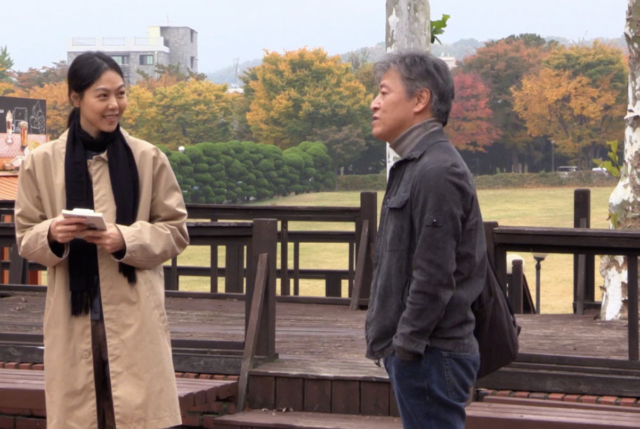
ROWDY GIRL

Renee King-Sonnen fights for animal rights and veganism in Rowdy Girl

ROWDY GIRL (Jason Goldman, 2023)
DCTV Firehouse Cinema
87 Lafayette St.
May 31 – June 6
212-966-4510
firehouse.dctvny.org
rowdygirlsanctuary.org

“Because we used to be cattle ranchers, we are the bridge, and we have to be able to have our feet in both worlds to be able to be a funnel and channel for the light to save not just cows, which I adore and love, but the planet, all species,” Renee King-Sonnen says in Rowdy Girl. “If we are not here to do that, then what are we doing?”

Jason Goldman’s debut feature-length documentary introduces audiences to King-Sonnen and her husband, Tommy Sonnen, who run Rowdy Girl Veganic Farm and Rowdy Girl Sanctuary, a nonprofit charity that rescues farm animals that had been raised for meat and incorporates them into their vegan lifestyle. Through their Rancher Advocacy Program, they help others convert their farms to grow crops veganically.

Goldman and cinematographers Bridget McQuillan, Dmitri Borysevicz, and Caleb Kuntz follow King-Sonnen as she speaks to and nurtures Sealy the turkey, Lulu and Penny the pigs, Tom Tom the goat, Trixie and Dixie the donkeys, Lemuria the horse, and Rowdy Girl the cow. A Texas rancher nearly breaks down in tears when he watches King-Sonnen welcome newborn calf Buster, who he helped deliver and then witnessed the animal’s mother reject and leave him to die.

King-Sonnen is a fierce activist for humane treatment of all animals; every shirt and hat she wears boasts anti-factory-farming and pro-vegan slogans, much like the farm’s social media presence. “There’s a door inside our consciousness that we dare not go through, because if we do, we will see that all these animals are just like us,” she tells the Texas rancher.

She meets with Valerie Peña and Jose Bustos about their pig, sixth-generation cattle ranchers Cindy and Richard Traylor about converting their farm, and Jennifer and Rodney Barrett about transforming their chicken ranch into “the first exotic automated mushroom farm in America.” In addition, King-Sonnen hosts a small gathering where she talks about how she is a product of rape, that her father horribly abused her mother, and that she is in recovery; her sobriety happened around the same time she went vegan, fighting against violence and the mistreatment of animals.

Just as King-Sonnen does, the film itself has a clear message. “I was originally drawn to Renee’s story when I learned that she was not only rescuing animals but rescuing ranchers,” Goldman notes in his director’s statement. “That idea crystalized in my mind, that her method of activism was disarming, displayed vulnerability, and was authentically holistic. I could see how she embodies the core philosophy of animal liberation: that animals are sentient beings who have their own interests, desires, and complex emotional lives. My intent with this film was to showcase the deep compassion, understanding, and unusual methods that are required of activists to help people open their hearts and minds to the cruel nature of animal agriculture.”

Rowdy Girl, which was executive produced by New York City native and longtime vegan Moby, opens May 31 at DCTV Firehouse Cinema; Goldman and King-Sonnen will be on hand for Q&As following the 7:00 show on Friday, the 7:30 screening ons Saturday, and the 4:30 show on Sunday.

[Mark Rifkin is a Brooklyn-born, Manhattan-based writer and editor; you can follow him on Substack here.]