this week in film and television

PRIDE MONTH: QUEER CONTINUUMS

Taja Lindley will give a free preview of Bag Lady Manifesta at the Brooklyn Museum on June 3

Taja Lindley will give a free preview of Bag Lady Manifesta at the Brooklyn Museum on June 3

Brooklyn Museum
200 Eastern Parkway at Washington St.
Saturday, June 3, free, 5:00 – 11:00
212-864-5400
www.brooklynmuseum.org

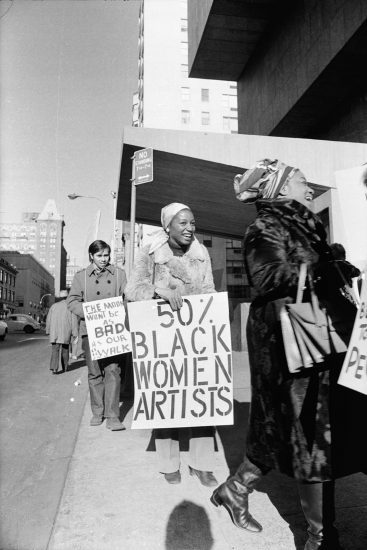
The Brooklyn Museum honors LGBTQ Pride Month for the June edition of its free First Saturday program, which continues its 2017 theme, “A Year of Yes: Reimagining Feminism.” There will be live music from the New York City Gay Men’s Chorus, SassyBlack, and Tamar-kali; a curator tour of “We Wanted a Revolution: Black Radical Women, 1965–85” led by Rujeko Hockley; teen apprentice pop-up gallery talks on works by LGBTQ artists; the New York City Legacy Ball, featuring Icons, Legends, Statements, and Stars of the ballroom community, hosted by father Sydney UltraOmni; a Community Resource Fair with the Gender Empowerment Movement Program, Health and Education Alternatives for Teens, Brooklyn Zen Center, Diaspora Community Services, Percent for Green, Well Read Black Girl, Brooklyn Pride, and the Audre Lorde Project; Pop-Up Poetry with Saretta Morgan and Alysia Harris paying tribute to artists in “We Wanted a Revolution: Black Radical Women, 1965–85”; a preview performance by Taja Lindley from The Bag Lady Manifesta, which comes to Dixon Place in the fall; a crown-making workshop; the Brooklyn premiere of Mike Mosallam’s Breaking Fast, part of “DisOrient: Queer Arab Film and Discussion,” hosted by Tarab NYC; and the kickoff of the museum’s Black Queer Brooklyn on Film series, with D’hana Perry performing selections from her immersive, multimedia documentary Loose and new works by Frances Bodomo, Dyani Douze, Ja’Tovia Gary, and Chanelle Aponte Pearson of the New Negress Film Society, joined by artists Lindsay Catherine Harris and Isabella Reyes and actor Ash Tai, followed by a Q&A. In addition, you can check out such exhibits as “Iggy Pop Life Class by Jeremy Deller,” “Infinite Blue,” “A Woman’s Afterlife: Gender Transformation in Ancient Egypt,” “We Wanted a Revolution: Black Radical Women, 1965–85,” and, at a discounted admission price of $12, “Georgia O’Keefe: Living Modern.”

FILMS ON THE GREEN: POTICHE (TROPHY WIFE)

Catherine Deneuve wants to be more than just a trophy housewife in François Ozon’s Potiche

POTICHE (TROPHY WIFE) (François Ozon, 2010)
Central Park, Cedar Hill
East side from 76th to 79th Sts.
Friday, June 2, free, 8:30
www.musicboxfilms.com/potiche
frenchculture.org

For the tenth anniversary season of Films on the Green, presented annually in parks around the city by the French Embassy — Cultural Services, the selections were made by a collection of guest curators; the 2017 summer series kicks off June 2 with François Ozon’s Potiche (Trophy Wife), which was chosen by actress and comedian Wanda Sykes. Legendary French star Catherine Deneuve radiates a colorful glow throughout the film, her smile lighting up the screen as it has throughout her long career, which now comprises more than one hundred movies over more than fifty years. Reunited with writer-director Ozon (8 Women) and Gérard Depardieu (they first appeared together in Claude Berri’s Je Vous Aime in 1980 and more recently in André Téchiné’s Les Temps Qui Changent in 2004), Deneuve was nominated for a César for her role as Suzanne Pujol, a trophy housewife who primarily serves as arm candy for her husband, Robert (Fabrice Luchini), who runs Suzanne’s family’s umbrella factory like a tyrant and is a little too close to his secretary, Nadège (César nominee Karin Viard). When Robert is taken hostage during a nasty strike at the plant, Suzanne is forced into action, deciding to run the business with the help of her counterculture son, Laurent (Jérémie Rénier), and her conservative daughter, Joëlle (Judith Godrèche). At first clashing with the mayor, Maurice Babin (Depardieu), Suzanne is soon considering rekindling her long-ago affair with the rather rotund Maurice as she realizes there’s so much more to life than being a wealthy appendage.

(Catherine Deneuve) has her hands full in Potiche, which kicks off Films on the Greens tenth anniversary season

Suzanne Pujol (Catherine Deneuve) has her hands full in Potiche, which kicks off Films on the Green’s tenth anniversary season on June 2 in Central Park

Loosely adapted from a Theatre de Boulevard comedy by Pierre Barillet and Jean-Pierre Grédy, Potiche is a charming throwback to 1970s female-empowerment movies, depicting long-held-back women suddenly grabbing the reins and embracing their personal and professional freedom, getting out from under the thumb of repressive societal conventions. Ozon infuses the film with numerous references to Deneuve’s history, evoking such seminal works as The Young Girls of Rochefort, Belle de Jour, and, of course, The Umbrellas of Cherbourg, and the costumes — particularly Deneuve’s fabulous fashion sense, which often dominates the scene — are a hoot, earning costume designer Pascaline Chavanne a much-deserved César nomination, but things get haywire in the final section, getting too silly and going too far over the top when politics come into play. Still, Potiche ably represents its genre, having fun with itself, which rubs off on the audience, who will have plenty of fun as well. Films on the Green continues weekly through July 28 (before a September 7 finale) with such other French films as Alain Gomis’s Tey (Today) chosen by Saul Williams, Leos Carax’s Mauvais Sang selected by Wes Anderson, Jean-Luc Godard’s Contempt picked by Jim Jarmusch, and Marcel Carné’s Port of Shadows from Laurie Anderson.

MODERN MATINEES — MR. CARY GRANT: ARSENIC AND OLD LACE

Cary Grant, Raymond Massey, and Peter Lorre star in Arsenic and Old Lace

Cary Grant, Raymond Massey, and Peter Lorre star in Frank Capra’s Arsenic and Old Lace

ARSENIC AND OLD LACE (Frank Capra, 1944)
MoMA Film, Museum of Modern Art
11 West 53rd St. between Fifth & Sixth Aves.
Wednesday, May 31, free with museum admission, 1:30
212-708-9400
www.moma.org

MoMA’s eight-week tribute to one of Hollywood’s coolest cats, “Modern Matinees: Mr. Cary Grant,” concludes May 31 with the film in which the actor born Archibald Leach believed he gave his “worst performance,” Frank Capra’s Arsenic and Old Lace. Grant, in a role meant for Bob Hope (and offered to Ronald Reagan and Jack Benny as well), stars as Mortimer Brewster, an affirmed bachelor and theater critic who has fallen in love with the preacher’s daughter, Elaine Harper (Priscilla Lane), who lives in the house next to the one where Mortimer grew up with his brother, Jonathan (Raymond Massey), who ultimately went bad and has not been seen for many years. Ominously, separating the two Brooklyn houses is a small graveyard. Mortimer and Elaine get married, and they arrive at his childhood home to celebrate with the two aunts who raised him, Abby (Josephine Hull) and Martha (Jean Adair), a pair of ever-so-kind spinsters who also happen to be poisoning old men and having Mortimer’s other brother, Teddy (John Alexander), who thinks he’s President Theodore Roosevelt, bury them in the basement, where he’s building the Panama Canal. Jonathan, on the lam from the law, shows up that night with his plastic surgeon, Dr. Herman Einstein (Peter Lorre), who keeps stitching him new faces; the latest makes him look like Boris Karloff, as several people notice. (Karloff played the role on Broadway, but his contract prevented him from leaving the stage to make the movie, which was filmed in 1941 but not released until 1944, when Joseph Kesselring’s play ended its successful run. Adair, Alexander, and Hull were all in the play but were allowed to take time off to make the film.) Meanwhile, Officer Patrick O’Hara (Jack Carson), the new cop on the beat, keeps hanging around, but he’s not exactly clued in to what is going on right under his nose.

Arsenic and Old Lace

Arsenic and Old Lace concludes MoMA tribute to Cary Grant

“I was embarrassed doing it. I overplayed the character. It was a dreadful job for me,” Grant said of his performance in Arsenic and Old Lace, which turned out to be a very popular film. It’s hard to tell, as his comic timing makes for some very funny scenes, complete with pratfalls, making faces directly into the camera, and even channeling the Three Stooges at one point. Capra and screenwriters Julius J. Epstein and Philip G. Epstein take some cheap shots at Brooklyn, including Dodgers fans, but it’s best to just not pay attention to those opening scenes and wait for Grant and Lane to show up. Most of the film, which takes place over the course of one Halloween, is set in the Brewster family home, where cinematographer Sol Polito (I Am a Fugitive from a Chain Gang, The Petrified Forest) keeps things dark and musty. Longtime stage actresses Hull, who would go on to win an Oscar for Harvey, and Adair (The Naked City, Detective Story) are charming and delightful as the most unlikely of serial killers, while Massey (Abe Lincoln in Illinois, East of Eden) is pure evil as Jonathan, and Lorre (M, Casablanca) is as creepy as always as the weird Dr. Einstein; Lorre would later star in Jacques Tourneur’s 1963 spoof The Comedy of Terrors with Karloff. Character actor Alexander is very loud as Teddy, who regularly runs up the stairs screaming, “Charge!” And despite his misgivings, Grant, who donated his full salary to war-related charities, is fine as Mortimer, blending comedy, horror, and romance with a sly wink. The film grows more and more convoluted as more people get involved, including James Gleason (Here Comes Mr. Jordan, The Clock) as Lt. Rooney, Edward Everett Horton (Lost Horizon, The Front Page) as Mr. Witherspoon, and Grant Mitchell (The Man Who Came to Dinner, Father Is a Prince) as Rev. Harper, and the endless gag of the cabdriver (Garry Owen) waiting outside gets old quick. But this is Capra, after all, so you have to take the good with the bad. And you’ll think twice the next time someone offers you elderberry wine.

CinéSalon: ENIGMATIC EMMANUELLE DEVOS (with Emmanuelle Devos in person)

Emmanuelle Devos will be at FIAF for a Q&A following the 7:30 screening of Read My Lips on June 6

Emmanuelle Devos will be at FIAF for a Q&A following the 7:30 screening of Read My Lips on June 6

French Institute Alliance Française, Florence Gould Hall
55 East 59th St. between Madison & Park Aves.
Tuesday, June 6 – July 25, $14, 4:00 & 7:30
Series continues Tuesday nights through March 21
212-355-6100
fiaf.org

FIAF got quite a curator for its eight-week, eight-film CinéSalon series “Enigmatic Emmanuelle Devos”: beloved award-winning French actress Emmanuelle Devos herself. And to kick off the festival, which runs Tuesday nights from June 6 through July 25, Devos will be in Florence Gould Hall to present Jacques Audiard’s 2001 thriller, Sur mes lèvres (“Read My Lips”), for which Devos won the first of her two Césars as Best Actress. The film, which also stars Vincent Cassel, will be shown at 4:00 and 7:30 on June 6, with the later screening followed by a Q&A with Devos, who turned fifty-three earlier this month. The series continues with seven other films selected by Devos: Sophie Fillières’s Gentille, Arnaud Desplechin’s Kings and Queen and My Sex Life . . . or How I Got into an Argument, Jérôme Bonnell’s Just a Sigh, Lorraine Lévy’s The Other Son, Anne Le Ny’s Those Who Remain, and Martin Provost’s Violette. Devos, who has appeared in more than forty films during her twenty-six-year career, also received César nominations for Kings and Queen, The Adversary, and My Sex Life . . . as well as winning a second César for In the Beginning.

THE SURVIVALIST

THE SURVIVALIST

Martin McCann stars as a man who will do just about anything to survive in Stephen Fingleton’s gripping debut feature

THE SURVIVALIST (Stephen Fingleton, 2015)
IFC Center
323 Sixth Ave. at West Third St.
212-924-7771
www.ifccenter.com
www.facebook.com/thesurvivalistfilm

Stephen Fingleton’s debut feature, The Survivalist, arrived at Tribeca in 2015 with the kind of expectations that are, well, tough to survive. The script was on both the 2012 Hollywood Black List (tied for fourteenth) and the 2013 Brit List (number one) of best unproduced screenplays; the self-taught Fingleton has been included in various names-to-watch, stars-of-tomorrow lists; and his twenty-three-minute SLR was shortlisted for an Oscar. Despite all the buildup, The Survivalist lives up to its billing as a gripping dystopian thriller from a major new talent. In the indeterminate near-future, oil production has plummeted while population growth exploded, leaving very little food available. Deep in the forest, an unnamed man (Martin McCann) lives by himself, fiercely defending his small cabin and vegetable garden. He is part Mad Max, part Rambo, setting traps to catch animals and protect him from other humans who might threaten his self-sufficient existence. But when the stoic Kathryn (Olwen Fouéré) and her teenage daughter, Milja (Mia Goth), show up, asking for temporary food and shelter — and willing to offer an alluring trade for them — the survivalist ultimately decides to let them into his carefully organized private world, knowing that things could change drastically at any moment.

Stephen Fingleton and Martin McCann talk things over on the set of THE SURVIVALIST

Stephen Fingleton and Martin McCann talk things over on the set of THE SURVIVALIST

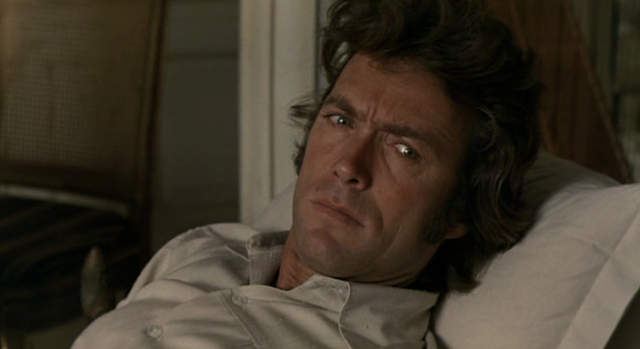
The Survivalist opens with long scenes of no dialogue or music at all, just naturalistic soundscapes, setting the stage for an intense, powerful experience. The Northern Ireland forest is like a character unto itself, living, breathing, fraught with menace. Fingleton and cinematographer Damien Elliott zoom in extra close on the man’s eye lashes, as if each individual hair were fighting for existence as well. McCann (Shadow Dancer, Clash of the Titans) combines danger with tenderness when he softly caresses a photograph of a woman or makes soup for Kathryn and Milja, his eyes ever-alert, revealing someone who is still trying to hold on to his last vestiges of humanity. Theater veteran Fouéré and young actress Goth are superb as a mother-and-daughter team desperate to make it through the apocalypse. The relationship among the three protagonists evokes Don Siegel’s underrated 1971 Civil War drama The Beguiled, in which Clint Eastwood plays a wounded soldier being tended to in a girls boarding school, only taking place here in the future instead of in the past. Despite knowing better, you’ll want to root for all three of them to triumph in this horrific ticking-time-bomb of a world, which might be a whole lot closer than we think. Fingleton also made a well-received short prequel of sorts, Magpie, which establishes the fiercely taught mood of the feature film but is best watched afterward.

THE WOMEN’S BALCONY

THE WOMENS BALCONY

The women have a bone to pick with a new rabbi in Emil Ben-Shimon’s The Women’s Balcony

THE WOMEN’S BALCONY (Emil Ben-Shimon, 2016)
Lincoln Plaza Cinema, 1886 Broadway at 63rd St., 212-757-2280
Quad Cinema, 34 West 13th St., 212-255-2243
Opens Friday, May 26
www.menemshafilms.com

Judaism may be matrilineal, but that doesn’t mean that women are treated as equal to men, especially among sects espousing fundamentalist religious beliefs, although women are considered holier than men in Orthodox communities. In Emil Ben-Shimon’s absolutely wonderful debut feature, The Women’s Balcony, that all comes to a head when wives, mothers, girlfriends, and daughters, relegated to a balcony in the back of a small, local shul — as if on a pedestal, farther away from the Torah but closer to G-d — come crashing down when the structure breaks, suddenly putting them on the same level as the men. It’s no coincidence that this happens during an Orthodox bar mitzvah, when a boy becomes a man, which is much different from an orthodox bat mitzvah, when a girl becomes a woman. When a fundamentalist rabbi from a nearby congregation offers to help rebuild the Mizrahi synagogue, the place of women in the shul are far from his main concern, leading to a furious and delightful battle of the sexes. With the elderly Rabbi Menashe (Abraham Celektar) flustered because the accident has left his wife in a coma, Rabbi David (Avraham Aviv Alush) is only too happy to step in, demanding further separation between the men and the women, which causes problems for such couples as gabbai Aharon (Itzik Cohen) and Tikva (Orna Banai); mild-mannered Nissan (Herzi Tobey) and Margalit (Einat Sarouf); and warmhearted shopkeeper Zion (Igal Naor) and Etti (Evelin Hagoel), who have a terrific marriage and equal partnership until things start changing at the shul. Meanwhile, everyone is hoping that Yaffa (Yafit Asulin) finds the right man as she expands her dating search, until she and Rabbi David’s assistant (Assaf Ben Shimon) take an interest in each other, a potential Romeo and Juliet romance.

Not even the Passover seder can bring order to the chaos surrounding the reconstruction of a synagogue in THE WOMENS BALCONY

Not even the Passover seder can bring order to the chaos surrounding the reconstruction of a synagogue in The Women’s Balcony

The Women’s Balcony was written by first-time screenwriter Shlomit Nehama, Ben-Shimon’s ex-wife, who was inspired by the religious extremism she saw in an Israeli neighborhood where she had once lived. The film evokes such sweet-natured favorites as Local Hero and Waking Ned Devine as well as Aristophanes’s Lysistrata as the women fight for their rights. Ben-Shimon (Mimon, Wild Horses) maintains an infectious pace throughout, as cinematographer Ziv Berkovich puts the audience right in the middle of the action, accompanied by Ahuva Ozeri and Shaul Besser’s playful, Jewish-flavored score. Naor and Hagoel are outstanding as Zion and Etti, the emotional center of the film, a lovely couple with a bright view of life, at least until exclusion and sexism get in the way. Asulin is excellent as Yaffa, the young woman who is part of the next generation of Judaism — and who is not extremely knowledgeable about her religion. But even when situations are at their most tense, Nehama and Ben-Shimon keep it all lighthearted; if only more religious (and marital) disputes could be handled with such grace and wit. Nominated for five Israeli Academy Awards, including Banai for Best Supporting Actress, Rona Doron for Best Costume Design, Vered Mevorach for Best Makeup, the late Ozeri (who passed away recently at the age of sixty-eight) and Besser for Best Score, and Alush for Best Supporting Actor, The Women’s Balcony opens May 26 at Lincoln Plaza and the Quad.

IMMIGRANT SONGS: LIQUID SKY

Liquid Sky</em. is having its last-ever 35mm screening in New York City this weekend

Liquid Sky is having its last-ever 35mm screening in New York City this weekend

LIQUID SKY (Slava Tsukerman, 1982)
Quad Cinema
34 West 13th St. between Fifth & Sixth Aves.
Saturday, May 27, and Sunday, May 28, 7:20 (both followed by Q&As)
212-255-2243
quadcinema.com
www.liquidskythemovie.com

“Everybody wants euphoria; what’s wrong with that?” a character declares in Slava Tsukerman’s 1982 sci-fi cult classic, Liquid Sky. First, a tiny alien spaceship lands above a rooftop apartment in the shadow of the Empire State Building. Margaret (Anne Carlisle), a Connecticut native who dresses in shocking makeup and clothing, lives there with Adrian (Paula E. Sheppard), a performance artist and heroin dealer specializing in Liquid Sky. Their world is all about sex, drugs, and punk / new wave music. Later, at the club, they meet Vincent (Jack Adalist), who claims his father is a bigwig in the movies, and Paul (Stanley Knap), a middle-class junkie whose wife, Katherine (Elaine C. Grove), is trying to get him to kick the habit. Katherine’s brother, the androgynous, Bowie-esque Jimmy (also played by Carlisle), is a friend of Adrian and Margaret’s who is going to model with Margaret in what turns out to be a very strange fashion shoot for Midnight magazine with an oddball crew that includes a cool designer (Nina V. Kerova), an eager photographer (Alan Preston), and a snappy hair stylist (Christine Hatfull). Meanwhile, UFO hunter Johann Hoffman (Otto von Wernherr) is on the trail of the midtown alien ship and being wined and dined by the hot-to-trot Sylvia (Susan Doukas), whose window offers an excellent view of Adrian and Margaret’s apartment. The plot thickens when Margaret discovers that she seems to have a rather special power whenever a sexual partner (or rapist) has an orgasm with her.

Ann Carlisle stars as both Jimmy and Margaret in Liquid Sky

Ann Carlisle stars as both Jimmy and Margaret in Slava Tsukerman’s Liquid Sky

Released in August 1982, Liquid Sky was ahead of its time in its treatment of gender identity and sexual orientation (and even bathroom usage); in fact, it’s already postgender. It also presages the AIDS crisis and the protest motto “Sex = Death.” And the special effects, which were created by Russian cinematographer Yuri Neyman and combine science with psychedelia, might look cheesy now but they were cutting edge (and still slyly funny) thirty-five years ago, as were the freaky costumes and production design by Marina Levikova. Marcel Fieve was responsible for the fab makeup and hair. Written by Soviet émigré Tsukerman (Stalin’s Wife, Perestroika), his wife, Kerova, and Carlisle, the film, inspired by Wendy Steiner’s The Scandal of Pleasure and Tsukerman’s own emigration, is an avant-garde look at the immigrant experience in America, whether coming from outer space, the Soviet Union, or Connecticut, as well as the Reagan-era counterculture. The Empire State Building rises tall in numerous shots, a large phallic symbol of personal freedom. There is also a brief shot of the Twin Towers, echoing Carlisle’s performance as both Margaret and Jimmy. The acting is mediocre at best and the plot doesn’t always make sense, but Liquid Sky is more than just a captured moment in time, as it explores issues that are still controversial today. The hypnotic, synth-heavy soundtrack is by Tsukerman, Clive Smith, and Brenda I. Hutchinson, but nothing can top Sheppard’s performance of “Me and My Rhythm Box.” Carlisle appeared in nine movies between 1981 and 1990, including Desperately Seeking Susan and Crocodile Dundee, but hasn’t made another one since, and Tsukerman has directed several nonfiction works but Liquid Sky is his only feature; however, they are collaborating on a documentary about the making of the movie (and perhaps a sequel as well). Among other things, the film is about death, and the original negative is decaying, so the Quad will be presenting the last-ever 35mm New York City screenings of Liquid Sky on May 27 and 28 at 7:20 as part of “Immigrant Songs,” with Tsukerman and Carlisle participating in Q&As after both shows. The series concludes May 26-29 with Brian De Palma’s Scarface and May 27-31 with Nicolas Roeg’s The Man Who Fell to Earth.