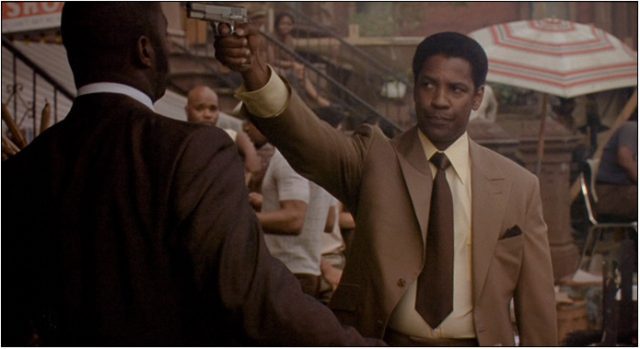
Frank Lucas (Denzel Washington) does whatever is necessary to succeed in Ridley Scott’s American Gangster
AMERICAN GANGSTER (Ridley Scott, 2007)
Nitehawk Cinema
136 Metropolitan Ave. between Berry St. & Wythe Ave.
Sunday, July 16, 11:00 am
Series runs through August 26
718-384-3980
nitehawkcinema.com
 Nitehawk Cinema turns back the clock a decade for its summer series “Back10: 2007,” presenting sixteen films that premiered that year, which saw No Country for Old Men nab Best Picture, Daniel Day-Lewis (There Will Be Blood) win Best Actor, and Marion Cotillard (La Vie en Rose) capture the Best Actress trophy at the eightieth Academy Awards. The series begins July 15 at midnight with David Cronenberg’s Eastern Promises, followed Sunday morning by American Gangster. Based on a true story, Ridley Scott’s American Gangster tracks the path of two very different men during the Vietnam War era. Frank Lucas (Denzel Washington) is a proud, dedicated man from poor southern roots who is determined to become the most respected and loved drug lord of Harlem. Richie Roberts (Russell Crowe) is an honest-to-a-fault Jewish cop studying to become a lawyer while failing miserably in his personal life. Cold, calculating, and smooth as silk, Lucas will do whatever is necessary to ensure his absolute success, including shooting another player in the head in plain view on an uptown street. Meanwhile, Roberts becomes a pariah in the corrupt police department when he finds nearly a million dollars in cash and turns it in. As the war escalates in Southeast Asia, Lucas and Roberts are both on a dangerous road that threatens to explode all around them.
Filmed in New York City, American Gangster — featuring an excellent script by Steven Zaillian and intense, superb direction from Scott (Blade Runner, Alien — is a compelling thinking man’s mob pic, a worthy successor to (and mash-up of) such genre classics as The French Connection, Serpico, and New Jack City. The diverse all-star cast also includes Chiwetel Ejiofor, RZA, T.I., Josh Brolin, Carla Gugino, Cuba Gooding Jr., Armand Assante, Idris Elba, Joe Morton, Roger Bart, Common, Kevin Corrigan, John Hawkes, Ruben Santiago-Hudson, Norman Reedus, and the great Ruby Dee and Clarence Williams III. Nominated for two Oscars — Dee for Best Supporting Actress and Arthur Max and Beth Rubino for Best Art Direction — American Gangster is screening July 16 at 11:00 in the morning in Nitehawk’s “Back10” series, which continues through August 26 with such other decade-old fare as J. A. Bayona’s The Orphanage, Rob Zombie’s Halloween reboot, Tony Gilroy’s Michael Clayton, Jason Reitman’s Juno, and Danny Boyle’s Sunshine.
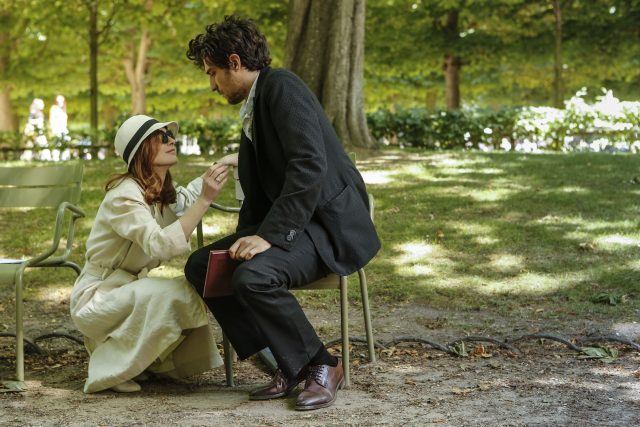
 Swiss-born French opera and theater director Luc Bondy also made several films during his five-decade career, the last of which, False Confessions, opens on Bastille Day at the Angelika and Lincoln Plaza. Based on Pierre Carlet de Chamberlain de Marivaux’s 1737 play, Les Fausses Confidences, the film was made at the same time Bondy was directing a stage version of the romantic comedy of manners at the Théâtre de l’Odéon; during the day, he would shoot scenes for the film, and the same cast would then perform at the theater for a live audience at night. The mesmerizing Isabelle Huppert stars as Araminte, a wealthy, and very sexy, widow who is convinced by her valet, Dubois (Yves Jacques), to hire the innately handsome Dorante (Louis Garrel) as her private secretary. Dubois’s plan is to have his former boss, Dorante, woo Araminte and marry her for her money. But Araminte is already being courted by the dastardly Count (Jean-Pierre Malo), who is also lording over her with a questionable legal dispute that he promises will go away once they are wed. Meanwhile, Dorante’s uncle, Monsieur Rémy (Bernard Verley), is trying to make a reputable match between his nephew and Marton (Manon Combes), Araminte’s servant and companion. Chaos soon reigns as Dorante does indeed fall in love with Araminte, who understands that social graces prevent their union, and Marton falls head-over-heels for Dorante.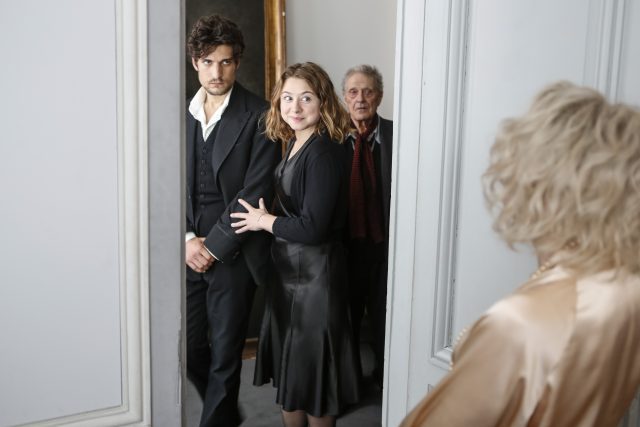
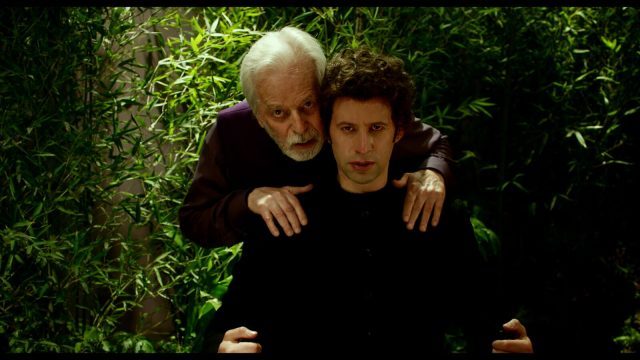


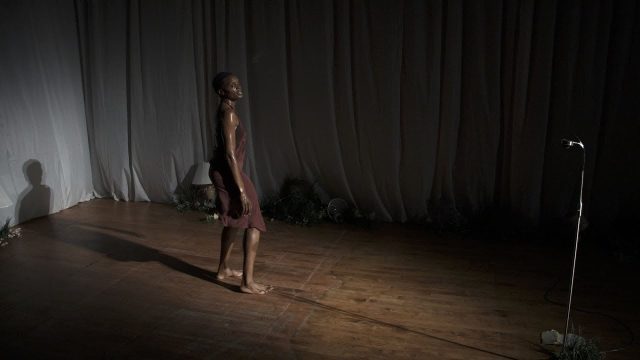
 “Okwui’s job is to scare people, just to scare them to get them to kind of wake up,” dancer, choreographer, and conceptualist Ralph Lemon says of his frequent collaborator and protégée Okwui Okpokwasili in the powerful new documentary Bronx Gothic. Directed by Okpokwasili’s longtime friend Andrew Rossi, the film follows Okpokwasili during the last three months of her tour for her semiautobiographical one-woman show, Bronx Gothic, a fierce, confrontational, yet heart-wrenching production that hits audiences right in the gut. Rossi cuts between scenes from the show — he attached an extra microphone to Okpokwasili’s body to create a stronger, more immediate effect on film — to Parkchester native Okpokwasili giving backstage insight, visiting her Nigerian-born, Bronx-based parents, and spending time with her husband, Peter Born, who directed and designed the show, and their young daughter, Umechi. The performance itself begins with Okpokwasili already moving at the rear of the stage, shaking and vibrating relentlessly, facing away from people as they filter in and take their seats. She continues those unnerving movements for nearly a half hour (onstage but not in the film) before finally turning around and approaching a mic stand, where she portrays a pair of eleven-year-old girls exchanging deeply personal notes, talking about dreams, sexuality, violence, and abuse as they seek their own identity. “Bronx Gothic is about two girls sharing secrets. . . . It is about the adolescent body going into a new body, inhabiting the body of a brown girl in a world that privileges whiteness,” Okpokwasili, whose other works include Poor People’s TV Room and the Bessie-winning Pent-Up: A Revenge Dance, explains in the film. National Medal of Arts recipient Lemon adds, “It’s about racism, gender politics — it’s not just about these two little black girls in the Bronx.” Rossi includes clips of Okpokwasili performing at MoMA in Lemon’s “On Line” in 2011, developing Bronx Gothic at residencies at Baryshnikov Arts Center and New York Live Arts, and participating in talkbacks at Alverno College in Milwaukee and the Bronx Academy of Arts and Dance, where the tour concluded, right next to her childhood church, which brings memories surging back to her.
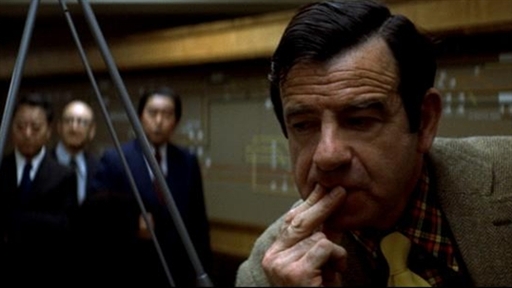
 On October 29, 1975, President Gerald R. Ford refused to grant a federal bailout of New York, resulting in one of the all-time-great headlines in the Daily News: “Ford to City: Drop Dead.” Film Forum is looking back at that rather unique decade in Big Apple history in the fab series “Ford to City: Drop Dead — New York in the 70s.” Running through July 27, the festival features more than three dozen Gotham classics, beginning with Midnight Cowboy and Taking Off and continuing with such favorites as Mean Streets (shown with Film Forum master programmer Bruce Goldstein’s Les Rues de Mean Streets), Serpico, Saturday Night Fever, Network, Klute, and Marathon Man. With all the recent problems with the subway system, it’s definitely time to revisit Joseph Sargent’s underground thriller, The Taking of Pelham One Two Three. Loosely adapted from the book by John Godey, the film wonderfully captures the cynicism of New York City in the 1970s. Four heavily armed and mustached men — Mr. Blue (Robert Shaw), Mr. Green (Martin Balsam), Mr. Gray (Hector Elizondo), and Mr. Brown (Earl Hindman), colorful pseudonyms that influenced Quentin Tarantino’s Reservoir Dogs — hijack an uptown 4 train, demanding one million dollars in one hour from a nearly bankrupt city or else they will kill all eighteen passengers, one at a time, minute by minute. The hapless mayor (Lee Wallace) is in bed with the flu, so Deputy Mayor Warren LaSalle (Tony Roberts) takes charge on the political end while transit detective Lt. Zachary Garber (a great Walter Matthau) and Inspector Daniels (Julius Harris) of the NYPD team up to try to figure out just how in the world the criminals expect to get away with the seemingly impossible heist. Sargent (Sybil) offers a nostalgic look back at a bygone era, before technology radically changed the way trains are run and police work is handled.