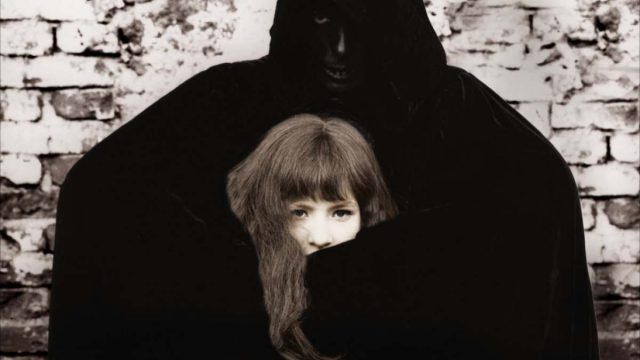
Valerie (Jaroslava Schallerová) comes of age rather early in Valerie and Her Week of Wonders
VALERIE AND HER WEEK OF WONDERS (VALERIE A TÝDEN DIVŮ) (Jaromil Jireš, 1970)
Nitehawk Cinema
136 Metropolitan Ave. between Berry St. & Wythe Ave.
Thursday, August 3, 7:30
Series continues select Thursdays through August 31
718-384-3980
nitehawkcinema.com
 Nitehawk Cinema’s “Fashion and Film” series, presented in conjunction with i-D magazine, consists of four movies selected by fashion designers, each preceded by a short “Designers on Their Favorite Films” prerecorded introduction. It kicks off August 3 with Czech New Wave auteur Jaromil Jireš’s (The Cry, The Joke) extremely strange, totally hypnotic Valerie and Her Week of Wonders, chosen by Shane Gabier and Christopher Peters’s Creatures of the Wind. Based on the 1945 Gothic novel by Vítězslav Nezval (which was written ten years earlier), Valerie is a dreamy adult fairy tale, inspired by “Little Red Riding Hood,” “Alice in Wonderland,” and other fables, about the coming of age of Valerie, a nymphette played by thirteen-year-old Jaroslava Schallerová in her film debut. Valerie lives with her icy, regal grandmother, Elsa (Helena Anýzová), in a remote village, where visiting missionaries and actors are cause for celebration. In addition, Valerie’s best friend, Hedvika (Alena Stojáková), is being forced to marry a man she doesn’t love. Valerie, who is in possession of magic earrings, is being courted by the bespectacled, bookish Eaglet (Petr Kopriva) as well as the Constable (Jirí Prýmek), who just happens to be an evil, ugly vampire who has a mysterious past with Elsa. Also showing an untoward interest in the virginal Valerie is the local priest, Gracián (Jan Klusák).
But don’t get too caught up in the hallucinatory narrative, which usually makes little sense. Characters’ motivations are inconsistent and confusing (especially as Jireš delves deeper and deeper into Valerie’s unconscious), plot points come and go with no explanation, and the spare dialogue is often random and inconsequential. And don’t try too hard looking for references to the Prague Spring, colonialism, and communism; just trust that they’re in there. Instead, let yourself luxuriate in Jan Curík’s lush imagery, Lubos Fiser and Jan Klusák’s Baroque score, Ester Krumbachová’s enchanting production design, and Jan Oliva’s weirdly wonderful art direction. Valerie’s white bedroom is enchantingly surreal, a private world in a darkly magical Medieval land beset by incest, rape, fire, murder, self-flagellation, paganism, and monsters, everything dripping with blood and sex. No, this is most definitely not a fantasia for kids. “Fashion and Film” continues August 10 with Gus Van Sant’s To Die For, selected by Adam Selman, August 17 with Sally Potter’s Orlando, chosen by Joseph Altuzarra, and August 31 with Douglas Keeve’s Unzipped, picked by film subject Isaac Mizrahi, who will be on hand to talk about the film and his career.

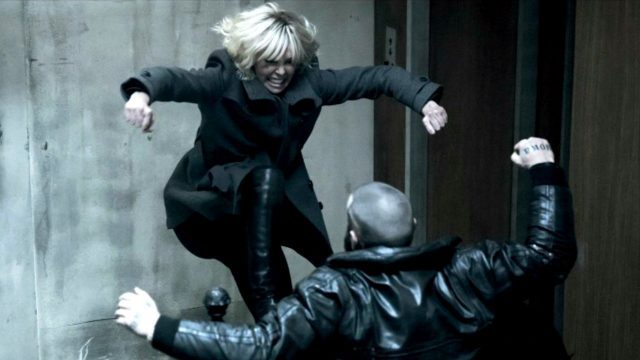
 Charlize Theron is nothing less than awesome in the action spy thriller Atomic Blonde, but that should come as no surprise; she was also awesome as a secret agent in 2005’s

 “So long space remains, so long sentient beings remain, so long suffering remains, I will remain. In order to serve. That is the real purpose of our life,” His Holiness the 14th Dalai Lama says at the beginning of Mickey Lemle’s documentary, The Last Dalai Lama. For nearly 450 years, the spiritual leader of Tibet has been known as the Dalai Lama, reincarnated to continue the lineage and guide the Tibetan people through his wisdom and compassion. But China, in its ongoing suppression of Tibet, has now decided it will choose the next Dalai Lama, so His Holiness, born Tenzin Gyatso in 1935, has vowed that if necessary, he will reincarnate as someone other than a Dalai Lama, bringing an end to the chain. Lemle introduced the world to the 14th Dalai Lama in 1993 with the release of Compassion in Exile: The Story of the 14th Dalai Lama; the new film, which Lemle wrote, produced, directed, and coedited, was made in conjunction with His Holiness’s eightieth birthday, which was celebrated with a Long Life Ceremony at the Javits Center in New York City (that we attended). The film reveals the Dalai Lama, a Buddhist meditation practitioner who escaped Tibet in 1959 and set up a new home in Dharamsala, India, to be both a mensch and a superstar, a man of deep, philosophical wisdom and great compassion for all sentient beings, as well as a very funny man with an infectious laugh. Lemle (The Other Side of the Moon, Ram Dass Fierce Grace) investigates the history of Tibetan relations with China while exploring the biography of the Dalai Lama, including interviews he made with him in the early 1990s.
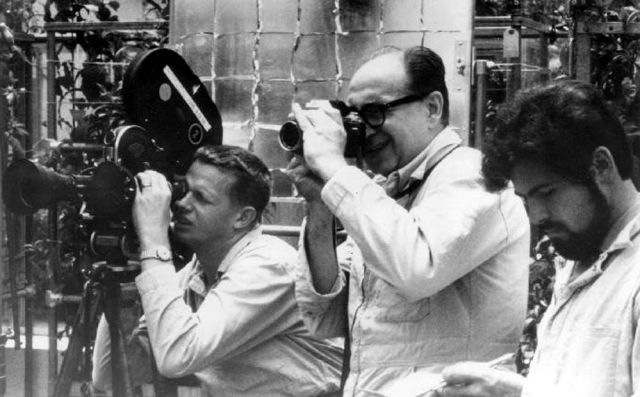
 Italian auteur Michelangelo Antonioni calls into question everything we see and hear, in photographs, on film, and in real life, in his 1966 counterculture masterpiece, Blow-Up, which is being shown July 28 to August 3 in a new DCP restoration at Film Forum. Antonioni’s first English-language film — part of a three-picture deal with producer Carlo Ponti that would also include the disappointing Zabriskie Point and the quirky existential suspense thriller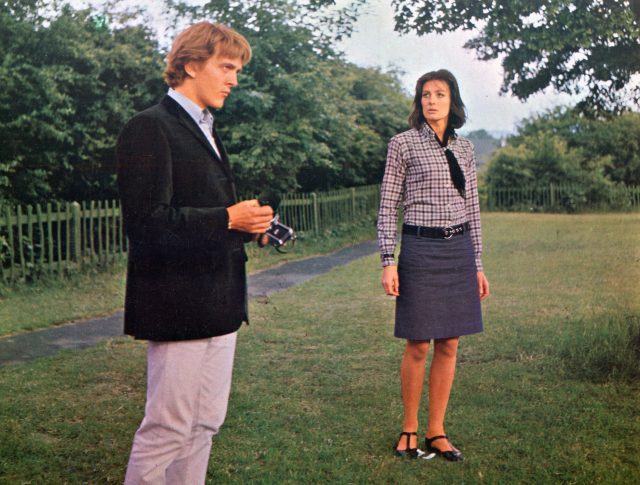
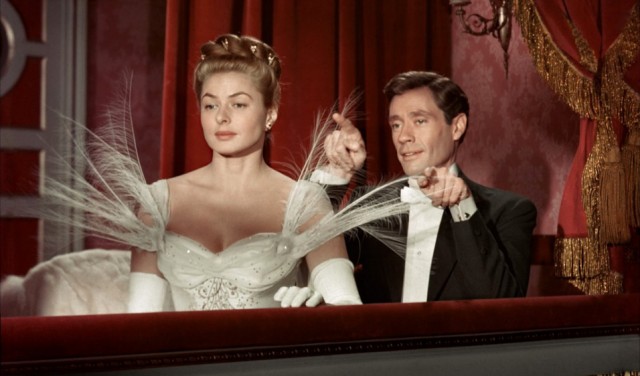
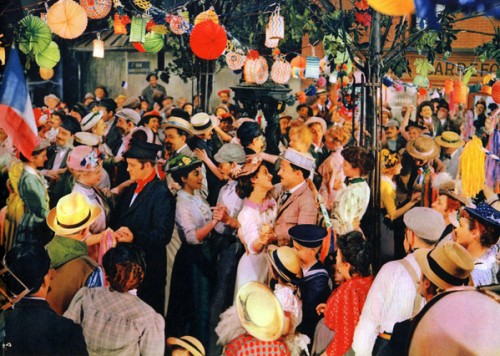
 The tenth anniversary of the Films on the Green series, in which such artists as Wes Anderson, Wanda Sykes, Jim Jarmusch, Laurie Anderson, and Saul Williams selected French films to be shown for free in parks around the city, continues July 28 with Isabella Rossellini’s pick, Jean Renoir’s intriguing, lesser-known 1956 “musical fantasy,” Elena and Her Men, starring her mother, Ingrid Bergman. In this small gem of a film, also known as Paris Does Strange Things, Bergman plays Elena Sokorowska, a splendiferous Polish princess living the high life in fin de siècle Paris, quickly running out of money and strongly advised by her aunt to find a rich husband. After dispatching one lover, composer Lionel Villaret (Jean Claudio), the princess has a trio of suitors: the much older Martin-Michaud (Pierre Bertin), a stuffy, aristocratic shoe mogul; the heroic General François Rollan (Jean Marais, playing a character based on the real-life General Georges Boulanger), who is being celebrated on Bastille Day; and the playboy Count Henri de Chevincourt (Mel Ferrer), who instantly falls madly in love with her — and wishes to take her home the very day he meets her. It’s 1915, and the streets are filled with French men, women, and children singing the praises of General Rollan while wondering what will come next for the government, with talk of a coup and a dictatorship making the rounds. In the middle of it all is Princess Sokorowska, whose lavish charm beguiles nearly everyone she meets, except, of course, the general’s mistress, Paulette Escoffier (Elina Labourdette). As the men fight over her, the princess hands out daisies to bring various people good luck.