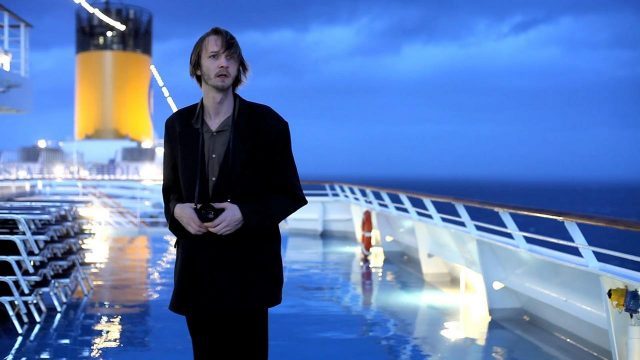
Good luck figuring out what Godard’s Film Socialisme is about
FILM SOCIALISME (Jean-Luc Godard, 2010)
BAMcinématek, BAM Rose Cinemas
30 Lafayette Ave. between Ashland Pl. & St. Felix St.
Friday, September 8, 7:00 & 9:30
Series runs September 8-17
718-636-4100
www.bam.org
In the late 1950s and 1960s, the French New Wave exploded around the world, redefining cinema through independent production and the auteur theory, led by such innovative directors as Jean-Luc Godard, François Truffaut, Agnès Varda, Claude Chabrol, Éric Rohmer, Alain Resnais, and Jacques Rivette. Fifty years later, several of these filmmakers were still creating outstanding motion pictures, as evidenced by the BAMcinématek series “Plus ça change: French New Wave in the New Millennium,” running September 8-17. The twelve-film festival kicks off September 8 with Godard’s highly contentious and polemical Film Socialisme, his first work to be made fully in high-definition digital video. After watching the 2010 film, I was not quite sure what I had just witnessed. There was beautiful imagery shot by Fabrice Aragno and Paul Grivas, pretentious and funny literary dialogue and narration taken from such writers as Hannah Arendt, Jacques Derrida, Jean-Paul Sartre, and Walter Benjamin, appearances by punk icons Patti Smith and Lenny Kaye, and archival footage from old movies, divided into three sections: The first (“Such Things”) takes place on a cruise ship (that capsized a few years later), the second (“Our Europe”) at a gas station, and the third (“Our Humanities”) a trip through the Mediterranean, with stops at Egypt, Palestine, Odessa, Hellas, Naples, and Barcelona. There’s bullfighting, Stalin, Hitler, soccer, a llama, war, cats on the internet, and a girl reading Balzac’s Lost Illusions. There’s also anti-Semitism, with parts of the film inspired by Léon Daudet’s Le Voyage de Shakespeare and Godard using the name Palestine instead of Israel. In doing research on Film Socialisme to try to find out what I had seen — not usually a good sign for a movie — I found lavish five-star reviews, angry one-star condemnations, and a series of fascinating essays by Richard Brody in the New Yorker discussing, among other things, Stalin looting the Spanish treasury, Godard’s fondness for tennis, and the strange story of Willi Münzenberg. And of course, there are statements about life and cinema, truth and fiction. “You see, with the verb ‘to be,’ the lack of reality becomes flagrant,” one character says. “Liberty is expensive. But one can’t buy her with gold, and not with blood but with cowardice, prostitution, and betrayal,” another says. Film Socialisme comes to an abrupt end as the words “No Comment” take over the screen in a stark, bold sans serif font. ’Nuf said.
In addition to the below films, the series includes Resnais’s You Ain’t Seen Nothing Yet and Wild Grass, Chabrol’s The Girl Cut in Two, Varda’s The Gleaners & I, Rohmer’s The Romance of Astrea and Celadon, and Rivette’s The Duchess of Langeais.
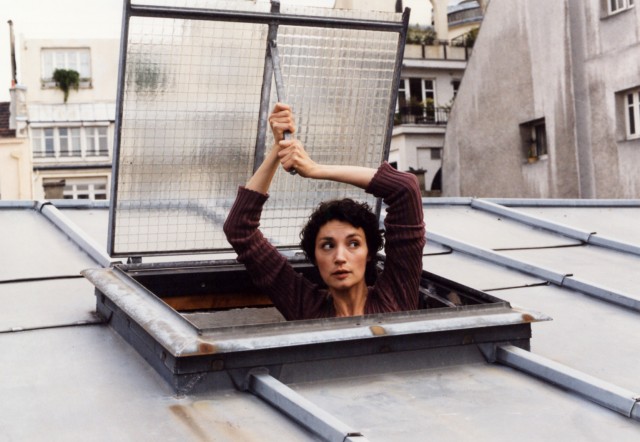
Jeanne Balibar is extraordinary in Jacques Rivette masterpiece
VA SAVOIR (WHO KNOWS?) (Jacques Rivette, 2001)
Saturday, September 9, 2:00, 6:30
www.bam.org
 Jacques Rivette’s Va Savoir is a long, talky French movie about very beautiful, very complicated, sex-crazed men and women — and it just might be the master filmmaker’s crowning glory, a magnificent masterpiece that deserved its slot as the New York Film Festival’s opening night selection back in 2001. This erotically charged, very funny drama is set around a traveling theater company’s return to Paris to put on Pirandello’s As You Desire Me in the original Italian. Ugo (Sergio Castellitto), the director and costar of the play, is romantically involved with Camille (Jeanne Balibar), the lead actress, who visits her former lover Pierre (Jacques Bonnaffé), a philosopher with a thing for Heidegger, who is now living with Sonia (Marianne Basler), a dance instructor who is being chased by Arthur (Bruno Todeschini), a ne’er-do-well whose half sister, Do (Hélène de Fougerolles), has taken a liking to Ugo and offers to help him find an unpublished ghost play by Carlo Goldini, which her mother (Catherine Rouvel) just might have. Every minute of this film is pure magic, and at the center of it all is the fantastique Camille, an instinctual, graceful actress whom everyone — men and women — fall in love with, played by the fantastique, instinctual, graceful Balibar, whom audiences will fall in love with as well. French film enthusiasts should watch for Claude Berri in a small role. Lovingly photographed by William Lubtchansky and edited by his wife, Nicole Lubtchansky, Va Savoir is screening at 2:00 and 6:30 on September 9 in the BAMcinématek series “Plus ça change: French New Wave in the New Millennium.”

Chris Marker goes in search of smiling felines in The Case of the Grinning Cat
THE CASE OF THE GRINNING CAT (Chris Marker, 2006)
Sunday, September 10, 2:00, 5:15, 8:30
www.bam.org
 Legendary cat lover and filmmaker Chris Marker (La Jetée, Sans Soleil) goes on a search for a friendly feline in the slight, playful hour-long documentary The Case of the Grinning Cat. In post-9/11 Paris, when much of the world was proclaiming “We are all Americans,” Marker discovered a series of stenciled yellow cats showing up in odd places, from the sides of buildings to internet sites to classical works of art. After disappearing for a short time — causing Marker great frustration — they return as placards and masks at protest movements against U.S. imperialism and other causes. Although the film is fun to watch, it never quite connects all the dots. The Case of the Grinning Cat is screening at 2:00, 5:15, and 8:30 on September 10 in the BAMcinématek series “Plus ça change: French New Wave in the New Millennium.”
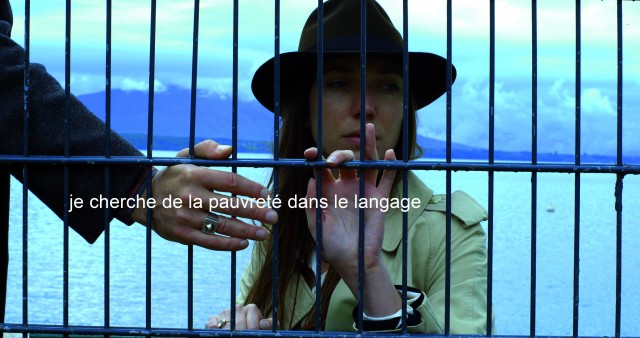
Jean-Luc Godard’s Goodbye to Language speaks for itself
GOODBYE TO LANGUAGE (ADIEU AU LANGAGE) (Jean-Luc Godard, 2014)
Saturday, September 16, 2:00, 4:30, 7:00, 9:30
www.bam.org
www.kinolorber.com
 After the New York Film Festival advance press screening of Jean-Luc Godard’s 3D Goodbye to Language in 2014, a colleague turned to me and said, “If this was Godard’s first film, he would never have had a career.” While I don’t know whether that might be true, I do know that Goodbye to Language is the 3D flick Godard was born to make, a 3D movie that couldn’t have come from anyone else. What’s it about? I have no idea. Well, that’s not exactly right. It’s about everything, and it’s about nothing. It’s about the art of filmmaking. It’s about the authority of the state and freedom. It’s about extramarital affairs. It’s about seventy minutes long. It’s about communication in the digital age. (Surprise! Godard does not appear to be a fan of the cell phone and Yahoo!) And it’s about a cute dog (which happens to be his own mutt, Miéville, named after his longtime partner, Anne-Marie Miéville). In the purposefully abstruse press notes, Godard, eighty-three at the time, describes it thusly: “the idea is simple / a married woman and a single man meet / they love, they argue, fists fly / a dog strays between town and country / the seasons pass / the man and woman meet again / the dog finds itself between them / the other is in one / the one is in the other / and they are three / the former husband shatters everything / a second film begins / the same as the first / and yet not / from the human race we pass to metaphor / this ends in barking / and a baby’s cries.” Yes, it’s all as simple as that. Or maybe not.
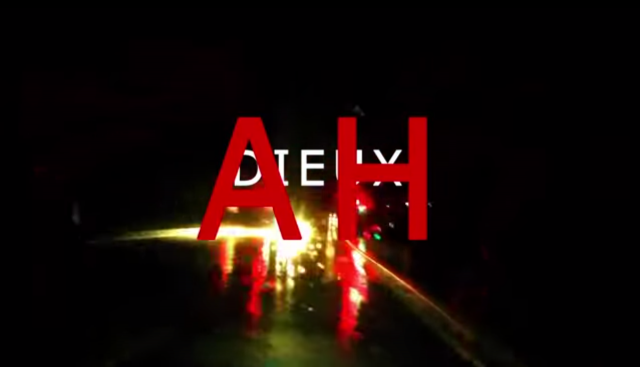
Jean-Luc Godard has fun with 3D in Goodbye to Language
Godard divides the film into sections labeled “La Nature” and “La Métaphore,” cutting between several ongoing narratives, from people reading Dostoyevsky, Pound, and Solzhenitsyn at an outdoor café to an often naked man and woman in a kitchen to clips of such old movies as Dr. Jekyll and Mr. Hyde and The Snows of Kilimanjaro to Lord Byron and the Shelleys on Lake Geneva. Did I say “narrative”? It’s not really a narrative but instead storytelling as only Godard can do it, and this time in 3D, with the help of cinematographer Fabrice Aragno. Godard has a blast with the medium, which he previously used in a pair of recent shorts. He has fun — and so do we — as he toys with the name of the film and the idea of saying farewell (he plays with the French title, Adieu au langage, forming such puns as “Ah, dieu” and “Ah, dieux,” making the most of 3D layering); creates superimpositions and fast-moving shots that blur the image, making the glasses worthless; changes from sharp color to black-and-white to wild pastel-like bursts of red, blue, and green; evokes various genres, with mystery men in suits and gunshots that might or might not involve kidnapping and murder; and even gets a kick out of where he places the subtitles. These games are very funny, as is the voiceover narration, which includes philosophy from such diverse sources as Jacques Ellul (his essay “The Victory of Hitler”) and Claude Monet (“Paint not what we see, for we see nothing, but paint that we don’t see”). And for those who, like my colleague, believe the film to be crap, Godard even shows the man sitting on the bowl, his girlfriend in the bathroom with him, directly referencing Rodin’s The Thinker and talking about “poop” as he noisily evacuates his bowels. So, in the end, what is Godard saying farewell to? Might this be his last film? Is he saying goodbye to the old ways we communicated? Is he bidding adieu to humanity, leaving the future for the dogs, the trees, and the ocean? Does it matter? A hit at Cannes, Goodbye to Language is screening September 16 at 2:00, 4:30, 7:00, and 9:30 in the BAMcinématek series “Plus ça change: French New Wave in the New Millennium.” You can check out the NSFW French trailer here.
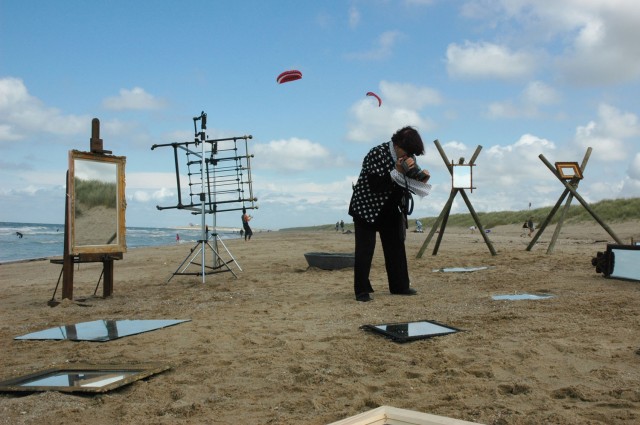
Agnès Varda takes an unusual approach to autobiography in THE BEACHES OF AGNES
THE BEACHES OF AGNÈS (LES PLAGES D’AGNÈS) (Agnès Varda, 2008)
Sunday, September 17, 2:00
www.bam.org
“The whole idea of fragmentation appeals to me,” filmmaker, photographer, and installation artist Agnès Varda says in the middle of her unusual cinematic autobiography, the César-winning documentary The Beaches of Agnès. “It corresponds so naturally to questions of memory. Is it possible to reconstitute this personality, this person Jean Vilar, who was so exceptional?” She might have been referring to her friend, the French actor and theater director, but the exceptional Belgian-French Varda might as well have been referring to herself. Later she explains, “My memories swarm around me like confused flies. I hesitate to remember all that. I don’t want to.” Fortunately for viewers, Varda (Jacquot de Nantes, The Gleaners & I) does delve into her past in the film, sharing choice tidbits from throughout her life and career, in creative and offbeat ways that are charmingly self-effacing. Using cleverly arranged film clips, re-creations, photographs, and an array of frames and mirrors, the eighty-year-old Varda discusses such colleagues as Jean-Luc Godard, Chris Marker, and Alain Resnais; shares personal details of her long relationship with Jacques Demy; visits her childhood home; rebuilds an old film set; speaks with her daughter, Rosalie Varda, and son, Mathieu Demy; talks about several of her classic films, including La Pointe Courte, Cléo from 5 to 7, and Vagabond; and, in her ever-present bangs, walks barefoot along beaches, fully aware that the camera is following her every move and reveling in it while also feigning occasional shyness. Filmmakers don’t generally write and direct documentaries about themselves, but unsurprisingly, the Nouvelle Vague legend and first woman to win an honorary Palme d’or makes The Beaches of Agnès about as artistic as it can get without becoming pretentious and laudatory. The film is screening September 17 at 2:00 in the BAMcinématek series “Plus ça change: French New Wave in the New Millennium.”
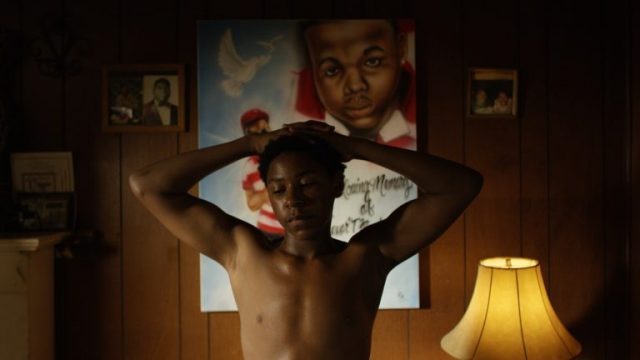
 “Everything stupid,” thirteen-year-old Dayveon (Devin Blackmon) says at the beginning of Amman Abbasi’s impressive debut film, Dayveon. Dayveon lives in a rural Arkansas town, where he is having a hard time overcoming the recent shooting death of his beloved older brother, Trevor (Errick Tillar). The wayward, disillusioned adolescent lives with his sister, Kim (Chasity Moore), and her gentle giant of a boyfriend, Brian (Dontrell Bright), but when Brian reaches out to him, Dayveon runs off. He is taken in by the local Bloods gang, led by Mook (Lachion Buckingham, who also served as a producer) and Country (Marquell Manning), who take him and his best friend, Brayden (Kordell “KD” Johnson), on a convenience store robbery that goes wrong, but even that does not deter Dayveon from staying on the bad track, angry at a world that has let him down. Despite knowing better, Dayveon continues hanging out with the gang, leading to a moment of truth that will determine his future.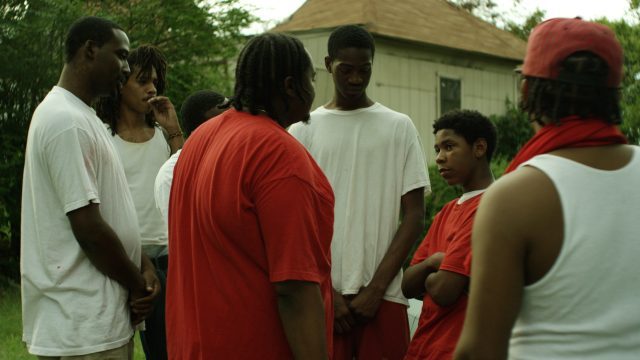



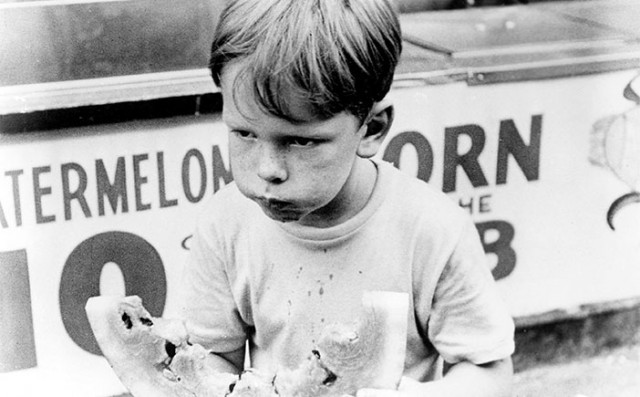
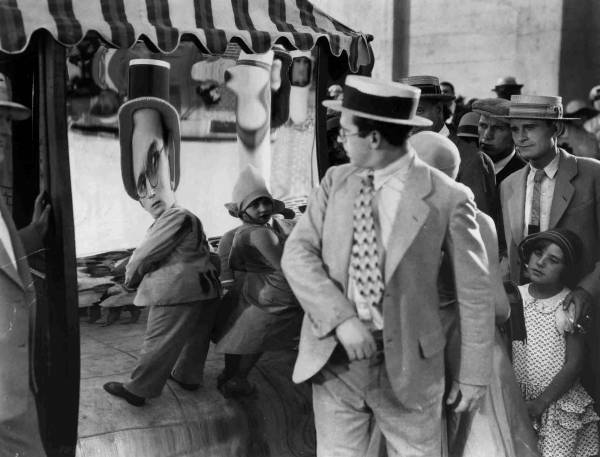
 In between the two showings of Little Fugitive is another delightful treat, Ted Wilde’s Speedy, with live musical accompaniment by pianist Steve Sterner. Much like the end of the silent film era itself, the last horse-drawn trolley is doomed in Harold Lloyd’s final silent film. Big business is playing dirty trying to get rid of the trolley and classic old-timer Pop Dillon. Meanwhile, Harold “Speedy” Swift, a dreamer who wanders from menial job to menial job (he makes a great soda-jerk with a unique way of announcing the Yankees score), cares only about the joy and wonder life brings. But he’s in love with Pop’s granddaughter, Jane (Ann Christy), so he vows to save the day. Along the way, he gets to meet Babe Ruth. Wilde was nominated for an Oscar for Best Director, Comedy, for this thrilling nonstop ride through beautiful Coney Island and the pre-depression streets of New York City. Film Forum’s second annual Festival of Summer Double Features continues through September 5 with such other sweet pairings as Panique and Peeping Tom, Point Blank and The Killers, and The Big Lebowski and The Last Picture Show.