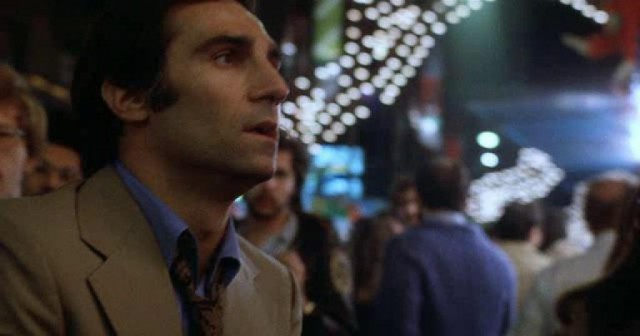
Tony Lo Bianco stars as a New York City cop searching for a cultlike leader in God Told Me To
GOD TOLD ME TO (Larry Cohen, 1976)
MoMA Film, Museum of Modern Art
11 West 53rd St. between Fifth & Sixth Aves.
Friday, February 2, 7:00, and Sunday, February 4, 1:45
Series runs through February 14
212-708-9400
www.moma.org
 Watching the first half hour of Larry Cohen’s 1976 thriller, God Told Me To, is extremely difficult, given the continuing spate of mass shootings in the United States and the battle over gun control. The film opens with a man (Sammy Williams) on top of a water tower in New York City, picking off random people down below with a .22 caliber rifle. Detective Peter Nicholas (Tony Lo Bianco) risks his life to go face-to-face with the soft-spoken killer, who says he did it because “God told me to.” A religious Catholic suffering a crisis of faith, Nicholas gets the same response from a series of other mass murderers, including a cop played by Andy Kaufman, in his big screen debut, who lets loose during the St. Patrick’s Day Parade. (The next scene takes place at the Feast of San Gennaro, which is held every September in Little Italy, but it’s clear that six months have not elapsed, so we’ll give Cohen, a native of Washington Heights, poetic license in this case.) As Lo Bianco gets deeper and deeper into the mystery that involves an odd, cultlike figure named Bernard Phillips (Richard Lynch), he also has to deal with his estranged wife, Martha (Sandy Dennis), and his younger girlfriend, Casey Forster (Deborah Raffin). As he gets closer to the truth, he is forced to look deep into his soul amid all the madness. God Told Me To is shot by cinematographer Paul Glickman guerrilla style primarily without city permits and using a handheld camera, keeping the viewer off balance; the choppy editing by Michael D. Corey, Arthur Mandelberg, and William J. Waters doesn’t help smooth things out. The production values are quintessential low-budget mid-’70s, eliciting screams not of horror but of campy enjoyment among the middle-aged, who grew up watching these offbeat films at offbeat times in wood-paneled basements. Inspired by the Bible and one of the very first “aliens visited Earth!” books, Erich von Däniken’s bestselling Chariots of the Gods, Cohen, a producer, director, and writer who made such other low-budget faves as Black Caesar, It’s Alive, Q, The Stuff, and The Masters of Horror episode Pick Me Up, creates some intense scenes, including a hellish visit to a burning underground lair, as the twisting plot enters sci-fi territory involving a very special vagina.
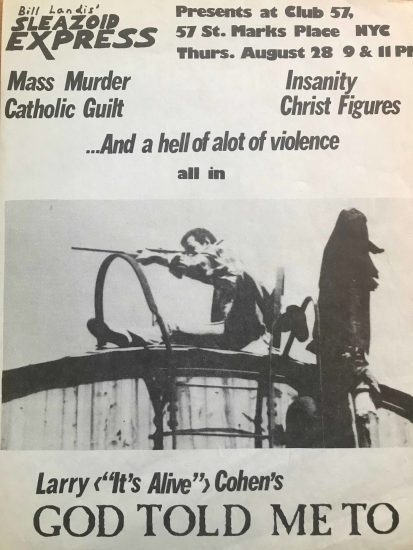
One of the undersung actors of the 1970s, Lo Bianco, who starred in such films as The Honeymoon Killers, The French Connection, The Seven-Ups, and Bloodbrothers and played Mayor Fiorella La Guardia in his traveling one-man show The Little Flower, gives one of his most nuanced performances in God Told Me To, whether desperately trying to stop killers or learning some hard facts from an elderly woman in a nursing home, portrayed by Oscar winner Sylvia Sidney. (The film also features old-time Broadway and Hollywood actor Sam Levene as publisher Everett Lukas.) Oscar-winning composer Bernard Herrmann was supposed to write the score but sadly passed away before he could begin, so Frank Cordell took over; the film is dedicated to Herrmann, who had written the score for It’s Alive. Fans of 1960s and 1970s television series will have a field day recognizing familiar faces in small roles, character actors who appeared in multitudes of comedies and dramas; among the names you’ll be Googling to see what else they’ve been in are Mason Adams, Richard Lynch, Harry Bellaver, and John Heffernan. God Told Me To, which was also released as Demon, is a gritty, dark film that resonates in a new way today, especially since all of the killers are white American males with apparent links to a supreme being. The film is screening February 2 and 4 at MoMA as part of the series “You Are Now One of Us: Film at Club 57,” being held in conjunction with the exhibition “Club 57: Film, Performance, and Art in the East Village, 1978–1983,” a celebration of the countercultural underground venue in the basement of a Polish church on St. Marks Pl. where people gathered to experience alternative art; among the curators were Susan Hannaford, Tom Scully, Keith Haring, and Ann Magnuson. The series continues through February 14 with such other fine fare as David Cronenberg’s Rabid, Dennis Donnelly’s The Toolbox Murders, Ed Wood’s Plan 9 from Outer Space, and “Cartoons You Won’t See on TV.”
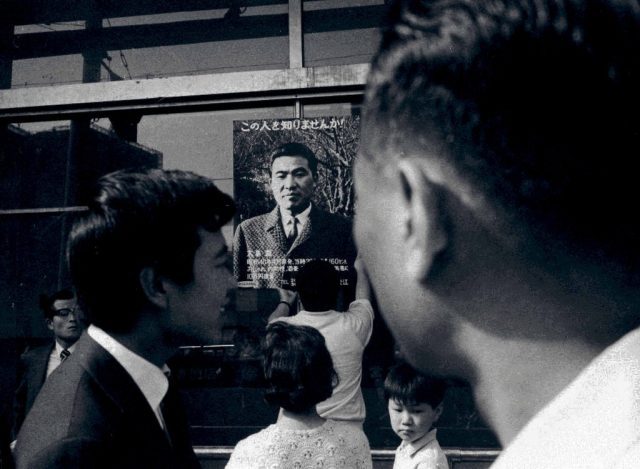
 Japanese filmmaker Shôhei Imamura blurs the lines between reality and fiction in his cinéma vérité masterpiece, A Man Vanishes. The 1967 black-and-white documentary delves into one of Japan’s annual multitude of missing persons cases, this time investigating the mysterious disappearance of Tadashi Ôshima, a plastics wholesaler who vanished during a business trip. Imamura sends out actor Shigeru Tsuyuguchi (The Insect Woman, Intentions of Murder) to conduct interviews with Ôshima’s fiancée, Yoshie Hayakawa, who develops an interest in her inquisitor; Yoshie’s sister, Sayo, who quickly finds herself on the defensive; business associates who talk about Ôshima’s drinking, womanizing, and embezzling from the company; and several people who remember seeing Sayo together with Ôshima, something she adamantly denies despite the building evidence. Throughout the 130-minute work, the film references itself as being a film, culminating in Imamura’s pulling the rug out from under viewers and calling everything they’ve seen into question in an unforgettable moment that breaks down the fourth wall and explodes the very nature of truth and cinematic storytelling itself. It also explores individual identity and just how much one really knows those closest to them. Originally supposed to be the first of a twenty-four-part series exploring two dozen missing-persons cases, A Man Vanishes ended up being such a challenging undertaking that it was the only one Imamura made, but what a film it is; it would be more than a decade before he returned to fiction, with 1979’s Vengeance Is Mine, which led the way to a spectacular final two decades that also included The Ballad of Narayama, Eijanaika, Black Rain, The Eel, Dr. Akagi, and Warm Water Under a Red Bridge. The amazing A Man Vanishes is screening February 3, 8, and 11 in the Anthology Film Archives series “Documentarists for a Day,” which highlights nonfiction works made by directors better known for their fiction films. The first part of the festival runs February 2-20 and also includes Orson Welles’s F for Fake, Roberto Rossellini’s India: Matri Bhumi and Interview with Salvador Allende, Rainer Werner Fassbinder’s Theater in Trance, and Louis Malle’s God’s Country before returning in the spring with documentaries by Eric Rohmer, Manoel de Oliveira, Claire Denis, Satyajit Ray, and others.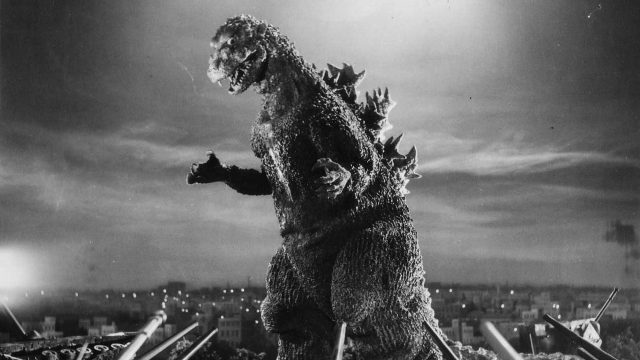
 More than two dozen sequels, prequels, remakes, and reboots have not diluted in the slightest the grandeur of the original 1954 version of Godzilla, one of the greatest monster movies ever made. If you’ve only seen the feeble, reedited, Americanized Godzilla, King of the Monsters!, made two years later with Canadian-born actor Raymond Burr inserted as an American reporter, well, wipe that out of your head. On February 2, Japan Society is screening the real thing, the restored treasure as part of its Monthly Classics series; it will be followed on February 21 with “Directing Godzilla: The Life of Filmmaker Ishirō Honda,” a talk with Steve Ryfle, author of Ishirō Honda: A Life in Film, From Godzilla to Kurosawa, moderated by Film Forum repertory programming director Bruce Goldstein, whose Rialto Pictures released the film in theaters in 2004 and 2014, followed by a book signing and reception with many old Godzilla posters and memorabilia items on view.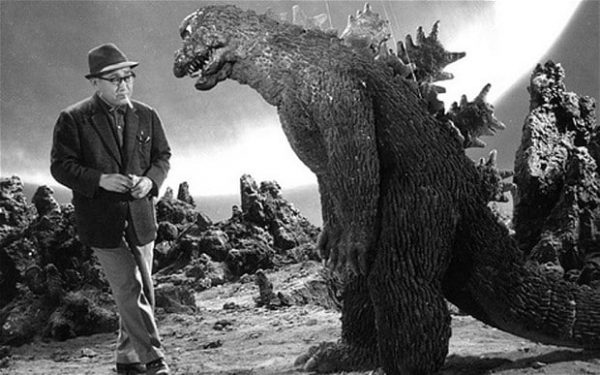
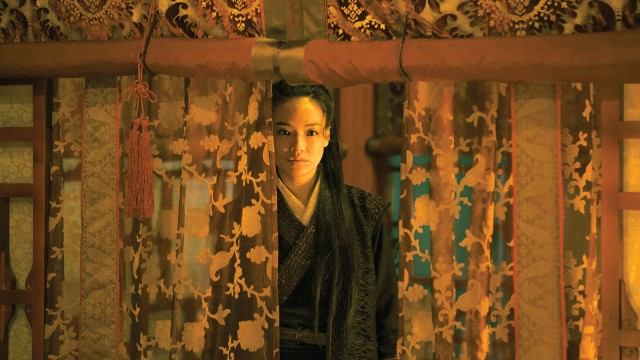

 During his sixteen-year career, Sixth Generation Chinese filmmaker Jia Zhangke has made both narrative works (The World, Platform, Still Life) and documentaries (Useless, I Wish I Knew), with his fiction films containing elements of nonfiction and vice versa. Such is the case with his 2013 film, the powerful A Touch of Sin, which explores four based-on-fact outbreaks of shocking violence in four different regions of China. In Shanxi, outspoken miner Dahai (Jiang Wu) won’t stay quiet about the rampant corruption of the village elders. In Chongqing, married migrant worker and father Zhao San (Wang Baoqiang) obtains a handgun and is not afraid to use it. In Hubei, brothel receptionist Ziao Yu (Zhao Tao, Jia’s longtime muse and wife) can no longer take the abuse and assumptions of the male clientele. And in Dongguan, young Xiao Hui (Luo Lanshan) tries to make a life for himself but is soon overwhelmed by his lack of success. Inspired by King Hu’s 1971 wuxia film A Touch of Zen, Jia also owes a debt to Max Ophüls’s 1950 bittersweet romance La Ronde, in which a character from one segment continues into the next, linking the stories. In A Touch of Sin, there is also a character connection in each successive tale, though not as overt, as Jia makes a wry, understated comment on the changing ways that people connect in modern society. In depicting these four acts of violence, Jia also exposes the widening economic gap between the rich and the poor and the social injustice that is prevalent all over contemporary China — as well as the rest of the world — leading to dissatisfied individuals fighting for their dignity in extreme ways. A gripping, frightening film that earned Jia the Best Screenplay Award at Cannes, A Touch of Zen is screening January 30 and 31 in the Metrograph series “Martial/Art,” which continues through February 10 with such other high-end martial-arts fare as Ang Lee’s Crouching Tiger, Hidden Dragon, Zhang Yimou’s Hero, and, appropriately enough, King Hu’s A Touch of Zen.