this week in film and television

BROOKLYN MUSEUM FIRST SATURDAY — RADICAL WOMEN: LATIN AMERICAN ART, 1960–1985

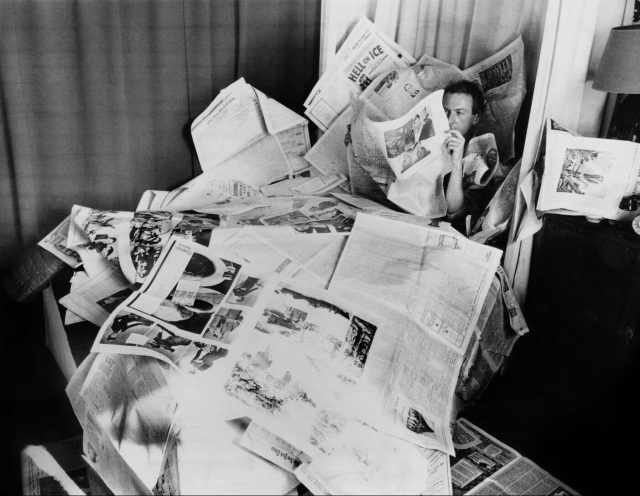
Sylvia Palacios Whitman, Passing Through, Sonnabend Gallery, 1977, documentation of performance (photo by Babette Mangolte)

Sylvia Palacios Whitman, “Passing Through,” documentation of performance, Sonnabend Gallery, 1977 (photo © 1977 by Babette Mangolte)

Brooklyn Museum
200 Eastern Parkway at Washington St.
Saturday, May 5, free (“David Bowie is” requires advance tickets, $25), 5:00 – 11:00
212-864-5400
www.brooklynmuseum.org

Latin art is the centerpiece of the Brooklyn Museum’s free First Saturday program on May 5. There will be live performances by Batalá New York, Flamenco Vivo Carlota Santana (Mujeres Valientes), Combo Chimbita, and Jarina De Marco (with visuals by Screaming Horses); a curator tour of “Radical Women: Latin American Art, 1960–1985” led by Catherine Morris; a community talk about the Sylvia Rivera Law Project; a hands-on art workshop in which participants can make a mask honoring their cultural heritage; a candle-decorating collage workshop with feminist collective Colectiva Cósmica, featuring a set by Ecuadorian-Lithuanian producer, DJ, and cultural activist Riobamba; screenings of experimental short films by Latin American women filmmakers, hosted by Jesse Lerner; a book-club talk about Marta Moreno Vega’s When the Spirits Dance Mambo; and pop-up gallery talks on “Radical Women: Latin American Art, 1960–1985” by teen apprentices. In addition, the galleries will be open late so you can also check out “William Trost Richards: Experiments in Watercolor,” “Arts of Korea,” “Infinite Blue,” “Ahmed Mater: Mecca Journeys,” “A Woman’s Afterlife: Gender Transformation in Ancient Egypt,” and more. However, please note that advance tickets are required to see “David Bowie is,” at the regular admission price.

MoMA PRESENTS: TAMER EL SAID’S IN THE DAYS OF THE LAST CITY

In the Last Days of the City

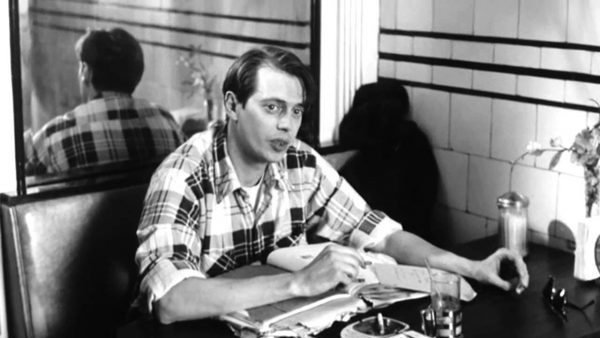
Khalid (Khalid Abdalla) experiences loss of many kinds in Cairo in Tamer El Said’s In the Last Days of the City

IN THE LAST DAYS OF THE CITY (Tamer El Said, 2016)
Museum of Modern Art, MoMA Film
11 West 53rd St. between Fifth & Sixth Aves.
April 27 – May 3
212-708-9400
www.moma.org
bigworldpictures.org

Tamer El Said’s extraordinary debut feature, In the Last Days of the City, is an elegiac love letter to his deeply troubled hometown, Cairo, as well as a treatise on the responsibilities filmmakers have to their art and to society as a whole. Almost ten years in the making, the film was shot between 2008 and 2010, finishing shortly before the Arab Spring uprising in January 2011 in Tahrir Square, and was not completed and screened until 2016, when it started winning prizes at festivals around the world. It finally receives its New York theatrical release at the Museum of the Modern Art, running April 27 through May 3, where El Said will take part in a postscreening conversation on opening night at 7:00; in addition, on April 30 at 7:00, MoMA’s “Modern Mondays” series will present “An Evening with Tamer El Said,” in which the director will discuss Cairo’s Cimatheque — Alternative Film Centre, which he and actor and activist Khalid Abdalla cofounded in 2012 to help grow independent cinema in Egypt. In the Last Days of the City is about loss of all kinds; Abdalla (The Kite Runner, United 93) stars as Khalid, a thirtysomething filmmaker living in Cairo whose life is unraveling: His girlfriend, Laila (Laila Samy), has left him, he needs to find a new apartment, his hospitalized mother (Zeinab Mostafa) is very sick, and his city is crumbling right before his eyes. He meets with three friends and fellow filmmakers, Hassan (Hayder Helo), from Baghdad, Tarek (Basim Hajar), an Iraqi living in Berlin, and Bassem (cinematographer Bassem Fayad), from Beirut. They decide that each of them is going to film their cities and send the footage to Khalid, who will incorporate it into the work he is already making but has reached a block. Throughout, radios and televisions report state news about Hosni Mubarak, the Egyptian football team, and the Muslim Brotherhood, revealing Egypt to be a country on the brink of something big, but neither the characters nor the filmmaker expected what actually occurred.

Khalid (Khalid Abdalla) looks over a Cairo about to undergo radical change in Tamer El Said’s In the Last Days of the City

Four friends meet in Cairo and decide to collaborate on a film in Tamer El Said’s In the Last Days of the City

Fayad captures a city bathed in a golden glow and facing an ominous future. Historic locations are surrounded by buildings turned into rubble. El Said and editors Mohamed Abdel Gawad, Vartan Avakian, and Barbara Bossuet cut between the film and the film-within-the-film, as Khalid interviews Maryam (Maryam Saleh), Hanan (Hanan Youssef), Laila, and others, trying to find out more about himself and his past as well as the Cairo he loves and fears. In a nod to the French New Wave, the camera occasionally continues on a subject with the dialogue not synced — for example, they look out contemplatively, their mouth not moving, their words heard in voice-over. The camera often loses focus, blurring the character as Khalid wrestles with various aspects of his life and career. Most of the film is improvised — El Said initially wrote a fake script in order to get permits, then went through numerous rehearsals before starting shooting. Although there are autobiographical elements, including Khalid living in El Said’s own apartment, the director considers it more of a personal venture and not about himself, a melding of fiction and reality. The film moves with the pace and rhythm of the city as a cloud hangs over it; while it was clear that something was going to happen, El Said did not anticipate the revolution that took place, centered in Tahrir Square. He also chose not to film any of the actual riots and protests and instead decided to participate and join the fight. It’s an option that Khalid does not take in the film; there are several scenes in which he sees violence but decides to either walk away or photograph it without trying to stop it or report it.

In the Last Days of the City is very different from the 2011 documentary Tahrir, in which Italian director Stefano Savona immediately went to Cairo upon hearing about the rebellion, got right in the middle of the action, and released the film shortly after the events. In the Last Days of the City is very much about the filmmaker’s role in the social contract. One of the reasons it took so long for El Said to complete the film was because he and Khalid, who was a major figure in Jehane Noujaim’s 2013 documentary, The Square, also about the Arab Spring, spent several years constructing and establishing Cimatheque, an arts institution where independent filmmakers can flourish in a country without any kind of cinematic infrastructure. Of course, there were budgetary issues as well. In the end, even though In the Last Days of the City very specifically searches for the soul of Cairo, it could really be about any person trying to find his or her place in their hometown, as change — personal, political, societal — looms on the horizon.

BRIC OPEN: BORDERS

BRIC House exhibit serves as inspiration for four-day free festival on borders (photo by twi-ny/mdr)

BRIC House exhibit serves as inspiration for four-day free festival about borders (photo by twi-ny/mdr)

BRIC House
647 Fulton St., Brooklyn
April 26-29, free (advance RSVP recommended)
718-683-5600
www.bricartsmedia.org

The theme of this year’s BRIC OPEN festival is “Borders,” four days of free programs focusing on borders both real and imagined, physical and ideological. The series is being held in conjunction with the exhibition “Bordering the Imaginary: Art from the Dominican Republic, Haiti, and Their Diasporas,” a collection of sculpture, painting, installation, and video that, in the words of BRIC contemporary art vice president Elizabeth Ferrer, “consider the complicated interrelated histories of two Caribbean countries that share a single island, their tradition of cultural and social exchange, and the social injustices that have long burdened the people of both nations.” The exhibit includes impressive work by Raquel Paiewonsky, Pascal Meccariello, Fabiola Jean-Louis, iliana emilia garcia, Patrick Eugène, and others. “Borders” begins April 26 at 7:00 with “Art Intersecting Politics,” a conversation between Paola Mendoza and Darnell L. Moore, preceded by a spoken-word performance by slam poet Venessa Marco. Friday night’s schedule consists of a concert by Blitz the Ambassador, Lido Pimienta, and the Chamanas (as well as a screening of Blitz’s fifteen-minute film, Diasporadical Trilogia), the ninety-minute walking tour “Borders We Carry” led by Kamau Ware through downtown Brooklyn, an Immigration Action Fair, and Alicia Grullón’s “Empanar!” mobile art project.

On Saturday, there will be a family art-making workshop in which participants can add to a Building Bridges mural; a Greenlight Bookstore pop-up shop; a “Drawn Together” workshop led by “Bordering the Imaginary” artists Vladimir Cybil Charlier, Antonio Cruz, and garcia; Juanli Carrión’s “Memelismos: Memories from the Other Side” participatory storytelling installation; more walking tours; screenings of short films and Jeremy Williams’s On a Knife Edge; the discussions “Reflections on the DACA and the DREAM Act: Erika Harrsch & Yatziri Tovar” and “Haiti-NYC-DR: Reflections from the Diaspora,” the latter with Suhaly Bautista-Carolina, Edward Paulino, Albert Saint Jean, Ibi Zoboi, and moderator Carolle Charles; and a RAGGA x BRIC dance party with DJs Oscar Nñ of Papi Juice, Serena Jara, LSXOXOD, and Neon Christina and a live performance by Viva Ruiz. Sunday features a gallery tour and the closing talk “Biscuits without Borders” by Jess Thorn, aka Touretteshero. In addition, the exhibitions “Under the Same Sky . . . We Dream” by Erika Harrsch and “What time is it there?” by Katie Shima will be on view throughout the festival.

TRIBECA FILM FESTIVAL: DUCK BUTTER

Duck Butter

Sergio (Laia Costa) and Naima (Alia Shawkat) attempt to have sex once an hour over an entire day in Duck Butter

DUCK BUTTER (Miguel Arteta, 2018)
Tribeca Film Festival: Thursday, April 26, Regal Cinemas Battery Park 11-10, 9:00
www.tribecafilm.com
Village East Cinema
181-189 Second Ave. at 12th St.
Opens Friday, April 27
212-529-6799
www.villageeastcinema.com
www.theorchard.com

The behind-the-scenes story of the making of Duck Butter, having its final world premiere screening at the Tribeca Film Festival on April 26 before opening at the Village East the next day, turns out to be better than the film itself. That doesn’t mean there isn’t lots to appreciate about the too-intimate drama, which chronicles the ups and downs, fears and desires of two women experiencing a full relationship in a twenty-four-hour period. Director Miguel Arteta (Beatriz at Dinner, Chuck & Buck) and actress Alia Shawkat (State of Grace, Arrested Development) initially wrote a script about an eighteen-month relationship between a man and a woman that featured a twenty-four-hour period in which they get to know each other by having sex once every sixty minutes. One friend advised that they instead make the movie just about the twenty-four hours, so they began looking for a male actor to star opposite Shawkat. After coming up empty, they decided that Laia Costa (Bandolera, Victoria), who had already been cast in a smaller role, was right for the part. They stripped the script down to its bare essentials, allowing the two actresses to improvise most of their dialogue as the main section of the film was claustrophobically photographed by Hillary Spera in about twenty-seven hours, giving it a cinéma vérité feel.

Duck Butter

Sergio (Laia Costa) and Naima (Alia Shawkat) come together and drift apart in Miguel Arteta’s Duck Butter

After being fired by Mark and Jay Duplass from a show starring characters played by Lindsay Burdge and Kumail Nanjiani, the uptight, overly contemplative Naima (Shawkat) calls the free-spirited Sergio (Costa), a singer she met at a lesbian club. Sergio suggests that they forego the standard dating rituals — “We can skip time!” Sergio declares — and instead spend the next twenty-four hours inside, making love once every hour as they explore who they are and speak only the truth, not playing any romantic games. But what starts out being exciting and sexy soon transforms into something else as they go through in one day what new partners usually go through in years. The film was executive-produced by the Duplass brothers, who portray themselves; Shawkat recently played the bisexual Lila on Transparent, which stars Jay Duplass as Josh Pfefferman. Duck Butter — the title phrase is explained in the film, but you might want to Google it when you’re not at work — also features Hong Chau as Glow and Kate Berlant as Kathy, a lesbian couple who are friends of Naima’s. Costa (who is also an associate producer on the film) and Shawkat (also an executive producer) have a sweet chemistry, but the film is extremely bumpy, jumping around too much as Arteta attempts to squeeze too much into ninety minutes. Some scenes will get you hot, some will make you laugh, but others will make you cringe. The whole experiment is an intriguing idea; perhaps it might have worked better if there were less back story, or more. It ends up being so private at times that you practically have to look away, which is not generally what a filmmaker wants from the audience.

TRIBECA FILM FESTIVAL SPOTLIGHT DOCUMENTARY: HOUSE TWO

Staff Sergeant Frank Wuterich and filmmaker Michael Epstein in Haditha, Iraq, in 2008 during the making of House Two (photo courtesy  of  Viewfinder  Productions)

Director Michael Epstein films Staff Sergeant Frank Wuterich in Haditha, Iraq, while investigating details of 2005 massacre (photo courtesy of Viewfinder Productions)

SPOTLIGHT DOCUMENTARY: HOUSE TWO (Michael Epstein, 2018)
Thursday, April 26, Regal Cinemas Battery Park 11-3, 8:45
www.tribecafilm.com
www.netizensfilm.com

Don’t be scared off by the title of House Two; it’s not a sequel to a horror film you didn’t see. But that doesn’t mean it isn’t downright frightening. On November 19, 2005, the Haditha Massacre took place, in which a small unit of U.S. Marines shot and killed two dozen Iraqis, including women and children, in a bedroom in a location identified as “House Two.” The Marines were searching for those responsible for setting off an IED nearby. The next year, following a Time magazine story about the incident, Oscar-nominated, Emmy-winning director Michael Epstein decided to make a film about the trial of Staff Sergeant Frank Wuterich, who was charged with eighteen counts of murder. In order to get as much behind-the-scenes information as possible without having to surrender it to the court or the military, Epstein actually became an official part of Wuterich’s defense team, gaining full access to its strategy and all those involved, beginning with Wuterich himself. In exchange, the legal team agreed that Epstein would have ownership of all footage he shot and that he could use it in any way he saw fit; thus, he had complete control over the documentary, and the legal team would even indemnify him for any resulting libel claims from them or Wuterich. What Epstein found out about the case is utterly shattering, a widespread conspiracy to cover up the incident — which recalled the 1968 My Lai Massacre in Vietnam — with a shocking revelation of who was ultimately in charge of the whitewashing.

Staff Sergeant Frank Wuterich and filmmaker Michael Epstein in Haditha, Iraq, in 2008 during the making of House Two (photo courtesy  of  Viewfinder  Productions)

Staff Sergeant Frank Wuterich tries to remember what really happened in Haditha while facing murder charges House Two (photo courtesy of Viewfinder Productions)

What was expected to take about eighteen months turned into a ten-year saga for Epstein, who met with Wuterich extensively as well as with his family, even returning to the scene of the crime to help Wuterich remember exactly what happened and who pulled the triggers when. Epstein speaks at length with Wuterich’s legal team, consisting of former Marine Corps Judge Advocate Neal Puckett, former Marine major Haytham Faraj, and Lt. Col. Colby Vokey, former head of the Regional Defense Council West for the Marine Corps. He also interviews NCIS special agents Michael Maloney and Thomas Brady, who discuss the forensic evidence in great detail and what likely happened at House Two, which doesn’t mesh with the prosecution’s case. But the more the agents and Wuterich’s legal team discover about four other members of the unit who were present at House Two (and House Four) — Private First Class Umberto Mendoza, Corporal Sanick DelaCruz, Lance Corporal Justin Sharratt, and Lance Corporal Stephen Tatum — the more doubt is cast on who actually was responsible for the killings, raising questions that top Marine brass seem to want to sweep under the rug as soon as possible.

(photo courtesy  of  Viewfinder  Productions)

Michael Epstein spent ten years immersing himself in the case involving Staff Sergeant Frank Wuterich’s role in the Haditha Massacre (photo courtesy of Viewfinder Productions)

House Two is a tough, tense procedural that goes beyond fly-on-the-wall docs, immersing the viewer in the narrative, particularly as new facts are brought to light but not everyone is willing to accept them. Epstein’s camera reaches some remarkable places as he reveals more about the Marines who were in Haditha at the time of the massacre and exposes a series of lies that keep growing bigger and bigger. Because he was part of the legal team, Epstein (The Battle over Citizen Kane, LennoNYC) has a clear bias; at times he can be heard off camera leading his interview subject onto a certain path. But as he later shows, there appears to be no legitimate other side of the case, as the Marine prosecutors rely on a shaky, and shady, house of cards that is destined to fall. It’s fascinating listening to Maloney, an expert who was among the first to question the original story; Faraj is also a riveting figure, not afraid to get right in Wuterich’s face to find out what happened in what he calls “a very ugly chapter in Marine Corps history.” But by the end, justice and the truth don’t matter; the reputation of the U.S. military is more important than a bedroom full of innocent dead Iraqis. As Epstein notes in his director’s statement, looking at all the evidence, “a clear, unambiguous picture emerged: In Haditha the Marines under Wuterich’s command committed murder.” That doesn’t mean anyone will pay for the crime. House Two has one more world premiere screening left at the Tribeca Film Festival, on April 26 at 8:45; its previous screenings caught the attention of the Pentagon, which is reviewing the incident and deciding what, if anything, to do next.

TRIBECA FILM FESTIVAL: NETIZENS

Netizens

Lawyer Carrie Goldberg fights cyber harassment and digital abuse in Netizens

NETIZENS (Cynthia Lowen, 2018)
Tuesday, April 24, Regal Cinemas Battery Park 11-6, 5:15
Friday, April 27, Cinépolis Chelsea 4, free with advance ticket, 7:30
www.tribecafilm.com
www.netizensfilm.com

In its April 24 newspaper, the New York Daily News reported a story about former Queens high school principal Annie Seifullah, who was suspended for a year without pay after X-rated pictures of her were found on her school computer. Seifullah lost her job even though the photos were allegedly placed there by an ex-boyfriend as an act of revenge porn — something city investigators did not dispute. Seifullah, represented by attorney Carrie Goldberg, is now suing the city over gender discrimination. The situation could have come straight out of Cynthia Lowen’s new documentary, the gripping, eye-opening Netizens, which is having its world premiere at the Tribeca Film Festival, with upcoming screenings on April 24 and 27. The film follows the work of three women — including Goldberg — who are leading the fight against cyber harassment, revenge porn, and digital abuse. Lowen explores not only the invasion of privacy but the financial, professional, and psychological effects of these cyber attacks, which remain with the victim for a long time. “There’s not moving on beyond the trauma because the trauma is your shadow,” the Brooklyn-based Goldberg says. Goldberg, who also suffered cyber abuse at the hands of a man she dated for only four months, later adds, “The nonconsensual distribution of sexually graphic images and videos causes immediate, irreparable harm to its victims.” The virulent hatred with which environmental commodities trader Tina Reine has been attacked online by her ex is absolutely terrifying. The man has built myriad websites condemning her and continues to stalk her to prevent her from restarting her career. “I just want to move on and have a normal life,” Reine says. “And that’s not really expecting that much. So I will do whatever it takes to get this solved, but I’m tired.”

Netizens

Anita Sarkeesian exposes online gender, race, and sexual discrimination in Tribeca Film Festival documentary

Even though the legal system can identify the responsible party, there are no clear legal channels for Reine to pursue. She was unable to get an order of protection, and her abuser uses the First Amendment to protect his legal right to continue the harassment. “It’s two different rules for men and women when it comes to sex,” Reine explains. Meanwhile, media critic Anita Sarkeesian has received death threats for decrying the depiction of women in video games, leading her to establish Feminist Frequency, which exposes gender, race, and sexual discrimination via The Freq Show and public appearances. “What do these platforms stand for and what do they want their platforms to be? Do they want it to be a cesspool of hate or do they want to actually make it something that users want to participate in and engage in?” Sarkeesian, who has also experienced cyber harassment, asks. “The thing about being attacked for four years is it takes away your humanity. You don’t get to feel to the extent of a human range of emotions because you can’t or else you’d be floored all the time. You have to be hypervigilant, and you can’t make jokes, and you can’t be human, and you can’t exist in the world like everyone else.”

In her directorial debut, Emmy-nominated writer and producer Lowen also speaks with Ordinary Women producer Elisabeth Aultman, University of Miami law professor Mary Anne Franks, Feminist Press executive director and publisher Jamia Wilson, Hate Crimes in Cyberspace author Danielle Keats Citron, Feminist Frequency managing editor Carolyn Petit, and Women’s Media Center Speech Project director Soraya Chemaly; the only man interviewed in the film is former assistant U.S. attorney and chief of cyber and intellectual crimes unit Wesley Hsu, who points out with regard to the cases, “The harm is immense. That’s why they’re worthy of prosecution.” Throughout the film, Lowen revisits the case of Celia, a young Mexican woman who doesn’t know who is stalking her. The resolution of her situation is frightening, representative of why it’s so difficult to arrest and imprison the perpetrators of these digital crimes. Perhaps Sarkeesian puts it best, however, placing cyber harassment in historical context: “It’s not like misogyny started when the internet started or when Twitter was developed.” It’s the monstrous amplification of misogyny that these platforms permit that takes one’s breath away — and all too often the victims’ lives as functioning human beings, on- and offline.

TRIBECA TWI-NY TALK: JEFF KAUFMAN / EVERY ACT OF LIFE

(photo courtesy Jeff Kaufman)

Producer and director Jeff Kaufman on the set of Every Act of Life (photo courtesy Jeff Kaufman)

EVERY ACT OF LIFE (Jeff Kaufman, 2018)
Tribeca Film Festival
Monday, April 23, SVA Theater 2 Beatrice, 8:00
Tuesday, April 24, Cinépolis Chelsea 6, 5:00
Wednesday, April 25, Cinépolis Chelsea 2, 6:15
Thursday, April 26, Cinépolis Chelsea 9, 4:00
everyactoflifedocumentary.com
www.tribecafilm.com

Four-time Tony winner Terrence McNally and his husband, producer Tom Kirdahy, appeared in the 2015 documentary, The State of Marriage, about marriage equality, but director-producer Jeff Kaufman and producer Marcia Ross were surprised to learn that no one had made a film about McNally himself. So they did. The result is Every Act of Life, an intimate portrait of the Texas-born activist and playwright, who has also won two Obies, four Drama Desk Awards, and an Emmy and has been a fixture in the theater community for six decades, writing such popular and influential works as Frankie and Johnny in the Clair de Lune; The Lisbon Traviata; Lips Together, Teeth Apart; Master Class; Kiss of the Spider Woman; and Love! Valour! Compassion!

Kaufman and Ross combine archival footage of many of McNally’s works with personal photos and new interviews with an all-star lineup that includes Angela Lansbury, Nathan Lane, Audra McDonald, Larry Kramer, Edie Falco, F. Murray Abraham, Tyne Daly, Billy Porter, Chita Rivera, John Slattery, Rita Moreno, Joe Mantello, and Christine Baranski, among many others. The film follows McNally through every act of his life, from his childhood in Texas living with abusive, alcoholic parents to his homosexuality, from his relationships with Edward Albee, Wendy Wasserstein, and others to his bout with lung cancer and marriage to Kirdahy. Every Act of Life is having its world premiere at the Tribeca Film Festival on April 23, with Kaufman, Mantello, Abraham, Lane, and McNally participating in an “After the Screening” conversation moderated by Frank Rich. (The film is also being shown April 24, 25, and 26.) Just as the festival got under way, Kaufman, who has also directed Father Joseph, The Savoy King: Chick Webb and the Music That Changed America, and Brush with Life: The Art of Being Edward Biberman, discussed the project via email in this exclusive twi-ny talk.

twi-ny: You first interviewed Terrence McNally and his husband, Tom Kirdahy, for The State of Marriage. How familiar were you with him and his work at that time?

Jeff Kaufman: Marcia grew up in Mt. Vernon, just outside of NYC, and the great love of her youth was coming into the city to go to the theater. It shaped much of her life that followed. I grew up near Seattle with a love of classic movies and art, so my discovery of the theater came a bit later (in part by subscribing to the Fireside Theatre Book Club). We both loved Terrence’s work but also made some lasting discoveries through making this film.

Every Act of Life

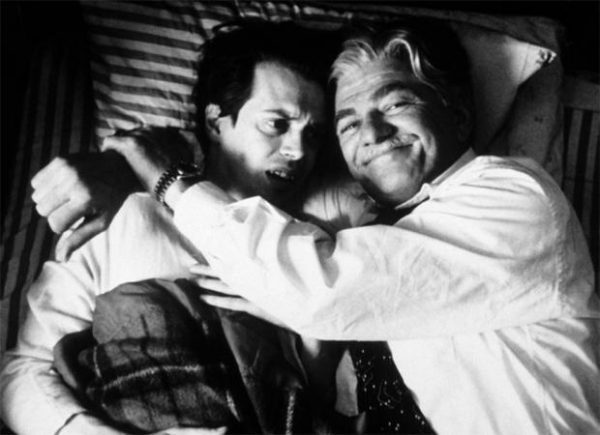
Every Act of Life is an intimate look at the life and career of award-winning playwright and activist Terrence McNally

twi-ny: Do you have a favorite play of his?

JK: For Marcia, her favorite play by Terrence (of many) is Love! Valour! Compassion! She says it speaks so beautifully about relationships. There are many characters and moments and plays of Terrence’s that keep reverberating for me, but I would mention (so others can look them up) the spiritual moments in A Perfect Ganesh and Corpus Christi, the sense of family and scope of life in L! V! C!, and the deep connection to the power of the arts in Master Class.

twi-ny: What made you think he would be a good subject for a full-length documentary? Was it difficult to get him to agree to the film?

JK: When we interviewed Terrence and Tom for The State of Marriage, we were so impressed with how direct and open and full of feeling Terrence could be. His life and work have changed many lives, and launched many careers, so his story is about a community of remarkable people as well. Through Terrence’s life and work we connect to a history of the theater, the struggle for LGBTQ rights (as Nathan Lane says, “Terrence has always been ahead of his time”), overcoming addiction (thanks in large part to Angela Lansbury), and what it means to keep searching and growing (and loving) throughout your life. So, for us Terrence, like his plays, speaks to a lot of important concerns.

And since we worked well together in the previous film, it wasn’t hard to get him and Tom to agree. They’ve been great to work with throughout the project.

twi-ny: Terrence gives you remarkable access to his life. Did that happen early on in the process, or did you have to establish a rapport?

JK: Our first conversation about doing this film was with Tom Kirdahy, a theater producer and former AIDS attorney who is also Terrence’s husband. Tom understood completely that honesty and access are essential. None of us wanted a fawning tribute. Terrence wasn’t comfortable with every aspect of our interviews, but he was remarkably forthcoming and unvarnished. I’ve interviewed hundreds of people, but Terrence is unique.

twi-ny: Were there any times he asked for the camera to be turned off?

JK: When he decides to open the door, he opens it all the way. There may have been a few things he pushed back on a bit, but we always got what we needed.

twi-ny: Terrence is known for being a perfectionist and, at times, demanding, yet he is very relaxed throughout the film. Did the making of the film actually go that smoothly? Whose idea was it to have numerous scenes in which two characters speak very comfortably to each other?

JK: I always try to put interview subjects in a positive frame of mind (even while asking a lot, on several levels). Marcia is a great ally in this as well. Often when I’m working with the film crew to set up the shot, Marcia engages in her singular way (and depth of theater knowledge) to help keep the subject engaged and relaxed. Then I conduct the interview. Since you asked, I came up with the idea for the various sequences (Edie and Murray talking about Frankie and Johnny, etc.).

(photo courtesy Jeff Kaufman)

Jeff Kaufman interviewed a vast array of theater people for documentary about Terrence McNally (photo courtesy Jeff Kaufman)

twi-ny: You have amassed a terrific cast of characters from both his personal and professional life for the film. What was that experience like, “casting” the documentary? Was there someone you really wanted to interview but was unavailable?

JK: Casting is key in documentaries, narrative films, and the theater. Also important for our work is to get people to tell stories that put the audience in a scene with the subjects of our films. We were pretty much able to talk to everyone on our list . . . but I would have loved to go back in time and film Terrence with some of the people who are no longer living. We got as close as possible to that by finding unseen footage of Edward Albee and Wendy Wasserstein, having Bryan Cranston read an amazing letter to Terrence about what a writer needs to keep going, and getting Meryl Streep to read a letter from Terrence’s beloved high school English teacher.

twi-ny: In the film, Terrence and the actors talk about the importance of collaboration, which even extended to many of the documentary participants helping the Kickstarter campaign by contributing special rewards for donors. How does collaboration in theater compare with collaboration in film?

JK: Both are essential, and as Terrence says, life is about collaboration as well. I have a strong vision for what I want the documentary to be and say. So does Marcia. However, that only comes together through the work and vision and talent of many people.

twi-ny: What was the single most surprising thing you learned about theater and Terrence McNally while making the film?

JK: I don’t know if this qualifies as a surprise, but Marcia and I were both impressed by finding in Terrence, and others in the film, great artists who could easily rest on their laurels but who instead are still inspired, still learning, and still striving to do new and better work.