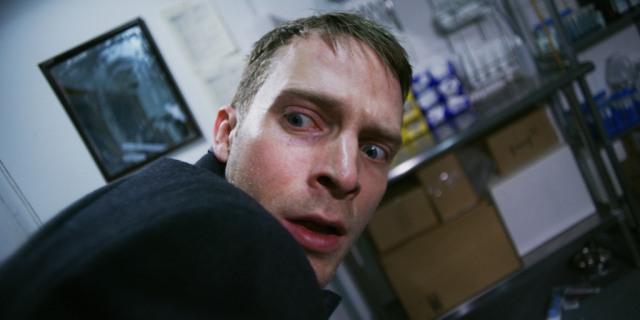
The second annual What the Fest!? is a five-day extravaganza of crazy films that will have you muttering out loud, “What the f!?” Held at IFC Center, the festival opens March 20 with the world premiere of indie horror maestro Larry Fessenden’s creepy Depraved, a modern-day Frankenstein tale set in New York City. Fessenden, who has made such underground faves as Habit, Wendigo, and The Last Winter, will participate in a postscreening Q&A with producers Jenn Wexler and Chadd Harbold and cast members, while the video presentation Frankenstein Origins will precede the movie. That same night, the New York City premiere of Crazy Pictures’ Swedish thriller The Unthinkable will be preceded by Sydney Clara Brafman’s one-minute short The Only Thing I Love More Than You Is Ranch Dressing and a Q&A with Professor Anna Maria Bounds about the coming New York apocalypse.
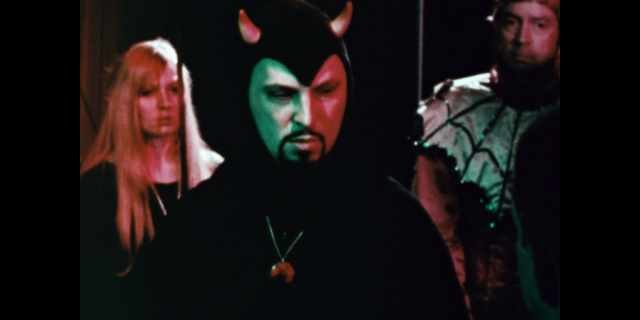
The second annual What the Fest!? features the world premiere of the restoration of the utterly strange 1970 documentary Satanis: The Devil’s Mass
Among the other bizarro highlights are Pollyanna McIntosh’s Darlin’, preceded with a tribute to late horror writer Jack Ketchum by Douglas E. Winter; Shinichiro Ueda’s One Cut of the Dead, followed by a panel discussion on making zombie flicks; Jocelyn DeBoer and Dawn Luebbe’s suburban comedy Greener Grass; the panel discussion “Female Trouble: Fearless Women Leading the Way in Horror, Fantasy, and Suspense,” with Meredith Alloway, Roxanne Benjamin, Emma Tammi, and Wexler; the American premiere of Peter Brunner’s To the Night, starring Caleb Landry Jones; Zack Lipovsky and Adam B. Stein’s Freaks, starring Emile Hirsch; and Chinese master Zhang Yimou’s Shadow, preceded by a talk with stuntwomen Kimmy Suzuki and Ai Ikeda. Oh, as part of the festival special focus “Satan Is Your Friend,” there’s also the world premiere of the restoration of Ray Laurent’s 1970 documentary, Satanis: The Devil’s Mass, which will do a lot more than just have you repeating, “What the f?!,” and New York Asian Film Festival cofounder Grady Hendrix will be on hand to present his latest book, We Sold Our Souls, with a talk and signing. Like we said, WTF?!
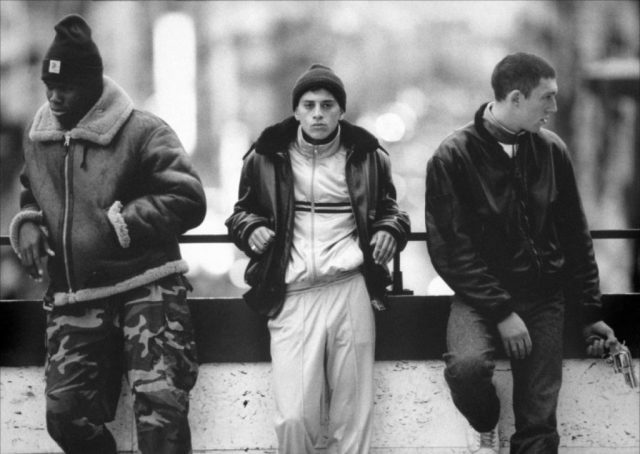
Hubert (Hubert Koundé), Saïd (Saïd Taghmaoui), and Vinz (Vincent Cassel) experience a wild and dangerous day in La haine
CURATOR’S CHOICE SCREENING: LA HAINE (HATE) (Mathieu Kassovitz, 1995)
BAMcinématek, BAM Rose Cinemas
30 Lafayette Ave. between Ashland Pl. & St. Felix St.
Wednesday, March 20, 7:30
Series runs March 20-28
718-636-4100 www.bam.org www.canopycanopycanopy.com
BAM and Triple Canopy, the New York–based online magazine, have teamed up to present the provocative film series “On Resentment,” which kicks off March 20 at 7:30 with Mathieu Kassovitz’s incendiary 1995 stunner, La haine, inspired by the real-life stories of Makome M’Bowole and Malik Oussekine, two young men who were killed by police in 1993 and 1986, respectively. Kassovitz’s second feature film (following Métisse), La haine, which means “hate,” is set in the immediate aftermath of Paris riots as three friends —the Jewish Vinz (Vincent Cassel), the Afro-French Hubert (Hubert Koundé), and the Arab Saïd (Saïd Taghmaoui) — spend about twenty hours wandering the mean streets of their banlieue (suburban projects) and Paris, causing minor mayhem as they encounter skinheads, stop off for some wine at an art opening, try to get into a hot club, and, over and over, become embroiled with the police.
The disaffected youths are fed up with a system that continues to treat them as outsiders, assuming they are criminals. Hubert wants to get out of the banlieue through hard work, but he keeps running into obstacles that are out of his control; at one point, when something goes wrong, he closes his eyes as if he can wish it away. Saïd is an immature schemer who thinks he can slide out of any untoward situation, especially with the help of his much more grounded older brother. But Vinz is a significant problem; one of their friends, Abdel (Abdel Ahmed Ghili), was arrested at the riots and has been severely injured while in police custody. Vinz has sworn to kill a policeman if Abdel dies, something that becomes more possible when he picks up a gun an officer dropped. “I’m fuckin’ sick of the goddam system!” Vinz proclaims, filled with resentment. The three young men pass by a few signs that say “The World Is Yours,” a reference to Scarface, but that seems far out of reach for them.
Vinz (Vincent Cassel) sees trouble coming in Mathieu Kassovitz’s explosive La haine
Photographed in gritty black-and-white by Pierre Aïm and edited with a caged fury by Kassovitz and Scott Stevenson, La haine is electrifying cinema, a powder keg of a film ready to explode at any second. The time is shown onscreen before each scene, going from 10:38 to 06:00, like a ticking time bomb. The film has a documentary-like quality, complete with actual news footage of riots and violence. Kassovitz shows up as a skinhead, while his father, director and writer Peter Kassovitz, is a patron at the art gallery. The soundtrack features songs by French hip-hoppers Assassin; Cassel’s brother, Mathias Crochon, is a member of the group. And look for French star Vincent Lindon’s riotous cameo as a very drunk man.
Several times Vinz appears to be looking straight into the camera, pointing his gun accusingly at the audience; his complete disdain for all types of authority is reckless and dangerous but also understandable, and Kassovitz is extending that rage beyond the screen. In fact, during the November 2005 riots in France, people looked to Kassovitz for a response, and the writer-actor-director eventually got into a blog battle with Minister of the Interior Nicolas Sarkozy, who would later become prime minister. Kassovitz wrote, “As much as I would like to distance myself from politics, it is difficult to remain distant in the face of the depravations of politicians. And when these depravations draw the hate of all youth, I have to restrain myself from encouraging the rioters.” Sarkozy replied, “You seem to be acquainted with the suburbs well enough to know, deep inside you, that the situation has been tense there for many years and that the unrest is deep-rooted. Your film La haine, shot in 1995, already showed this unease that right-wing and left-wing governments had to deal with, with varying results. To claim this crisis is down to the Minister of the Interior’s sayings and doings is yet another way of missing the point. I attributed this to an untimely and quick-tempered reaction.”
The BAM/Triple Canopy series is a nine-day program of films that focus on the concept of resentment as it applies to politics, identity, and representation, asking such questions as “How can resentment be reclaimed by those who are used to fits of anger and bitterness being called unproductive, petty, selfish, even pathological?” and “Can — and must — resentment be useful?” The Curator’s Choice screening of La haine will be followed by a discussion with artist and writer Maryam Monalisa Gharavi, series programmer Ashley Clark, and Triple Canopy editor Emily Wang, who cowrote the TC article “A Note on Resentment” with Shen Goodman, which states, “We’re proposing to hold on to resentment not so much as a means of plotting the downfall of our enemies — though why not, it is the resentment issue — but as a starting point for thinking and making and belonging. . . . Who, if anyone, has a right to be resentful? How can resentment be useful? (Must resentment be useful?)” And of course, the film is relevant yet again in light of the Yellow Vest protests held earlier this year in Paris and the many people of color shot by police or who die in custody under questionable, controversial circumstances here in America. The series continues through March 28 with such other films as Haskell Wexler’s Medium Cool, Michelangelo Antonioni’s Zabriskie Point, Asghar Farhadi’s A Separation, Lindsay Anderson’s If . . . , and John Akomfrah’s Handsworth Songs.
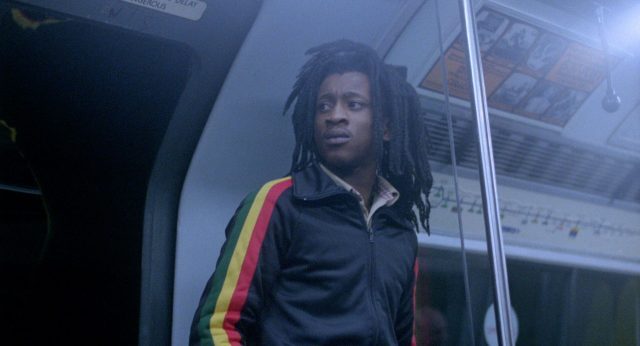
Brinsley Forde stars as the conflicted Blue in Franco Rosso’s incendiary Babylon
BABYLON (Franco Rosso, 1980)
Expands Friday, March 15 www.kinolorber.com
One of the best, and most important, British films of the last forty years took the long route to reach America, but it’s finally here, and it’s a knockout. In 1973-74, Franco Rosso and Martin Stellman wrote Babylon, a somewhat semiautobiographical story of prejudice and bigotry set around Jamaican sound system culture during the Thatcher era in South London. The BBC rejected it, and after several production companies passed on it as well, it was finally picked up by Mamoun Hassan of the National Film Finance Corporation. The movie was shot in six weeks on location in Deptford and Brixton and received an X rating, despite having limited violence and no sex. It screened at Cannes but was turned down by the New York Film Festival, which considered the subject matter too controversial. The film was restored in 2008, but an old print was shown at BAM in 2012, the only time the film was officially shown in the United States. That is, until now; the scorching tale at last got its American theatrical release March 8 at BAM and has now opened as well at IFC Center, Kew Gardens Cinemas, Nitehawk, and the Magic Johnson Harlem 9. Babylon is a don’t-miss work that is still frighteningly relevant today, even though it was ripped from the headlines of the 1970s.
The Ital Lion crew prepares for a toasting battle in Babylon
Brinsley Forde, a former child actor and founding member and original guitarist for the British reggae group Aswad, stars as Blue, a toaster — a Jamaican dancehall deejay who chants over riddims — whose crew, Ital Lion, is preparing for a bit-time competition against their archrival, Jah Shaka (the real-life legend who plays himself). Blue is a mechanic but would rather spend his time toasting, smoking spliffs, and goofing around with his buddies, including Beefy (Trevor Lair), Dreadhead (Archie Pool), Scientist (Brian Bovell), Errol (David N. Haynes), Lover (Victor Romero Evans), and Ronnie (Karl Howman), the only white man in the group. When a racist Caucasian family living above their hangout starts threatening them, some of the Ital Lion crew want to fight back, but Blue tries to prevent any violence. However, following a harrowing night when he’s chased through the dark streets by white men in a car, Blue packs his bags and reconsiders his future.
Babylon is a blistering film, spectacularly photographed by Chris Menges, who would go on to win Oscars for his cinematography on The Killing Fields and The Mission, and expertly edited by Thomas Schwalm, bringing the rhythm of the crew to the fore. In his first feature film, Rosso, a documentarian who spent his career making works about the underrepresented, captures the energy and the rage, the spirit and the fear experienced by Blue (superbly played by Forde, who was appointed a Member of the Order of the British Empire in 2015) and his friends as they try to survive amid ever-more-threatening xenophobic danger that is almost begging for revolution and rebellion. It echoes what is happening around the world now, particularly the treatment of refugees and immigrants (legal and illegal) and calls to build a wall to keep out “the other.” Perhaps not surprisingly, cowriter-director Rosso (The Mangrove Nine, Lucha Libre) was the son of an Italian immigrant, cowriter Stellman (Quadrophenia, Defence of the Realm) is the son of a Viennese Jewish immigrant, producer Gavrik Losey (Magical Mystery Tour, Agatha) is the son of blacklisted American director Joseph Losey, and NFCC managing director Hassan is the son of a Saudi immigrant. And of course, the music is simply phenomenal, from Dennis Bovell’s pulsating soundtrack to songs by Aswad, Yabby You, Cassandra, Johnny Clarke, I-Roy, and Michael Prophet. In this intensely realistic and deeply involving masterpiece, Rastaman (Cosmo Laidlaw) identifies Africa, Jamaica, and England as the “Babylonian triangle of captivity,” but forty years later it continues to spread far and wide, ensnaring more and more in its hateful reach.
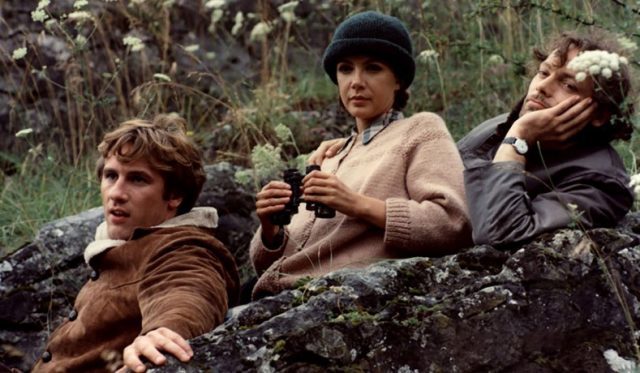
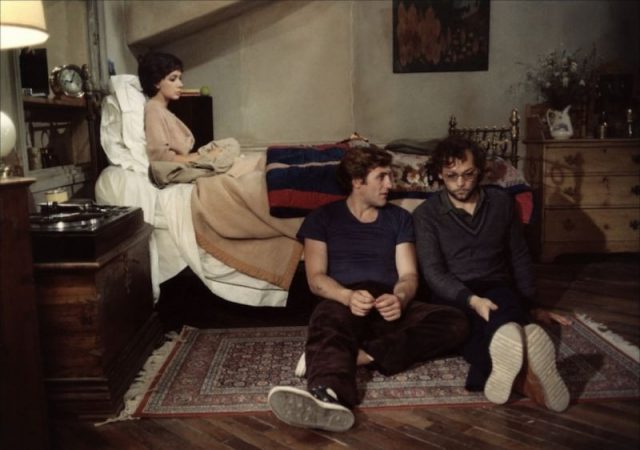
Solange (Carole Laure), Raoul (Gérard Depardieu), and Stéphane (Patrick Dewaere) form a unique kind of family in Bertrand Blier’s Get Out Your Handkerchiefs
GET OUR YOUR HANDKERCHIEFS (PRÉPAREZ VOS MOUCHOIRS) (Bertrand Blier, 1978)
Quad Cinema
34 West 13th St. between Fifth & Sixth Aves.
March 15-21
212-255-2243 quadcinema.com
French writer-director Bertrand Blier’s Oscar-winning Get Out Your Handkerchiefs is no weepy melodrama. If you need hankies while watching, they’ll be for the tears rolling down your face from laughter. A fortieth-anniversary 2K restoration is screening March 15-21 in the Quad series “Amour or Less: A Blier Buffet,” a nine-film celebration of the five-decade career of the controversial auteur, who has been regularly labeled a misogynist. Get Out Your Handkerchiefs has stirred up its share of naysayers through the years, so it’s fascinating to watch it now, in the midst of the #MeToo movement. The film opens in a restaurant where the brutish, doting Raoul (Gérard Depardieu) is eating with his bored, disinterested wife, Solange (Carole Laure). Suspecting that she is stealing glances at a man seated at a table behind him, Raoul approaches him, a schoolteacher named Stéphane (Patrick Dewaere), and practically begs him to sleep with his wife. Raoul, a driving instructor, loves Solange so much that he is willing to go to great lengths to make her happy, even if it means sharing her bed with another man.
Adolescence hits Christian Belœil (Riton Liebman) hard in Oscar-winning romantic comedy
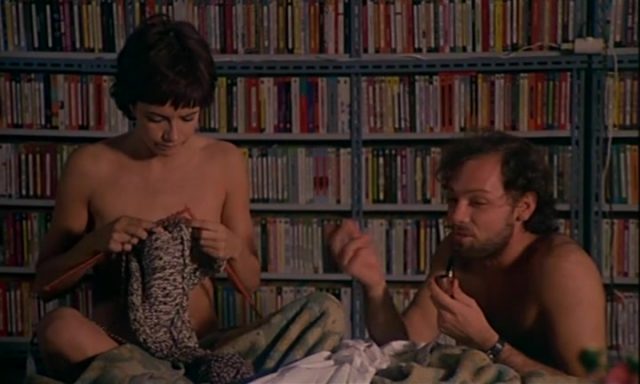
Of course, she has something to say about it and ultimately decides, without much excitement, that the plan is fine with her; she desperately wants to have a baby but has been unable to conceive with her husband. The men begin having quite the bromance themselves as they talk about Mozart while Solange knits, and knits, and knits. (The first scene Blier wrote was when the two men have a less-than-intelligent discussion on Mozart; Blier then built the film around that.) Their green-grocer neighbor (Michel Serrault) starts hanging around as well, concerned about Solange’s search for contentment. Solange, Raoul, and Stéphane spend a summer working together at a camp, where they meet Christian Belœil (Riton Liebman), a thirteen-year-old rich kid who gets bullied by the other boys but takes a liking to Solange as his hormones rage out of control. The film gets more absurdist, and funnier and funnier, as it heads into territory destined to offend politically correct watchdogs everywhere.
A fortieth-anniversary 2K restoration of Get Out Your Handkerchiefs opens at the Quad on March 15
Named Best Picture by the National Society of Film Critics in addition to nabbing the Academy Award for Best Foreign Language Film, Get Out Your Handkerchiefs is a delightful farce that turns traditional family and societal relationships inside out and upside down, whether it be parents and children, mothers and sons, husbands and wives, teachers and students, or just a couple of dudes. Depardieu and Dewaere, who previously teamed up in Blier’s Going Places, are a comic force as a couple of ordinary guys caught up in a crazy riff on Jules et Jim, Raoul a driving instructor who doesn’t know where he’s going, Stéphane a man obsessed with Pocket Books. Laure (Sweet Movie, La Tête de Normande St-Onge) charmingly underplays the enigmatic Solange: Raoul and Stéphane think she might be a simpleton, but is she? The scenes of her knitting are hilariously deadpan, and the matching sweaters she produces eventually show up on nearly everyone, their prosaic patterns sometimes echoed in the walls, floors furniture, and other elements. Meanwhile, the comedy turns poignant as Christian, who can’t stand his parents (Eléonore Hirt and Jean Rougerie) or the other kids, spends more time with his new adult friends, especially Solange. At one point Christian is in bed reading Ralph Dennis’s super-noir On bricole, the cover showing a man torn in half, as if Raoul and Stéphane are two parts of the same human being (or referencing Christian’s growth from boy to man). And Stéphane is reading Vladimir Nabokov’s Ada, a novel about a rather unusual family. Through it all is a wonderfully evocative score by Georges Delerue. “Amour or Less: A Blier Buffet” continues through March 21 with such other Blier works as Beau-père, Merci la vie, Ménage (Tenue de soirée), and Going Places.
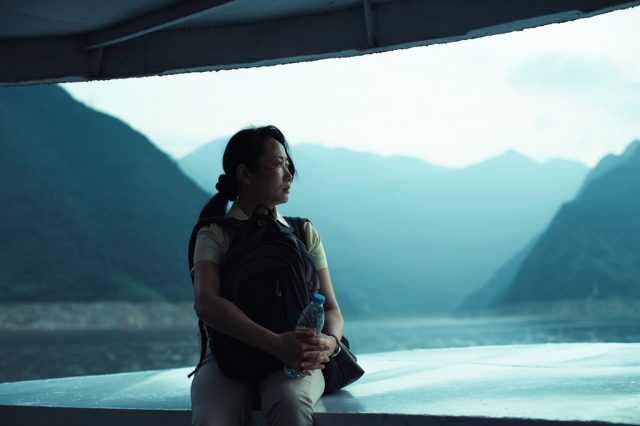
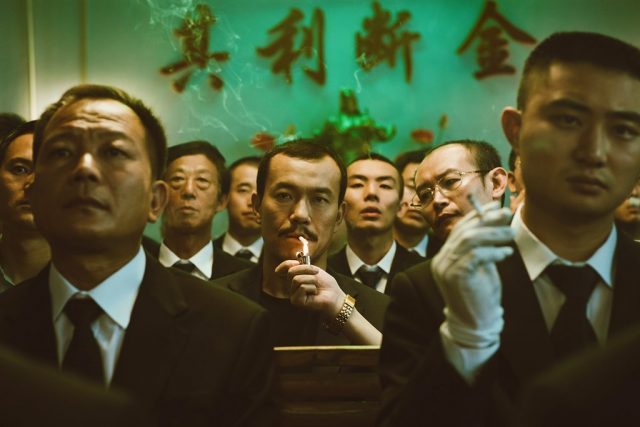
Jia Zhang-Ke reaches into his recent past, and China’s, in his elegiac Ash Is Purest White. In the film, which opens today at the Quad and Lincoln Center, the Sixth Generation writer-director’s wife and muse, Zhao Tao, stars as Qiao, a combination of the characters she played in Jia’s 2002 Unknown Pleasures and 2006 Still Life. It’s the spring of 2001, and Qiao is living in style with her handsome, ultracool jianghu boyfriend, well-respected local gangster Guo Bin (Liao Fan). She runs a gambling parlor, where she asserts her power with men who are in awe of her. But when a rival gang attacks Bin and Qiao pulls a gun, their lives take a series of unexpected turns as the story moves first to 2006 and then to 2018, when things are decidedly, and sadly, different for both of them in a China that has changed as well.
Things are about to change for Guo Bin (Liao Fan) in Ash Is Purest White
As in many of his fiction works, Jia includes documentary elements as he touches upon China’s socioeconomic crisis, primarily exemplified by the Three Gorges Dam project, which led to the displacement of families and the literal disappearance of small communities. Working with a new cinematographer, Eric Gautier, who has lensed films for Olivier Assayas, Walter Salles, Leos Carax, Alain Resnais, and Arnaud Desplechin, among others — his longtime cameraman, Yu Lik-Wai, was unavailable — Jia incorporates general footage he shot between 2001 and 2006 of everyday people and architecture that underscores China’s many changes. There are many gorgeous shots of towns and cities, at one point bathed in white volcanic ash, with costumes of bright yellow, red, and blue, as Gautier goes from digital video to Digibeta, HD video, film, and the RED Weapon camera to add distinct textures. (Jia took the title from what was supposed to be Fei Mu’s last work, which was later made by Zhu Shilin.)
Qiao and Bin try to go back, but little is the same, except for some of their old friends, who are still trying to hold on to the way things were. Zhao (A Touch of Sin,Mountains May Depart) is slow and deliberate as Qiao, her wide eyes telling a story all their own as she wrestles with disappointment, searching for some meaning in her life, while Fan (The Final Master; Black Coal, Thin Ice) is bold and forceful as a proud, powerful man who undergoes a radical shift. “The city is developing fast. It’s ours for the taking,” Bin says early on. But in Jia’s moving, heartfelt epic, there’s nothing for them to grab on to anymore.
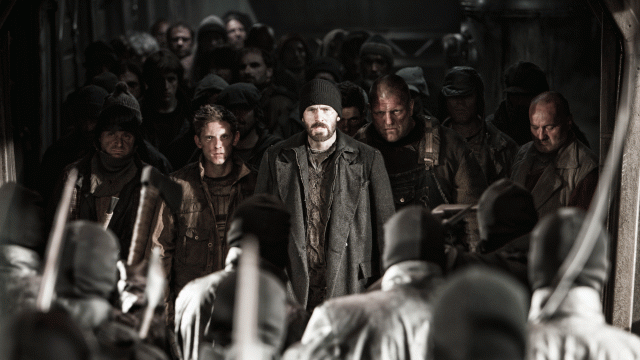
Curtis (Chris Evans) leads a revolt in Bong Joon-ho’s Snowpiercer
SNOWPIERCER (Bong Joon-ho, 2014)
Anthology Film Archives
32 Second Ave. at Second St.
Saturday, March 16, and Thursday, March 21, 9:00
Series runs March 14-28
212-505-5181 anthologyfilmarchives.org www.snowpiercer-film.com
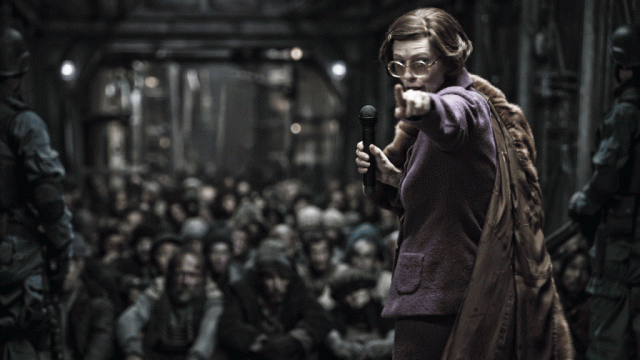
Korean director Bong Joon-ho, who had a huge international hit in 2006 with The Host and a major critical success with 2009’s Mother, made his English-language feature debut with Snowpiercer, a nonstop postapocalyptic thrill ride that takes its place with such other memorable train films as The Great Train Robbery, From Russia with Love, The Train, and Murder on the Orient Express. It’s 2031, seventeen years after the chemical C7, which was supposed to end climate change, instead froze the earth, killing all living beings except for a group of survivors on board a train run by a perpetual motion machine. In the rear of the train, men, women, and children are treated like prisoners, beaten, tortured, dressed in rags, their only food mysterious gelatin blocks. Soldiers led by the cold-hearted Mason (Tilda Swinton) and the yellow-clad Claude (Emma Levie), whose outfit brings virtually the only color to this dark, dank, deeply depressing setting, violently keep the peace as the two women heartlessly dictate orders and abscond with the children. But Curtis Everett (Chris Evans) and Edgar (Jamie Bell) hatch a plan to get past the guards and make their way to the front of the train in order to find out just what is really going on and to meet with Wilford, the wealthy entrepreneur running the engine. With the help of defiant mother Tanya (Octavia Spencer), elder statesman Gilliam (John Hurt), train engineer Namgoong Minsu (Bong regular Song Kang-ho), and Namgoong’s daughter, Yona (Go Ah-sung), Curtis attempts to lead a small revolution that is seemingly doomed to failure.
Mason (Tilda Swinton) has something to say about potential revolution on board train to nowhere
Inspired by the French graphic novel Le Transperceneige by Jean-Marc Rochette and Benjamin Legrand (who both make cameos in the film), Snowpiercer is a tense, gripping thriller that unfolds as a microcosm of contemporary society, intelligently taking on race, class, poverty, drug addiction, education, and corporate greed and power. Evans (Captain America, Push) is almost unrecognizable as Everett, a flawed hero trying to make things right, followed every step of the way by cold-blooded killer Franco the Elder (Romanian star Vlad Ivanov of Police, Adjective and 4 Months, 3 Weeks and 2 Days). The film features splendid production design by Ondrej Nekvasil; each train car offers a completely different look and feel as Curtis heads toward the front, leading to a finale that is everything the conclusion to the Matrix trilogy wanted to be. Bong (Memories of Murder), who cowrote the film with Kelly Masterson (Before the Devil Knows You’re Dead), doesn’t shy away from violence in telling this complex story – of course, it doesn’t hurt that one of the producers is Korean master Park Chan-woo (the Vengeance trilogy, Thirst), who had recently made his first English-language film as well, Stoker. A fantastically claustrophobic chase film, Snowpiercer is screening March 16 and 21 at 9:00 in the Anthology Film Archives series “Infrastructure on Film,” which consists of works that involve constructed environments dealing with history, technology, and humanity. Running March 14-28, the series, curated in collaboration with Rebecca Cleman of Electronic Arts Intermix, features such other films as Frederick Wiseman’s Canal Zone, Bernardo Bertolucci’s The Path of Oil, Dominic Angerame’s City Symphony, and Sergio Leone’s Once Upon a Time in the West and will continue with a second part in the spring.
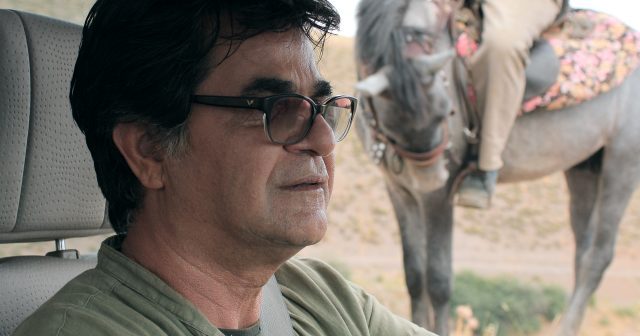
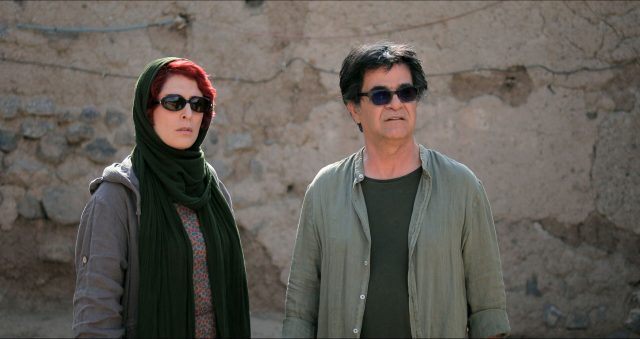
Iranian auteur Jafar Panahi plays himself in gorgeously photographed and beautifully paced 3 Faces
3 FACES (SE ROKH) (Jafar Panahi, 2018)
IFC Center
323 Sixth Ave. at West Third St.
Opens Friday, March 8
212-924-7771 www.ifccenter.com
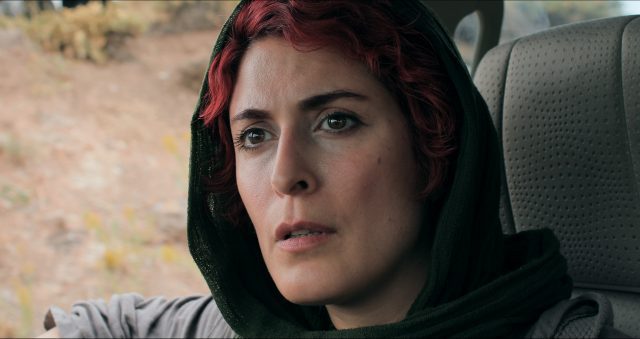
One of the most brilliant and revered storytellers in the world, Iranian auteur Jafar Panahi proves his genius yet again with his latest cinematic masterpiece, the tenderhearted yet subtly fierce road movie 3 Faces. The film, which made its US premiere this past fall at the New York Film Festival, won the Best Screenplay prize at Cannes, and screened in January as part of IFC’s inaugural Iranian Film Festival New York, is now back at IFC for a theatrical run beginning March 8. As with some of Panahi’s earlier works, 3 Faces walks the fine line between fiction and nonfiction while defending the art of filmmaking. Popular Iranian movie and television star Behnaz Jafari, playing herself, has received a video in which a teenage girl named Marziyeh (Marziyeh Rezaei), frustrated that her family will not let her study acting at the conservatory where she’s been accepted, commits suicide onscreen, disappointed that her many texts and phone calls to her hero, Jafari, went unanswered. Deeply upset by the video — which was inspired by a real event — Jafari, who claims to have received no such messages, enlists her friend and colleague, writer-director Panahi, also playing himself, to head into the treacherous mountains to try to find out more about Marziyeh and her friend Maedeh (Maedeh Erteghaei). They learn the girls are from a small village in the Turkish-speaking Azeri region in northwest Iran, and as they make their way through narrow, dangerous mountain roads, they encounter tiny, close-knit communities that still embrace old traditions and rituals and are not exactly looking to help them find out the truth.
Iranian star Behnaz Jafari plays herself as she tries to solve a mystery in Jafar Panahi’s 3 Faces
Panahi (Offside, The Circle) — who is banned from writing and directing films in his native Iran, is not allowed to give interviews, and cannot leave the country — spends much of the time in his car, which not only works as a plot device but also was considered necessary in order for him to hide from local authorities who might turn him in to the government. He and Jafari stop in three villages, the birthplaces of his mother, father, and grandparents, for further safety. The title refers to three generations of women in Iranian cinema: Marziyeh, the young, aspiring artist; Jafari, the current star (coincidentally, when she goes to a café, the men inside are watching an episode from her television series); and Shahrzad, aka Kobra Saeedi, a late 1960s, early 1970s film icon who has essentially vanished from public view following the Islamic Revolution of 1978-79, banned from acting in Iran. (Although Shahrzad does not appear as herself in the film, she does read her poetry in voiceover.) 3 Faces is gorgeously photographed by Amin Jafari and beautifully edited by Mastaneh Mohajer, composed of many long takes with few cuts and little camera movement; early on there is a spectacular eleven-minute scene in which an emotionally tortured Jafari listens to Panahi next to her on the phone, gets out of the car, and walks around it, the camera glued to her the whole time in a riveting tour-de-force performance.
Behnaz Jafari and Jafar Panahi encounter culture clashes and more in unique and unusual road movie
3 Faces is Panahi’s fourth film since he was arrested and convicted in 2010 for “colluding with the intention to commit crimes against the country’s national security and propaganda against the Islamic Republic”; the other works are This Is Not a Film, Closed Curtain, and Taxi Tehran, all of which Panahi starred in and all of which take place primarily inside either a home or a vehicle. 3 Faces is the first one in which he spends at least some time outside, where it is more risky for him; in fact, whenever he leaves the car in 3 Faces, it is evident how tentative he is, especially when confronted by an angry man. The film also has a clear feminist bent, not only centering on the three generations of women, but also demonstrating the outdated notions of male dominance, as depicted by a stud bull with “golden balls” and one villager’s belief in the mystical power of circumcised foreskin and how he relates it to former macho star Behrouz Vossoughi, who appeared with Shahrzad in the 1973 film The Hateful Wolf and is still active today, living in California. Panahi, of course, will not be present for the opening at IFC, as his road has been blocked, leaving him a perilous path that he must navigate with great care.
 BAM and Triple Canopy, the New York–based online magazine, have teamed up to present the provocative film series “On Resentment,” which kicks off March 20 at 7:30 with Mathieu Kassovitz’s incendiary 1995 stunner, La haine, inspired by the real-life stories of Makome M’Bowole and Malik Oussekine, two young men who were killed by police in 1993 and 1986, respectively. Kassovitz’s second feature film (following Métisse), La haine, which means “hate,” is set in the immediate aftermath of Paris riots as three friends —the Jewish Vinz (Vincent Cassel), the Afro-French Hubert (Hubert Koundé), and the Arab Saïd (Saïd Taghmaoui) — spend about twenty hours wandering the mean streets of their banlieue (suburban projects) and Paris, causing minor mayhem as they encounter skinheads, stop off for some wine at an art opening, try to get into a hot club, and, over and over, become embroiled with the police.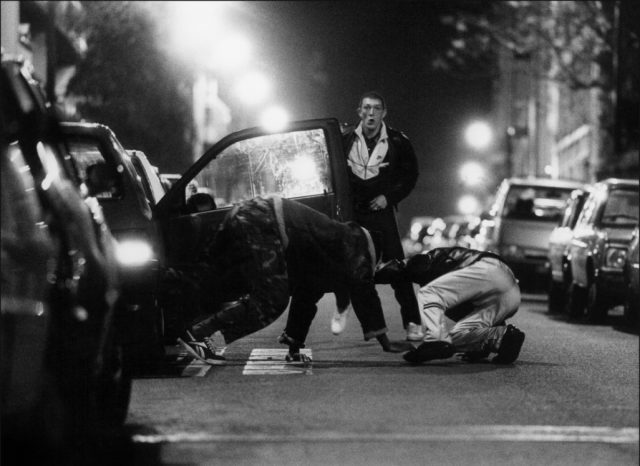
 One of the best, and most important, British films of the last forty years took the long route to reach America, but it’s finally here, and it’s a knockout. In 1973-74, Franco Rosso and Martin Stellman wrote Babylon, a somewhat semiautobiographical story of prejudice and bigotry set around Jamaican sound system culture during the Thatcher era in South London. The BBC rejected it, and after several production companies passed on it as well, it was finally picked up by Mamoun Hassan of the National Film Finance Corporation. The movie was shot in six weeks on location in Deptford and Brixton and received an X rating, despite having limited violence and no sex. It screened at Cannes but was turned down by the New York Film Festival, which considered the subject matter too controversial. The film was restored in 2008, but an old print was shown at BAM in 2012, the only time the film was officially shown in the United States. That is, until now; the scorching tale at last got its American theatrical release March 8 at BAM and has now opened as well at IFC Center, Kew Gardens Cinemas, Nitehawk, and the Magic Johnson Harlem 9. Babylon is a don’t-miss work that is still frighteningly relevant today, even though it was ripped from the headlines of the 1970s.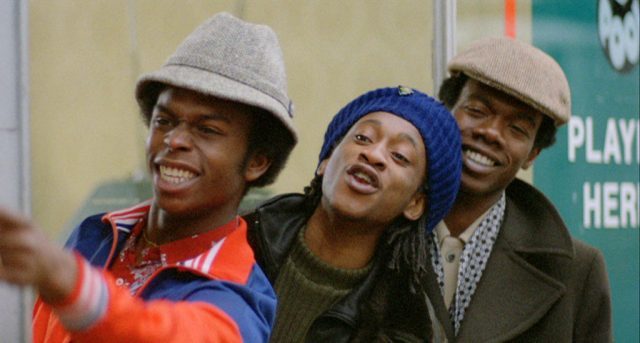
 French writer-director Bertrand Blier’s Oscar-winning Get Out Your Handkerchiefs is no weepy melodrama. If you need hankies while watching, they’ll be for the tears rolling down your face from laughter. A fortieth-anniversary 2K restoration is screening March 15-21 in the Quad series “Amour or Less: A Blier Buffet,” a nine-film celebration of the five-decade career of the controversial auteur, who has been regularly labeled a misogynist. Get Out Your Handkerchiefs has stirred up its share of naysayers through the years, so it’s fascinating to watch it now, in the midst of the #MeToo movement. The film opens in a restaurant where the brutish, doting Raoul (Gérard Depardieu) is eating with his bored, disinterested wife, Solange (Carole Laure). Suspecting that she is stealing glances at a man seated at a table behind him, Raoul approaches him, a schoolteacher named Stéphane (Patrick Dewaere), and practically begs him to sleep with his wife. Raoul, a driving instructor, loves Solange so much that he is willing to go to great lengths to make her happy, even if it means sharing her bed with another man.