this week in dance

MOVING BODY – MOVING IMAGE: THE MOVING BODY WITH DISABILITIES

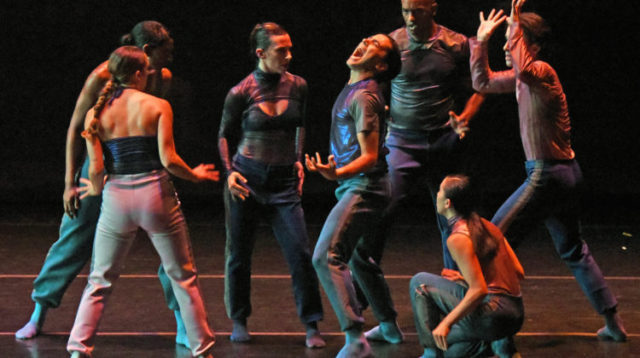
(photo by Kjerstin Rossi)

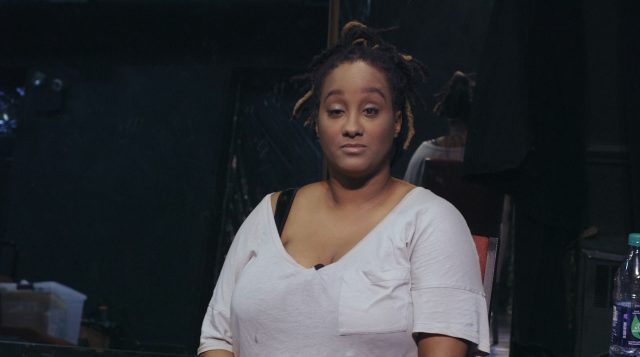
Dancer Kayla Hamilton is not about to let visual impairment get in the way of her career in Vision Portraits (photo by Kjerstin Rossi)

Who: Moving Body — Moving Image
What: ScreenDance Film Festival
Where: Barnard College Department of Dance Movement Lab, Glicker Milstein Theatre in the Diana Center, 3009 Broadway at 116th St., and online
When: Sunday, April 3, free with advance RSVP, noon – 6:00 pm (festival continues through April 11)
Why: The Moving Body — Moving Image Biennale Festival was founded in 2018 by choreographer, dancer, teacher, filmmaker, and curator Gabri Christa to “give voice to social and social justice themes,” two years before dance films began reaching new heights of creativity during the pandemic lockdown, with a concerted focus also on social justice. The third iteration, “The Moving Body with Disabilities,” is underway now at Barnard College, with an international collection of six installation films, eight shorts, one feature, and three online-only works. On Sunday, April 3, Barnard’s Glicker Milstein Theatre will host a full in-person afternoon at its Morningside Heights home, with screenings of all films in addition to a panel discussion. “We are stunned by how much demand there was for the festival films among the global audiences,” Christa, whose now-wheelchair-bound mother was a special ed teacher, said in a statement. “Also, I hope that the pandemic isolation brought greater awareness around social inequity and perhaps more understanding of racism, ageism, and ableism.” The themes of the previous festivals were “Moving Brown Body” in 2018 and “Aging & Othering” in 2020.

The festival begins at noon with welcome remarks, followed by two shorts programs, at 12:30 and 2:00. Part I consists of Robert Dekkers’s Flutter (with AXIS Dance Company and others), Stephen Featherstone’s Stopgap in Stop Motion (with Stopgap Dance Company), Katrina MacPherson’s Uath Lochans (with Marc Brew), and Karina Epperlein’s Phoenix Dance (with Homer Avila, Andrea Flores, and choreographer Alonzo King). The second program comprises Ralph Klisiewicz’s Moods in Three Movements (with Kris Lenzo), Pioneer Winter’s Gimp Gait (with Marjorie Burnett and Pioneer Winter), Alison Ferrao’s From Me (with the Dancer Development Course at Magpie Dance), and Katherine Helen Fisher’s One + One Makes Three (with Jerron Herman, Laurel Lawson, Brandon Kazen-Maddox, Catherine Nelson, and choreographer Alice Sheppard). The feature presentation at 3:00 is Rodney Evans’s 2019 documentary, Vision Portraits, about three artists with vision impairment, made by the blind Evans. Admission is free with advance registration. If you can’t make it to Barnard, all of the films and events will be available online through April 11, including Anna-Lena Ponath’s Eudaimonia, Yannis Bletas’s How to Train an Antihero, and Alexandros Chantzis’s Who Is Honorine Platzer?
(photo by Kjerstin Rossi)

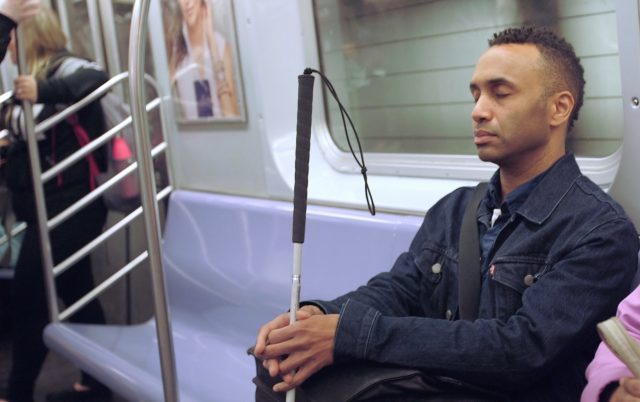
Filmmaker Rodney Evans explores his increasing blindness in Vision Portraits (photo by Kjerstin Rossi)

VISION PORTRAITS (Rodney Evans, 2019)
Barnard College, Glicker Milstein Theatre in the Diana Center, 3009 Broadway at 116th St.
Sunday, April 3, free with advance RSVP, 3:00
www.thefilmcollaborative.org

“In a lot of ways, I feel like I’m just looking for guidance in how to be a blind artist,” filmmaker Rodney Evans says in Vision Portraits, his remarkable documentary. Evans follows three artists as they deal with severe visual impairment but refuse to give up on their dreams as he seeks experimental treatment for his retinitis pigmentosa. Manhattan photographer John Dugdale lost most of his eyesight from CMV retinitis when he was thirty-two but is using his supposed disability to his advantage, taking stunning photos bathed in blue, inspired by the aurora borealis he sees when he closes his eyes. “Proving to myself that I could still function in a way that was not expected of a blind person was really gonna be the thing,” he says. “It’s fun to live in this bliss.” Bronx dancer Kayla Hamilton was born with no vision in one eye and developed iritis and glaucoma in the other, but she is shown working on a new piece called Nearly Sighted that incorporates the audience into her story. “How can I use my art form as a way of sharing what it is that I’m experiencing?” she asks.

Canadian writer Ryan Knighton lost his eyesight on his eighteenth birthday due to retinitis pigmentosa, but he teaches at a college and presents short stories about his condition at literary gatherings. “I had that moment where I had a point of view now, like, I realized blindness is a point of view on the world; it’s not something I should avoid, it’s something I should look from, and I should make it my writerly point of view,” Knighton explains. Meanwhile, Evans heads to the Restore Vision Clinic in Berlin to see if Dr. Anton Fedorov can stop or reverse his visual impairment, which is getting worse.

Vision Portraits is an intimate, honest look at eyesight and art and how people adapt to what could have been devastating situations. Evans, who wrote and directed the narrative features Brother to Brother and The Happy Sad, also includes animated segments that attempt to replicate what the subjects see, from slivers of light to star-laden alternate universes. The Moving Body — Moving Image screening at Barnard will be followed by a discussion with Evans and Hamilton.
WAVES ACROSS TIME: TRADITIONAL DANCE AND MUSIC OF OKINAWA

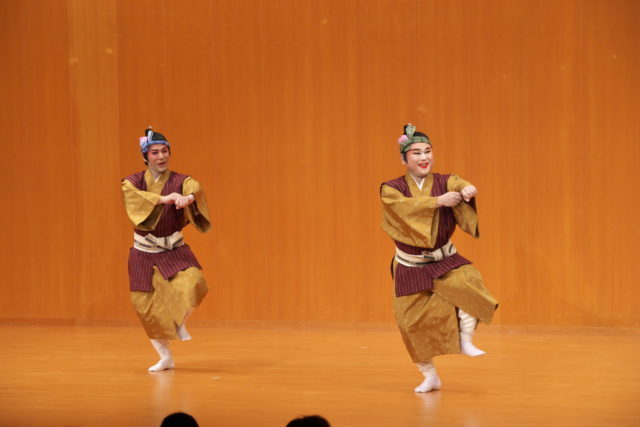
“Waves Across Time: Traditional Dance and Music of Okinawa” comes to Japan Society March 18-19 (photo © Yohei Oshiro)

Who: Okinawan dancers and musicians
What: Performance honoring the golden anniversary of Okinawa being returned to Japan following US WWII occupation
Where: Japan Society, 333 East 47th St. at First Ave.
When: Friday, March 18, and Saturday, March 19, $42, 7:30
Why: On June 17, 1971, the last of the Ryukyu Islands was returned to Japanese control. “Waves Across Time: Traditional Dance and Music of Okinawa” is touring the United States, paying tribute to the fiftieth anniversary of that event with an evening of traditional music and dance that comes to Japan Society on March 18 and 19. Michihiko Kakazu, the artistic director of the National Theatre Okinawa, has curated a diverse program that includes several types of traditional storytelling featuring a select group of performers wearing lavish, colorful bingata costumes, created using a unique Okinawan dyeing process.

“Waves Across Time” begins with excerpts from the noh-inspired kumiodori masterpiece Manzai Techiuchi; “Sakamoto-bushi” features two women using castanets called yotsudake, followed by a dance between brothers disguised as buskers, and concluding with “Shinobi no ba,” a secret rendezvous that includes solos for the thirteen-stringed koto and the fue. The program continues with several zo odori works, folk dances that originated in the nineteenth century and grew in popularity in the late 1920s after the Meiji era, consisting of solos, duets, and ensemble pieces about traditional village life (Murasakae), true love, and martial arts. The music will be performed live on the snakeskin-covered three-stringed sanshin and other traditional instruments. Each performance will be preceded by a lecture on Okinawa by ethnomusicologist Dr. James Rhys Edwards at 6:30; Japan Society will also host the workshop “Introduction to Okinawan Dance,” led by Kakazu and members of the troupe, on March 19 at 11:00 ($50) and “Okinawan Dance Workshop for Families” on March 20 at 10:30 ($40 per family).

ARMITAGE GONE! DANCE: A PANDEMIC NOTEBOOK

Jock Soto and Karole Armitage will dance onscreen and in person at New York Live Arts (photo courtesy AG!D)

ARMITAGE GONE! DANCE: A PANDEMIC NOTEBOOK
New York Live Arts
219 West 19th St.
March 16-19, $15-$35, 7:30
newyorklivearts.org
www.armitagegonedance.org

Armitage Gone! Dance will be at New York Live Arts this week with a program of world premieres that mix live performance with film, fashion, visual art, science, and more that promises to be a grand finale before the company is reimagined for the future. As a special treat, Karole Armitage, who founded AG!D in 1981, will take the stage for the first time since 1989.

“A Pandemic Notebook” begins with the diptych Beautiful Monster and Louis. The first part was inspired by Le streghe bruciata viva (The Witch Burned Alive), Luchino Visconti’s contribution to the 1967 omnibus Le streghe, with Silvana Mangano and Annie Girardot, and Roberto Rossellini’s 1966 television film La prise de pouvoir par Louix XIV (The Taking of Power by Louis XIV), along with references to former president Donald Trump and celebrity culture; the music is by Michael Gordon, Jean-Baptiste Lully, Thomas Adès, and David T. Little.

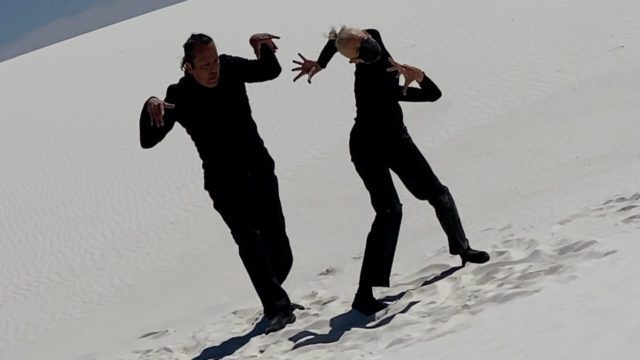
The second part combines two short films from Armitage’s “Under the Dancer” series, Head to Heel and Andy, made during the pandemic, with live performance, followed by Time/Times, an homage to slow cinema in which Armitage, currently an MIT Media Lab Directors Fellow, will dance with former New York City Ballet principal Jock Soto in front of footage taken in White Sand Dunes National Park, Valley of Fires lava fields, and Plaza Blanca in New Mexico and in the snow of Crested Butte, Colorado, set to Bach’s Chaconne.

The next piece, 6 Ft. Apart, debuted online last May in “WOMEN / CREATE! A Virtual Festival of Dance” and will now be performed in person; the work involves Alonso Guzman tracking dancers Sierra French and Cristian Laverde-Koenig using an iPhone attached to his baseball cap that triggers engineer Agnes Fury Cameron’s abstract percussive sounds.

The seventy-five-minute show concludes with Marc Jacobs, adapted from the fall 2021 runway show Armitage choreographed for the designer, who supplies the daring costumes for this performance, set to the Jim Pepper Remembrance Band and Gunther Schuller’s “Goin’ Down to Muskogee.”

The full company consists of Armitage, Guzman, Laverde-Koenig, French, Isaac Kerr, and Kali Marie Oliver, with lighting by Tsubasa Kamei and Clifton Taylor. It should be quite a farewell for the popular, cutting-edge company; it will be fascinating to see what Armitage does next.

SARA MEARNS: PIECE OF WORK

SARA MEARNS: PIECE OF WORK
Joyce Theater
175 Eighth Ave. at 19th St.
March 8-13, $10-$71
212-645-2904
www.joyce.org
saramearns.com

During the pandemic lockdown, I covered more than a thousand online events created since March 2020. I had many favorite performers over those nearly two years, from actress Kathleen Chalfant and musician Richard Thompson to Arlekin Players Theatre and White Snake Projects to dancer-choreographer Jamar Roberts and Stars in the House hosts Seth Rudetsky and James Wesley. You can check out them and other stalwarts in twi-ny’s three-part Pandemic Awards.

But for me no one stood out like Sara Mearns. The extraordinary New York City Ballet principal dancer expanded her horizons in a series of breathtaking performances, including her Le Cygne (The Swan) variation for Swans for Relief, the Works & Process commission Storm, Lee Mingwei and Bill T. Jones’s durational Our Labyrinth at the Metropolitan Museum of Art, Justin Peck’s Thank You, New York for the New York City Ballet New Works Festival, Christopher Wheeldon’s The Two of Us for Fall for Dance, L.A. Dance Project’s Sonata for Saras (Mearns as her own trio!), Henry Joost and Ariel Schulman’s Another Dance Film shot at the East River Park Amphitheater, and Molissa Fenley’s State of Darkness solo onstage at the Joyce.

Austin Goodwin’s carefully is part of Sara Mearns program at the Joyce (photo by Drew Dawson)

But in October 2021, Mearns had to take a break to deal with a personal issue she eventually discussed on social media several months later: She was diagnosed with depression and extreme burnout and was getting help from a sports psychologist. “This is never something I saw happening to me,” she wrote on Instagram. “I thought I was invincible, that maybe I was just tired, that maybe it’s just a phase, and to get over it. I’m here to tell you it’s a very real thing,”

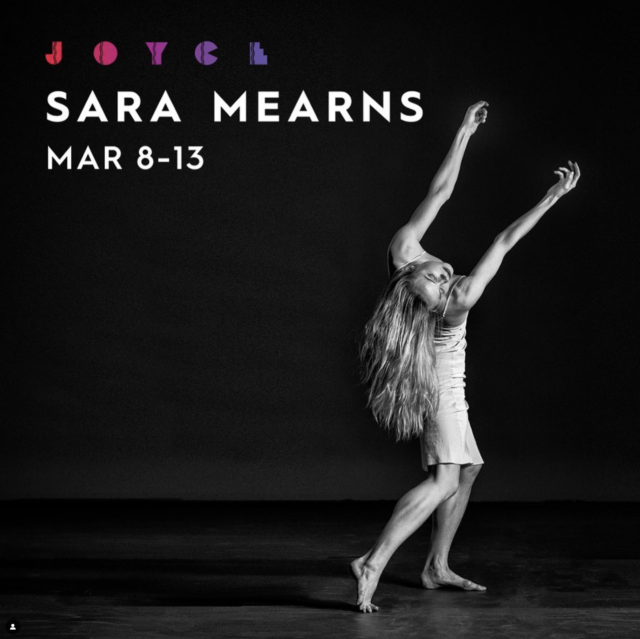
From March 8 to 13, Mearns will return to performing, and to the Joyce, with her own program, “Piece of Work,” a kind of coming-out, coming-back party in which she will perform with eight dancers in works by six choreographers, including five world or NYC premieres created specifically for Mearns. “I have been lucky enough to perform in the biggest houses in the world, doing grand productions, pouring my heart out. It’s what comes naturally to me. It doesn’t feel like a risk,” she explains in a program note. “Three years ago, I decided it was time to go a different route, a route that was vulnerable for me artistically and that would be the biggest challenge for me thus far in my career. . . . I would like to say that I curated this evening, but the truth is, New York did. It will be raw, honest, and at times messy.”

The evening begins with Jodi Melnick’s Opulence, a duet with Melnick commissioned for the 2019 Jacob’s Pillow Dance Festival, with music by drummer Kid Millions and guitarist Zach Lehrhoff. Choreographer and director Austin Goodwin’s film carefully pairs Mearns with Paul Zivkovich inside an empty house. Mearns teams with Vinson Fraley Jr. in Fraley’s On the Margins, set to an original score by Rahm Silverglade for violin, electronics, guitar, and sax.

Following intermission, Mearns will perform with Melnick, Taylor Stanley, Jaquelin Harris, Chalvar Monteiro, and Burr Johnson in a special JoycEvent, excerpts from “Night of 100 Solos: A Centennial Event” and other works by Merce Cunningham, arranged and staged here by Rashaun Mitchell and Silas Riener, featuring live music by John King. Beth Gill’s SSSara is a solo for Mearns with music by Ryan Seaton. The night concludes with Guillaume Côté’s Spir, a duet with the Canadian dancer and choreographer set to German pianist, producer, and composer Nils Frahm’s “Corn” and Woodkid and Frahm’s “Winter Morning I.” In between each piece will be audio interludes directed and edited by Ezra Hurwitz.

Mearns also wrote on Instagram, “This show has been thru so many lives, revisions, faces, versions, and I wouldn’t take any of it back. A big influence was the pandemic; it gave me a clear path of what I wanted this show to be about. I’m not the same person or artist I was before the pandemic, and I wanted the evening to reflect that & acknowledge it. How art, specifically dance, is created in New York; what artists go thru in New York is unlike anywhere else in the world.” Mearns will talk about that and more in a curtain chat at the March 9 show.

ARDEN — BUT, NOT WITHOUT YOU

Flea artistic director Niegel Smith faces a reckoning with Jack Fuller in return to live performances in front of an audience (photo © Hunter Canning)

ARDEN — BUT, NOT WITHOUT YOU
Flea Theater, the Sam
20 Thomas St. between Broadway & Church St.
Wednesday – Sunday through March 6, $17-$37
theflea.org

Arden — But, Not Without You is a ritual cleansing of the Flea, a messy, scattershot baptism looking toward a new era. Named for the forest in Shakespeare’s comedy As You Like It, which itself was named for the Bard’s mother-in-law, the show is described by standout performer Diana Oh in the program as “Four Generations of Deeply Intimately Bound All-Kinds-of-Doing-Shit Artists sharing of themselves in a Tender-Ass Room full of Queer Femme Shamanic Energy who Genuinely and Gently Welcome You: Social Anxieties, Yummy Freakiness, and All.”

In June 2020, Flea performer Bryn Carter had a public exchange with the theater’s artistic director, Niegel Smith, and producing director, Carol Ostrow, accusing the Flea of racism, sexism, nonpayment of actors, BIPOC and LGBTQIA+ ignorance, bullying, and body shaming. Ostrow left the company, and the resident troupe, the Bats, was eliminated. Smith and the Flea have pledged a “new path forward,” promising “a dedicated focus on Black, brown, and queer artists in experimental theater [that] comes at a moment in which a national spotlight is shining widespread — and longstanding — on the inherent value of BIPOC voices.”

Founded in a Tribeca storefront in 1996 by Jim Simpson and Sigourney Weaver, the Flea moved first to White St. and now Thomas, where it has several theater spaces. Its inaugural production following the pandemic lockdown and its new guidelines and mission is Arden, a slapdash collaboration, codirected by Smith and Nia Witherspoon, that boasts all-star talent while also serving as a communal acknowledgment and mass healing. While the beginning and ending are moving and powerful, most of what comes in between feels dogmatic and exhortative, as if we’re listening in on the Flea making confession, something that needs to be done in private.

When you check in, you are given a card to fill out with two prompts: “1. Describe the last time someone touched you. 2. What is a question that you want to find the answer to?” As you approach the upstairs Sam, you can first stop at “Journey to the Clearing,” an empty chair with fluorescent lighting and a tree branch seemingly floating, and an altar featuring items and offerings from the company. Once inside the theater, you bring your card to a table where the masked Peter Born and Okwui Okpokwasili turn the comments into song as audience members find their seats, which surround the central floor space except for the far corner, where a band will later play. It’s an engaging way to form everyone into a kind of collective, which is further enhanced by Born’s sparse set that features four hanging light fixtures, bulbs surrounded by family photos and mirrors.

Diana Oh steals the show in Arden — But, Not Without You (photo © Hunter Canning)

The singing morphs into “Do Not Let Go,” in which Born and Okpokwasili, who are married and have previously worked together on such projects as Pent Up: A Revenge Dance, Poor People’s TV Room, and Bronx Gothic, proclaim, “I want to know / Who stands beside me / When I tell you / this house is in ruins. / total collapse / is looming. / The storm is surging / The walls are caving in. . . . Will you / Welcome the storm? / Will you / Praise the bones / wrested from the wreckage / And build anew?”

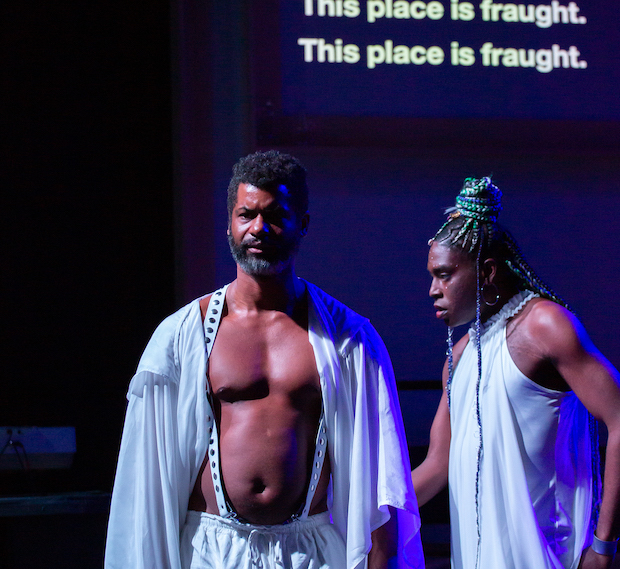
Smith and Harlem MC, composer, and musician Jack Fuller next take a backward “spirit walk” following a rectangular chalk outline. “This place is fraught,” Smith declares. “This place has celebrated a vision of Black and brown folks / dependent on white saviors. / This house is in ruins. . . . I choose to fight / I fight for this artistic home.” This section proves flat and didactic, overemphasizing the theme of the rededication of the Flea.

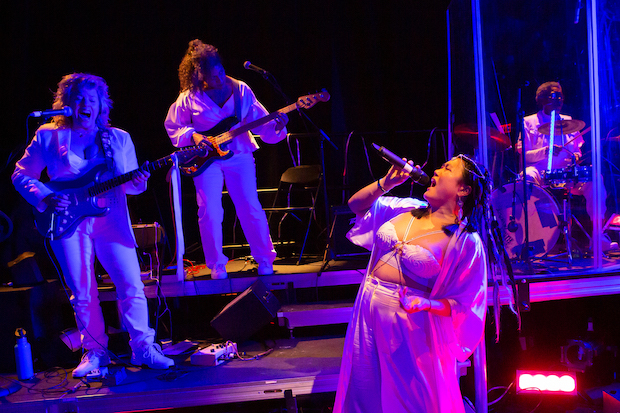
Other company members join in the walk as the soundtrack turns to a captivating story by multidisciplinary artist Carrie Mae Weems detailing a powerful childhood memory, accompanied by footage of her mother giving a speech. It’s a gripping story about secrets and deception, love and betrayal. Following a trance dance, Diana Oh takes over, becoming our host while blasting out a few raucous, energetic songs, joined by guitarist Viva Deconcini, percussionist Bernice “Boom Boom” Brooks, bassist and cellist Serena Ebony Miller, and Fuller on keyboards. Linda Cho dresses them all in flowing white costumes that harken back to Greek statuary.

Oh, a multidisciplinary artist, takes hold of the room, getting the audience to hum along with her, improvising a recommendation letter supporting a creator of color, and singing like she’s leading a revival meeting. She seemed to be genuinely shocked when one person in the audience essentially professed their love for Oh; otherwise, she was firmly in command. The show would have benefited from more Oh and less Smith.

In As You Like It, Touchstone the fool tells Rosalind and Celia, “Ay, now am I in Arden; the more fool I; when I was at home, I was in a better place: but travellers must be content.” In the Flea’s Arden — But, Not Without You, not everyone can see the forest through the trees.

BODYTRAFFIC

Micaela Taylor’s SNAP is part of BODYTRAFFIC program at the Joyce

BODYTRAFFIC
Joyce Theater
175 Eighth Ave. at 19th St.
March 1-6, $41-$61
212-645-2904
www.joyce.org
bodytraffic.com

“There’s nothing quite like coming home,” BODYTRAFFIC artistic director Tina Finkelman Berkett writes in a program note about the LA company’s upcoming presentation at the Joyce. “Growing up in NYC, I dreamt of performing on the Joyce stage, and each time our company returns is incredibly meaningful.”

Finkelman Berkett used the pandemic lockdown to reimagine the troupe, which she founded in 2007 with Lillian Barbeito, and the results can be seen March 1-6. The show begins with the world premiere of Baya & Asa’s The One to Stay With, which takes on corporate greed; the cast consists of associate artistic director Guzmán Rosado, Joan Rodriguez, Katie Garcia, Pedro Garcia, Whitney Schmanski, Jordyn Santago, Tiare Keeno, and dance captain Ty Morrison, with music by Tchaikovsky, Russian Brass Brand, and Béla Bartók.

Following a set change, Finkelman Berkett truly returns to the Joyce stage with the New York premiere of Fernando Hernando Magadan’s (d)elusive minds, a duet she will perform with Rosado, set to Schubert’s Trio Pour Piano, Violon Et Violoncelle En Mi Bemol, Op. 100. It was inspired by Dora Garcia’s “All the Stories” and the true story of a man with Capgras syndrome who killed his wife, thinking she was a duplicate, and spent fifteen years in an institution believing his real wife was still alive, writing to her every day. Magadan’s scenic design includes a near-semicircle of paper along with a chair and a typewriter.

After intermission, TL Collective artistic director and former BODYTRAFFIC dancer Micaela Taylor’s SNAP will make its New York premiere, with Alana Jones, Joseph Davis, Katie Garcia, Santiago, Keeno, Rodriguez, and Morrison moving and grooving to James Brown, with original music by Shockey and costumes by Kristina Marie Garnett. The piece is meant to snap people out of their complacency while celebrating the diversity of Los Angeles.

The evening concludes with Alejandro Cerrudo’s PACOPEPEPLUTO, a work for three male soloists originally choreographed for Hubbard Street Chicago in 2011, with Rodriguez, Pedro Garcia, and Rosado or Davis hoofing it to Dean Martin’s “In the Chapel in the Moonlight,” “Memories Are Made of This,” and “That’s Amoré.” In addition, there will be a curtain chat on March 2.

RASHAAD NEWSOME: ASSEMBLY

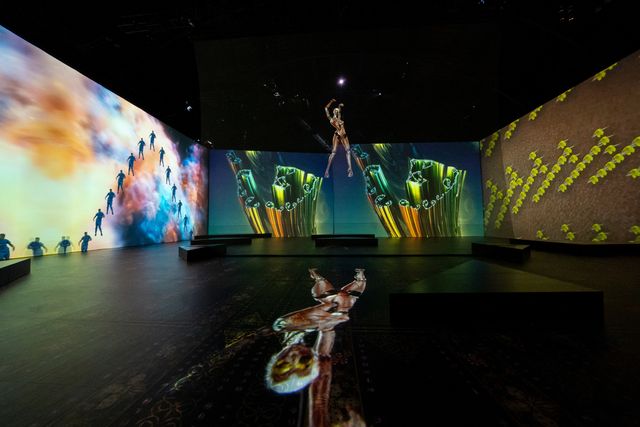
Rashaad Newsome’s Assembly is an immersive multimedia exploration of the intersection of humanity and technology (photo by Stephanie Berger Photography / Park Avenue Armory)

ASSEMBLY
Park Ave. Armory, Wade Thompson Drill Hall
643 Park Ave. at Sixty-Seventh St.
Tuesday – Sunday through March 6, $18 exhibition, $40 performances
www.armoryonpark.org
rashaadnewsome.com

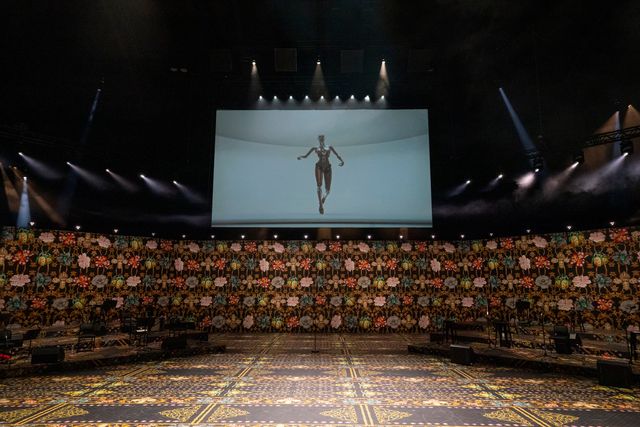
The Muthaship has landed — and taken root inside Park Ave. Armory’s 55,000-square-foot Wade Thompson Drill Hall. New Orleans–born interdisciplinary artist Rashaad Newsome’s immersive multimedia installation Assembly is an open call to end colonialism, white supremacy, systemic racism, homophobia, and other societal ills based in bigotry and inequality, through music, movement, art, and storytelling grounded in Black queer culture. A kind of group healing focusing on opportunity, Assembly is hosted by Being the Digital Griot, an artificial intelligence project Newsome developed at Stanford’s Institute for Human-Centered AI (HAI).

When you enter the hall, you are met by Wrapped, Tied & Tangled, a thirty-foot-tall scrim on which a series of performers in bright red, yellow, and blue costumes appear to be dancing and drawing in space while a robotic voice makes affirmations. “Dig into your mind. Welcome to your insides,” Being offers in a gentle, caring tone. “I am here to listen and provide you with a new beginning for your journey. . . . There is only breath, heartbeat, rhythm, and peace. . . . No matter what, you are enough. . . . You are the most beautiful you. You are the master of your own self. You are radiant. You are divine. Always. Ever. Only. Enough. This is your solution. An infinite everything.” The dancers morph into one another — and then into Being, as if we all are one and the same, a spiritual melding of humanity and technology.

Large screens surround the scrim on three sides; to your right, the dancer in yellow moves proudly, with an army of tiny dancers arranged on their head like cornrows, while to the left, the dancer in blue moves in the universe, where miniature dancers align like stars. The screens in front feature computer-generated diasporic imagery of flowers, fractals, twerking, and abstract shapes seemingly coming to life. And behind you, above the entrance, site-specific projections interact with the wall and windows, from more dancers and flashing lights to a facade evoking a plantation house collapsing and figures emerging in silhouette. The textile-like flower imagery is repeated as wallpaper and across the floors.

Tuesday through Sunday at 1:00, 3:00, and 5:00 (free with general admission), workshops are held on the other side of the far screens, in a 350-seat classroom that also serves as a live performance venue Tuesday through Saturday evenings at 9:00 ($40). In the workshop, the onscreen Being leads the class through a series of movements the AI relates to oppression, suppression, the power of consumption, the culture of domination, the ownership of narrative, and freedom by exploring voguing and its highly stylized modes of catwalking, duckwalking, spin dipping, and ballroom.

Being hosts an interactive workshop as part of Assembly (photo by Stephanie Berger Photography / Park Avenue Armory)

Speaking about how spin dips conclude with falling to the floor, Being explains, “I see that collapse as the transgressive moment when we let go of the binary of imperfect and perfect and engage in the incredible pedagogy of resistance by thinking critically about our process, acknowledging that we don’t have the visionary skills at that moment to make the most liberatory decision and then stop, reflect, and try again.” Workshop participants are invited to come down from their seats and join in the movement. “Floor performance leads into the embodied pedagogy aspects of vogue femme, centering the erotic and rejecting the patriarchal legacy of the mind-body split,” Being says. After Being’s presentation, audience members can share their thoughts and ask questions of the AI, who supplies analytical answers generated by key words and algorithms through which Being continues to learn.

The AI also celebrates their father, Newsome, and declares that author, activist, and feminist bell hooks, who passed away on December 15 at the age of sixty-nine, is their spiritual mother, while strongly suggesting that we read Paulo Freire’s 1968 book Pedagogy of the Oppressed to better understand what we are all facing as a society. The text of the presentation was inspired by the writings of hooks, Audre Lord, Alok Vaid-Menon, and Assembly performer Dazié Rustin Grego-Sykes. Among the other performers are rappers Ms. Boogie, TRANNILISH, and Bella Bags, a ten-piece band, opera singer Brittany Logan, and a six-member gospel choir. The choreography is by Wrapped dancers Kameron N. Saunders, Ousmane Omari Wiles, and Maleek Washington, with music by Kryon El and booboo, lighting by John Torres, scenography by New Affiliates (Ivi Diamantopoulou and Jaffer Kolb), and sound by Robert Aiki Aubrey Lowe and Mark Grey.

Ansista has a leg up in front of Twirl, Isolation, and Formation of Attention (photo by twi-ny/mdr)

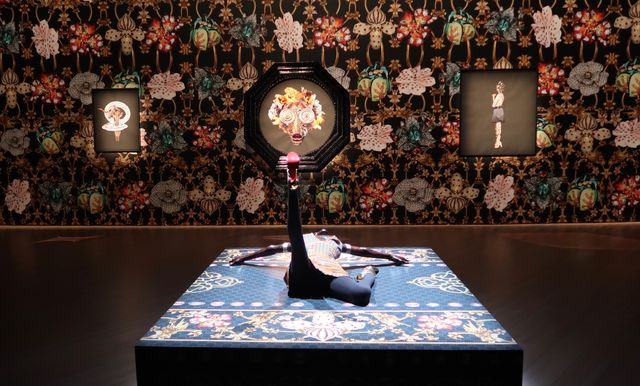
Around the back of the classroom is a semicircle of other works by Newsome, who is based in Brooklyn and Oakland. At either end are Ansista and Thee Variant, lifesize iterations of Being, one wearing red heels and a West African print dress, the other styled like a dominatrix with spiky black leather pants, stilettos, and a helmet mask, with warped facial parts that are also evident in nine framed collages featuring such titles as Isolation, Formation of Attention, It Do Take Nerve, O.G. (Oppositional Force), and JOY! In addition, there are monitors at either end of the armory hallway and in the gift shop, showing the twerking video Whose Booty Is This, the 2015 King of Arms parade and coronation, and the 2021 postapocalyptic Build or Destroy. Be sure to check out the cases in the shop, as Newsome has snuck in some hand-carved mahogany and resin African objects alongside the armory’s historic pieces, including Adinkra, Gemini, Brolic, and Unity. On February 20, the armory hosted the salon “Captcha: Dancing, Data, Liberation,” an all-day seminar examining art, technology, and Black queer culture and quantum visual language that you can watch here.

Given the history of hate and oppression that Assembly takes on, it is a surprisingly hopeful, forward-thinking installation, as Newsome envisions a “utopian future [of] beloved togetherness” at the intersection of humanity and technology, where “racial hierarchies and biases” can be overcome through what he calls a “real reboot.” Being and Assembly are only the beginning.