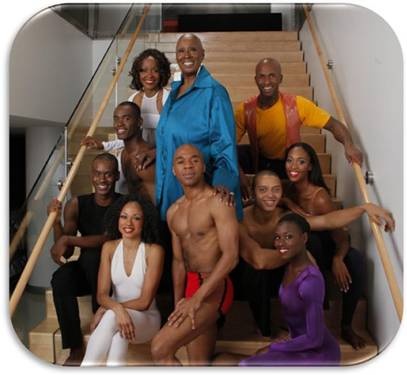
Alvin Ailey American Dance Theater honors Judith Jamison's twentieth anniversary as artistic director during annual season at City Center (photo by Paul Kolnick)
New York City Center
130 West 56th St. between Sixth & Seventh Aves.
December 2 – January 3
Tickets: $25-$175
212-581-1212
www.alvinailey.org
www.nycitycenter.org
The Alvin Ailey American Dance Theater is celebrating Judith Jamison’s twentieth anniversary as artistic director in appropriate style and panache with a number of very special programs during its annual fall/winter season at City Center, including several world premieres: AAADT veteran Matthew Rushing’s “Uptown,” Ronald K. Brown’s specially commissioned “Dancing Spirit,” and Jamison’s own “Among Us (Private Spaces: Public Places).” In addition, Anna Deavere Smith will appear onstage to present her libretto for a new production of Jamison’s Emmy-winning “Hymn,” and “Best of 20 Years” will feature a forty-five-minute compilation of excerpts of thirteen pieces from Jamison’s tenure, by such choreographers as Alonzo King, Jawole Willa Jo Zollar, Dwight Rhoden, Lar Lubovitch, Garth Fagan, and Donald Byrd. Also on the itinerary are George Faison’s “Suite Otis,” Alvin Ailey’s “Memoria” and “Blues Suite” (the latter with live music by the Brawner Brothers), Mauro Bigonzetti’s “Festa Barocca,” Elsa Monte’s “Treading,” Hans van Manen’s “Solo,” Ulysses Dove’s “Episodes,” Robert Battle’s “Unfold” and “In/Side” (a company premiere), the Ailey classic “Revelations” (with live music), and Jamison’s “Love Stories” (choreographed with Battle and Rennie Harris). Seeing Ailey at City Center has become quite a holiday tradition that no fan of contemporary dance should miss.
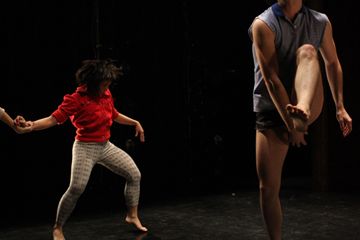

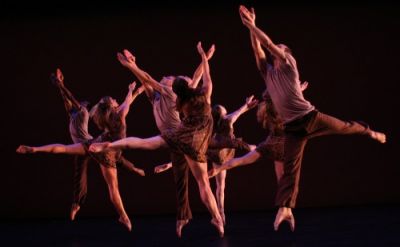
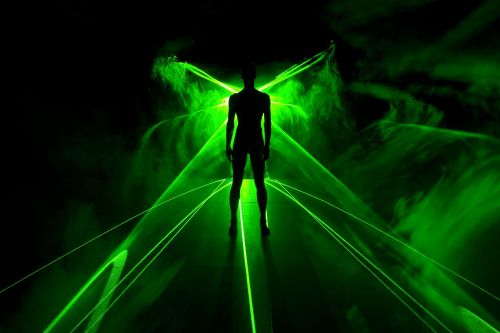
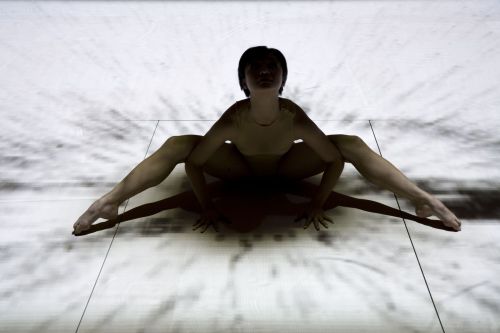
 While GLOW was an intimate gathering in the Kitchen, where the small audience sat on four sides of the dance space, a tiny vinyl rectangle on the floor, MORTAL ENGINE turns out to be a much larger spectacle, performed on an steeply raked white platform at center stage of the vast Howard Gilman Opera House, where dancers walk, crawl, twist, turn, and hang on as the lights and sounds react to their movements, in a dazzling display. Two of the floor panels occasionally tilt up vertically, creating walls against which, at one point, two dancers wriggle, as if attached by a sticky substance, accompanied by a fascinating oozy sound. Unfortunately, at times the vastly talented crew gets caught up in the spectacular technology, as long patches of the piece abandon the dancers and simply show off amazing computer-generated interactive lighting and sound design that takes the audience away from the compelling narrative of duality and interconnectedness. But then smoke machines unleash a dense fog that becomes otherworldly as green lasers shoot out across the theater, involving the spectators in the gorgeous maelstrom, the bands of light manipulated onstage by two dancers. Even though a passing random thought of Laser Floyd is hard to avoid, it’s an unforgettable scene, the highlight of a choppy but fascinating night of dance theater.