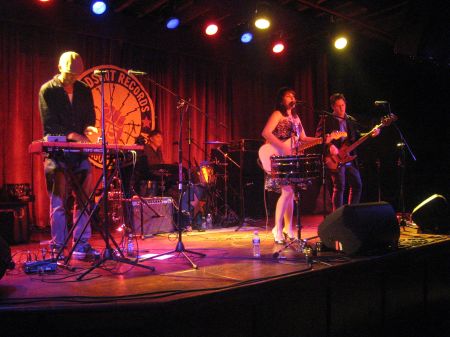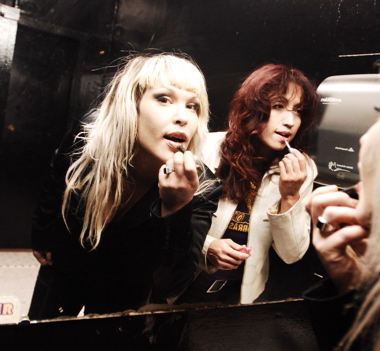
The Detroit Cobras get ready to rock in the new year at the Mercury Lounge
You can say goodbye to the decade with a cornucopia of live concerts in New York City on December 31, starting with Chuck Berry’s New Year’s Rockin’ Eve at B.B. King’s Blues Club and Grill ($98, 8:00 show; $120, 11:00 show). The very hot Detroit Cobras will be at the Mercury Lounge, welcoming in 2010 with the Underthings and the A-Bones ($25-$30). The intriguing trio of John Medeski, Robert Randolph, and the North Mississippi Allstars bring the Word to Terminal 5 ($40-$50). Revelers can get their freak on for free at Radegast Hall & Biergarten in Williamsburg, where the Coney Island Circus Sideshow will set up their portable tent, featuring Scott Baker, Serpentina, Kryssy Kocktail, Adam “the First Real Man” Rinn, the Executioner, Dick Zigun, Bad Buka, and more starting at 10:00. Los Lobos will threaten to tear down the house at City Winery with shows at 7:30 ($45-$150) and 11:00 ($75-$225). Roky Erickson won’t need any elevators at Maxwell’s, where he’s on a bill with Muck & the Mires ($35). Former Luna residents Dean & Britta will be playing an early show at Southpaw with Undersea Poem ($20-$25).
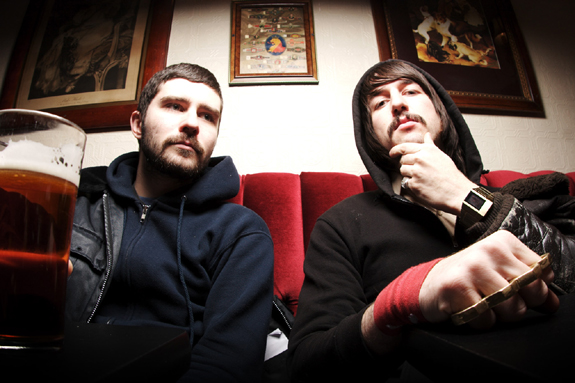
MSTRKRFT will mix things up at Webster Hall on December 31
The Living Room on Ludlow hosts a night of bluegrass, Auld Twang Syne, with Fresh Baked, Whistlin’ Wolves, Michael Daves, the Birdhive Boys, and others ($10-$15). Necromantic presents a Blue Moon New Year’s Eve party at the Bowery Poetry Club, featuring goth, synth, wave, dancing, revelry, and more ($10-$15). SOB’s, the Home of Universal Music, will get your booty shaking to a Taste of Latin Paradise with Kazua Band, La Excelencia, Stil, and DJ Spike ($25-$150). The Lovin’ Cup in Brooklyn will be throwing a ‘50s Beach Party, with Lemonade, Surfer Blood, Frankie and the Outs, Beach Fossils, We Are Country Mice, booze and food packages, and more ($15-$99). The Bell House will be providing a free can of Champagne along with Obits, the Subway Soul Club, and Eli Paperboy Reed & the True Loves at the Rock ‘N’ Soul 2010 New Year’s Eve Party ($30-$40). The Club Night New Year’s Eve Ball at Webster Hall is sure to be crazy, with MSTRKRFT, four floors, six adventure rooms, aerial performances, and what is billed as the Largest Balloon Drop in the World ($60-$150). And party planners extraordinaire Gemini & Scorpio promise that plenty of contraband will be on hand at the Bootleggers’ Ball in a vacant Carroll Gardens warehouse space, along with the Mad Jazz Hatters, the Stumblebum Brass Band, the Main Squeeze Orchestra, Alchemy Dance Theater, burlesque performers Mme Renee Rosebud and Jenny C’est Quoi, tarot reader and numerologist Marcy Currier, aerialist Nikki Borodi, mayhem master Dan Glass, host Bastard Keith, a live auction, games of chance, the Den of Sin, Dub Pies, and lots of surprises ($30-$40).
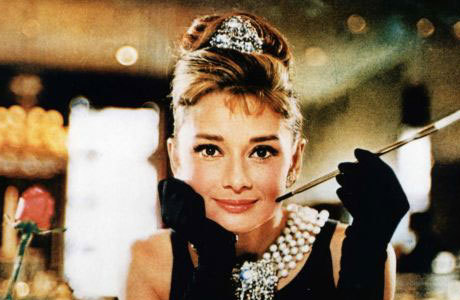
Audrey Hepburn brings class and style to Film Forum for NYE
For a milder New Year’s Eve, the Concert for Peace at St. John the Divine features Harry Smith, Judy Collins, Glen Cortese, Lauren Flanigan, and a thousand points of candlelight ($60), while Music at St. Bartholomew’s will include works by Bach, Böhm, and Langlais in addition to Copland’s “Fanfare for the Common Man” at midnight (free). If music of any sort isn’t quite your beat on New Year’s Eve, you can head over to Central Park for the annual Midnight Run, with a fireworks and laser light show, costume contest, dancing, and a four-mile run. Prospect Park will also host free fireworks, right over Grand Army Plaza. Jivamukti Yoga School will be holding its twenty-first annual New Year’s Eve celebration with more than eight hours of special classes, a vegan dinner, a free kirtan dance party, and three hours of silence leading up to a midnight message (free – $75). Carolines on Broadway celebrates with Bobby Lee headlining at 8:00 ($38.25), while Greg Giraldo leads two shows at Comix (7:30 & 10:30, $45-$149). Sandra Bernhard continues her string of shows at Joes Pub (9:00, $100; 11:00, $150), followed by various members of the cast of HAIR letting the sun shine with DJ Theocracy in 2010: AN EQUALITY ODYSSEY! (1:00, $20). Film Forum is throwing in a free glass of Champagne after the 9:50 screening of THE APARTMENT (Billy Wilder, 1960), followed by BREAKFAST AT TIFFANY’S (Blake Edwards, 1961). And for a little something very different, New Lost City begins at 195 Morgan Ave. at 9:00 pm and continues through 7:00 am with promised fire and ice, art and laughter, love and nudity, and prophetic visions and brief moments of the sublime as well as performances by the Hungry March Band, Baja + the Dry Eye Crew, the Lady Circus, and lots more ($29).