The Baseball Project will take the field in Hoboken on Sunday afternoon, followed by Ian Hunter & the Rant Band
Washington St. between Observer Highway and Seventh St.
Sunday, May 1, free, 11:00 am – 6:00 pm
www.hobokennj.org
One of the best double headers of the season is scheduled for Sunday, and not only does it not require separate admission, it’s absolutely free. It’s also not taking place on a grass-and-dirt diamond. The annual Hoboken Arts & Music Festival will step up to the plate with a day of cultural celebration in the city where the organized game of baseball was first played, on the Elysian Fields on June 19, 1846, with the New York Nine defeating the Knickerbockers 23–1 in a four-inning contest. On Sunday at 3:00, the Baseball Project will take the stage, an athletic supergroup consisting of R.E.M.’s Peter Buck and Scott McCaughey, the Dream Syndicate’s Steve Wynn, and the Pretty Babies’ Linda Pitmon, who also plays drums for Steve Wynn and the Miracle 3. The Baseball Project, the brainchild of huge baseball fanatics McCaughey and Wynn, are touring behind their sophomore album, Volume Two: High and Inside (Yep Roc, March 2011), the follow-up to their 2008 debut, Volume One: Frozen Ropes and Dying Quails. While the first disc explored such legends as Ted Williams, Willie Mays, Harvey Haddix, Curt Flood, Big Ed Delahanty, Fernando Valenzuela, Jackie Robinson, and Satchel Paige, the second focuses on such characters as Reggie Jackson, Tony Conigliaro, Mark “the Bird” Fidrych, Pete Rose, Roger Clemens, Ichiro Suzuki, and Bill Buckner. The band clearly knows its baseball, detailing specific classic situations, using the correct terminology, and sharing their obvious affection for the national pastime, with pop hooks galore. One of the most entertaining songs is “Panda and the Freak,” in which they praise dozens of the greatest nicknames of all time, from Baby Bull and the Beast to the Spaceman and Will the Thrill. If they show a bent toward the Red Sox, blame it on Wynn. They even bring in guest vocalist Craig Finn of the Hold Steady to warble “Don’t Call Them Twinkies,” a ditty about his hometown team, the Minnesota Twins. (Ben Gibbard of Death Cab for Cutie, Steve Berlin of Los Lobos, Ira Kaplan of Yo La Tengo, and Chris Funk and John Moen of the Decemberists also pitch in.)

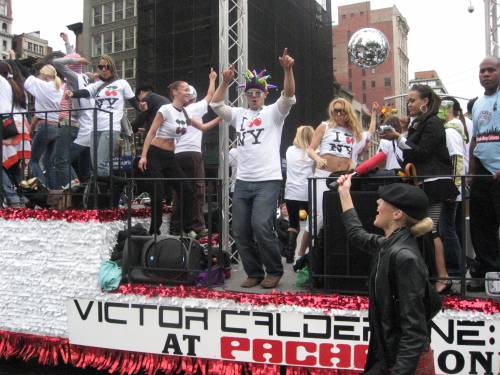
Ian Hunter, Hoboken’s own Jim Mastro, and the rest of the Rant Band will close out Hoboken Arts & Music Festival on Sunday at 4:30 (photo by twi-ny/mdr)
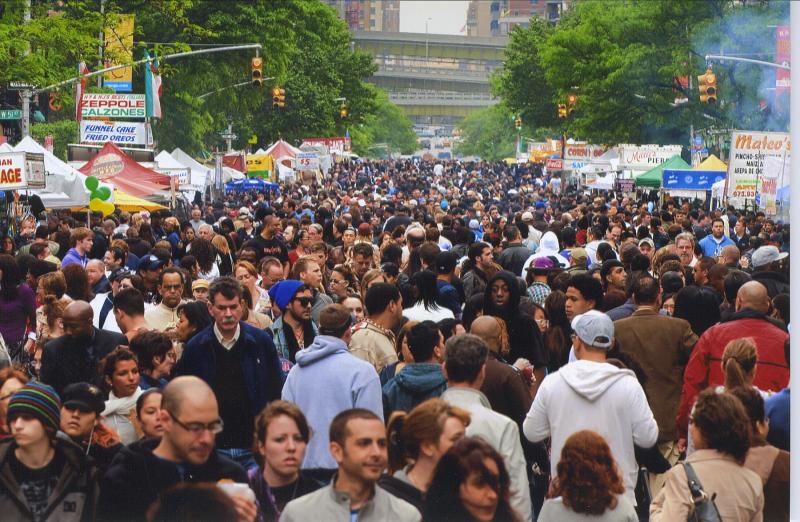
After the Baseball Project reach their prearranged pitch count, Ian Hunter & the Rant Band will be brought in to close things out. Hunter, the former leader of Mott the Hoople, is still making outstanding albums, the most recent being 2009’s Man Overboard and 2007’s Shrunken Heads (both on Yep Roc), showing that he knows how to go from a fastball to a curve to a slider like the best of them, and oh those change-ups. Songs such as “Stretch,” “Soul of America,” “Up and Running,” and “Win It All” might not actually be about baseball, but Hunter loads the bases with those newer tunes, then hits it out of the park with such longtime favorites as “Once Bitten, Twice Shy,” “All the Way from Memphis,” “All the Young Dudes,” “Just Another Night,” “Michael Picasso,” and “23A, Swan Hill.” Hunter is a genuine rock star who still has Hall of Fame stuff; don’t miss this great chance to catch him and his excellent team live, and for free. (The fair itself begins at 11:00 am, with fine artists displaying their wares between Second & Third Sts., childrens’ activities in a special area on Third St. with rides, games, arts & crafts, clowns, and a puppet show, crafters showing off their handmade goods, and local restaurants offering an international selection of food. Among the many other live performers are Hudson Dance & Movement, the Fuzzy Lemons, Genesis Dance Company, and Dawnee from Peanut Butter n Jammin at the Kid Zone on Third St., Bandwidth, NYC School of Rock, Garden Street Music, Goodbye Friday, Mad Dog Mary, Gene d’ Plumber, and Frankie Morales and the Mambo of the Times Orchestra at the Sixth St. Stage, and Davey & the Trainwreck, Bern & the Brights, and the Pretty Babies at the Observer Hwy Stage.)


From 1973 until her death in 2009, legendary dancer and choreographer Pina Bausch ran Tanztheater Wuppertal, the German company that changed the face of dance theater forever with such seminal productions as Rite of Spring, Café Müller, Danzón, Masurca Fogo, and so many more. In 1978 she staged Kontakthof, collaborating with Rolf Borzik, Marion Cito, and Hans Pop, set to music by Juan Llossas, Charlie Chaplin, Anton Karas, Sibelius, and other composers. In 2000, she revisited the piece with a cast of senior citizens, and eight years later she turned the roles over to a group of Wuppertal high schoolers, most of whom had never heard of her and had never danced before. Director Anne Linsel and cinematographer Rainer Hoffmann follow the development of this very different production in Dancing Dreams, speaking with the eager, nervous participants, who talk openly and honestly about their hopes and desires, as well as with rehearsal directors Jo-Ann Endicott and Benedicte Billet, who do not treat the teens with kid gloves but instead are trying to get them to reach deep inside of themselves and hold nothing back. When Bausch shows up to choose the final cast, telling the teenagers that she doesn’t bite, the tension mounts. Dancing Dreams is an intimate look at the creative process, about dedication and determination and what it takes to be an artist. It suffers at times from feeling too much like a reality television show, mixing American Idol and So You Think You Can Dance with the fictional Glee, but it also offers a last glimpse at Bausch, whose final interview is captured in the film. “You might think I’ve had enough of Kontakhtof,” she says at one point. “But every time it’s a new thing.” Dancing Dreams is screening May 1 & 2 as part of MoMA’s KINO 2011: New Cinema from Germany series, which runs April 27 – May 2 and also includes Gereon Wetzel and Jorg Adolph’s How to Make a Book with Steidl, Tom Tykwer’s Drei (Three), Friedmann Fromm’s Weissensee (The Weissensee Saga: A Berlin Love Story), Florian Cossen’s Das Lied in mir (The Day I Was Not Born), Philip Koch’s Picco, and a Next Generation presentation of short works.