this week in dance

RESIDUE: AN INSTALLATION BY EIKO & KOMA

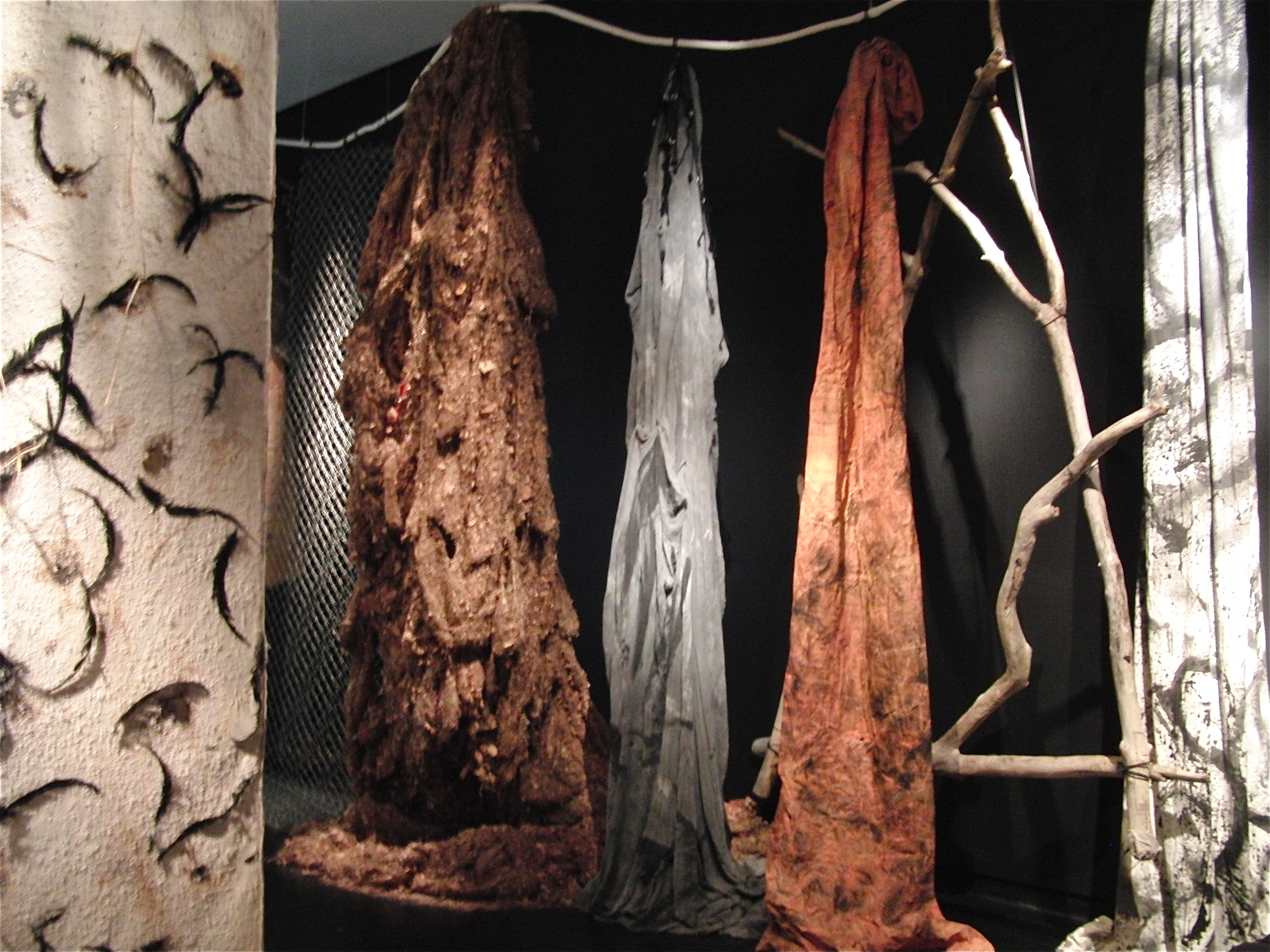
Eiko & Koma take a look back at their life and career in “Residue” (photo by twi-ny/mdr)

The New York Public Library for the Performing Arts
Dorothy and Lewis B. Cullman Center, Vincent Astor Gallery
40 Lincoln Center Plaza, 111 Amsterdam Ave. between 64th & 65th Sts.
Through Saturday, October 29, free, 12 noon – 6:00 or 8:00
www.eikoandkoma.org/residue
www.nypl.org

It’s been quite a year for Japanese dance couple Eiko & Koma here in their home base of New York City. Celebrating their fortieth anniversary together, Eiko Otake and Takashi Koma Otake performed the postapocalyptic dance installation Naked at the Baryshnikov Arts Center in the spring, went for a dip in the Paul Milstein Pool on Lincoln Center’s Hearst Plaza for the mesmerizing Water this summer, and held numerous local talks and workshops. And, as part of their three-year Retrospective Project, they’re taking a look back at their career in the unique gallery installation “Residue,” on view at the New York Public Library for the Performing Arts through October 29. Designer Eric Bissell has transformed the Vincent Astor Gallery into a dark, hypnotic space featuring paraphernalia from throughout Eiko & Koma’s career, including costumes, sets, a series of white rectangular wells screening videos at the bottom, and a central structure similar to the Naked wall where visitors can walk in, sit down, and watch Naked on a monitor on the floor. “Residue” highlights such works as Hunger, River, White Dance, Thirst, Grain, Wind, Tree, and Offering, organic pieces in which Eiko and Koma are often naked, performing in the outdoors or on stark sets. “It is very clear nothing lasts,” Koma says in the exhibition brochure. “So this installation too is not an attempt to last or save what we have done,” Eiko responds. “We just look at the ‘dust’ and enjoy that we can look at it for now.” Visitors will be able to look at and enjoy the dust of Eiko and Koma’s continuing adventurous career through the end of the week, and as an added treat the duo will be at the gallery on Saturday from 4:00 to 6:00 to meet and greet everyone who stops by.

JOHN KELLY: FIND MY WAY HOME

John Kelly’s FIND MY WAY HOME has found its way home at New York Live Arts

New York Live Arts
Bessie Schönberg Theater
219 West 19th St. between Seventh & Eighth Aves.
October 21-23, 25-29, $15-$40
212-691-6500
www.newyorklivearts.org
www.johnkellyperformance.org

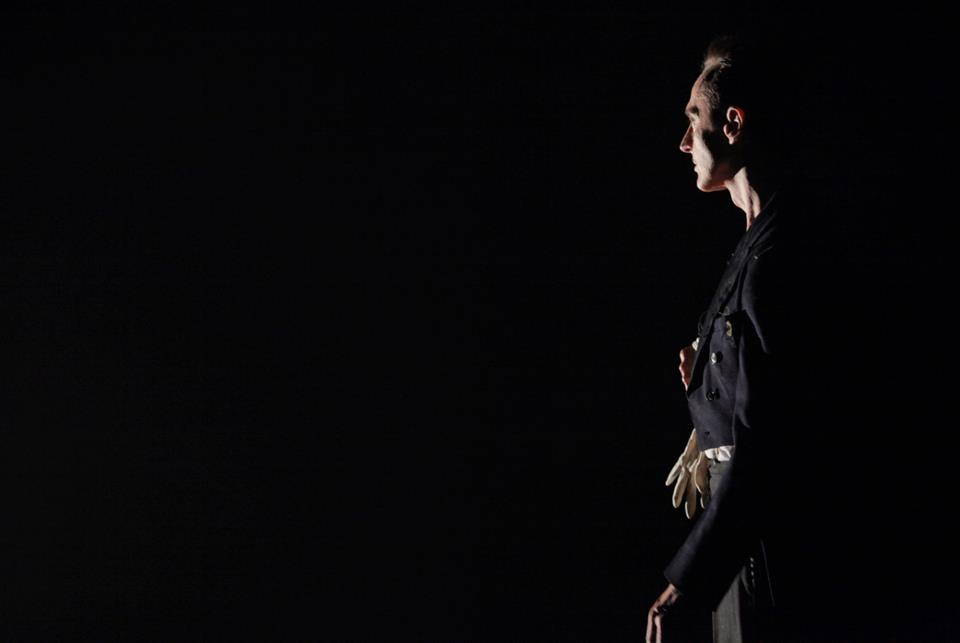
Over the past several years, innovative multidisciplinary performance artist John Kelly has been revisiting past works while also continuing to challenge himself and his audience in exciting new pieces, whether it’s a final restaging of Pass the Bluttwurst, Bitte at La MaMa last year or the world premiere of the highly adventurous The Escape Artist at P.S. 122 this past April. Kelly is currently revising his Bessie Award-winning Find My Way Home at New York Live Arts, the new name for the space where it was commissioned in 1988, by the former Dance Theater Workshop. (So one could say that is has indeed found its way home.) Set during the Great Depression, Find My Way Home, which recently held open rehearsals at the Museum of Arts and Design as part of that institution’s Risk + Reward series, is a reimagining of the Orpheus myth that also incorporates elements of the AIDS epidemic of the 1980s. Featuring eleven dancers and singers and film projections, Find My Way Home runs at NYLA through October 29; there will be a preshow talk October 25 with Lucy Sexton and a postshow talk October 28 with Bonnie Marranca. Kelly is a mesmerizing performer with an endlessly creative mind who is always worth watching, no matter what he is doing, so we cannot recommend this show highly enough.

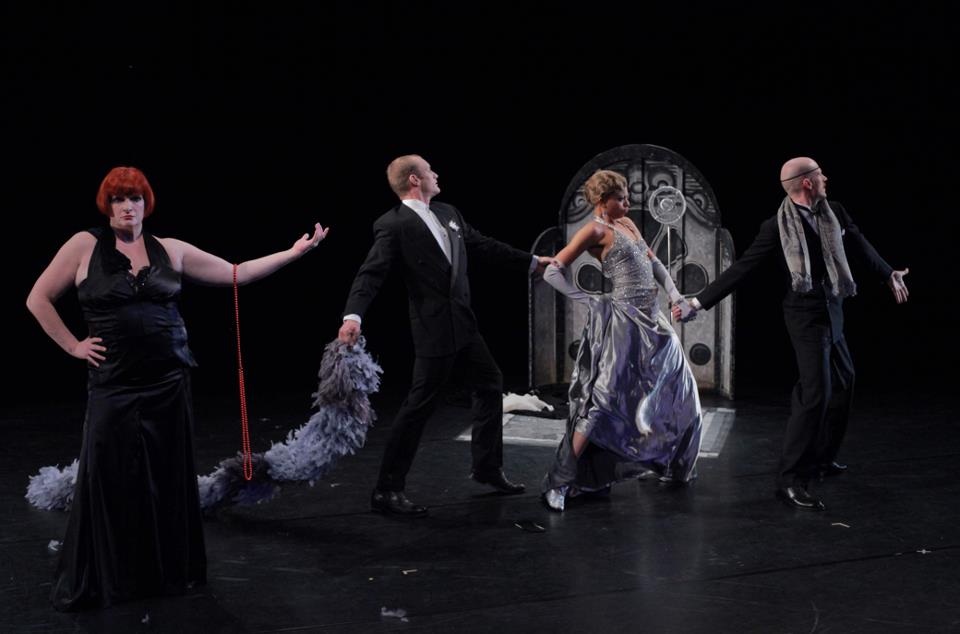
John Kelly reimagines the tale of Orpheus and Eurydice in wonderful new production of FIND MY WAY HOME

Update: When John Kelly first presented Find My Way Home at Dance Theater Workshop in 1988, it was infused with the growing AIDS epidemic, dealing with the horrific loss being suffered particularly in the arts community. He brought it back ten years later, and he has revised it yet again, in a wonderfully fresh version running at New York Live Arts through October 29. Even though Find My Way Home 3.0 is set during the Great Depression, it is hard not to think of the current financial crisis and the Occupy Wall Street movement, as the multimedia production opens with obscenely wealthy aristocrats (Daniel Squire, Cecelia Jones, Aaron Mattocks, and original cast member Marleen Menard) treating parlour maid Eurydice (Kyle de Camp, also returning from the original production) like a slave, the rich abusing the poor. Radio crooner Orfeo (Kelly) arrives and sings in front of a faux fireplace, focusing his attention on the maid, and the two soon run away together, Orfeo ripping off Eurydice’s French maid outfit to reveal a sexy red dress. But their love comes to a screeching halt when a car runs them over, killing Eurydice and blinding Orfeo, who then travels to the Underworld to try to get her back and rekindle their passionate flame. Find My Way Home features virtually no dialogue, instead playing out like an old-time silent film, going back and forth between black and white and color, with live musical accompaniment by pianist Alan Johnson, cellist Mary Wooten, and vocalists Philip Anderson, Amanda Boyd, Gregory Purnhagen, and Barbara Rearick. Carefully choreographed movement, Anthony Chase’s ghostly filmed projections, and Stan Pressner’s lighting design — which includes an effective strobe light scene and another in which Orfeo crawls across windowlike rectangles glowing across the floor — combine with popular songs by Cole Porter, Noël Coward, and George Gershwin and classical music and opera pieces by Alban Berg, Claude Debussy, Giuseppe Verdi, and of course, Christoph Willibald Gluck’s Orfeo ed Eurydice to create a stirring production that honors its past while still remaining relevant today. (To further that, a lobby exhibition displays several of Kelly’s 1988 preparatory drawings, a video of rehearsals for the original production, and the remaining section of set designer Huck Snyder’s backdrop; Snyder died of AIDS in 1993 at the age of thirty-nine.) It is absolutely thrilling that Find My Way Home has indeed found its way home.

BEIJING DANCE THEATER: HAZE

Beijing Dance Theater makes its U.S. debut at BAM’s Next Wave Festival with HAZE (photo by Tan Shaoyuan)

BAM Next Wave Festival
BAM Harvey Theater
651 Fulton St.
October 19-22, $16-$50, 7:30 (October 20 performance reviewed)
718-636-4100
www.bam.org

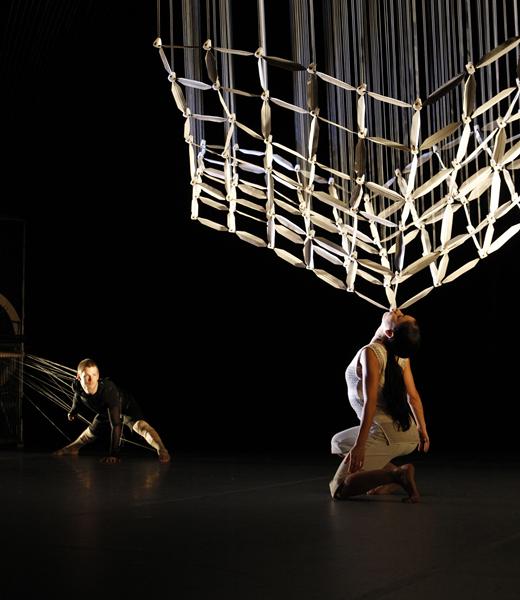
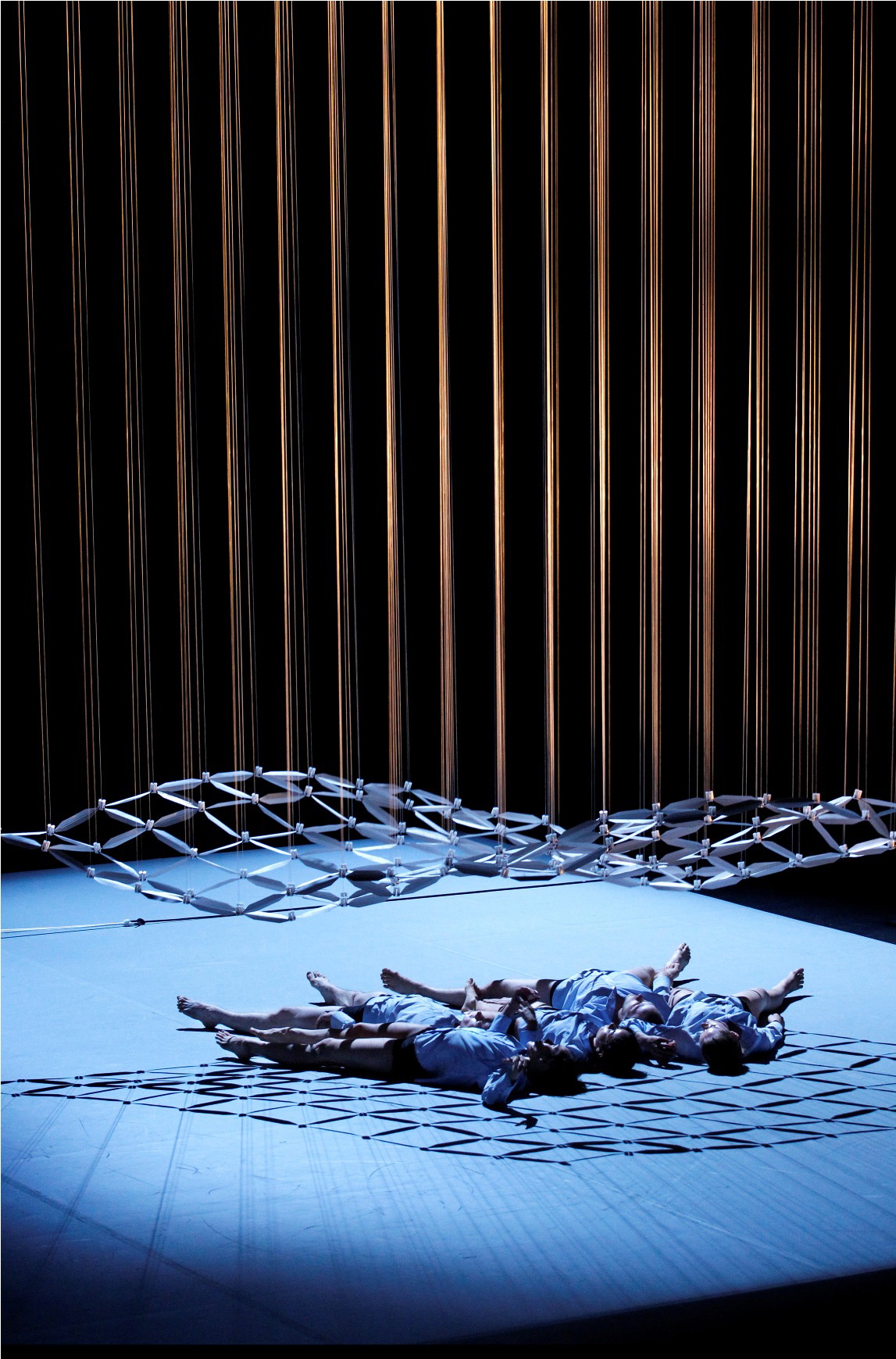
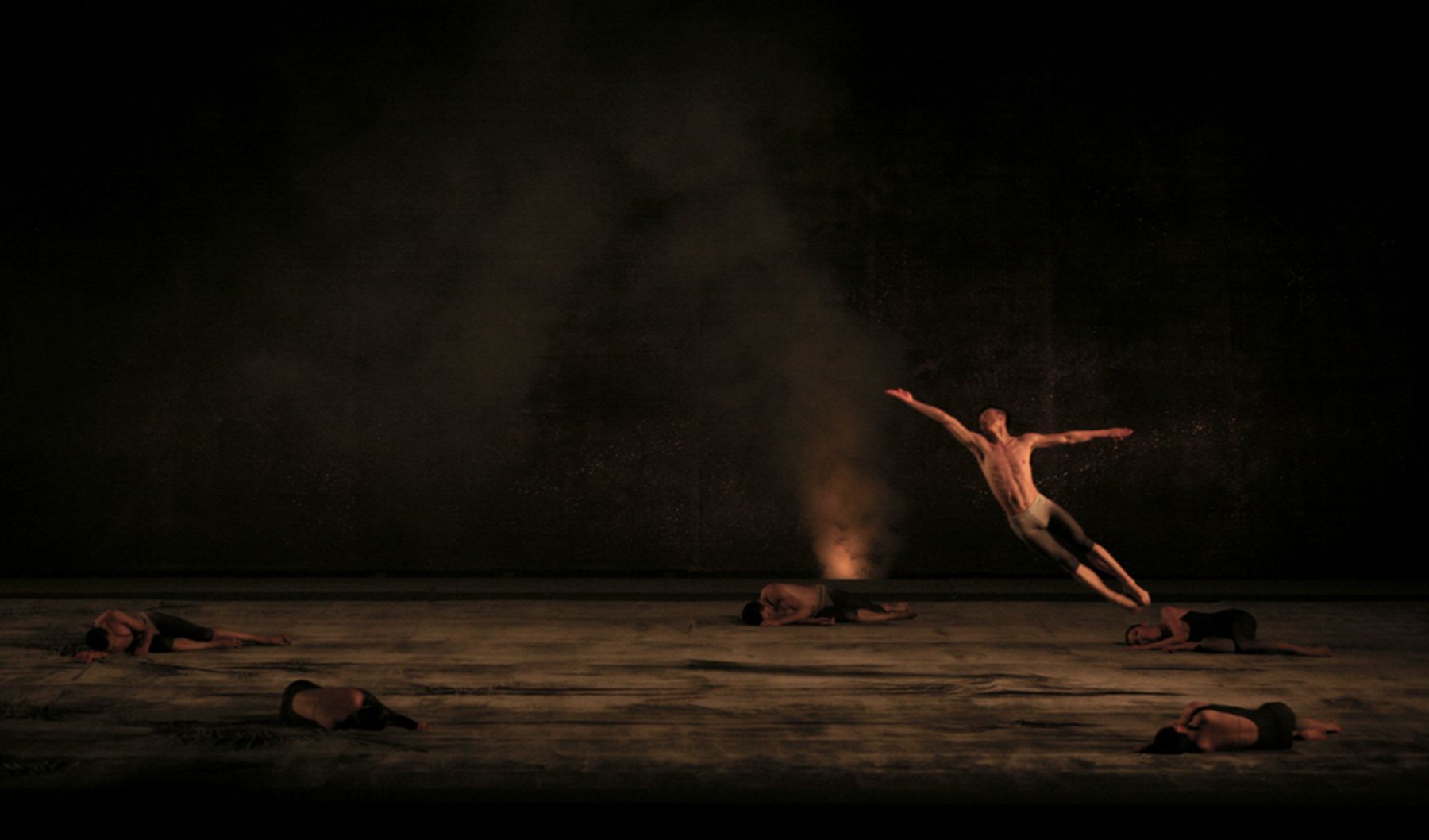
In October 2005, the BAM Next Wave Festival presented Zhang Yimou’s lush transformation of his 1991 film, Raise the Red Lantern, into a sumptuous ballet choreographed by Wang Xinpeng and Wang Yuanyuan. A former resident choreographer for the National Ballet of China who also participated in the opening ceremonies of the 2008 Beijing Olympics (with Zhang), Yuanyuan is now back at the Next Wave Festival with the U.S. premiere of Haze, performed by Beijing Dance Theater, which she began in December 2008 with lighting designer Han Jiang and set designer Tan Shaoyuan. BJD seeks to meld traditional ballet, Chinese folklore and history, and contemporary dance into a more modern experience. Running approximately seventy minutes, Haze is a piece for fourteen dancers, set to music by Henryk Górecki and Biosphere.

Dancers evoke Socialist imagery in Beijing Dance Theater’s HAZE at BAM (photo by Jack Vartoogian)

Update: Beijing Dance Theater made its U.S. debut with Haze, an often beautiful but repetitive and dispassionate abstract exploration of the current environmental and economic crises facing China. The production is set on a spongy surface that allows the company of seventeen dancers to jump, roll, and dive in unusual ways but also limits other type of more traditional movements; the result is that the performers are often slightly but noticeably out of sync. The soundtrack, by Henryk Górecki and Biosphere, primarily consists of overbearing, overly emotional electronic drones that hover over the dancers like a thick cloud, battling it out with a smoke machine that creates a constant haze. Choreographer Wang Yuanyuan has come up with some wonderfully creative moves, and watching the dancers’ feet submerge into the floor evokes a visceral feeling, adding a shared physicality between performer and audience. Wang has divided Haze into three sections, “Light,” “City,” and “Shore,” but never quite achieves the narrative flow she aspires to. Still, there is a lot to admire about Haze, which received a lengthy, rapturous standing ovation the night we attended.

WALLS AND BRIDGES: HUMAN BEAUTY AND ITS SOCIAL CONSTRUCTION

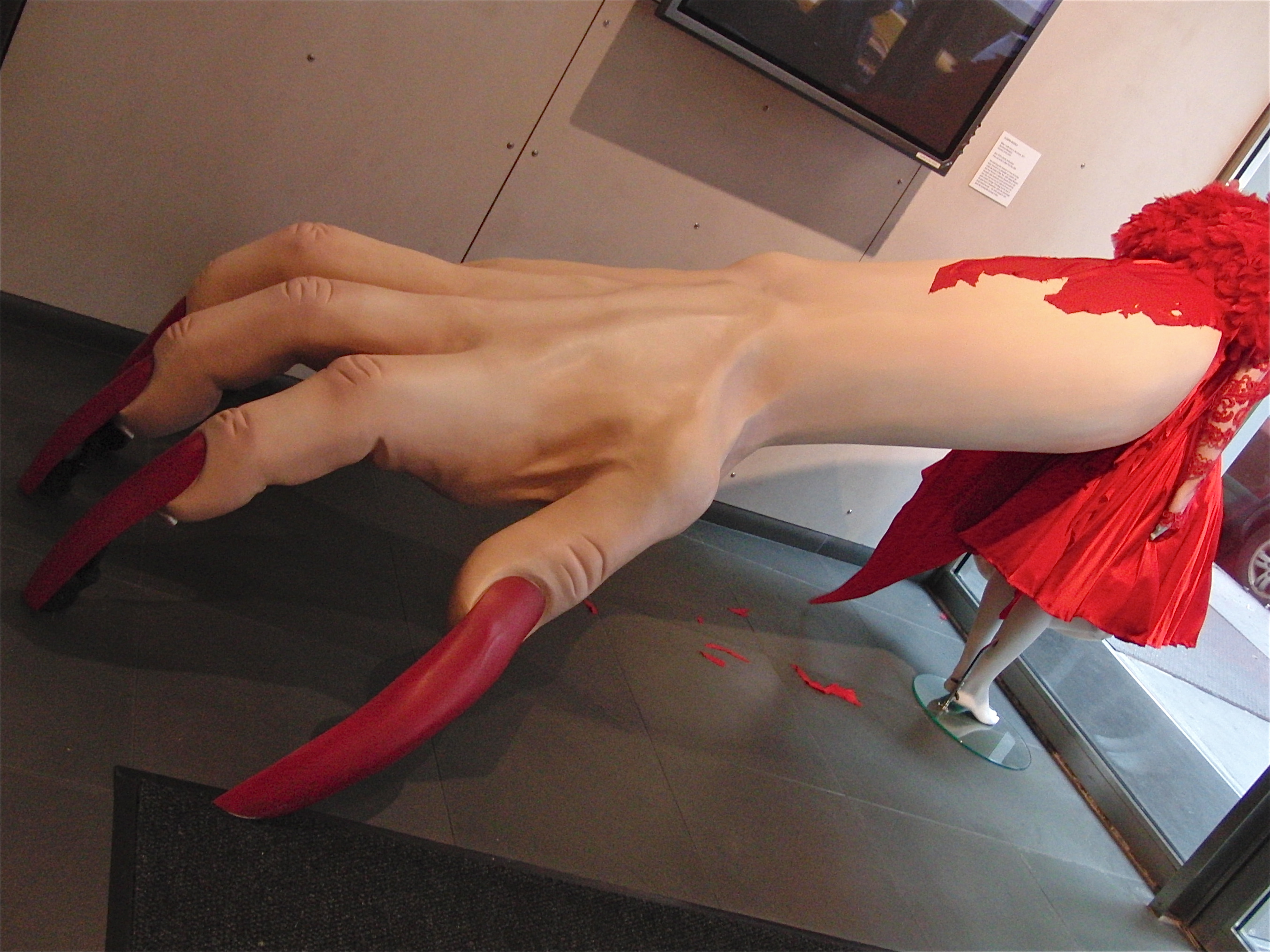
Clarina Bezzola’s “When I Walk Alone in the Streets” greets visitors at the Austrian Cultural Forum (photo by twi-ny/mdr)

Austrian Cultural Forum
11 East 52nd St. between Madison & Fifth Aves.
Wednesday, October 19, free, RSVP required at 212-319-5300 ext222, 6:30
Walls and Bridges festival continues through October 28
Beauty Contest exhibition continues daily through January 3, 10:00 am – 6:00 pm
www.acfny.org
www.wallsandbridges.net/en

Featuring works by twenty international artists, “Beauty Contest” examines the ever-evolving nature of what is considered beautiful in today’s society. Pieces by Cindy Sherman, Kalup Linzy, Rashaad Newsome, Anna Jermolaewa, Katarina Schmidl, Evangelia Kraniot, and others look at the concept of beauty from a multitude of different angles, often incorporating humor to make their point. For example, it’s hard not to initially smile upon first encountering Clarina Bezzola’s “When I Walk Alone in the Streets,” which greets visitors to the Austrian Cultural Forum with an enormous hand and teeth, but there’s more to it than just its big, bold colors. On October 19, dance writer Gia Kourlas will host the panel discussion “Human Beauty and Its Social Construction” at ACFNY, with François Chaignaud, Jon-Jon Goulian, Silke Grabinger, and Gressett Salette talking about beauty and its preconceptions, followed by a performance by Chaignaud and Grabinger. The event is part of the semiannual Walls and Bridges festival, ten days of “transatlantic insights” gathered this time under the theme of “Infinite Affinities.” The festival continues through October 28 with such programs as “The Actual Lives of Catherine Millet and Robert Storr” at FIAF on October 20 (free, 7:30), “Screening Identities: Danny Glover in Conversation with Manthia Diawara” at the Invisible Dog on October 22 (free, 3:30), “Please Kill Me: A Punk Musical Show” by Mathieu Bauer at the Invisible Dog on October 23 (free, 6:30), “Sonic Affinities: A Piano Performance by Jay Gottlieb” at the New School on October 24 (free, 8:30), and “The Space-Time Continuum: What the Future Has in Store for Human Beings” with Étienne Klein at the New York Public Library on October 26 ($15-$25, 7:00).

DanceNOW 2011 JOE’S PUB FESTIVAL

Annual DanceNOW festival will take place in newly renovated Joe’s Pub

Joe’s Pub
425 Lafayette St. between East Fourth St. & Astor Pl.
October 19-22, $15-$20, 7:00
212-967-7555
www.joespub.com
www.dancenownyc.org

Encouraging innovative dance by giving companies five minutes on a tiny stage, DanceNOW returns to a newly redesigned Joe’s Pub this week for four nights of specially created presentations from some forty choreographers. The ninth season features new names as well as more familiar groups offering unique, intimate experiences; the lineup includes, among others, Camille A. Brown, Dash/Gregory Dolbashian, Sean Curran, and Sidra Bell Dance on Wednesday, Jamal Jackson Dance Company, Luke Murphy/Movement Underground, binbinFactory, and small apple co. on Thursday, Hilary Easton + Company, Gina Gibney Dance, Nicholas Leichter Dance, Amber Sloan, and TAKE Dance on Friday, and BANGdance, Jane Comfort and Company, Doug Elkins Choreography, Liberation Dance Theater, Ellis Wood Dance, and zvidance on Saturday. The companies will be competing in a nightly DanceNOW Challenge, complete with audience voting, with the winners receiving $1,000 for development, a week-long residency, and a twenty-hour space grant.

CLOUD GATE DANCE THEATRE OF TAIWAN: WATER STAINS ON THE WALL

Cloud Gate Dance Theatre returns to BAM with WATER STAINS ON THE WALL (photo by Liu Chen-hsiang)

BAM Next Wave Festival
Howard Gilman Opera House
30 Lafayette Ave. between Ashland Pl. & St. Felix St.
October 12-15, $16-$50, 7:30
718-636-4100
www.bam.org
www.cloudgate.org

Since 1973, company founder and artistic director Lin Hwai-min and the Cloud Gate Dance Theatre have been presenting elegant, exquisitely choreographed shows centered around meditative movement inspired by Taoist and Buddhist philosophy and ancient culture, incorporating traditional, contemporary, and classical dance in mesmerizing ways. The company has been appearing at BAM’s Next Wave Festival since 1995, in such elegant productions as Moon Water and Wild Cursive. This week they’re back in Brooklyn with the international premiere of Water Stains on the Wall, a seventy-minute multimedia work that explores Chinese calligraphy, with music by Toshio Hosokawa, lighting design by Lulu W. L. Lee, projections by Ethan Wang, costumes by Lin Ching-ju, and set design and choreography by Lin. Lin will also give an Iconic Artist Talk on Thursday night at BAM Rose Cinemas at 6:00 ($20), moderated by Rachel Cooper, as part of BAM’s 150th anniversary celebration.

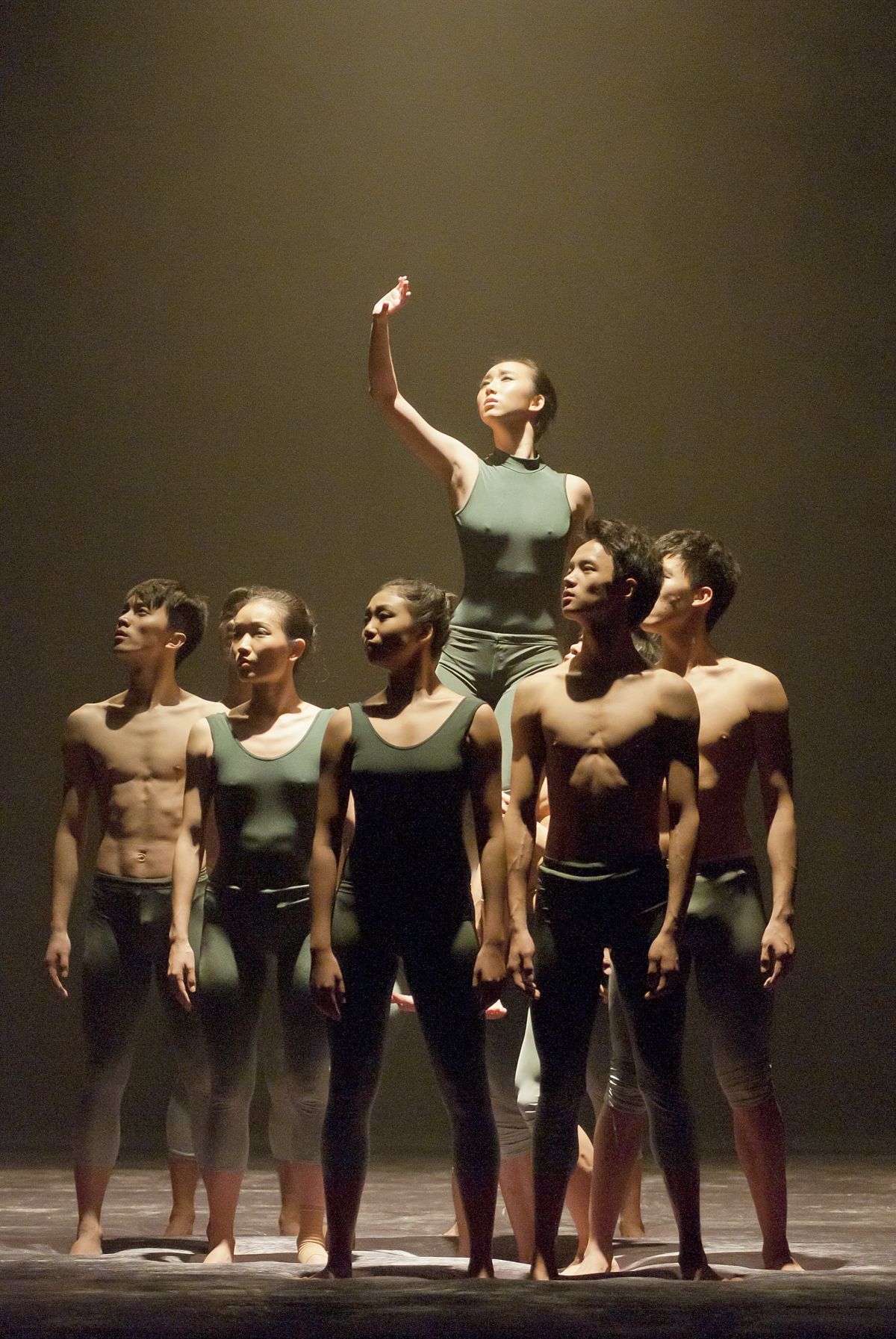
Dancers appear to float on clouds in WATER STAINS ON THE WALL (photo by Liu Chen-hsiang)

Update: On a slightly tilted white stage resembling Japanese rice paper, sixteen dancers slowly move about, sometimes in unison, sometimes individually, as black and gray inky, shadowy splotches drift across the floor like clouds. All of the dancers but one exit, leaving Su I-Ping to perform a brief solo, soon joined by Yang I-Chun. Through a prologue and seven sections over the course of seventy minutes, dancers slowly come and go, at times breaking out into smooth, fluid movements, waving their arms, lifting their legs, almost as if they are calligraphic letters come to life. Identically garbed in diaphanous, translucent, floor-length billowing pants and either bare-chested (seven men) or in flesh-colored leotards (nine women), the performers never once come into contact with one another, each a single, individual part of the whole, floating on the formations below them — which often evoke memory and the past as much as clouds — as Toshio Hosokawa’s compelling score shifts from electronic noise to minimalist percussion and piano. The Cloud Gate Dance Theatre of Taiwan’s Water Stains on the Wall, inspired by a legendary Tang Dynasty tale about calligraphy, is another breathtaking presentation from one of that country’s most popular companies, which has been bringing their mesmerizing works to BAM’s Next Wave Festival since 1995. “Brooklyn in late autumn can be freezing and wet, especially in comparison to Taipei,” company founder and artistic director Lin Hwai-min explains in a program note, “but to all of us in Cloud Gate — BAM is a center of warmth.”

CROSSING THE LINE: FAUSTIN LINYEKULA STUDIOS KABAKO: MORE MORE MORE… FUTURE

Faustin Linyekula’s MORE MORE MORE… FUTURE has its New York premiere at the Kitchen this week as part of FIAF’s Crossing the Line Festival (photo © Agathe Poupeney)

The Kitchen
512 West 19th St. between Tenth & Eleventh Aves.
October 12-15, $15, 8:00
212-255-5793
www.fiaf.org

Part of the “Endurance/Resistance/Inspiration” section of FIAF’s ninth annual Crossing the Line Festival, dancer/choreographer Faustin Linyekula’s more more more… future examines the past, present, and future of life in his native Democratic Republic of Congo. “We deserve more than the vanishing shadows of delusions. We deserve more than headlines and media compassion,” he writes about the evening-length piece, having its New York premiere October 12-15 at the Kitchen. “More than the false happiness that blinds our minds. More than assistance, we deserve justice. More than money, we deserve dignity. More than a glorious past, we long for a future.” Wearing colorful, oversized, enveloping costumes created by Lamine Badian Kouyaté/Xuly Bët at the very last minute, three dancers, including Linyekula, move to live music played onstage by a five-piece band led by music director and guitarist Flamme Kapaya, set to poems by political prisoner Antoine Vumilia Muhindo, a childhood friend of Linyekula’s. “To be positive is the most subversive. Celebrating is a way of resisting,” Linyekula notes.