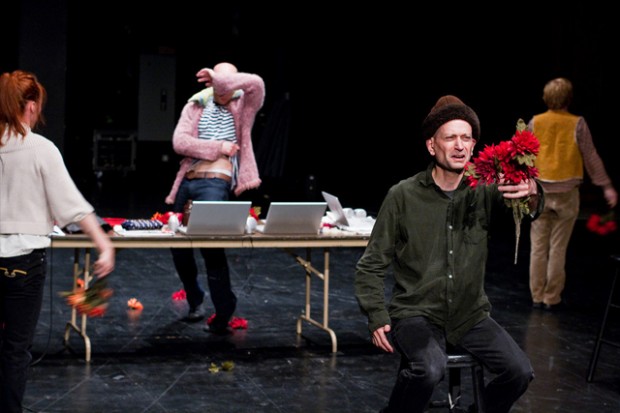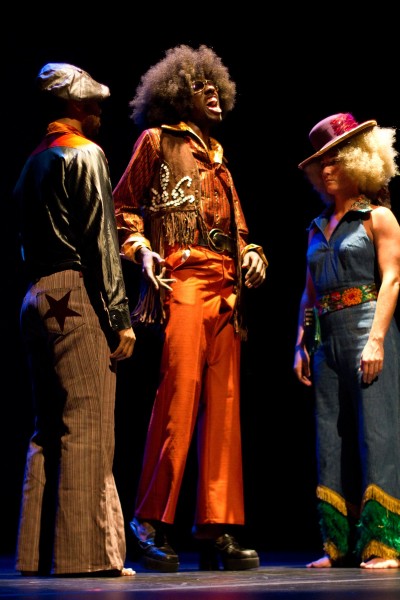
David Dorfman Dance gets funky at the Joyce (photo courtesy of Adam Campos)
David Dorfman Dance
Joyce Theater
175 Eighth Ave. at 19th St.
January 24-29, $10-$39
212-645-2904
www.joyce.org
www.daviddorfmandance.org
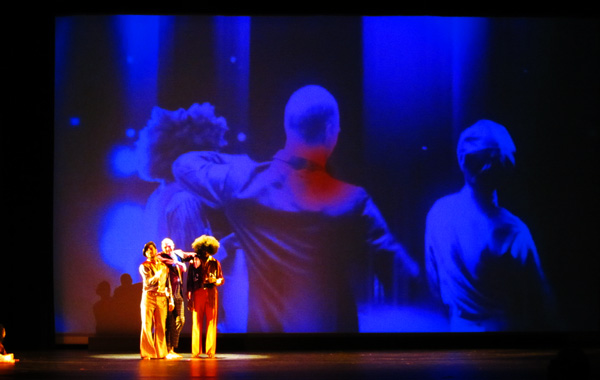
David Dorfman brings da funk — and so can you — in the New York-based choreographer’s latest evening-length work, Prophets of Funk, continuing at the Joyce through January 29. The conclusion to an unofficial trilogy that began with underworld and Disavowal, the new fifty-five-minute piece is an uplifting and energizing celebration of music, dance, and imagery set to the songs of late 1960s, early 1970s icons Sly & the Family Stone. Amanda Bujak’s hippie costumes make it look like performers Kyle Abraham, Meghan Bowden, Luke Gutgsell, Renuka Hines, Raja Kelly, Kendra Portier, Jenna Riegel, Karl Rogers, and Whitney Lynn Tucker stepped right out of the road company of Hair, featuring lots of frills as the dancers move and groove to such fab tunes as “Underdog,” “Stand,” “Love City,” “If You Want Me to Stay,” and, of course, “Dance to the Music” and “Everyday People.” Each dancer plays a different character, led by Kelly as Sly, sporting a big Afro, cool shades, and silver elevator shoes, and Abraham as the text-spouting comic relief. Dorfman himself occasionally cuts a diagonal path across the stage as the elder statesman of the group. With images of the real Sly Stone, wafting marijuana smoke, and psychedelia projected onto a large screen behind them, the company breaks off into several trios, duets, and solos, with particularly beautiful moments supplied by Tucker, Gutgsell, and Portier. Dorfman is actually listed as artistic director, with the entire company credited with the choreography, the dancers given the freedom to not only create their movement but to improvise every night, leading to performances that feel fresh and invigorating. The show does touch upon some of the more political aspects of Stone’s oeuvre, including dealing with racism in “Don’t Call Me Nigger, Whitey,” but for the most part Prophets of Funk follows Sly’s advice of “Ooh sha sha / We gotta live together.” At the end of the performance, the dancers and audience can indeed live together, as everyone is invited onstage to show off their “Scooby dooby dooby.” (Be sure to arrive early to take some dance lessons downstairs at the Joyce.)