this week in dance

TAKE DANCE: SALARYMAN

TAKE Dance’s SALARYMAN is back for a return engagement at the Baruch Performing Arts Center

Baruch Performing Arts Center, Nagelberg Theater
17 Lexington Ave. at 23rd St.
February 8-11, $20, 7:30
866-811-4111
www.takedance.org
www.baruch.cuny.edu/bpac

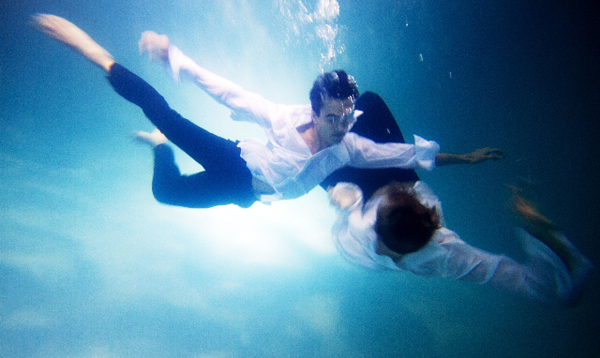
If you missed its world premiere at Dance Theater Workshop last year, you now have another chance to catch TAKE Dance’s Salaryman, the New York-based company’s first full evening-length production, running February 8-11 at the Baruch Performing Arts Center. A Juilliard graduate who cut his teeth performing in the Paul Taylor Dance Company, Tokyo-born dancer-choreographer Takehiro Ueyama is familiar with the plight of Japan’s salaried businessmen who toil through a repetitive daily cycle that rarely changes; in fact, he researched the work by interviewing many Japanese executives. The piece, inspired by the song “Salaryman” by the late Japanese rock star and actor Kiyoshiro Imawano, is choreographed for eleven dancers (Kristen Arnold, Jill Echo, John Eirich, Kile Hotchkiss, Gina Ianni, Clinton Edward Martin, Nana Tsuda Misko, Lynda Senisi, Kei Tsuruharatani, Marie Zvosec, and Ueyama), with film projections by Yuko Takebe, set design by Yukinobu Okazaki, costumes (primarily business suits) by Taylor Forrest, lighting by Jason Jeunnette, and music by Joy Askew, Aun, Eve Beglarian, Michael Gordon, Boban Markovic! Orkestar, RC Succession, and others, with live violin by composer Ana Milosavljevic. “My initial intention for Salaryman was to showcase Japan’s business landscape,” Ueyama explained in a statement. “Now, as the Japanese struggle to survive one of history’s largest catastrophes, I recognize that their innate loyalty and stringent norms are indicative of not just the corporate culture but of the Japanese community as a whole and will ultimately help the country thrive once again.”

FIRST SATURDAYS: BLACK MALES DEFYING STEREOTYPES

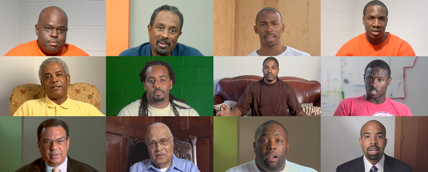
Chris Johnson and Hank Willis Thomas, with Kamal Sinclair and Bayeté Ross Smith, stills from “Question Bridge: Black Males,” multichannel video installation, 2012 (courtesy of the artists and Jack Shainman Gallery, New York)

Brooklyn Museum
200 Eastern Parkway at Washington St.
Saturday, February 4, free, 5:00 – 11:00 (some events require free tickets distributed in advance at the Visitor Center)
212-864-5400
www.brooklynmuseum.org

The Brooklyn Museum turns its attention to Black History Month for its February First Saturdays program, focusing on the exhibition “Question Bridge: Black Males,” in which Hank Willis Thomas, Chris Johnson, Bayeté Ross Smith, and Kamal Sinclair traveled around the country interviewing 150 black men in a dozen locations and editing the results into a multiscreen video installation. On Saturday night there will be an Action Station where visitors can add their own questions on the topic of identity, a discussion with the creative team, pop-up dances by Renegade Performance Group inspired by the exhibit, an interactive workshop led by “Question Bridge” education director Samara Gaev, and a dance party with DJ Stormin’ Norman featuring songs by black men. In addition, there will be live music by Game Rebellion, curator Shantrelle P. Lewis will discuss her Museum of Contemporary African Diaspora Arts exhibit “Dandy Lion: A Re(de)fined Black Masculine Identity,” hands-on art will help attendees create a mixed-media piece based on Kehinda Wiley’s work, museum guides will lead a tour about defying gender stereotypes, Daniel Bernard Roumain will play parts of his “Symphony for the Dance Floor” with Lord Jamar, Carla Peterson will discuss her book Black Gotham: A Family History of African Americans in Nineteenth-Century New York City, and the Brooklyn Circus will host a fashion runway show. And the galleries will be open late, giving visitors plenty of opportunity to check out “HIDE/SEEK: Difference and Desire in American Portraiture,” “Rachel Kneebone: Regarding Rodin,” “Raw/Cooked: Shura Chernozatonskaya,” “Newspaper Fiction: The New York Journalism of Djuna Barnes, 1913–1919,” “Work of Art: Kymia Nawabi,” and “19th-Century Modern.”

JIN XING DANCE THEATRE SHANGHAI: SHANGHAI TANGO

Jin Xing Dance Theatre Shanghai makes a very welcome return to the Joyce with SHANGHAI TANGO (photo by Angelo Palombini)

Joyce Theater
175 Eighth Ave. at 19th St.
January 31 – February 5, $10-$39
212-645-2904
www.joyce.org

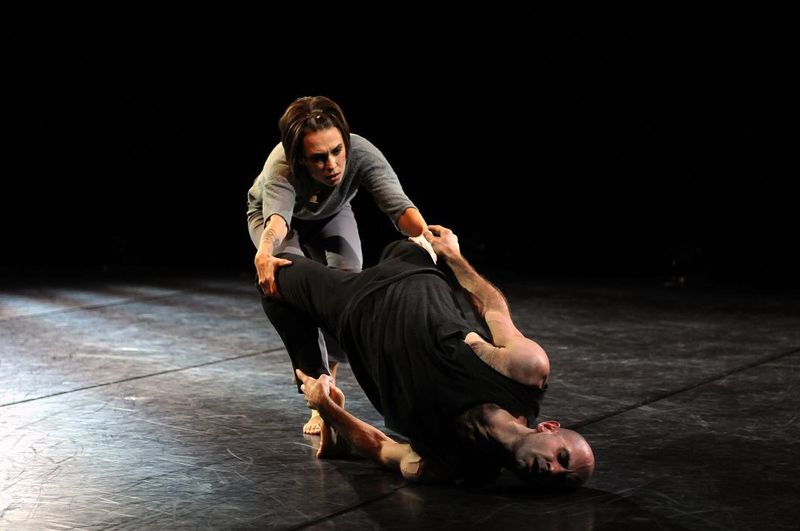
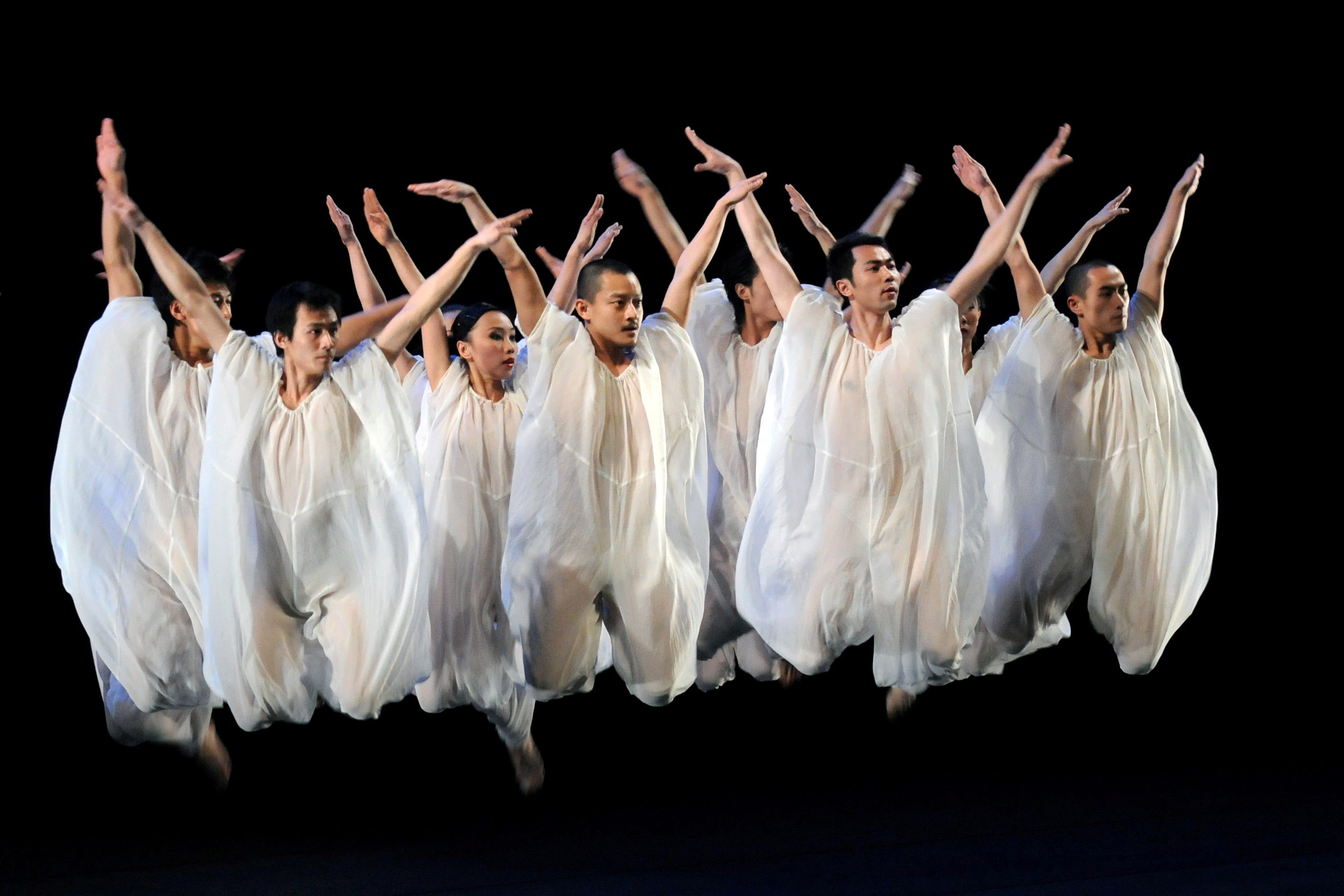
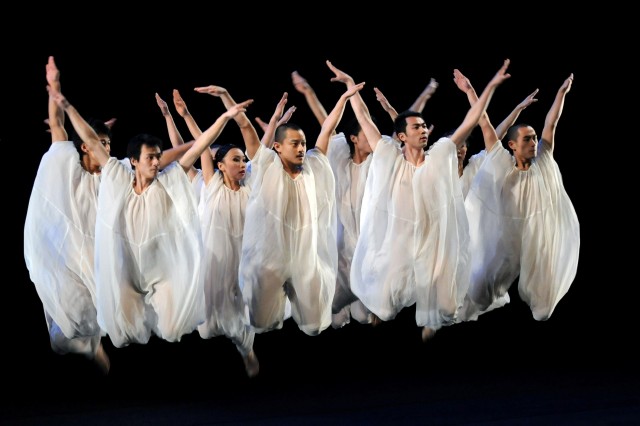
Performing in New York City for the first time since undergoing gender reassignment surgery fifteen years ago, ballerina, choreographer, and People’s Liberation Army colonel Jin Xing leads her company, Jin Xing Dance Theatre Shanghai, in a lyrical, beautiful, stirring show at the Joyce. Jin Xing — who was born to Korean parents in Shanghai in 1967, is married to a German man, and has three adopted children — fills Shanghai Tango with ten exquisite works from throughout her career. The show opens with Liu Minzi spinning around and around on her toes, a light shining on her from above, casting a holy glow as twelve dancers pick up flowing white robes that surround her, the spirit of dance gathering her disciples as Dead Can Dance’s “The Host of Seraphim” plays. It’s a captivating narrative that prepares the audience for an evening of gorgeous set pieces featuring colorful, elegant costumes designed by Jin Xing, an eclectic score with music by Johann Strauss, John Williams, Astor Piazzola, and Rene Aubry, a lovely, unique movement vocabulary that mixes modern dance with ballet, numerous references to the Chinese Cultural Revolution, and a surprising sense of humor. In “Dance 02,” Dai Shaoting and Han Bin deliver a stunning pas de deux, spending much of the time with their backs on the floor, at one point Dai delicately balancing on Han with one leg on his chest and the other on his raised knee. In “Red Wine,” the male members of the company move around Jin Xing, who is seated in a chair, and ultimately give her the world’s biggest lap dance. In “Four Happiness,” Deng Mengna, Li Meilin, Liu Minzi, and Pang Kun dance on their knees all in a row, with Wang Peng’s lighting casting large shadows of the women on the back wall. In “Shanghai Tango,” Sun Zhuzhen, Han Bin, Wang Tao, and Liu Xianyi pose for an old-time family photo, but Sun is more interested in the man over her right shoulder than in her husband, who is sitting beside her. And all of that happens before intermission. The second act includes five more works that feature yet more dazzling costumes, breathtaking lifts, holds, and carries, sexy poses, a dazzling duet between Lu Ge and Liu Xianyi, such props as red fans, bicycles, and lilting sheets, and other inventive creations by Jin Xing and her remarkably talented company. Shanghai Tango, which continues at the Joyce through February 5 (with a postshow Dance Chat on February 1 and a preshow Dance Talk on February 2), marks the very welcome return of Jin Xing to New York; she’s been away far too long.
DAVID DORFMAN DANCE: PROPHETS OF FUNK

David Dorfman Dance gets funky at the Joyce (photo courtesy of Adam Campos)

David Dorfman Dance
Joyce Theater
175 Eighth Ave. at 19th St.
January 24-29, $10-$39
212-645-2904
www.joyce.org
www.daviddorfmandance.org

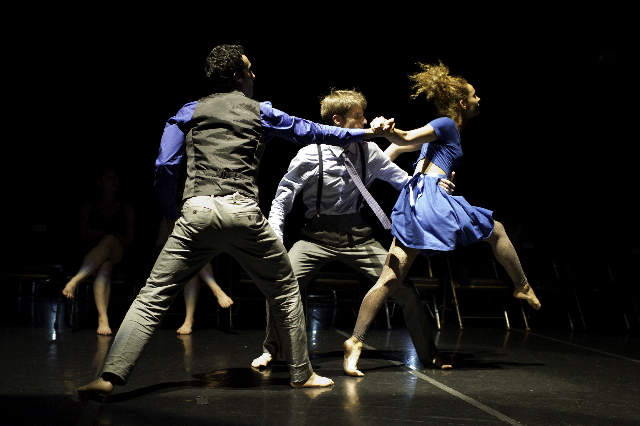
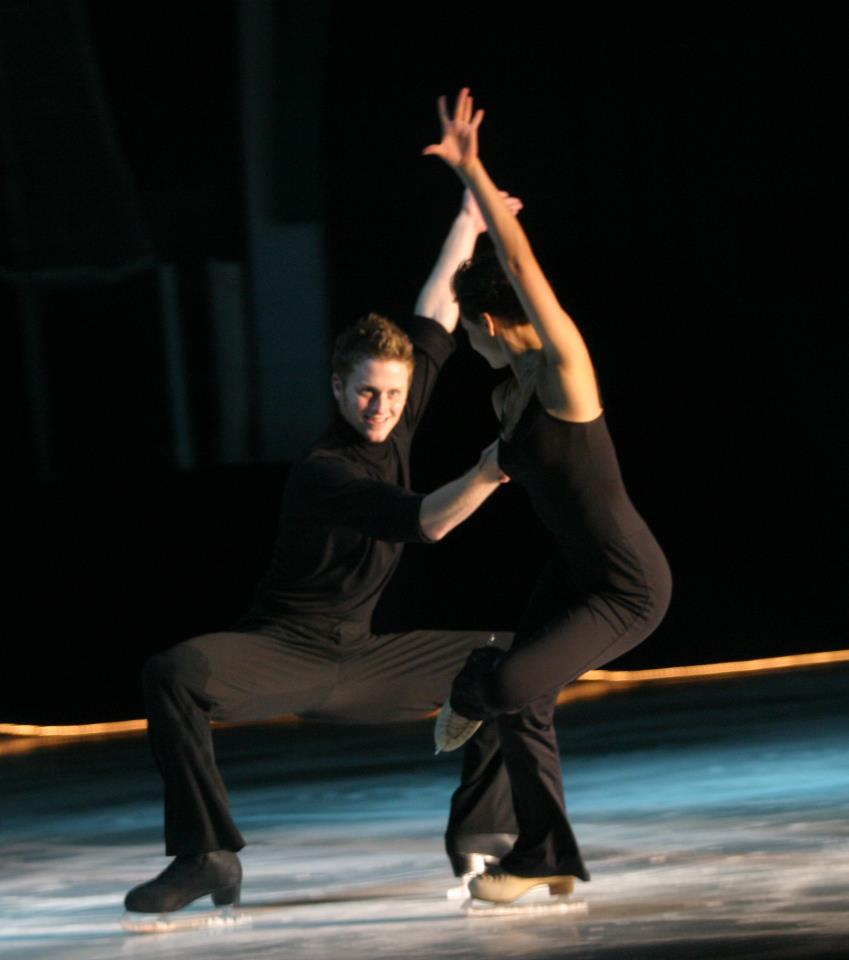
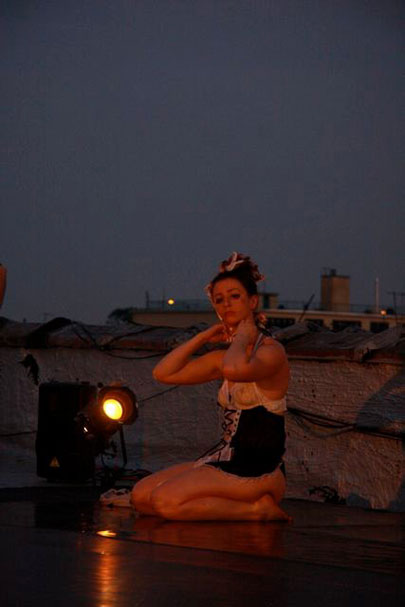
David Dorfman brings da funk — and so can you — in the New York-based choreographer’s latest evening-length work, Prophets of Funk, continuing at the Joyce through January 29. The conclusion to an unofficial trilogy that began with underworld and Disavowal, the new fifty-five-minute piece is an uplifting and energizing celebration of music, dance, and imagery set to the songs of late 1960s, early 1970s icons Sly & the Family Stone. Amanda Bujak’s hippie costumes make it look like performers Kyle Abraham, Meghan Bowden, Luke Gutgsell, Renuka Hines, Raja Kelly, Kendra Portier, Jenna Riegel, Karl Rogers, and Whitney Lynn Tucker stepped right out of the road company of Hair, featuring lots of frills as the dancers move and groove to such fab tunes as “Underdog,” “Stand,” “Love City,” “If You Want Me to Stay,” and, of course, “Dance to the Music” and “Everyday People.” Each dancer plays a different character, led by Kelly as Sly, sporting a big Afro, cool shades, and silver elevator shoes, and Abraham as the text-spouting comic relief. Dorfman himself occasionally cuts a diagonal path across the stage as the elder statesman of the group. With images of the real Sly Stone, wafting marijuana smoke, and psychedelia projected onto a large screen behind them, the company breaks off into several trios, duets, and solos, with particularly beautiful moments supplied by Tucker, Gutgsell, and Portier. Dorfman is actually listed as artistic director, with the entire company credited with the choreography, the dancers given the freedom to not only create their movement but to improvise every night, leading to performances that feel fresh and invigorating. The show does touch upon some of the more political aspects of Stone’s oeuvre, including dealing with racism in “Don’t Call Me Nigger, Whitey,” but for the most part Prophets of Funk follows Sly’s advice of “Ooh sha sha / We gotta live together.” At the end of the performance, the dancers and audience can indeed live together, as everyone is invited onstage to show off their “Scooby dooby dooby.” (Be sure to arrive early to take some dance lessons downstairs at the Joyce.)

DAVID DORFMAN DANCE: PROPHETS OF FUNK

David Dorfman Dance will dance to the music in PROPHETS OF FUNK at the Joyce

Joyce Theater
175 Eighth Ave. at 19th St.
January 24-29, $10-$39
212-645-2904
www.joyce.org
www.daviddorfmandance.org

For more than twenty-five years, David Dorfman Dance has been staging narrative and abstract works that deal with such subjects as political activism, violence, abolitionism, athleticism, and life and death. Among its many projects are underground, Lightbulb Theory, Subverse, and Approaching No Calm Counting Laughter. This week the company returns to the Joyce to present its latest work, Prophets of Funk — Dance to the Music, which harkens back to the late 1960s and early 1970s, set to songs by Sly and the Family Stone, featuring dancers Kyle Abraham, Meghan Bowden, Luke Gutgsell, Renuka Hines, Raja Kelly, Kendra Portier, Jenna Riegel, Karl Rogers, Whitney Lynn Tucker, and Dorfman. Performances run January 24-29, with a Dance Chat following the January 25 show.

LUNAR NEW YEAR 4710: YEAR OF THE DRAGON

The annual Chinatown Lunar New Year festivities will welcome in the Year of the Rabbit (photo by twi-ny/mdr)

The annual Chinatown Lunar New Year festivities will welcome in the Year of the Dragon (photo by twi-ny/mdr)

Sara D. Roosevelt Park (and other venues)
East Houston St. between Forsythe & Chrystie Sts.
January 23 – February 5, free – $20
www.betterchinatown.com

There will be celebrations galore the next two weeks as the Lunar New Year arrives, 4710, the Year of the Dragon. The party kicks into high gear on Monday at 11:00 with the Chinese New Year Firecracker Ceremony and Cultural Festival in Sara D. Roosevelt Park, with live music and dance, speeches by politicians, drum groups, lion, dragon, and unicorn dancers making their way through local businesses, and 600,000 rounds of firecrackers warding off evil spirits and welcoming in a prosperous new year, with 200,000 expected attendees. Next Sunday, the thirteenth annual Chinatown Lunar New Year Parade & Festival takes place, with cultural booths in the park (11:30 – 4:00) and a parade with floats, antique cars, special performers, and many others, beginning at 1:00 in Minuscule Italy. The Museum of Chinese in America will be hosting several new year events, including Family Drop-in Arts & Crafts on January 23 and 30 from 2:00 to 4:00, when kids ages six and up can make their own zodiac animal puppets. The walking tour “Preparing for the New Year” will wander through Chinatown on January 28 at 11:00 am and 1:00 pm, and “Little Dragon Tales: Chinese Children’s Songs with the Shanghai Restoration Project” will be held on February 4 at 1:30. The New York Chinese Cultural Center will celebrate the holiday with live music, acrobatics, folk dances, arts and crafts, and more at the World Financial Center on January 28. The sixteenth annual Lunar New Year Parade in Flushing is scheduled for Friday, February 4, at 11:00 am, followed by the Lunar New Year Dance Sampler at Flushing Town Hall at 2:00 and Lunar New Year workshops on Sunday, February 5, in which families can make dragon puppets and Korean lucky bags. And remember that it’s good luck to eat a whole steamed fish with head on for the new year, in addition to other delicacies. Gōng xǐ fā cái!

CULTUREMART 2012

YOU ARE DEAD. YOU ARE HERE. opens Culturemart 2012 with an intimate look at the Iraq war (photo © Jared Mezzocchi)

HERE Arts Center
145 Sixth Ave. at Dominick St.
January 24 – February 11, $15
212-647-0202
www.here.org

The January parade of experimental theater festivals, which has already included Coil, Under the Radar, American Realness, and the Times Square International Theater Festival, continues with HERE’s annual Culturemart. Referring to itself as a “vital testing ground,” Culturemart will present a dozen works in progress from January 24 through February 11 in a variety of disciplines, beginning with Christine Evans, Joseph Megel, and Jared Mezzochi’s You Are Dead. You Are Here., an interactive multimedia examination of the relationship between an American soldier and an Iraqi blogger during the Iraq war. Among the other productions are Aaron Landsman’s participatory City Council Meeting, Jake Margolin and Nick Vaughan’s A Marriage: 1, involving a couple who watches Fox News in a motel room for twenty-four consecutive hours (and is supplemented by an exhibition at HERE), Bora Yoon’s audiovisual one-woman show Weights and Balances, Betty Shamieh’s The Strangest, which imagines the story of the Arab killed in Albert Camus’s The Stranger, and Alexandra Beller/Dances’ other stories, which delves into narrative itself. Tickets to all events are only fifteen bucks, so it’s always worth checking out something different and unusual at one of the city’s best spots to see cutting-edge productions.