this week in dance

GERTRUDE’S PARIS FESTIVAL

Symphony Space will celebrate American ex-pat Gertrude Stein and Paris with springtime festival

Symphony Space
2537 Broadway at 95th St.
April 1 – May 5, free – $95
212-864-5400
www.symphonyspace.org

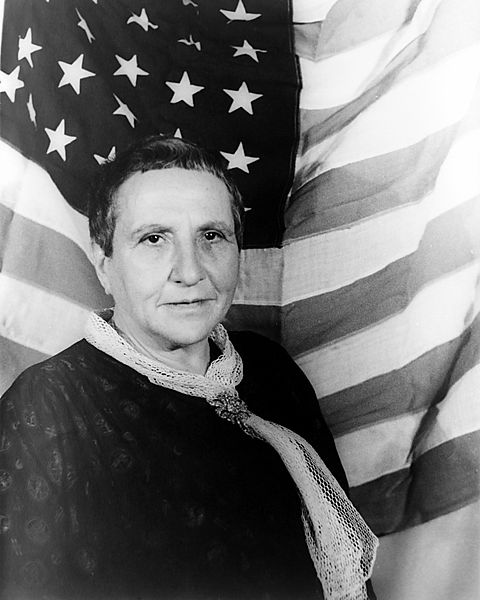
“America is my country and Paris is my hometown,” Gertrude Stein famously said about the City of Lights. Symphony Space is celebrating the Lost Generation writer’s longtime love affair with the romantic French city with five weeks of special programming, including film screenings, jazz concerts, literary discussions, wine tastings, and dancing. Held in conjunction with the Met’s current exhibit “The Steins Collect: Matisse, Picasso, and the Parisian Avant-Garde” (running through June 3), “Gertrude’s Paris” begins on April 1 with Vincente Minnelli’s An American in Paris, a free reception for the “My Paris!” and “La Revue Nègre” photo exhibitions, a free jazz cabaret with the Nick Finzer Trio, and Perry Miller Adato’s documentary Paris: The Luminous Years. The festival continues with such events as “Wearing the Lost Generation: A Musical/Sartorial Salon” on April 5, Henri-Georges Clouzot’s The Mystery of Picasso on April 8, “Great Taste! Red Wines of France” on April 10, “Tin Hat Takes on E. E. Cummings” on April 13, Arne Glimcher’s Picasso and Braque Go to the Movies on April 22, “Josephine Baker/Archival Footage” on April 29, and the free, all-day “Wall to Wall: Gertrude’s Paris” party on May 5. The series also offers a great chance to catch up on the work of Jean Renoir, with Sunday screenings of Beauty and the Beast (April 8), Boudu Saved from Drowning (April 15), and The Rules of the Game (April 22).

SAKURA — SPRING RENEWS, BEAUTY BLOOMS: KABUKI DANCE

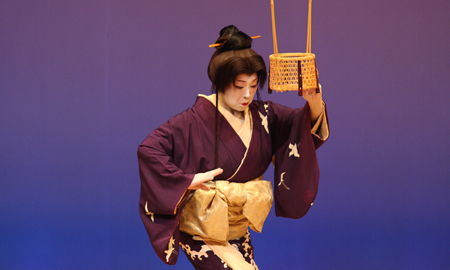
Japan Society celebrates the coming of spring with kabuki dance program this week (photo © Kiyofuji Studio)

Japan Society
333 East 47th St. at First Ave.
March 29-31,
212-715-1258
www.japansociety.org

For more than five hundred years, Japan has been telling stories using the art form known as kabuki, a highly stylized dance play that features ornate costumes, intricately choreographed movement, heavy makeup, and extreme facial gestures. As part of Japan Society’s “Sakura — Spring Renews, Beauty Blooms” festival, nihon buyo (Japanese classical dance) master Bando Kotoji will lead his troupe through four kabuki works March 29-31. Accompanied by live music, the program includes Sanbaso, Cho no Michiyuki (“The Last Journey of Two Butterflies”), Tamatori Ama (“The Pearl Diver”), and Yoshino-yama (“Yoshino Mountain”). All performances will be preceded by a lecture on shamisen music and kabuki dance by Dr. Sachiyo Ito. Japan Society will also be hosting a kabuki workshop on Saturday morning at 10:15 led by Bando; although participant tickets are sold out, you can still attend as an observer for eight dollars. Japan Society’s spring festival continues through April 14 with such films as Hirokazu Kore-eda’s Hana: The Tale of a Reluctant Samurai, a haiku workshop led by Sho Otaka and John Stevenson, and “J-Cation 2012,” an all-day event that includes live music, dance, art, film, food, storytelling, demonstrations, and more.

DANCE CONVERSATIONS 2012

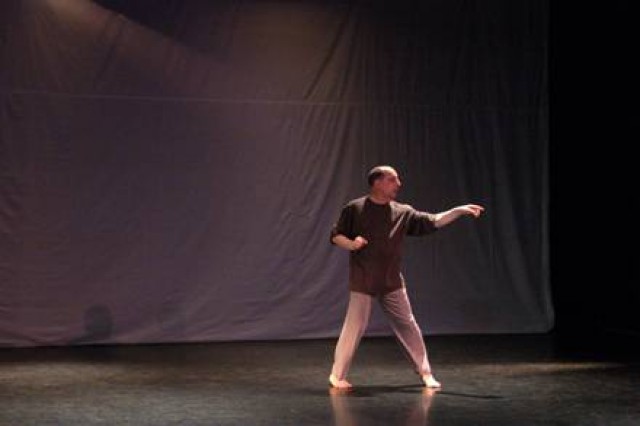
David Appel will present “a boat makes its way across the water” on Saturday night at free festival at the Flea (photo by Jim Willet)

The Flea Theater
41 White St. between Broadway & Church St.
Through March 25, free
212-226-2407
www.theflea.org

The annual free Dance Conversations festival runs through Sunday at the Flea Theater, combining dance, film, and discussion. This year’s program, curated by Nina Winthrop and Taimi Strehlow, continues Thursday night with performances by Jessica Ray, Movement of the People Dance Company, Vangeline, and Megan Sipe, moderated by Gina Gibney. Friday night’s show includes Molissa Fenley, Maggie Bennett, Caliince Dance, and binbinFactory, moderated by Carol Ostrow. Pele Bauch moderates Saturday night’s program, with Alaine Handa/A.H. Dance Company, David Appel, Beau Hancock, and Talya Epstein. The festival concludes on Sunday afternoon with presentations by Luke Murphy, BARKIN/SELISSEN PROJECT, Daniel Gwirtzman Dance Company, and Peggy and Murray Schwartz celebrating Pearl Primus, moderated by Jonah Bokaer.

RISA JAROSLOW & DANCERS: 25th ANNIVERSARY SEASON

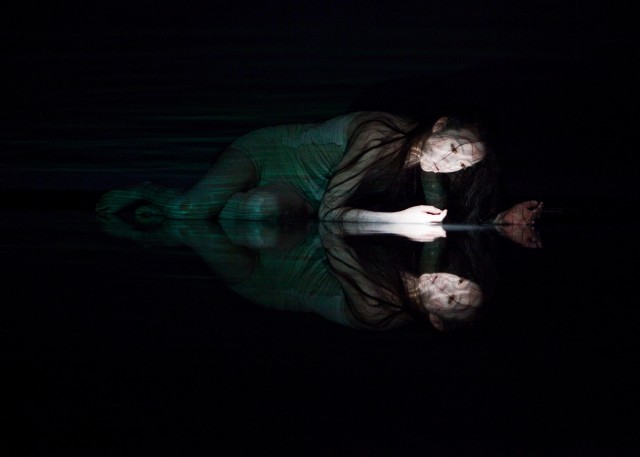
Risa Jaroslow & Dancers will celebrate their silver anniversary season at Abrons Arts Center this week (photo by Anja Hitzenberg)

Abrons Arts Center, Henry Street Settlement
466 Grand St. at Pitt St.
March 9-11, $20
212-598-0400
www.henrystreet.org
www.hightidedance.com

For a quarter of a century, New York–based Risa Jaroslow & Dancers have been tackling issues of masculinity, community, and the human experience in such works as Book Song Woman Man, Table Talk, Whole Sky, and 311. For their silver anniversary season, coming to Abrons Arts Center March 9-11, they will revive 2006’s Resist/Surrender, in which company dancers Marcos Duran, Luke Gutgsell, Elise Knudson, and Paul Singh are joined by a group of bare-legged men from various walks of life who, dressed in white, watch from the wings as the dancers, wearing sharp blue costumes, break into duets in the center of the stage and incorporate a large wooden wall in the back as composer Scott Johnson’s score is performed live by Fireworks Ensemble, along with snippets of quotes from interviews with men. The company will also present the world premiere of The Middle of Where She Is, a piece about sadness and loss, growth and responsibility, that will be danced by Rachel Lehrer, Knudson, and Jaroslaw, with music by Brooklyn-based violin and viola duo Charly & Margaux.

BATSHEVA DANCE COMPANY: HORA

Ohad Naharin and his Batsheva company reimagine traditional Israeli group dance in HORA (photo by Gadi Dagon)

Howard Gilman Opera House
30 Lafayette Ave. between Ashland Pl. & St. Felix St.
March 7-10, $20-$70
718-636-4100
www.bam.org
www.batsheva.co.il

For more than thirty years, Tel Aviv-based choreographer Ohad Naharin has been creating exciting, unpredictable works that push the limits of what contemporary dance can be. His unique movement language, known as Gaga, has been a centerpiece of the Batsheva Dance Company since 1990, when he was named artistic director. Works such as Deca Dance, Three, Minus 16, and Project 5 have dazzled audiences with their wild creativity and often humorous use of music. Naharin returns to BAM this week with Hora, an hour-long piece for eleven dancers that features lighting and stage design by Avi Yona Bueno, costumes by Anna Mirkin, and a vast array of classical music arranged and performed by Isao Tomita, including snippets of Mussorgsky, Strauss, Ives, Grieg, Wagner, Debussy, Sibelius, and John Williams. You never know what’s going to happen in Naharin’s work, which always makes it fresh and inviting. On Saturday, March 10, at 12 noon ($20), you can join in the fun by taking an open class with Batsheva dancers at BAM’s Hillman Attic Studio; we recently found ourselves onstage with the Alvin Ailey American Dance Theater going Gaga to their production of Minus 16, a thrill that still gives us chills every time we think of it, which is rather often.

Ohad Naharin’s HORA is a dazzlingly subtle, mesmerizingly beautiful dance (photo by Gadi Dagon)

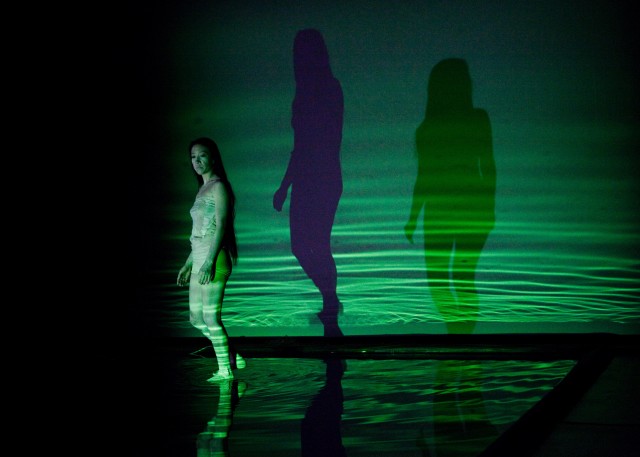
Update: In a large rectangular room bathed in an intoxicating green light, eleven dancers sit on a long bench at the back. One at a time they get up and start moving slowly to an austere silence that eventually gives way to Ryoji Ikeda’s electronic drone music. Six women, wearing various black leotards, and five men, in white and gray shorts and T-shirts, often stay in place as they bend down, stretch toward the ceiling, and twist and turn. Soon Isao Tomita’s score takes over, playfully reconfigured versions of classical music familiarized in Hollywood movies, including Strauss’s “Also Sprach Zarathustra,” Wagner’s “Die Walküre: Ride of the Valkyries,” and even John Williams’s main theme from Star Wars. Over the course of sixty minutes, the dancers (including stand-out Iyar Elezra) perform Ohad Naharin’s movement-based nonlinear, nonnarrative choreography that shifts from controlled chaos to featured solos and duets while at other times feeling like the dancers are rehearsing their own roles all at once, seldom making physical contact. The Batsheva Dance Company’s Hora — which never evolves into the title’s traditional Jewish celebratory group dance — is a mesmerizing experience, a stunning balance of light, color, sound, and movement from one of the world’s most innovative and entertaining choreographers.

STEPHEN PETRONIO COMPANY

Julian De Leon and Joshua Tuason will perform in the world premiere of THE ARCHITECTURE OF LOSS (photo by Sarah Silver)

Joyce Theater
175 Eighth Ave. at 19th St.
March 6-11, $10-$69
212-645-2904
www.joyce.org
www.stephenpetronio.com

The New York City-based Stephen Petronio Company is known for its unusual collaborations and innovative choreography that shows off the sheer strength and beauty of its dancers. Last year at the Joyce, SPC performed Underland, an evening-length piece that was set to murder ballads by Nick Cave, while in 2010, Petronio put together old and new works set to tunes by Elvis Presley, Wire, Radiohead, and the Wordless Music Orchestra. This year SPC will present the world premiere of The Architecture of Loss, a coproduction with the Nordic House of the Faroe Islands that investigates formation and disintegration in an ever-morphing global society. The work features a score by Icelandic composer Valgeir Sigurðsson with contributions from Nico Muhly, costumes by Guðrun & Guðrun, lighting by Ken Tabachnick, and visual design by Rannvá Kunoy, with Sigurdsson, Nadia Sirota, and Shahzad Ismaily performing the score live. The program also includes the first-ever revival of Steve Paxton’s 1970 Intravenous Lecture, which examines censorship and will be performed by Petronio; 2002’s City of Twist, which pays homage to post-9/11 New York with music by Laurie Anderson and costumes by Tara Subkoff/Imitation of Christ; and an updated version of 2003’s Ethersketch I (March 6-9 only), a solo from Underland that has been reimagined for New York City Ballet principal dancer Wendy Whelan. (Note: There will be a Dance Chat following the March 7 performance.)

THINKSWISS: GENÈVE MEETS NEW YORK

Foofwa d’Imobilité will pay tribute to Pina Bausch, Merce Cunningham, and Michael Jackson as part of ThinkSwiss festival

A FESTIVAL OF GLOBAL IDEAS BORN IN GENEVA: JEAN CALVIN, JEAN-JACQUES ROUSSEAU, ALBERT GALLATIN, HENRY DUNANT
Multiple locations
March 6-12, free – $35
212-599-5700, ext 1061
www.thinkswissny.org

“The world of reality has its limits; the world of imagination is boundless,” Geneva philosopher Jean-Jacques Rousseau wrote nearly three centuries ago. The Social Contract author’s native country is celebrating the three hundredth anniversary of the master thinker’s birth with a series of events around the world, including this month’s ThinkSwiss Festival of Global Ideas Born in Geneva. Examining issues that impact both America and Switzerland, the week-long festival includes live music and dance, panel discussions, literary readings, film screenings, and art exhibits, most of which are free but require advance RSVP. Things get under way on March 6 ($10) with a screening of Swiss director Jacob Berger’s 2002 feature film Loving Father (Aime Ton Père) and his 2002 short I Think About Alain Tanner (Je pense à Alain Tanner) as part of FIAF’s weekly CinémaTuesdays series, with Berger on hand to participate in a Q&A at 7:00. On March 7, the American Red Cross will host “Can the Geneva Conventions Still Protect Civilians and Non-Combatants in Contemporary Warfare?” a roundtable with Philip Gourevitch, Colonel (ret.) Dick Jackson, Roger Mayou, and Gabor Rona, moderated by Walter A. Füllemann. On March 8, the exhibition “L’Esprit de Genève by Its Posters” will open at Posters Please, and the NYU Presidential Medal Ceremony will include a conversation between honoree Michel Butor and Lois Oppenheim examining “L’Esprit de Genève: From Albert Gallatin to Michel Butor.” On March 9 ($35, lunch included), Adam Gopnik will moderate the discussion “A la Table de Rousseau: What Is Progressive About Education Today?” at FIAF with Butor, Megan Laverty, Jean-Michel Olivier, and Shimon Waronker, followed by “How to Read Rousseau in the 21st Century,” led by François Jacob. Also on March 9 ($25), Pascal Couchepin, Thomas Kean, Eliot Spitzer, Benjamin Barber, Guillaume Chenevière, Victor Gourevitch, Amin Husain, Laura Flanders, Nannerl Keohane, Dr. Khalil Gibran Muhammad, and Simon Schama will occupy the Celeste Bartos Forum at the New York Public Library for “Occupy Rousseau: Inequality & Social Justice,” which seeks to answer the question “What would Jean-Jacques Rousseau say about our democracies if he were among us today?” On March 10, pianist Louis Schwizgebel, cellist Lionel Cottet, and violinist François Sochard will perform the U.S. premiere of “Variations on a Theme by J.J. Rousseau” by Friedrich W. Kalkbrenner and André-François Marescotti, Ravel’s “Ondine,” Brahms’s “Scherzo in C Minor” and “Hungarian Dances Nos. 1, 2, 6 and 7,” Mendelssohn’s “Piano Trio No. 1, Op. 49,” and Liszt’s “Les Cloches de Genève” in the program “Soloists from L’Orchestre International de Genève” at Merkin Concert Hall. On March 11 at 4:00, Foofwa d’Imobilité will pay tribute to dance legends Pina Bausch, Merce Cunningham, and Michael Jackson in “Pina Jackson in Mercemoriam” at the Kitchen, and the Marc Perrenoud Trio will perform at 7:00 at the Allen Room. And on March 12, Rebecca MacKinnon will moderate “Breaking Through Internet Censorship” at the Cooper Union with Stéphane Koch, Ebtihal Mubarak, Thérèse Obrecht, Anas Qtiesh, and a surprise guest, and journalist and writer Jean-Michel Olivier will give a lecture in French at the Haskell Library at FIAF.