this week in dance

FIRST SATURDAYS — JEAN-MICHEL OTHONIEL: MY WAY

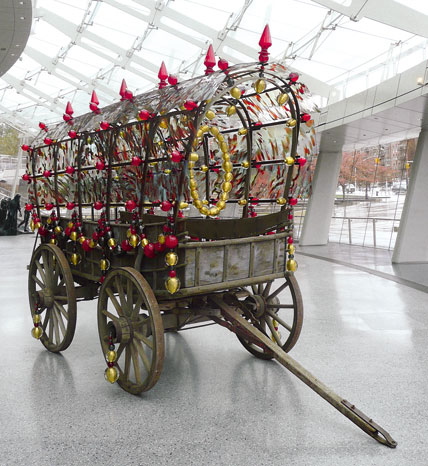
Jean-Michel Othoniel, “The Secret Happy End,” Murano glass, Saint Just’s mirror glass, metal, vintage carriage, 2008 (© Jean-Michel Othoniel)

Brooklyn Museum
200 Eastern Parkway at Washington St.
Saturday, November 3, free, 5:00 – 9:00 (some events require free tickets distributed in advance at the Visitor Center)
212-864-5400
www.brooklynmuseum.org

The Brooklyn Museum is hosting a somewhat abbreviated version of its monthly free First Saturdays program tonight because of the hurricane, but it’s still packed with cool events built around the exhibition “Jean-Michel Othoniel: My Way,” a career survey of the idiosyncratic French artist that continues through December 2. There won’t be a dance party, but there will be live music by Slowdance, Jarana Beat, and Savoir Adore, a performance of The Blue Belt by Andrew Benincasa and Shadow Organ Theater, the experimental dance Ghost Lines by Cori Olinghouse, an origami demonstration, a movement workshop with Hip-Hop Dance Conservatory, a sensory gallery tour incorporating touch, smell, sight, and sound, an artist talk with members of Urban Glass, a glass-painting workshop, a book-club talk with Ruth B. Bottigheimer (Fairy Tales: A New History), and the psychedelic light projection “Cosmic Morning” by Don Miller. Also on view at the museum now are “Mickalene Thomas: Origin of the Universe,” “Materializing ‘Six Years’: Lucy R. Lippard and the Emergence of Conceptual Art,” and “Aesthetic Ambitions: Edward Lycett and Brooklyn’s Faience Manufacturing Company” in addition to long-term installations and the permanent collection.

GRUPO CORPO: ÍMÃ & SEM MIM

Grupo Corpo’s ÍMÃ is a magnetic exploration of color, sound, and movement (photo by Juniper Shuey)

NEXT WAVE FESTIVAL
BAM Howard Gilman Opera House
30 Lafayette Ave. between Ashland Pl. & St. Felix St.
November 1-3
718-636-4100
www.bam.org
www.grupocorpo.com

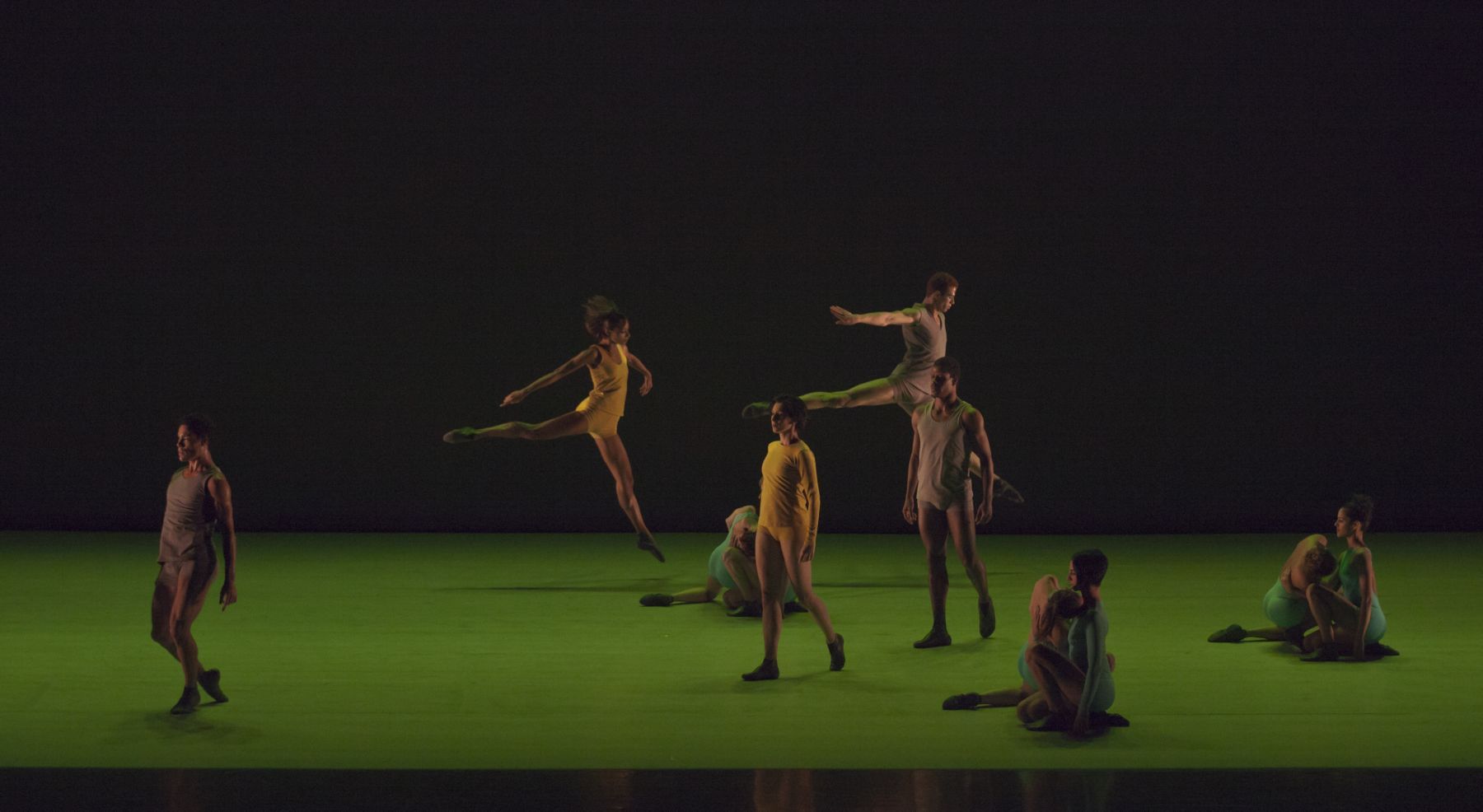
It might have taken us two and a half hours to get to BAM from Midtown Manhattan on Thursday night, but it was worth every second to see one of the world’s most innovative and entertaining dance troupes. Brazil’s Grupo Corpo, which was founded by Paulo Pederneiras in Belo Horizonte in 1975, has dazzled us before at BAM, in 2002 with 21 and O Corpo, in 2005 with Lecuona and Onqotô, and in 2008 with Benguelê and Breu, and they’ve done it again with the premieres of Ímã and Sem Mim, both choreographed by Paulo’s brother, Rodrigo Pederneiras, with artistic director Paulo handling the set and lighting design. Ímã, which means “magnet” in Portuguese, is a gorgeous interplay of attraction and repulsion, the movement flowing out and up from the lower half of the body as the dancers, primarily in pairs, join together, then thrust apart, the men bare-chested in jeans, the women also in jeans with tight tank tops of assorted hues that contrast and coordinate with the lush lighting that beams bold blues, greens, pinks, purples, oranges, and reds against the back screen, making the stage a bath of vibrant color. Mixing ballroom and ballet with Afro-Brazilian and contemporary styles, the company performs seemingly impossible twirls and awe-inspiring leg- and footwork to a percussion-heavy electronic score by the trio +2. Ímã is an energetic, energizing piece that deftly displays the vast athleticism of the dancers and the sheer joy of movement.

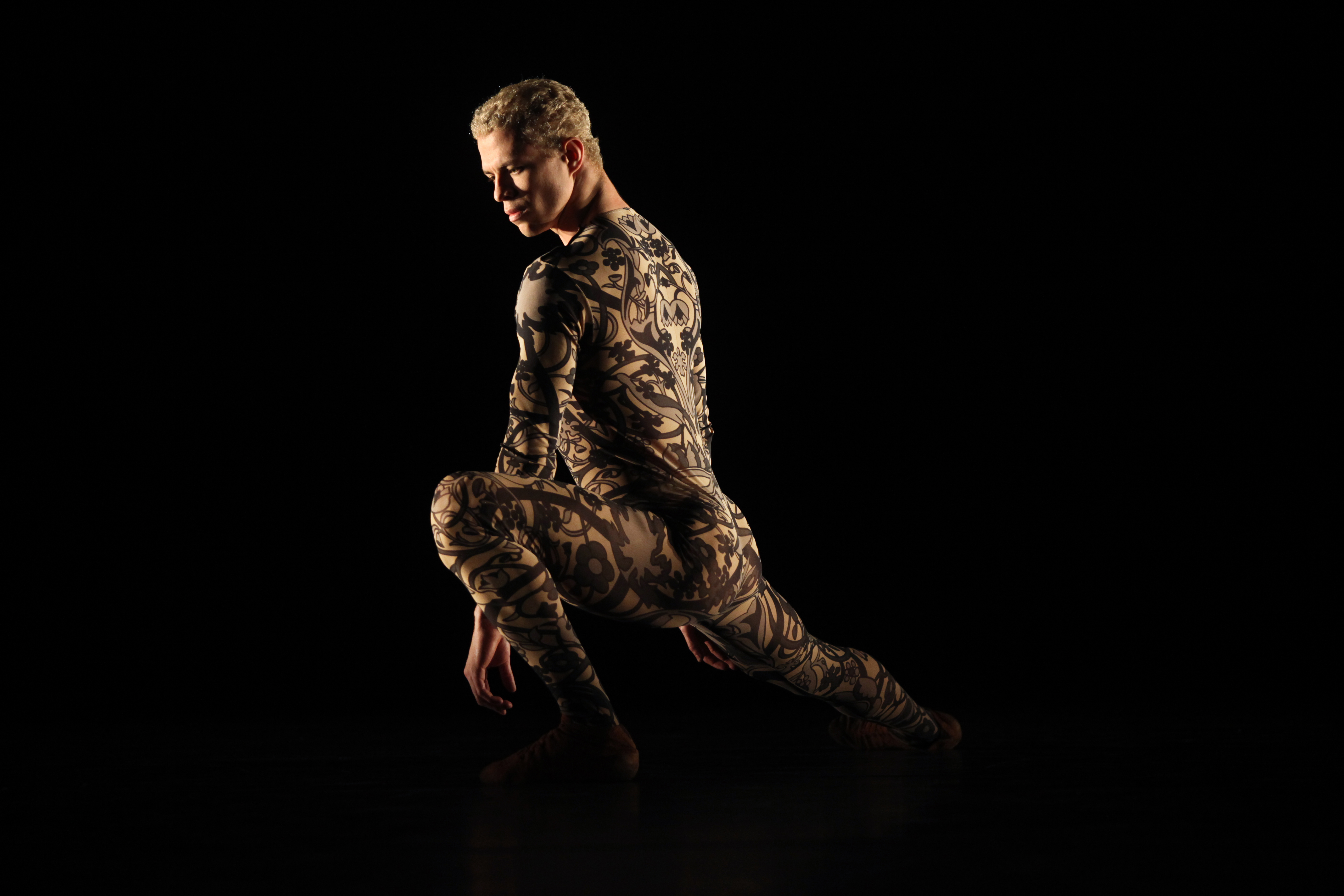
Uátila Coutinho shows off Freusa Zechmeister’s unique costuming in Grupo Corpo’s SEM MIM (photo by Julieta Cervantes)

After intermission, Grupo Corpo returns with Sem Mim, a more delicate, intimate work inspired by Sea of Vigo, a thirteenth-century Galician-Portuguese song cycle by Martín Codax about maidens awaiting their lovers to come back from across the sea. The stage is now all black, save for a silvery fabric that serves as clouds, mountains, waves, and other natural elements. The dancers are wearing Freusa Zechmeister’s tight-fitting, heavily designed unitards emblazoned with colorful ornaments that look like they’re tattooed right onto their sleek bodies. There is more separation between men and women as they move slower to an original score by bagpiper Carlos Núñez and regular Grupo Corpo collaborator José Miguel Wisnik, highlighted by a central section in which a couple performs a romantic pas de deux in a makeshift cave. Ímã and Sem Mim are like a magnetic pas de deux of their own, two exquisite pieces from a supremely talented troupe. And although it’s probably unfair to single out one of the twenty-one dancers, Uátila Coutinho’s work in both pieces was simply breathtaking, a marvel to behold. (Oh, and getting back to Manhattan was much easier by getting on the BAM bus, which costs $7 and can be reserved either in advance or at the theater.)

NEXT WAVE FESTIVAL: “…COMO EL MUSGUITO EN LA PIEDRA, AY SI, SI, SI…”

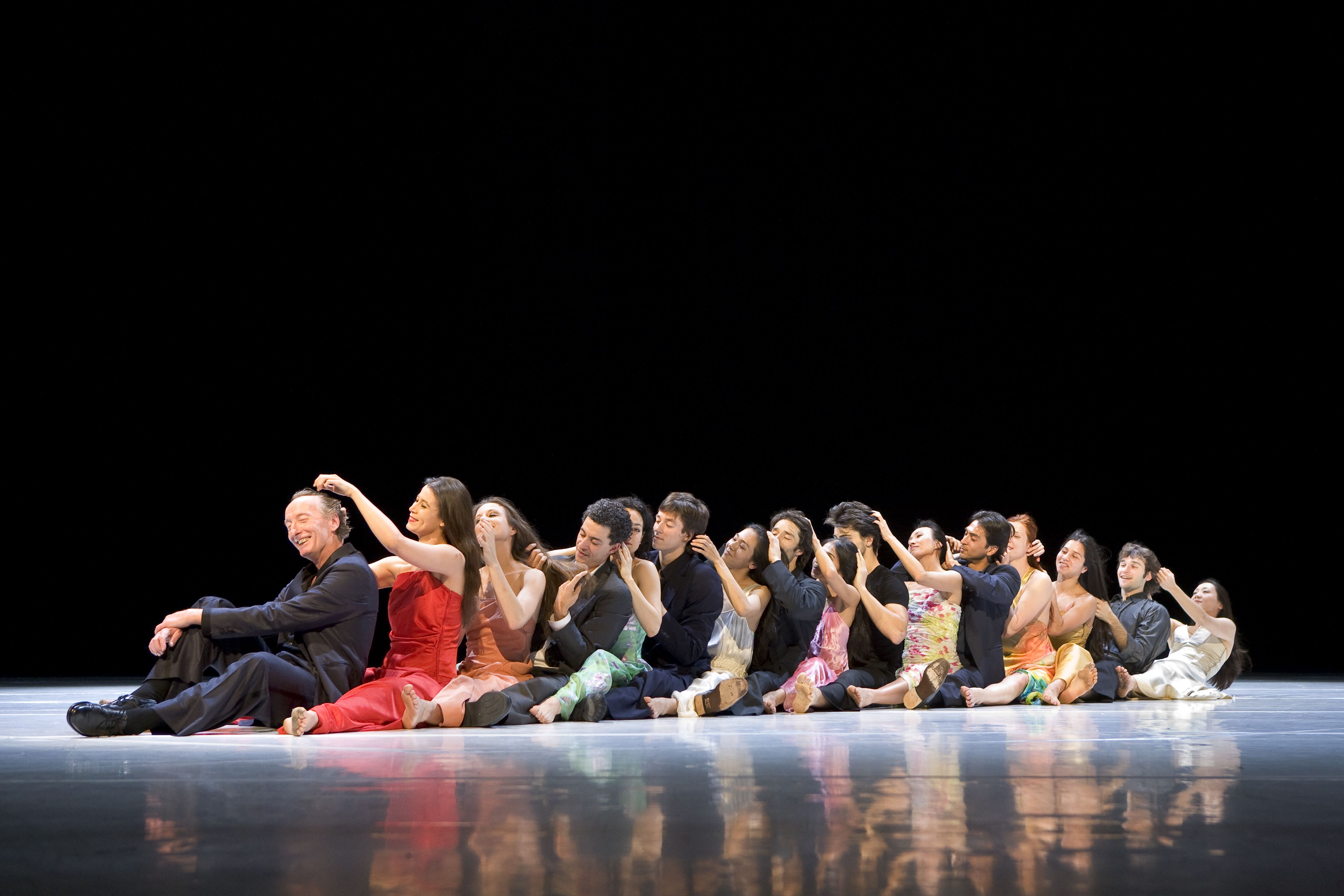
Fans will be lining up at BAM to see Pina Bausch’s final choreographed work October 18-27 (photo by Laurent Philippe)

“ . . . COMO EL MUSGUITO EN LA PIEDRA, AY SI, SI, SI . . .”
BAM Howard Gilman Opera House
30 Lafayette Ave. between Ashland Pl. & St. Felix St.
October 18-27
718-636-4100
www.bam.org
www.pina-bausch.de

For more than thirty-five years, German choreographer Pina Bausch changed the face of dance theater, creating unique, memorable, mind-bending works for her innovative and influential company, Tanztheater Wuppertal. Going from the simple to the sublime, the experimental to the monumental, Bausch staged pieces that combined movement and music with dialogue and humor in thrilling ways. Bausch died in 2009 at the age of sixty-nine, leaving behind a lasting legacy captured in such seminal works as Café Müller, Kontakthof, Danzón, Masurca Fogo, Nefés, and Vollmond (Full Moon) as well as her longtime friend Wim Wenders’s Oscar-nominated 3-D documentary, Pina. From October 18 to 27, the final piece she choreographed, “…como el musguito en la piedra, ay si, si, si…” (Like moss on a stone), will be performed at the company’s exclusive New York home, BAM. There is nothing quite like experiencing a piece by Bausch, who infused her creations with unexpected twists and turns, social commentary and sexuality, and an overriding love of life, in all its forms. This final work was inspired by the folk music and legends of Chile, featuring a cast of sixteen, with set design by the great Peter Pabst and costumes by Marion Cito. It should be a fond farewell to a true legend.
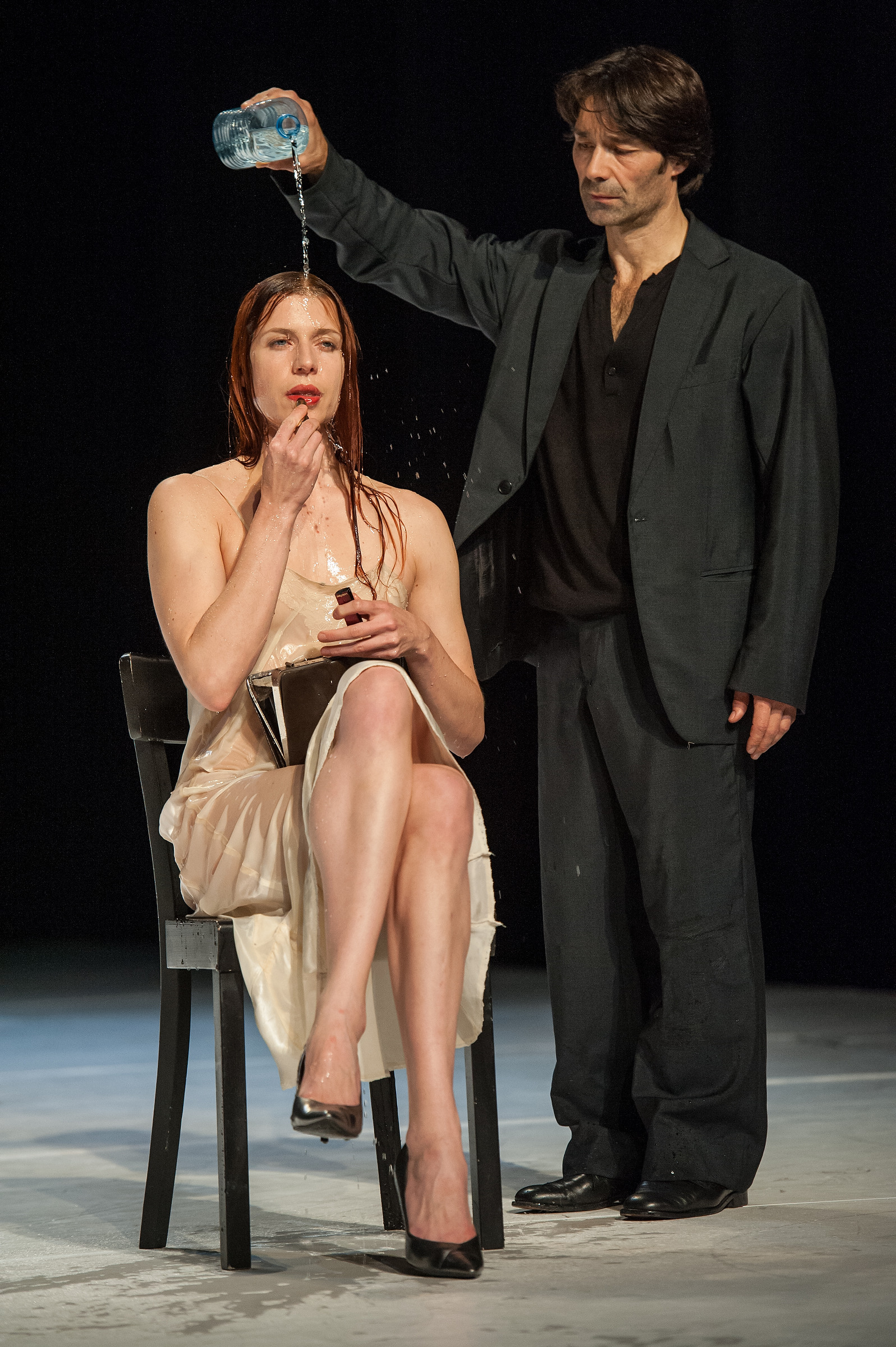
Anna Wehsarg and Rainer Behr share a tender moment in “…COMO EL MUSGUITO…” (photo by Stephanie Berger)

Update: Clouds of both happiness and sadness hung over BAM’s Howard Gilman Opera House as Tanztheater Wuppertal performed the final work choreographed by Pina Bausch, who died in 2009 shortly before “…como el musguito en la piedra, ay si, si, si…” (Like moss on a stone) opened. Part of her international residency series, the evening-length piece was inspired by the company’s visit to Santiago, Chile, and features a wide-ranging score, including songs by Chico Trujillo, Victor Jara, Congreso, Mauricio Vicencio Alquinta, Rodrigo Covacevich, and Mecánica Popular as well as Madeleine Peyroux, Count Basie, and the Cinematic Orchestra. Under the leadership of artistic directors Dominique Mercy and Robert Sturm, who promise to keep the company moving forward, “…como el musguito…” is chock-full of Bausch’s trademark touches, both humorous and romantic, but it focuses more on pure dance than usual, with a large number of solos, duets, and trios taking place within the arc of a narrative that examines the never-ending battle of the sexes. On Peter Pabst’s white overlay that occasionally breaks apart into sections like ice floes, the men, in dark pants and shirts, and the women, in elegant, colorful gowns and long hair, kiss, grope, bark, tell jokes, line up on the floor, and run around in circles. Chairs, poles, water, rocks, potatoes, and trees appear onstage, then disappear in a series of sketches that are reminiscent of Laugh-In, only with much better choreography. One of the many joys of Bausch’s work was its unpredictability, and that is as true as ever with “…como el musguito…,” which offers surprises galore. Tanztheater Wuppertal is part of BAM, part of the Brooklyn family, as this long-sold-out run once again proves. As the performers left the stage, it was hard not to shed tears of joy and sadness, though it should be fascinating to see what the company comes up with next as they face the future without their founder, who changed the face of dance theater forever.
NEXT WAVE FESTIVAL: POLITICAL MOTHER

The Hofesh Shechter Company will perform its explosive POLITICAL MOTHER this week at BAM (photo by Ben Rudick)

HOFESH SHECHTER COMPANY: POLITICAL MOTHER
BAM Howard Gilman Opera House
30 Lafayette Ave. between Ashland Pl. & St. Felix St.
October 11-13
718-636-4100
www.bam.org
www.hofesh.co.uk

British-based Israeli choreographer Hofesh Shechter, a former drummer and tap dancer, has struck a chord around the world with his debut full-length piece, the brash and bold Political Mother. A work for twelve dancers, Schechter’s follow-up to Uprising/In your rooms once again features his physical, in-your-face choreography set to his own propulsive score, played by a live heavy-metal band led by music collaborator Yaron Engler, with Lee Curran contributing the powerful lighting design, Tony Birch the sound design, and Merle Hensel the costumes. The seventy-minute multimedia assault on the senses, first performed in 2010, was expanded into a “Choreographer’s Cut” at Sadler’s Wells last year with even more dancers and musicians. Political Mother, which is built around ideas of control, is running October 11-14 at BAM’s Howard Gilman Opera House as part of the thirtieth Next Wave Festival. In addition, while in New York, the Hofesh Shechter Company will be holding intensives at Cedar Lake in Chelsea from October 15-19; the 10:00 am – 2:00 pm slots are sold out, but there is still limited availability for the 3:00 – 7:00 pm workshops, designed for “professional dancers/recent graduates and third year students in full time dance training.”

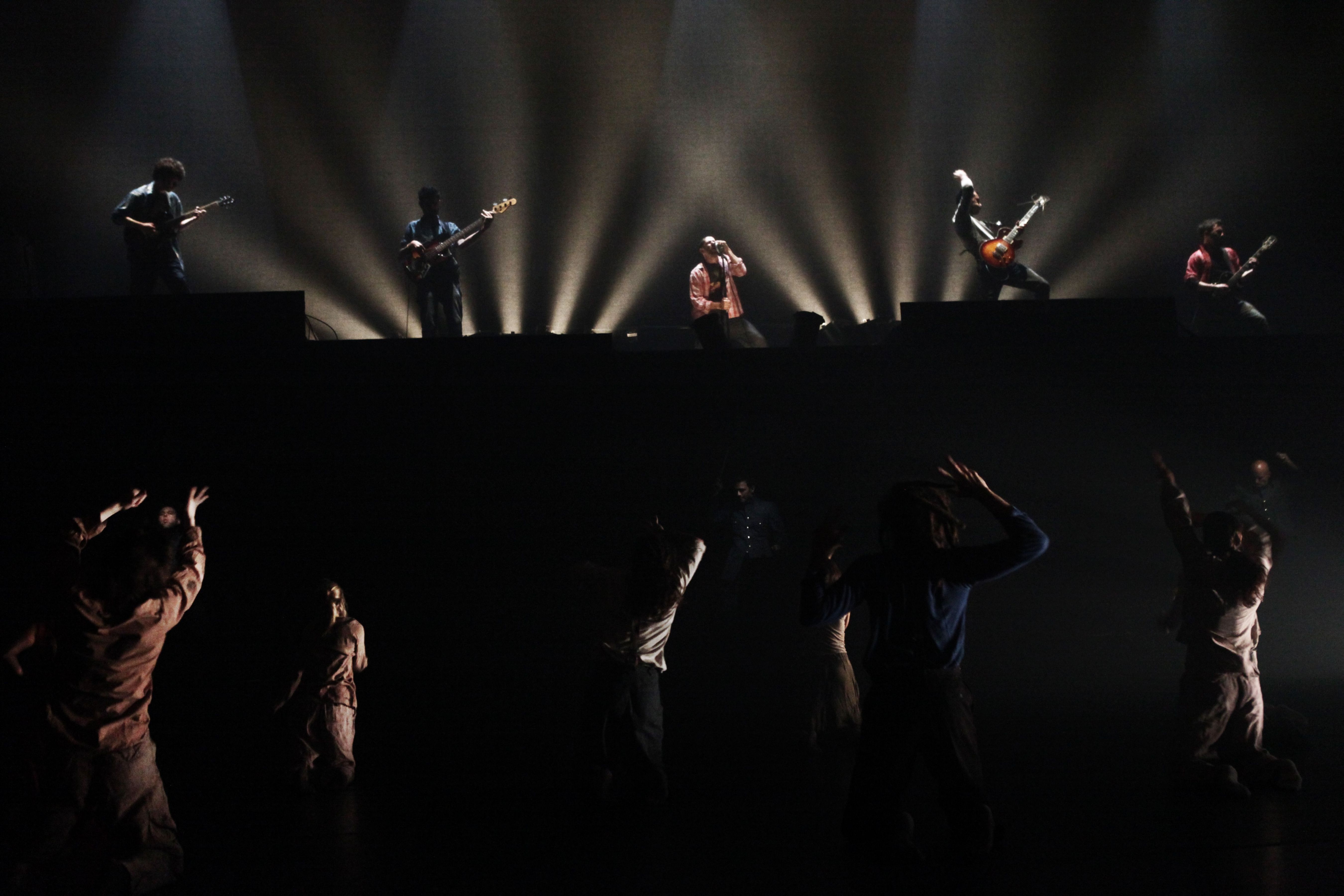
Music and dance collide in loud, beautiful ways in POLITICAL MOTHER (photo by Julieta Cervantes)

Update: As the audience enters, a smoky mist drifts through BAM’s Howard Gilman Opera House. Soon a lone figure appears center stage, dressed in a samurai outfit. He pulls out a sword and commits hara-kiri. Then the soundtrack suddenly blasts out of the speakers and two words are illuminated on a backdrop: Political Mother, announcing that Hofesh Shechter’s hotly anticipated international sensation is about to blow your mind. And blow your mind it does, for more than an hour of energizing movement, blaring music, and blazing lights. A dozen dancers move on- and offstage, running, jumping, writhing on the floor, and forming a hora-like circle as they change costumes from ordinary clothing to gray, dingy prison garb. Behind them, drummers in military outfits pound away, while above the percussionists are five guitarists who play screeching industrial hard rock tinged with Middle Eastern melodies. Occasionally a man up top, dressed alternately as a heavy metal hero, an old-time crooner, or a brutal dictator, grabs a microphone and bellows out an unintelligible song or command as the dancers/inmates below wait on his every word. Somewhere in the middle of this marvelous maelstrom, a classical interlude gives everyone, onstage and in the audience, a brief respite, but then it’s back to the madness as Shechter explores ideas of power and control in his breathless choreography, with Lee Curran’s superb lighting signaling changes like a strobe operating in slow motion. Then, as explosive as it’s been, it stops, reconfiguring itself with a song choice that makes the audience laugh out loud, bringing it all back home with a fond simplicity. No mere dance, Political Mother is like an event unto itself, a daring, balls-out work that takes over your mind, body, and spirit for seventy glorious, unforgettable minutes.

CROSSING THE LINE — RAIMUND HOGHE: PAS DE DEUX

Raimund Hoghe and Takashi Ueno examine the history of the duet in PAS DE DEUX (photo by Rosa Franks)

Baryshnikov Arts Center, Howard Gilman Performance Space
450 West 37th St. between Ninth & Tenth Aves.
October 10-12, $20, 7:30
866-811-4111
www.bacnyc.org
www.fiaf.org

German dancer and choreographer Raimund Hoghe made his U.S. debut at FIAF’s 2009 Crossing the Line festival with Boléro Variations and L’Après-midi, followed in 2010 by Sans-titre, his collaboration with Faustin Linyekula, and his site-specific Skyroom Project, in which he examined his blossoming relationship with New York City. Hoghe is back in New York for the 2012 CTL festival, teaming up with Japanese dancer Takashi Ueno for Pas de Deux, another unusual exploration of the art form from one of the dance world’s most iconoclastic characters. (Hoghe and Ueno performed an excerpt from Pas de Deux at the the Cultural Services of the French Embassy as part of the free Fiction & Non-Fiction opening day at the 2011 CTL festival.) Hoghe’s unique sense of stagecraft was influenced by his ten years serving as dramaturge for Pina Bausch’s Tanztheater Wuppertal, based in his hometown; he has been creating his own pieces for more than twenty years now, primarily in collaboration with fellow German artist Luca Giacomo Schulte. For Pas de Deux, running October 10-12 at the Baryshnikov Arts Center, Hoghe and Ueno don black and yellow costumes and perform alone and together in a minimalist tribute to the centerpiece of classical ballet.

DOUG VARONE AND DANCERS: TWENTY-FIFTH ANNIVERSARY SEASON

The New York premiere of CARRUGI is part of Doug Varone and Dancers’ twenty-fifth anniversary celebration at the Joyce (photo by Cylia von Tiedeman)

Joyce Theater
175 Eighth Ave. at 19th St.
October 9-14, $10-$49
212-645-2904
www.joyce.org
www.dougvaroneanddancers.org

For twenty-five years, New York City-based choreographer Doug Varone has been creating works for opera, theater, film, fashion, and his company, Doug Varone and Dancers, which he started back in 1986. He’ll be celebrating his silver anniversary with a series of events that kick off this week with a six-day stand at the Joyce, where last year he brought his riveting Chapters from a Broken Novel. This time around he’s presenting a pair of programs, the first featuring the New York premiere of Carrugi, a dance opera with singers and musicians that examines duplicity and myth inspired by the pathways and labyrinths of Liguria in Italy, set to Mozart’s La Betulia liberate; 2001’s Ballet Mécanique, a groundbreaking twenty-six-minute multimedia piece for eight dancers that intertwines movement and technology, set to George Anthreil’s 1925 score and with projections by Wendall Harrington; and 1994’s Aperture, a work for three dancers that imagines life outside the frame of a photograph, set to Shubert’s Moments Musicaux, No. 2. The second program is highlighted by the world premiere of Able to Leap Tall Buildings, a duet with movement based on that of superhero dolls, set to Julia Wolfe’s “Cruel Sister”; 2006’s Bessie Award-winning Boats Leaving, with images adapted from photos in the New York Times and reproductions in an art book, set to Arvo Pärt’s “Te Deum”; and a reconstruction of 1993’s signature dance Rise, an investigation of structure built around John Adams’s “Fearful Symmetries” that changed the nature of Varone’s choreography. There will be a Dance Chat following the October 10 performance and a preshow discussion led by Amy Kail on October 11. In honor of the anniversary, Varone has created a series of videos, “Uncovering the Archives,” looking back at his repertoire; you can watch them here.

FIRST SATURDAYS: MICKALENE THOMAS’S ORIGIN OF THE UNIVERSE

Mickalene Thomas, “A Little Taste Outside of Love,” acrylic, enamel and rhinestones on wood panel, 2007 (© Mickalene Thomas)

Brooklyn Museum
200 Eastern Parkway at Washington St.
Saturday, October 6, free, 5:00 – 11:00 (some events require free tickets distributed in advance at the Visitor Center)
212-864-5400
www.brooklynmuseum.org

The Brooklyn Museum will celebrate Brooklyn-based artist Mickalene Thomas in the October edition of its free First Saturdays program. Thomas, who explores the concept of female beauty and power in sparkling works that incorporate rhinestones, acrylic, and enamel into 1970s-style tableaux, recently received the Asher B. Durand Award from the museum, along with Martha Rosler and Amy Sillman, for their contribution to Brooklyn culture. The First Saturdays programming is built around Thomas’s “Origin of the Universe,” her first museum exhibition, which continues through January 20. Visitors are encouraged to come dressed in 1970s clothing as they check out musical poet Candice Anitra; a multidisciplinary performance by Latasha Diggs, Beatrice Anderson, and Jaime Philbert, followed by a Q&A; an artist talk with G. Lucas Crane, who will create a live sonic collage and place it in context with Thomas’s work; a curator talk by Eugenie Tsai about Thomas’s painting “A Little Taste Outside of Love”; an art workshop showing how to make a Thomas-like collage; an interactive performance and discussion with poet and conceptual artist Harmony Holiday; “Betty’s Story,” a musical tribute to Betty Mabry Davis (Miles Davis’s ex-wife and singer in her own right) by Nucomme and the Curators; and a fashion show, open to all, hosted by Raye 6, Marcus Simms, and Gizmovintage Honeys Beeline.