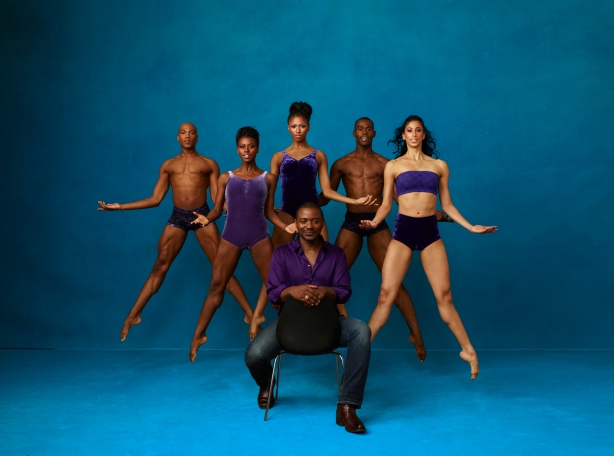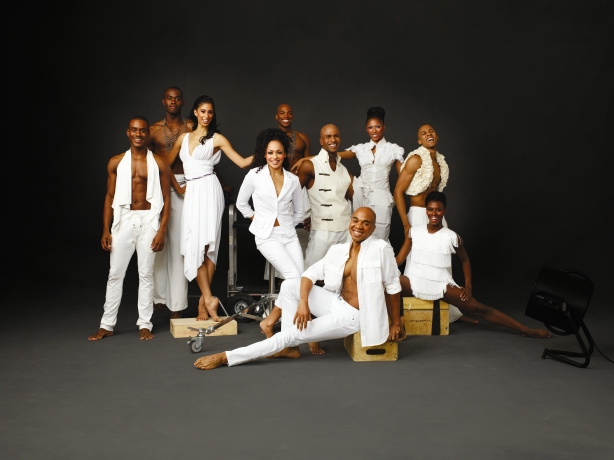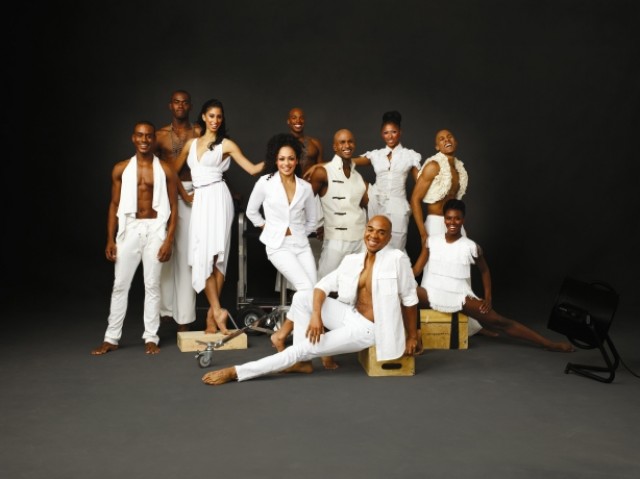
Rehearsal director and guest artist Matthew Rushing and members of the AAADT company are ready for annual month-long season at City Center (photo by Andrew Eccles)
New York City Center
130 West 56th St. between Sixth & Seventh Aves.
November 28 – December 30, $25-$135
212-581-1212
www.alvinailey.org
www.nycitycenter.org
Alvin Ailey American Dance Theater has been captivating audiences for more than fifty years, amassing a repertoire of more than two hundred works from more than eighty choreographers since its founding by Alvin Ailey in 1958 at the 92nd St. Y. The inspirational company returns to City Center in Midtown for its annual season November 28 through December 30, comprising world premieres, new productions, company premieres, and Ailey Classics. Robert Battle is now in his second season as artistic director, having taken over in July 2011 from the legendary Judith Jamison, and he has put together another exciting series of shows. Last year’s all-new program contained Ohad Naharin’s Minus 16, Battle’s Takademe, Rennie Harris’s Home, and Alvin Ailey’s Streams, and they are all back again. The new works for 2012 are Garth Fagan’s From Before, Jiří Kylián’s Petite Mort, Kyle Abraham’s Another Night, Ronald K. Brown’s Grace, and Battle’s Strange Humors. The special programs include Revelations with live performance by Jessye Norman, Anika Noni Rose, and Brian Stokes Mitchell, Saturday afternoon family matinees followed by Q&A sessions, and a tribute to Renee Robinson, who is retiring after more than thirty years with the company. As AAADT prepared for opening night, we asked nine of the dancers which piece they were most looking forward to performing on the City Center stage. (Below photos by Andrew Eccles, Eduardo Patino, and Paul Kolnick; for a chance to win free tickets to the December 12 performance, go here.)
 Marcus Jarrell Willis: I think I’m most excited to perform Grace by Ronald K. Brown this season. I’ve been watching the Alvin Ailey American Dance Theater on videos since I was a child, but I never had the chance to see the company in a live performance until just before moving from Houston to study at the Ailey School twelve years ago. Grace was first on the program and I fell in love. So now having the opportunity to be a part of it almost takes me full circle, and I’m thrilled.
 Aisha Mitchell: I am really looking forward to premiering Kyle Abraham’s work, Another Night. The choreography is electric and set to music by Dizzy Gillespie. Also it’s the sole world premiere in our repertoire this season, so I’m ready to get onstage and share with our audiences something they have never seen before.
 Kirven James Boyd: Our home season is my favorite time of the year because we’re able to perform all of our current repertory as well as a number of returning favorites. This season there are so many works that I’m looking forward to performing, but one of the most important roles for me this season would have to be A Song for You from the Ailey Classics program. This solo is an excerpt of a ballet called Love Songs, which was choreographed by Mr. Ailey in 1972. For the men in the company, being cast to perform this ballet holds the same weight as a woman being cast to perform Cry. For me, this is by far one of the biggest highlights of my career and I’m looking forward to discovering new layers of my artistry through this work.
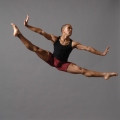 Daniel Harder: The ballet I’m most looking forward to performing this season is Jiří Kylián’s Petite Mort. I think the ballet is going to present a great challenge for me because it provides the perfect blend of ballet and modern vocabulary and allows me to tap into a quieter sensuality and power. Also, Kylián is an iconic choreographer, so I’m excited to have the opportunity to perform his work this season.
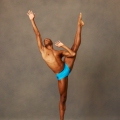 Antonio Douthit: I am so excited that Mr. Battle brought Grace back into the company’s repertory. Grace is one of the ballets I saw when I first joined the company nine years ago and was just in awe of what Ron Brown did with the movement and how he used the dancers in the space. I am happy to be taking on this ballet and growing from it.
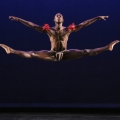 Samuel Lee Roberts: I am looking forward to performing Robert Battle’s Strange Humors the most. Having been a founding member of Battleworks Dance Company, I performed the role for many years in the past. Coming back to it will be like seeing an old friend! I also look forward to performing with Mr. Boyd (a force of nature). I am sure that the Ailey audience will fall in love with this ballet.
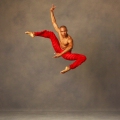 Yannick Lebrun: I am most looking forward to performing Grace by Ronald K. Brown this season. The first time I saw the ballet six years ago as a student in the Ailey School, I immediately fell in love with it. After joining the company four years ago, I always hoped and wished that it would return to the repertory, so now that I have an opportunity to perform it, it’s almost like a dream come true, because I’m able to interpret a ballet that inspired me so much long ago and that has a deep meaning. I hope the audience is moved by my performance of the work just as I was so many years ago.
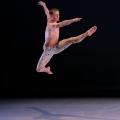 Michael Francis McBride: It is really difficult to pick just one work that I am most excited about performing this season because the repertory has an expanding diversity and every piece is so different. If I had to pick three, I would say that I am really excited to perform Robert Battle’s Strange Humors, Jiří Kylián’s Petite Mort, and Ronald K. Brown’s Grace. These three made the list because they are new to this year’s repertory and they challenge me in new and exciting ways.
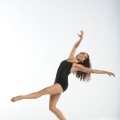 Sarah Daley: I’m most excited to perform Petite Mort. It’s an amazing ballet that captivated me the first time I saw it and I’m excited to bring it to our New York audience.