this week in dance

MARTHA GRAHAM DANCE COMPANY: MYTH AND TRANSFORMATION

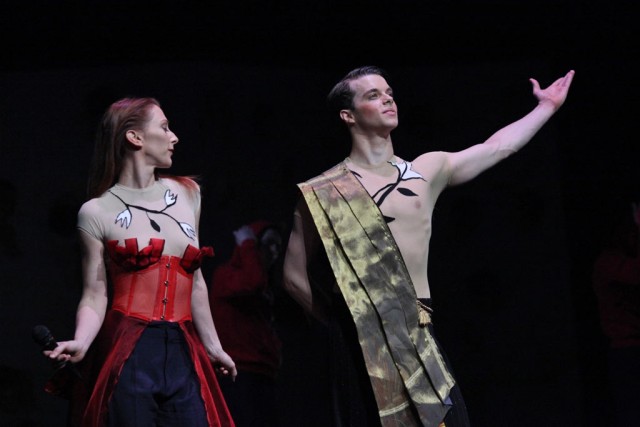
The Martha Graham Dance Company rehearses for its Joyce season, which runs February 20 - March 3

The Martha Graham Dance Company rehearses for its Joyce season, which runs February 20 – March 3

Joyce Theater
175 Eighth Ave. at 19th St.
February 20 – March 3, $10-$59
212-645-2904
www.joyce.org
www.marthagraham.org

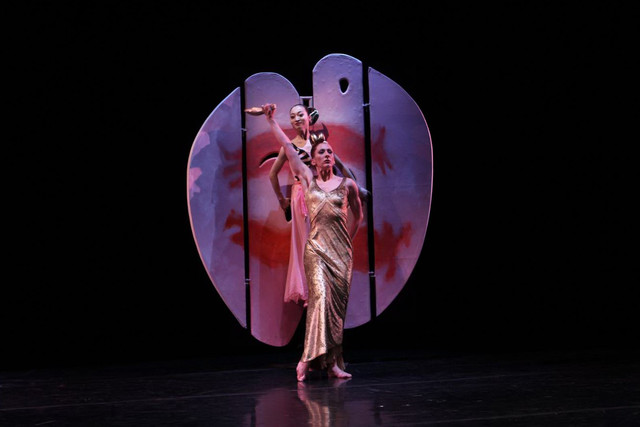
It’s been nearly twenty-two years since legendary dancer and choreographer Martha Graham, one of the most influential people in the history of American modern dance, passed away, in 1991 at the age of ninety-six, but her company has continued her vast legacy with both old and new pieces that fit her vision. “A dance reveals the spirit of the country in which it takes root,” she wrote in 1937. “No sooner does it fail to do this than it loses its integrity and significance.” The Martha Graham Dance Company, under the artistic direction of Janet Eilber since 2005, will be at the Joyce from February 20 through March 3, presenting three programs called “Myth and Transformation,” which examine aspects of contemporary storytelling through movement. Program A pairs two Greek myths retold in provocative ways: Graham’s 1962 sexually driven Phaedra, with music by Robert Starer and sculptural décor by Isamu Noguchi, and 2002’s The Show (Achilles Heels), a dance-theater piece commissioned by the White Oak Dance Project and created, directed, and choreographed by Richard Move, with a score by Arto Lindsay, songs by Debbie Harry, and scenic art by Nicole Eisenman. Program B features three postwar Graham pieces that also relate Greek tales, beginning with 1946’s Cave of the Heart, inspired by the story of Medea and featuring music by Samuel Barber; 1947’s Night Journey, which examines the Oedipus myth from the point of view of Jocasta, with music by William Schumann; and a new, spare version of that same year’s Errand into the Maze, loosely based on the Theseus myth, with music by Gian Carlo Menotti, directed by Luca Veggetti and performed by Miki Orihara and others without the usual costumes and set design, as those elements were destroyed by Hurricane Sandy. Program C includes Cave of the Heart; the New York premiere of Doug Varone’s Lamentation Variation, set to Ravel, along with previous Variations by Yvonne Rainer (2012) and Bulareyaung Pagarlava (2009); the world premiere of Veggetti’s From the Grammar of Dreams, with music by Kaija Saariaho and text from Sylvia Plath; and an excerpt from Graham’s 1948 ensemble piece Diversion of Angels, with music by Norman Dello Joio and introductory film by Peter Sparling.

There will be several special events during the season, including a gala on February 21 featuring the “Moon” duet from Graham’s Canticle for Innocent Comedians and The Show (Achilles Heels), introduced by Patricia Field and with live musical accompaniment by Harry; a dance chat following the February 22 performance; a University Partner Showcase on February 23 with Graham classics performed by college and high school students; a preshow talk on February 28 led by Susan Thomasson; and the Fall and Recovery benefit on February 26, which will raise funds to help restore the costumes and sets destroyed by the hurricane, consisting of From the Grammar of Dreams; “Moon”; an excerpt from The Show (Achilles Heels); excerpts from Rust, a work-in-progress by Nacho Duato with music by Arvo Pärt; Graham’s 1935 Panorama performed by three dozen local high school students; and the 1935 Graham solo Imperial Gesture, reimagined by Kim Jones. Among the participants at the benefit will be Wendy Whelan and Ask la Cour (performing an excerpt from Christopher Wheeldon’s After the Rain), Michelle Dorrance (improvisation), Maria Kowroski and Martin Harvey (George Balanchine’s Slaughter on Tenth Avenue), Irina Dvorovenko (Mikhail Fokine’s Dying Swan), David Neumann (DOSE), and Francesca Harper (TBA).

RONALD K. BROWN / EVIDENCE

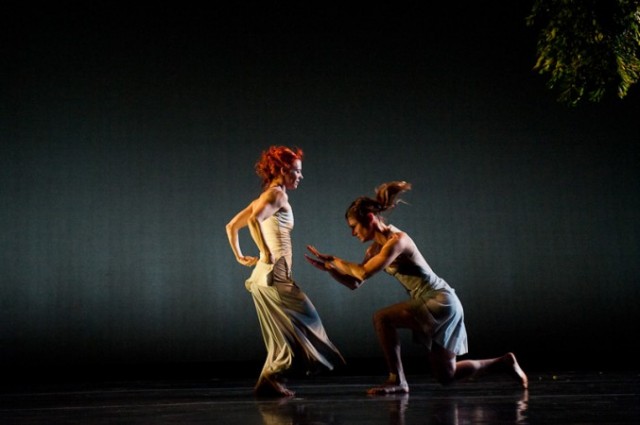
INCIDENTS will be part of Evidence's winter season at the Joyce (photo by Julia Cervantes)

INCIDENTS will be part of Evidence’s winter season at the Joyce (photo by Julia Cervantes)

Joyce Theater
175 Eighth Ave. at 19th St.
February 12-17, $10-$49
212-242-0800
www.joyce.org
www.evidencedance.com

Brooklyn-based choreographer Ronald K. Brown refers to what his company does as “the ritual and journey of dance,” and they continue what has been an exciting and rewarding journey this week at the Joyce. Founded by Brown in 1985, Evidence, a Dance Company, which incorporates traditional West African rhythm and movement into its exploration of the African American experience, will be performing two programs February 12-17. The first is highlighted by the world premiere of Torch, which is dedicated to the life and memory of former Brown student Beth Young, who passed away in January 2012, along with 2005’s Order My Steps, set to the music of Terry Riley, Fred Hammond, and Bob Marley; 2005’s IFE/My Heart, with guest artist and Alvin Ailey veteran Matthew Rushing, who recently performed in Brown’s updated version of Grace for Ailey’s winter season at City Center; and excerpts from 1998’s Incidents, in which five women evoke slavery life, with music by the Staple Singers, Aretha Franklin, and Wunmi Olaiya. Program B includes 2001’s Walking Out the Dark, combining an original score by Philip Hamilton with text in addition to songs by Sweet Honey in the Rock, Francisco Mora, and M’Bemba Bangoura; and 1998’s Upside Down, an excerpt from Destiny, which examines community mourning, set to the title song by Fela Kuti and “Kun Fe Ko (The Uncertainty of Things)” by Oumou Sangare. There will be a Dance Chat following the February 13 show and a Joyce Pre-Show talk before the February 14 performance, led by Amy Kail. Following the Joyce presentation, Brown and Evidence will be back next month, performing the 1999 Philadanco commission Gatekeepers March 15-17 as part of the 92nd St. Y Harkness Dance Festival series “Stripped/Dressed.”

SYMPHONIC BALANCHINE

New York City Ballet
David H. Koch Theater
20 Lincoln Center between West 62nd & 65th Sts. and Columbus & Amsterdam Aves.
Saturday, February 9, 2:00, and Sunday, February 10, 3:00, $29-$155
212-496-0600
www.nycballet.com

This week the New York City Ballet is presenting its Symphonic Balanchine program, comprising Western Symphony, featuring traditional American tunes orchestrated by Hershy Kay, Symphony in Three Movements, set to music by Igor Stravinsky, and Symphony in C, with music by Georges Bizet, all choreographed by NYCB founder George Balanchine, creator of the American classical ballet tradition. Demonstrating Balanchine’s love of music and mastery of multiple genres, from Stravinsky’s twentieth-century modernism to Bizet’s nineteenth-century Romanticism, the program showcases NYCB’s particularly strong corps du ballet this season as well as a well-rounded group of soloists and principals. Western Symphony is a lively production, with fanciful costumes by Karinska; the men wear cowboy hats and western shirts, while the women are beribboned, tightly encased in satin with showgirl flounces. Energetic and fast-paced, the piece is as American as Broadway, which is fitting, since Kay also did the orchestrations for On the Town, Once Upon a Mattress, A Chorus Line, and Evita, among many other musicals. Megan Fairchild and Jared Angle are among the high-spirited pairs who prance and twirl playfully against the western backdrop. The stark stage of Symphony in Three Movements could not be more different; with nary a prop in sight, the dancers wear plain white or black leotards, executing Balanchine’s precise choreographic architecture to Stravinsky’s stark modernism with grave precision. The evening concludes with a longtime favorite, Balanchine’s glittering tour de force for the corps du ballet, Symphony in C. Originally titled “The Crystal Palace,” Symphony in C sparkles this year in brand-new costumes liberally set with Swarovski crystals. With a cast of more than fifty dancers and a stunningly intricate finale featuring some three dozen dancers onstage at the same time, Symphony in C is, as Ballet Master in Chief Peter Martins says in the above video, “arguably our signature piece . . . perhaps the most challenging ballet for the company.” The two-hour Symphonic Balanchine program continues on February 9-10 at the David H. Koch Theater at Lincoln Center.

CULTUREMART 2013

Bora Yoon collaborates with Adam Larsen and R. Luke DuBois in surreal WEIGHTS AND BALANCES (photo by James Chung)

Bora Yoon collaborates with Adam Larsen and R. Luke DuBois in surreal WEIGHTS AND BALANCES (photo by James Chung)

HERE
145 Sixth Ave. at Dominick St.
Through February 10, $10 in advance, $15 within twenty-four hours of show
212-647-0202
www.here.org

The HERE Artist Residency Program, known as HARP, is now in the second week of its annual Culturemart festival, consisting of unique, experimental works, often in double features, from emerging presenters in such disciplines as dance, theater, music, visual arts, and puppetry as well as a melding of several of them. On February 4-5, Mei-Yin Ng’s Lost Property Unit explores loneliness and solitude in the digital age, referencing television and movies through dance, live and prerecorded music, and robot sculptures, while in Hai-Ting Chinn’s Science Fair the mezzo-soprano combines opera with science in a multimedia performance. On February 6-7, Robin Frohardt’s The Pigeoning uses music and puppets to look at the end of the world, while Joseph Silovsky’s Send for the Million Men is a solo piece that reexamines the Sacco and Vanzettti case with puppets and handmade projectors. Also on February 6-7, Bora Yoon’s Weights and Balances is a surreal opera featuring an interactive performance design by R. Luke DuBois. On February 8-9, Stein / Holum Projects’ The Wholehearted is a work in progress about a woman boxer looking back at her glory days. On February 9 at 2:00, there will be a free performance of David T. Little’s opera-theater piece Artaud in the Black Lodge, which links Antonin Artaud, William S. Burroughs, and David Lynch through a libretto by Anne Waldman. The festival, which also celebrates HERE’s twentieth anniversary, concludes February 9-10 with HERE artistic director Kristin Marting and David Morris’s Trade Practices, a live, interactive market in which audience members become participants in the event.

TRISHA BROWN DANCE COMPANY: PROSCENIUM WORKS, 1979-2011

LES YEUX ET L’ÂME is one of two New York premieres by Trisha Brown at BAM (photo by Stephanie Berger)

LES YEUX ET L’ÂME is one of two New York premieres by Trisha Brown at BAM (photo by Stephanie Berger)

BAM Howard Gilman Opera House
30 Lafayette Ave. between Ashland Pl. & St. Felix St.
Through February 2, $20-$70, 7:30
718-636-4100
www.bam.org
www.trishabrowncompany.org

The Trisha Brown Dance Company’s “Proscenium Works, 1979-2011” tour kicked off at BAM this week with the New York premiere of Brown’s final two works, along with several repertory classics, as Brown announced her retirement as choreographer from the troupe she founded in 1970. On January 31, the program focused on Brown’s revolutionary use of silence and experimental music and avoidance of narrative structure; none of the pieces featured traditional songs or told a dramatic story. The show began with the thirtieth anniversary presentation of the seminal Set and Reset, a stirring collaboration with Laurie Anderson and Robert Rauschenberg. As Anderson’s hypnotic, repetitive “Long Time, No See” plays, seven dancers take the stage under a three-part geometric construction on which Rauschenberg projects newsreel-style black-and-white footage. (On the other nights, 2011’s Les Yeux et l’âme, opened the program.) For 1966’s Homemade, former TBDC member Vicky Shick returned for the short solo work in which she wears an old-fashioned projector that displays a film (by Babette Mangolte, based on Robert Whitman’s original) of Shick dancing wearing an old-fashioned projector. As she slowly moves around the stage, the film appears on the back wall, on the ceiling, and on the audience itself. Different-colored wall screens by artist Donald Judd occasionally descend from above and divide the stage into claustrophobic spaces in Newark (Niweweorce), set to Judd’s minimalist score that combines silence with bolts of loud noises that resemble the sounds of an MRI, which didn’t exist when the piece debuted in 1987. And in the new I’m going to toss my arms—if you catch them they’re yours, eight dancers in loose-fitting white costumes interact with large industrial fans that blow their clothes off, revealing colorful briefs and bathing suits as Alvin Curran plays “Toss and Find” on the piano in the far corner. The informal yet elegant movement throughout all four works is slow and steady, emphasizing form and function in compelling ways, paying tribute to Brown’s profound influence on the world of postmodern dance. At the beginning of the evening, an offstage voice announced that the night will honor the “past, present, and future” of the Trisha Brown Dance Company, and the troupe will indeed continue, with Brown, now seventy-six, taking on the official title of founding artistic director and choreographer. Following the tour of “Proscenium Works, 1979-2011,” TBDC will return to its roots, concentrating on presenting multimedia works in unusual spaces beginning in 2015.

TRISHA BROWN DANCE COMPANY

(photo by Laurent Philippe)

New York premiere of “I’m going to toss my arms—if you catch them they’re yours” is part of Trisha Brown Dance Company program at BAM (photo by Laurent Philippe)

BAM Howard Gilman Opera House
30 Lafayette Ave. between Ashland Pl. & St. Felix St.
January 30 – February 2, $20-$70, 7:30
718-636-4100
www.bam.org
www.trishabrowncompany.org

This past fall, BAM bid farewell to Pina Bausch as Tanztheater Wuppertal presented the final work by the legendary German choreographer, “…como el musguito en la piedra, ay si, si, si…” (Like moss on a stone), who died in 2009 at the age of sixty-nine. Now BAM is saying goodbye to another dance master as Trisha Brown brings her last two pieces to the Howard Gilman Opera House from January 30 to February 2. Now seventy-six, the Washington State-born Brown has been presenting dance at BAM since January 1976. How to describe her eclectic style? In fall 1993, influential multimedia artist and choreographer Yvonne Rainer wrote in BOMB magazine, “The task of describing Trisha Brown’s unique form of dancing is daunting. Its inscrutable blend of zaniness, athleticism, delicacy, and logic, always evading mimetic clichés, similarly eludes language, like a half-forgotten word or phrase that can’t quite roll off the tip of the tongue.” The Trisha Brown Dance Company will be performing two programs at BAM. The first (January 30, February 1-2) consists of 1987’s Newark (Niweweorce), featuring audiovisual elements by minimalist Donald Judd and Peter Zummo and lighting by Ken Tabachnick; the New York premiere of Les Yeux et l’âme, set to music by William Christie and Les Arts Florissants from Jean-Philippe Rameau’s Pygmalion, with lighting by Jennifer Tipton and costumes by Elizabeth Cannon; the New York premiere of I’m going to toss my arms—if you catch them they’re yours, with video by Burt Barr, costumes by Kaye Voyce, and lighting by John Torres, set to Alvin Curran’s “Toss and Find”; and 1966’s Homemade, a solo danced by Vicky Shick, with an original film by theatrical happenings mainstay Robert Whitman. The second program (January 31) comprises Newark (Niweweorce), I’m going to toss my arms—if you catch them they’re yours, Homemade, and the thirtieth-anniversary presentation of the 1983 BAM commission Set and Reset, a collaboration with Laurie Anderson, Robert Rauschenberg, and Beverly Emmons. The company features Neal Beasley, Cecily Campbell, Tara Lorenzen, Megan Madorin, Leah Morrison, Tamara Riewe, Jamie Scott, Stuart Shugg, Nicholas Strafaccia, and Samuel Wentz. In conjunction with the performances, John Rockwell, Wendy Perron, and Stephen Petronio will participate in an “Iconic Artist Talk: On Trisha Brown” on February 2 at 5:00 at the BAM Fisher Fishman Space.

EIKO & KOMA: THE CARAVAN PROJECT

(photo by twi-ny/mdr)

Eiko and Koma will be performing THE CARAVAN PROJECT through January 21 at MoMA (photo by twi-ny/mdr)

PERFORMING HISTORIES: LIVE ARTWORKS EXAMINING THE PAST
Museum of Modern Art, Agnes Gund Garden Lobby
11 West 53rd St. between Fifth & Sixth Aves.
Through January 21
Museum admission: $25 ($12 can be applied to the purchase of a film ticket within thirty days)
212-708-9400
www.moma.org
www.eikoandkoma.org

Although Eiko & Koma refer to their 1999 work, The Caravan Project, as “a vehicle for art activism,” it does not seek to make any comments on political or social issues. Instead, it was created to help promote art, particularly bringing it to those who either don’t have access to it or don’t know much about it. Reconfigured as part of their ongoing Retrospective Project, the 2012 version of Caravan has pulled into the MoMA lobby in front of Rodin’s “Monument to Balzac,” where the New York-based Japanese couple are performing during all hours the museum is open, through January 21. Placed right by the entrance, it forces people to see it on their way into MoMA as well as on their way out, so even if visitors intend to make a beeline straight for a specific exhibit, it is hard to miss an unhooked trailer that opens on all four sides, with a man and a woman either inside it or walking around outside, wearing decrepit white material that seems to be molting off their bodies as they move ever so slowly. It also can be seen without having to pay the $25 admission charge, furthering the dancers’ desire to bring the project to people who might not be able to afford hefty museum fees.

Koma emerges from the trailer and takes a slow walk in MoMA lobby (photo by twi-ny/mdr)

Koma emerges from trailer and takes slow walk in MoMA lobby (photo by twi-ny/mdr)

Held in conjunction with the “Tokyo 1955-1970: A New Avant-Garde” show, the “Art Theater Guild and Japanese Underground Cinema, 1960–1986” film series, and the “Performing Histories: Live Artworks Examining the Past” exhibition, The Caravan Project is for the first time being presented indoors without the Jeep that drives them to the site at the beginning and takes them away at the end. Instead, Eiko and Koma have become one with the museum, much as their work throughout the years has seen them merge with the natural environment, either real or constructed, in works such as Naked and Water. With The Caravan Project, at times they’ll be playing to a large crowd surrounding the trailer, where visitors are allowed to get within three feet of them, while at other moments there might be no one watching, just museumgoers passing by without even glancing their way, but that is all part of this compelling living installation. The trailer itself is filled with bare tree branches and beehive-like detritus above and below, with Eiko and Koma, in all white, emerging in between as if coming out of cocoons following an apocalyptic nightmare. Spiderwebs are wrapped around their faces, making it appear that they’ve been dormant for a long time before rising again. Their Butoh-like movements are painstakingly slow; it is electrifying when they actually touch each other, appearing to be so desperately in need of human contact in this barren, desolate scene, the only sound coming from the crowd itself. “Performing Histories” continues through May 25 with such upcoming programs as Kelly Nipper’s Tessa Pattern Takes a Picture, Fabian Barba’s A Mary Wigman Dance Evening, and El Arakawa’s Paris & Wizard: The Musical.