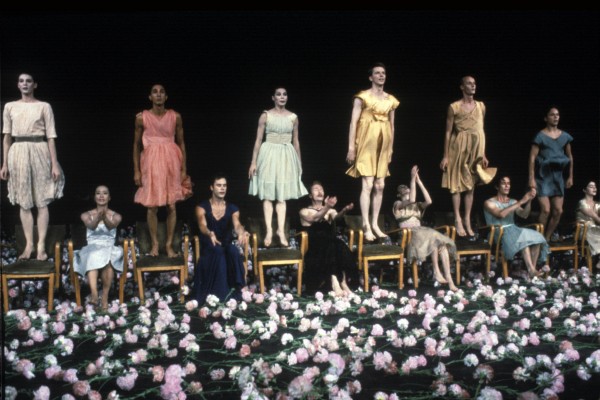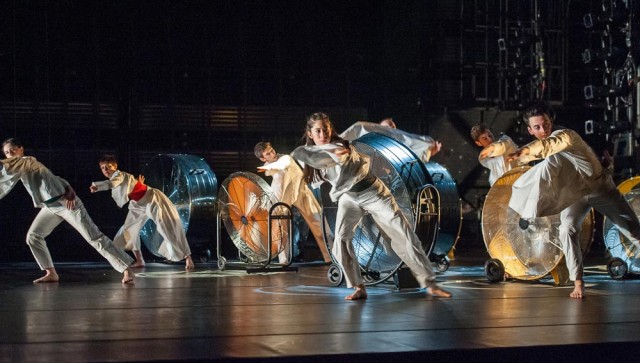
Trisha Brown’s “I’m going to toss my arms — if you catch them they’re yours” will be performed June 25-26 as part of summer-long River to River tribute to the celebrated choreography (© Laurent Phillipe)
The highlight of this summer’s free dance programs is River to River’s tribute to Trisha Brown, including an exhibition, a conversation and Q&A, an open rehearsal, and live performances, taking place on Governors Island and other locations. Among the other festivals featuring dance are Lincoln Center Out of Doors, SummerStage, Hudson River Park’s Moondance, and Celebrate Brooklyn! Keep watching this space for updates as more events are announced.
Saturday, May 24
River to River Festival: Open Studio with Tere O’Connor, LMCC Arts Center at Governors Island, 2:00
Sunday, May 25
River to River Festival: Open Studio with Joanna Kotze, LMCC Arts Center at Governors Island, 3:00
Saturday, June 7
Red Hook Fest, with the Dance Cartel, Dendê and Band, Gallim Dance, Godsell Dance Collective, and Underground System, Louis J. Valentino Jr. Park & Pier, 12 noon – 7:00
Friday, June 13
Bryant Park Presents Modern Dance: Elisa Monte Dance, Buglisi Dance Theatre, Jennifer Muller/The Works, Bryant Park Stage, 6:00
Friday, June 20
Bryant Park Presents Modern Dance: Stephen Petronio Dance, NØA Dance, UnderOneDances, the Dash Ensemble, Bryant Park Stage, 6:00
SummerStage Presents Jason Samuels Smith, All Levels Open Dance Master Class with Jamal Jackson at 7:00, performance by tap-dancer Jason Samuels Smith and composer Owen “Fiidla” Brown at 8:00, Herbert Von King Park
Friday, June 20
through
Sunday, June 29
River to River Festival — Trisha Brown Dance Company: “Embodied Practice and Site Specifity,” exhibition, LMCC Arts Center at Governors Island
Friday, June 20
and
Sunday, June 22
River to River Festival — Eiko: Two Women, duet with Tomoe Aihara, LMCC Arts Center at Governors Island, 2:00
Friday, June 20, 3:00
and
Saturday, June 21, 1:00 & 3:00
River to River Festival — Vanessa Anspaugh: What Was Wasn’t Here, performed by Vanessa Anspaugh, Addys Gonzalez, and Bessie McDonough-Thayer, LMCC Arts Center at Governors Island
Saturday, June 21
SummerStage Presents ChoreoQuest: All Levels Open Dance Master Class with Jamel Gaines at 7:00, performance by ChoreoQuest at 8:00, Herbert Von King Park
Saturday, June 21
River to River Festival Living Room — Ephrat Asherie & Hector Arce-Espasas: Everyday I’m Hustlin’, VBar, South Street Seaport, 9:00
Sunday, June 22
River to River Festival — In Conversation: Susan Rosenberg on Trisha Brown, LMCC Arts Center at Governors Island, 4:30
Sunday, June 22, 7:00 & 8:00
and
Tuesday, June 24, 7:30
River to River Festival — enrico d wey: where we are right now, Pier 15, South Street Seaport
Monday, June 23
through
Wednesday, June 25
River to River Festival — untitled site-specific duet choreographed by Tere O’Connor, performed by Michael Ingle and Silas Riener, Elevated Acre, 1:00
Tuesday, June 24, 3:00
and
Wednesday, June 25, 3:00 & 5:00
River to River Festival — Souleymane Badolo: , of history (Virgule de l’histoire), John Street Church Courtyard
Wednesday, June 25
River to River Festival — Trisha Brown Dance Company: I’m going to toss my arms — if you catch them they’re yours, open rehearsal, Pier 15, South Street Seaport, 7:00
Wednesday, June 25, 2:45
and
Thursday, June 26, 1:45 & 3:45
River to River Festival — Reggie Wilson: …Moses(es), St. Cornelius Chapel, Governors Island
Thursday, June 26
River to River Festival — Trisha Brown Dance Company: I’m going to toss my arms — if you catch them they’re yours, performance, Pier 15, South Street Seaport, 4:00
Thursday, June 26, 5:00
Saturday, June 27, 1:00
and
Sunday, June 28, 1:00
River to River Festival — The Set Up: I Nyoman Catra by Wally Cardona & Jennifer Lacey, 120 Wall St.
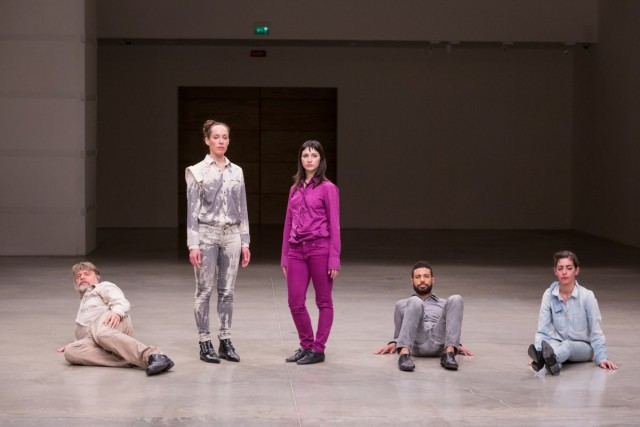
Maria Hassabi’s mesmerizing PREMIERE will move outside to Bowling Green
Friday, June 27
Bryant Park Presents Modern Dance: Take Dance, Steps Ensemble, BodyStories: Teresa Fellion Dance, Bryant Park Stage, 6:00
River to River Festival — In Conversation: Maria Hassabi, Paolo Javier & Kaneza Schall, Poets House, 7:00
Friday, June 27, 3:00
and
Saturday, June 28, 3:00 & 5:00
River to River Festival — Maria Hassabi: Premiere, Bowling Green
Saturday, June 28
and
Sunday, June 29
River to River Festival — Bronx Gothic: The Oval, Open Studios with LMCC artist in residence Okwui Okpokwasili, LMCC Arts Center at Governors Island, 3:00
Friday, July 4
Bryant Park Presents Modern Dance: Booking Dance Festival Edinburgh, with Art of Motion, Antara Bhardwaj, Barkin/Selissen Project, Buggé Ballet, Dzul Dance, Michael Mao Dance, Rebecca Stenn, Reed Dance, Synthesis Dance, and Compagnie Christiane Emmanuel, Bryant Park Stage, 6:00
Wednesday, July 2
SummerStage Presents Urban Bush Women, Laurie M. Taylor, and Soul Movement, Central Park, 8:00
Friday, July 11
SummerStage Presents Ballet Hispanico’s BHdos, All Levels Open Dance Master Class at 7:00, performance at 8:00, St. Mary’s Park
Saturday, July 12
SummerStage Presents Urban Bush Women, All Levels Open Dance Master Class at 7:00, performance at 8:00, St. Mary’s Park
Sunday, July 13
Moondance: Swing with David Berger Jazz Orchestra, Pier 84, Hudson River Park, lessons at 6:30, live music at 7:00
Wednesday, July 15
SummerStage Presents Ballet Hispanico and A Palo Seco, Central Park, 8:00
Thursday, July 17
Celebrate Brooklyn! Shen Wei Dance, Prospect Park Bandshell, 8:00
Friday, July 18
SummerStage Presents Harambee Dance Company, All Levels Open Dance Master Class at 7:00, performance at 8:00, Queensbridge Park
Sunday, July 20
Moondance: Salsa with Los Hermanos Colon, Pier 84, Hudson River Park, lessons at 6:30, live music at 7:00
Tuesday, July 22
Lincoln Center Out of Doors Brasil Summerfest — screening of Passinho Dance Off: The Movie, David Rubenstein Atrium, 6:30
Tuesday, July 22
Lincoln Center Out of Doors Brasil Summerfest — Behind the Groove: Welcome Party for A Batalha do Passinho, with DJ KS*360, David Rubenstein Atrium, 8:00
Thursday, July 24
Lincoln Center Out of Doors: Rennie Harris Puremovement (Get it, Church, Spirit Migrations, Students of the Asphalt Jungle) and A Batalha do Passinho, Damrosch Park Bandshell, 7:30
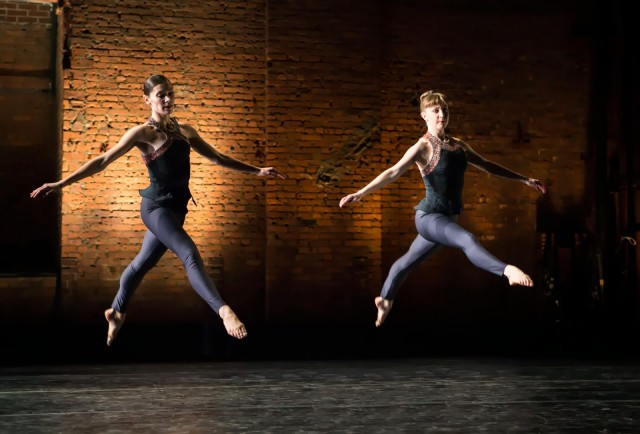
Pam Tanowitz’s PASSAGEN is part of Lincoln Center dance program on June 25 (photo by Yi-Chun Wu)
Friday, July 25
Lincoln Center Out of Doors: Pam Tanowitz Dance (PASSAGEN featuring violinist Pauline Kim Harris, excerpt from The Spectators featuring FLUX Quartet) and eighth blackbird (Erase by Andy Akiho, Murder Ballades by Bryce Dessner, Counting Duets by Tom Johnson/“Études” by György Ligeti, these broken wings 3 by David Lang), Damrosch Park Bandshell, 7:30
Saturday, July 26
Lincoln Center Out of Doors — Family Day: Baby Loves Disco — A Family Dance Party, Roslyn and Elliot Jaffe Dr., 11:00 am and 2:00 pm; A Batalha do Passinho Dance Class, Hearst Plaza, 1:00; National Dance Day, Josie Robertson Plaza, 4:00
Sunday, July 27
Moondance: Swing with Vince Giordano & the Nighthawks, Pier 84, Hudson River Park, lessons at 6:30, live music at 7:00
Thursday, July 31
Celebrate Brooklyn! Dance Theatre of Harlem and Leyla McCalla, Prospect Park Bandshell, 7:30
Friday, August 1
Lincoln Center Out of Doors: Paul Taylor Dance Company (Fibers, Aureole, Piazzolla Caldera) and Pablo Ziegler’s New Tango Ensemble, Damrosch Park Bandshell, 7:30
Saturday, August 2
Lincoln Center Out of Doors: Camille A. Brown and Dancers (Mr. TOL E. RAncE) and Stew & the Negro Problem, Damrosch Park Bandshell, 7:00
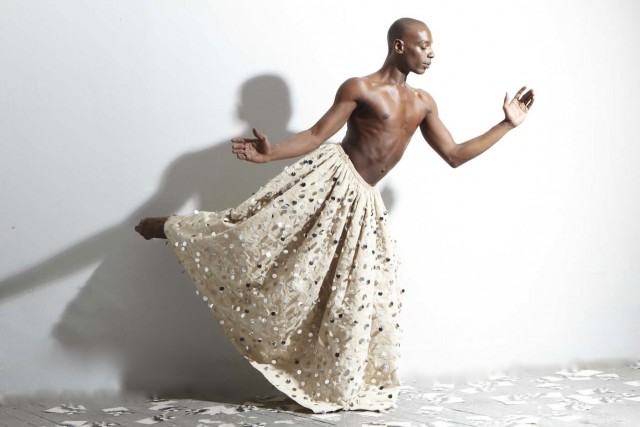
Germaul Barnes of Viewsic Expressions Dance will lead a master class at SummerStage program in East River Park on August 8
Sunday, August 3
Moondance: Salsa with Nu D’Lux, Pier 84, Hudson River Park, lessons at 6:30, live music at 7:00
Wednesday, August 6
Uptown Bounce: Summer Nights at 104th & Fifth — Throwback, with DJ D’Marquesina, DJ Grand Master Caz, breakdancers the NBS Crew, video projections and sidewalk art by the Murcielagos Fumando Collective, and discussion with Perla de Leon, 6:00
SummerStage Presents Spectrum Dance Theater and Sidra Bell Dance NY, Central Park, 8:00
Thursday, August 7
Lincoln Center Out of Doors: Ragamala Dance with Rudresh Mahanthappa (Song of the Jasmine), Kun-Yang Lin/Dancers (Be/Longing 2), and Chinese American Arts Council Dancers (From Chinatown with Love), Damrosch Park Bandshell, 7:30
Friday, August 8
SummerStage Presents Spectrum Dance Theater, All Levels Open Dance Master Class with Germaul Barnes at 7:00, performance at 8:00, East River Park
Saturday, August 9
SummerStage and Valerie Gladstone present Dance Off the Grid, Master Class with Evidence at 7:00, performance at 8:00, East River Park
Sunday, August 10
Moondance: Swing with George Gee Swing Orchestra, Pier 84, Hudson River Park, lessons at 6:30, live music at 7:00
Sunday, August 10
through
Saturday, August 16
Downtown Dance Festival, Battery Park
August 13
Uptown Bounce: Summer Nights at 104th & Fifth — Remix, with DJ D’Marquesina, DJ Grand Master Caz, Kelly Peters and his Generation X Hip Hop Dancers, video projections and sidewalk art by the Murcielagos Fumando Collective, and El Museo founder Raphael Montañez Ortiz in conversation with Chon Noriega, 6:00
Friday, August 15
SummerStage and the Firehouse Present: The Harlem Dance Caravan: Erasing the Boundaries, All Levels Open Dance Master Class with Theresa Lavington at 7:00, performance at 8:00, Marcus Garvey Park
Saturday, August 16
SummerStage and the Firehouse Present: The Harlem Dance Caravan: Erasing the Boundaries, All Levels Open Dance Master Class with Calvin Wiley at 7:00, performance at 8:00, Marcus Garvey Park
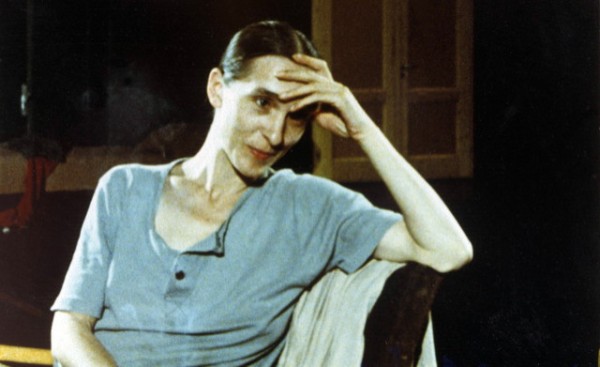
 In 1982, Belgian filmmaker Chantal Akerman followed Pina Bausch’s Tanztheater Wuppertal on a five-week tour of Europe as the cutting-edge troupe traveled to Milan, Venice, and Avignon. “I was deeply touched by her lengthy performances that mingle in your head,” Akerman says at the beginning of the resulting documentary, “One Day Pina Asked…,” continuing, “I have the feeling that the images we brought back do not convey this very much and often betray it.” Akerman (Jeanne Dielman, 23 Quai du Commerce, 1080 Bruxelles; Je tu il elle) needn’t have worried; her fifty-seven-minute film, made for the Repères sur la Modern Dance French television series, is filled with memorable moments that more than do justice to Bausch’s unique form of dance theater. From 1973 up to her death in 2009 at the age of sixty-eight, Bausch created compelling works that examined the male-female dynamic and the concepts of love and connection with revolutionary stagings that included spoken word, unusual costuming, an unpredictable movement vocabulary, and performers of all shapes, sizes, and ages. Akerman captures the troupe, consisting of twenty-six dancers from thirteen countries, in run-throughs, rehearsals, and live presentations of Komm Tanz Mit Mir (Come Dance with Me), Nelken (Carnations), 1980, Kontakthof, and Walzer, often focusing in on individual dancers in extreme close-ups that reveal their relationship with their performance. Although Bausch, forty at the time, is seen only at the beginning and end of the documentary, her creative process is always at center stage. At one point, dancer Lutz Förster tells a story of performing Gershwin’s “The Man I Love” in sign language in response to Bausch’s asking the troupe to name something they’re proud of. Förster, who took over as artistic director in April 2013, first performs the song for Akerman, then later is shown performing it in Nelken. (Bausch fans will also recognize such longtime company members as Héléna Pikon, Nazareth Panadero, and Dominique Mercy.)