this week in art

LAST CHANCE: JUDITH GODWIN / TARYN SIMON / DANIEL BUREN

Judith Godwin, “Black Cloud,” oil on canvas, 1960 (© Spanierman Modern)

While the holiday crowds rush to MoMA to see the outstanding “Abstract Expressionist New York,” which continues through April 25, there are several free shows in the Midtown area that are ending this week and are more than worthy of a bigger audience. The eighteen works that comprise “Judith Godwin: Paintings, 1954-2002,” at Spanierman Modern (53 East 58th St.) through December 30, are easily deserving of their own room in the expansive MoMA exhibit, alongside canvases by such contemporaries and colleagues of Godwin’s as Franz Kline (whose Greenwich Village brownstone she bought in 1963), Willem de Kooning, Jackson Pollock, and Mark Rothko. “The act of painting is for me, as a woman, an act of freedom, and a realization that an image generated by the female experience can be a powerful expression for all humanity,” Godwin said in 1978, but there is no need to view her magnificent works specifically as those of a woman. Godwin’s bold brushstrokes and innate color sense, ranging from the yellows and golds of 1978’s “Tropic Zone” to the dark reds of 1979’s “Infidel,” from the vast, central white of 1977’s “Crusade” to the blues and reds that dominate 1954’s “Echoes, No. 2” and 1981’s “Harlem” and the black, brown, and cream of 1960’s stunning “Black Cloud,” result in powerful, emotional oils that both surprise and delight. Don’t miss this marvelous show, one of the best of the year.

Taryn Simon surveys her “Contraband” installation shortly before opening (photo by twi-ny/mdr)

In November 2009, New York native Taryn Simon spent five days photographing items that were confiscated at John F. Kennedy International Airport, cataloging more than a thousand of the photos in “Contraband,” on view through December 31 in the glassed-in lobby gallery that is home to the Lever House Art Collection (390 Park Ave. at 53rd St.). Simon divides the contraband items into such categories as “Illegal,” “Prohibited,” and “Counterfeit,” including images of such obviously problematic goods as drugs, weapons, a dead falcon, pirated DVDs, and fake designer handbags and currency as well as various kinds of food and drink, cow manure, insect larvae, and even Russian matryoshka dolls. The photographs offer fascinating insight not only into the occasional stupidity of both travelers and Customs officials but also a telling peek into consumerism and desire run rampant. The location enhances the exhibit, as it can be viewed from the outside, as if everything inside has been taken away and stored, or from the inside, as the busy holiday traffic passes by ritzy Park Ave.

Daniel Buren’s Hermès silk scarves are on view and on sale on Madison Ave. (photo by twi-ny/mdr)

The days after Christmas are followed by trips to stores to return unwanted items and purchase new things with gift cards, but it’s going to take a wealthy friend or relative to help you obtain one of the limited-edition scarves designed by artist Daniel Buren for Hermès (691 Madison Ave. at 62nd St.). French conceptual artist Daniel Buren, who in the past several years has designed uniforms for MoMA employees and covered the interior of the Guggenheim in aluminum foil, has now teamed up with the French luxury store to create a series of 365 silk scarves, combining photographs from his vast collection with his trademark colored stripes. Several dozen of the pieces can be seen through December 31 in the gallery on the top floor of the Madison Ave. Hermès store, where savvy shoppers can also purchase one of the unique items for about $7,000; each scarf comes with a deluxe book, PHOTOS-SOUVENIRS AU CARRE, part of Hermès’s carré d’artiste project, which began in 2008 with Josef Albers’s “Homage to the Square.”

ALVIN AILEY AMERICAN DANCE THEATER: ALL NEW WORKS 2010

Christopher L. Huggins’s “Anointed” is one of the highlights of Alvin Ailey American Dance Theater season at City Center (photo by Paul Kolnik)

New York City Center
130 West 56th St. between Sixth & Seventh Aves.
Through January 2
Tickets: $25-$150
212-581-1212
www.alvinailey.org
www.nycitycenter.org

As always, Alvin Ailey American Dance Theater’s annual year-end season at City Center includes world premieres, brand-new productions of earlier works, performances with live music, revivals of classics, and plenty of “Revelations,” which is in the midst of its fiftieth anniversary. The first program of all-new works took place on December 21, beginning with the world premiere of former Ailey member Christopher L. Huggins’s celebratory “Anointed.” In the first section, “Passing,” set to Moby’s “Grace,” Olivia Bowman Jackson, representing Ailey artistic director Judith Jamison, who is stepping down from her position in January, and Glenn Allen Sims, playing the part of Alvin Ailey, perform a gentle pas de deux, both dressed in black, before Sims follows a glowing light and exits the stage. In the second section, “Sally Forth,” set to Sean Clements’s percussion-based “Blessed Love,” Jackson emerges wearing Jamison’s trademark purple, continuing Ailey’s legacy with Megan Jakel, Rachael McLaren, Akua Noni Parker, and Khilea Douglass. The piece concludes with “52 and Counting,” featuring Moby’s “God Moving Over the Face of the Waters” as Sims reemerges in white, now the heavenly spirit of Ailey watching the full company perform before teaming up with Jackson again and handing over the reins to new artistic director Robert Battle (Abdur-Rahim Jackson). “Anointed” is a wonderful tribute to the past, present, and future of the company.

AAADT’s Briana Reed and Samuel Lee Roberts in Geoffrey Holder’s “The Prodigal Prince” (photo by Paul Kolnik)

In honor of his retiring mentor, associate artistic director Masazumi Chaya has restaged Jamison’s 1989 work, “Forgotten Time,” a seven-part ballet that begins in silence as six male dancers and six female dancers look up at an unseen image, then, dressed in skin-tight, flesh-colored costumes re-created by Jamison, break off into pairs and perform thrilling lifts, carries, and pulls, exhibiting marvelous body control in Timothy Hunter’s soft lighting as a score by Le Mystere des Voix Bulgares plays. Sims and Jermaine Terry join together for a particularly awe-inspiring duet. A new production of Geoffrey Holder’s 1968 dazzler, “The Prodigal Prince,” was a terrific choice to follow the much quieter “Anointed” and “Forgotten Time.” Based on the life of Haitian painter Hector Hyppolite, “The Prodigal Prince” comes alive with colorful costumes, loud tribal music, and flashy choreography, all by Holder, with lighting and special stage effects by Clifton Taylor. The brash, bold, exciting piece is divided into five sections (“Conversations with the Gods,” “The Feather Brush,” “The Dream of Africa — A Divine Sleep,” “Homecoming and Inheritance,” and “The Beginning”) as Hyppolite (Samuel Lee Roberts) meets Voudoun goddess Erzulie Freda Dahomey (Parker) and John the Baptist (Jamar Roberts) in a vision and is joined by the Mambo/Le Serviteur (Hope Boykin), a pret-savanne spirit (Michael Francis McBride), and the rest of the company, their faces hidden behind masks, with religious rituals taking place and a general love of life bursting forth. “The Prodigal Prince” will be performed again December 23, December 26, and January 2, with “Forgotten Time” scheduled for December 26, December 28, and January 1 and “Anointed” December 29 and January 2.

THE CONTENDERS 2010: WASTE LAND

Catadore Magna shows artist Vik Muniz the ropes at world’s largest daily landfill (courtesy Vik Muniz Studio)

WASTE LAND (Lucy Walker, 2010)
IndieScreen, 285 Kent Ave. at South Second St.
Thursday, December 23, $10-$12, 7:00
Wednesday, December 29, $10-$12, 8:00
347-227-8030
MoMA Film, Museum of Modern Art, 11 West 53rd St., $10, in person only, may be applied to museum admission within thirty days, same-day screenings free with museum admission, available at Film and Media Desk
Wednesday, December 29, 4:00
212-708-9400
www.moma.org
www.wastelandmovie.com
www.indiescreen.us

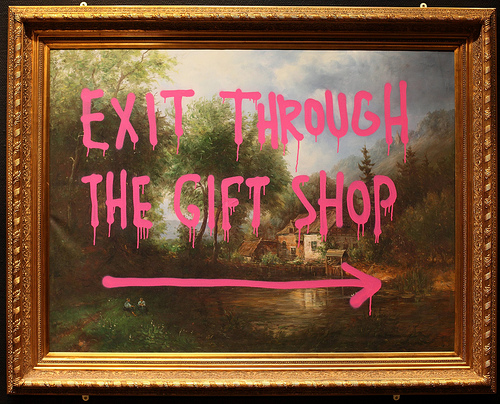
Born in São Paulo, Brazil, but based in New York City for many years, Vik Muniz has been making portraits and re-creating artistic masterpieces using such materials as sand, sugar, jewels, junk, paper, and pigments and showing them in galleries and museums around the globe. In 2007, he returned to Brazil and met with the catadores, men and women who work at Jardim Gramacho, the largest landfill in the world, picking out recyclable materials they can then sell to survive. He comes to know Tiaõ and Zumbi, who help run the Association of Recycling Pickers of Jardim Gramacho, as well as such other catadores as Suelem, Isis, Irma, Magna, and Valter, each a character in his or her own right, with unique stories to tell. Filmmaker Lucy Walker (BLINDSIGHT, COUNTDOWN TO ZERO) documents Muniz’s interaction with these dirt-poor people, who live in Rio’s dangerous favelas, as he sets out to capture their images by using the garbage they sift through to eke out some kind of living. Despite their surroundings, they are proud and happy, welcoming in Muniz, who is not shy about calling himself the most successful Brazilian artist in the world and sharing his determination to give something back. WASTE LAND is about art and ecology, about class consciousness and the vast separation between the rich and the poor. The film proceeds in a fairly standard, straightforward manner, putting Muniz and the project on too high a pedestal, which is not surprising given that the initial idea was Walker’s; the heartwarming subject matter, more than the filmmaking itself, is the reason it has been a hit at international festivals, including winning Audience Awards at Sundance and Berlin earlier this year. WASTE LAND is being screened at the Museum of Modern Art on December 29 as part of the series “The Contenders 2010,” a collection of influential and innovative international movies the institution believes will stand the test of time. MoMA has already shown such works as Luca Guadagnino’s I AM LOVE, Christopher Nolan’s INCEPTION, Roman Polanski’s THE GHOST WRITER, and Mads Brügger’s THE RED CHAPEL, and upcoming films include Tom Hooper’s THE KING’S SPEECH, Mark Romanek’s NEVER LET ME GO, and Banksy’s EXIT THROUGH THE GIFT SHOP. WASTE LAND is also being shown December 23 and 29 at IndieScreen in Williamsburg.

LEONARDO DA VINCI’S THE LAST SUPPER: A VISION BY PETER GREENAWAY

Peter Greenaway investigates da Vinci’s “Last Supper” and Veronese’s “Wedding at Cana” at Park Avenue Armory

Park Avenue Armory
643 Park Ave. at 67th St.
Tuesday – Sunday through January 6, timed tickets $15 (children ten and under free), 12 noon – 8:00 pm
212-933-5812
www.armoryonpark.org

On December 4 at the Park Avenue Armory, iconoclastic British director Peter Greenaway boldly declared that cinema is dead, that all art is elitist, and that we have become a visually illiterate society. The man behind such unique and unusual films as THE COOK, THE THIEF, HIS WIFE & HER LOVER (1989) and THE PILLOW BOOK (1996) was in New York discussing his dazzling multimedia installation “Leonardo’s Last Supper: A Vision by Peter Greenaway,” which continues through January 6 at the armory. Greenaway is in the midst of his Ten Classical Paintings Revisited series, in which he delves deep into the stories behind some of the greatest works of art in the history of the world. He began by turning Rembrandt’s “Nightwatch” into a thrilling murder mystery and has now turned his attention to Leonardo da Vinci and Paolo Veronese. Upon first entering the fifty-five-thousand square foot Wade Thompson Drill Hall, visitors are greeted by more than a dozen screens of varying sizes, dangling from the ceiling, hiding in the background, and even forming a red carpet of sorts on the floor. Different videos place the viewer in the midst of a Milan piazza as images of tourists whirl past. “I love Italian fascist architecture,” Greenaway noted during his December 4 talk.

The Park Avenue Armory is transformed into a multimedia Italian piazza and refectory for dazzling Greenaway installation (photo by James Ewing)

Following shots of Italian ballet dancer Roberto Bolle’s graceful movement, visitors are taken into a second room, a re-creation of the Refectory of Santa Maria Delle Grazie, featuring a long white table with white place settings leading to an exact copy of da Vinci’s masterful depiction of “The Last Supper.” Greenaway brings the magnificent painting to life using light, shadow, and projection as the work suddenly becomes three-dimensional, glows when hit by apparent sunlight, and is broken down into individual figures and specific elements. The standing audience is then brought back into the first room, where Greenaway investigates Veronese’s “Wedding at Cana,” a work that places Jesus at the center of a Jewish wedding, the married couple way off to one side, as Jesus turns water into wine. Greenaway discusses various characters Veronese included in the painting, his controversial depiction of blood, and the hierarchy of the carefully arranged 126 figures at the banquet, all of whom are given bits of dialogue, some taken from the Gospel of St. John. With voices coming from all directions and classical music by Andrea and Giovanni Gabrieli and Antonio Vivaldi echoing through the hall, visitors become guests at the wedding, as if in the middle of it all, as Greenaway offers a new way to look at a painting and cinema, just as he did with “The Last Supper.” The forty-five-minute presentation gets into cosmography, Christian iconography, and apocrypha with a sly sense of humor, integrating living images with a text-based cinema, incorporating art and architecture, film and dance, religion and history into a spectacular experience that should not be missed.

YOSHITOMO NARA: NOBODY’S FOOL

“Nobody’s Fool” offers a look into childhood memories and loneliness (photo by twi-ny/mdr)

Asia Society
725 Park Ave. at 70th St.
Tuesday – Sunday through January 2
Admission: $5-$10 (free Friday nights from 6:00 to 9:00)
212-288-6400
www.asiasociety.org

The many obsessions of fifty-one-year-old Japanese artist Yoshitomo Nara are on view at the Asia Society in “Nobody’s Fool,” a wide-ranging exhibition of paintings, sculptures, drawings, ceramics, and site-specific installations. Divided into three primary themes — Isolation, Rebellion, and Music — the works create a fascinating portrait of Nara and his unique take on popular culture. Nara’s most familiar subjects — houses, animals, rock and roll, and little girls who are not quite as cute as they initially appear — relate to his own loneliness growing up and his desire to break free. Evil and danger lurk just below the surface of his pieces, if not in plain sight. In the painting “Make the Road, Follow the Road,” a pig-tailed girl hands a knife to a smiling doglike creature, while on the plate “Too Young to Die” a young girl smoking a cigarette directs a sly, knowing look at the viewer. And in the drawing “Stuffed Dog,” a canine wearing a crown has been thumbtacked to the wall, echoing the crucifixion by way of a direct reference to Nara’s own art, as if his freedom has been taken away from him, accompanied by the words “No Pain No Again.” Nara often uses written language in his works, with his characters making such declarations as “Oh! My God! I Miss You!” and “Pave Your Dreams.” Heavily influenced by American rock and punk, especially the Ramones, he incorporates such phrases as “It’s better to burn out than to fade away” and “Stand by me” in his pieces; In “Guitar Wolf,” the title animal is blasting away on a six-string, shouting out, “Fuckin’ neurotic world!” while in an untitled piece, a young girl with a guitar is standing atop a mountain with a face while singing, “Kill kill kill the P.” Nara has also set up a wall display of dozens of his favorite album covers, appreciated for their jacket art and/or music, including some very interesting and surprising choices.

Yoshitomo Nara opens up the doors to his psyche in site-specific installations at Asia Society (photo by twi-ny/mdr)

“Nobody’s Fool” also features three site-specific installations organized around the theme of home and developed by Nara in tandem with designer Hideki Toyoshima. “Drawing Room Between the Concord and Merrimack” creates a carnivalesque atmosphere with color-wheel stages you can stand on and a small house that represents Nara’s studio. “Doors,” named after the rock band and part of a bigger project from 2006 held in Nara’s hometown, consists of five rooms, each with a very different scene inside and including such works as “It’s Something Unpredictable But in the End Is Right” and “Promise Me No Dead End Streets,” inspired by Green Day. And in “Untitled (formerly ‘Home’),” Nara invites visitors to walk through a one-story house he and Toyoshima constructed earlier this year in the Park Ave. Armory and filled with a video montage of photographs, a peace sign stuffed with handmade dolls, and a maquette of “White Ghost,” a miniature of the large sculptures that stood on Park Ave. announcing and protecting the exhibit. The installations offer trips deeper into Nara’s fascinating psyche and working method, built on childhood memories and rock and roll dreams. On Sunday, December 19, Asia Society will be hosting “My House Is My Home,” a workshop for families at 3:00 in which they’ll take a closer look at Nara’s special installations. And as a special bonus, if you check in with Asia Society on Foursquare, you’ll get two-for-one admission. (Admission is free on Friday nights from 6:00 to 9:00.)

AYALA GAZIT: WAS IT A DREAM

In “Was It a Dream,” photographer Ayala Gazit goes to Australia to find out about her half-brother, who committed suicide in 1996 (photo by twi-ny/mdr)

SVA Gallery
209 East 23rd St. between Second & Third Aves.
Through December 18
Admission: free
212-592-2010
www.schoolofvisualarts.edu
www.ayalagazit.com

Born in Haifa in 1984, Ayala Gazit was twelve years old when her father told her that she had a half-brother named James in Australia from a brief relationship he had with an Englishwoman named Linda in London. Gazit wrote James a letter introducing herself, but they never met, as he committed suicide later that year. After being awarded the Tierney Grant in Photography as a senior at SVA, Gazit used the prize, which gives promising graduating photography students one year to create an exhibition, to go to Australia and find out about the half-brother she never knew. She met with James’s mother and siblings, went through the family album, and scouted out the neighborhood where James lived. What she discovered, in words and pictures, is on view through the weekend in the somber yet powerful “Was It a Dream,” at the SVA Gallery on East 23rd St. Gazit, who was an intelligence photographer in the Israeli military for two years, groups together portraits of members of both families along with haunting individual shots of landscapes where James lived and played. To further the idea of home, one corner includes two chairs and a table on which sits an ashtray with a partially smoked cigarette in it, as if something has been left unfinished. There are few smiles in Gazit’s photographs, mostly serious looks contemplating a life cut short and what might have been. The pictures are supplemented with Linda’s letter to Ayala’s father telling him about the suicide, Ayala’s letter to James, and a slideshow of older family photographs.

JEAN-MICHEL BASQUIAT: THE RADIANT CHILD

Tamra Davis examines the life of her friend Jean-Michel Basquiat in revealing documentary (photo courtesy of Lee Jaffe)

JEAN-MICHEL BASQUIAT: THE RADIANT CHILD (Tamra Davis, 2010)
Film Forum
209 West Houston St.
December 15-21, 1:15, 3:15, 6:00, 8:00, 10:00
212-727-8110
www.filmforum.org
www.jean-michelbasquiattheradiantchild.com

Director Tamra Davis (GUNCRAZY) transports viewers back to the 1980s New York art scene in the intimate documentary JEAN-MICHEL BASQUIAT: THE RADIANT CHILD, which is having a special return engagement at Film Forum by popular demand. In 1986, just as the career of street artist Jean-Michel Basquiat was exploding, Davis filmed him being interviewed by designer Becky Johnson, a revealing portrait that she put away in a drawer for more than twenty years. Davis finally brings out that footage, making it the centerpiece of this new examination of the ambitious, influential artist and musician who experienced massive success before falling hard and fast and dying of a drug overdose at the age of twenty-seven in 1988. Davis, a friend of Basquiat’s, conducts new interviews with many of the people from his inner circle, including art dealers Jeffrey Deitch, Larry Gagosian, Annina Nosei, Tony Shafrazi, and Bruno Bischofberger; Basquiat’s girlfriends Suzanne Mallouk and Kelle Inman; close Basquiat friends Diego Cortez and Fab 5 Freddy; NEW YORK BEAT cable TV host Glenn O’Brien; and fellow artist Julian Schnabel, who directed Basquiat in DOWNTOWN 81. Davis has also dug up amazing footage from the 1980s of Basquiat that shows him to be a unique, driven figure who used whatever he could — from broken windowframes and doors he’d find on the street to immense canvases — to spread his art and world view, which began with drawings in which he identified himself as Samo, criticizing contemporary art as “the same old shit.” Ultimately, though, it was his relationship with Andy Warhol that was the beginning of the end. JEAN-MICHEL BASQUIAT: THE RADIANT CHILD is a dazzling document of a fascinating time and a cautionary tale of success that comes too fast, too soon.