this week in art

THE WOODMANS

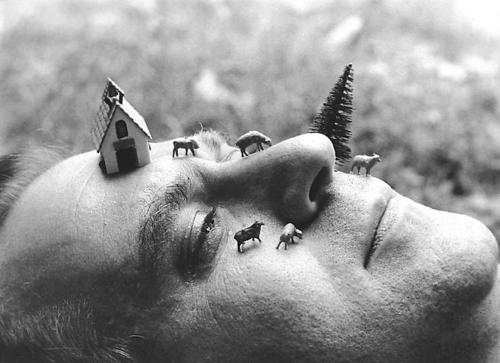
The tragic life of artist Francesca Woodman and her family is the focus of intriguing documentary (untitled photo by Francesca Woodman, 1977-78, Rome, courtesy Betty and George Woodman)

THE WOODMANS (C. Scott Willis, 2010)
Film Forum
209 West Houston St.
January 19 – February 2, 1:00, 2:50, 4:30, 6:20, 8:10, 10:00
212-727-8110
www.filmforum.org
www.kinolorber.com

There’s something inherently creepy about THE WOODMANS, C. Scott Willis’s documentary about a family of artists that opens tonight at Film Forum for a two-week run. For the first half of his debut theatrical release, Willis, an eleven-time Emmy winner who has spent most of his career working for television news organizations, speaks with successful ceramic sculptor Betty Woodman, who had a terrific retrospective at the Met in 2006; her less-well-known husband, painter and photographer George Woodman; and their son, video artist and professor Charles Woodman, focusing on the missing member of the family, photographer Francesca Woodman, who is heard from through excerpts from her diary and seen in her videos and photographs. For those who don’t know Francesca’s fate, Willis builds the tension like a mystery, although it’s obvious something awful occurred. THE WOODMANS gets even creepier once Willis reveals what happened to Francesca, a RISD grad who quickly made a name for herself in the late 1970s taking innovative and influential nude black-and-white photographs of herself. As the parents talk about their daughter’s life and career, Betty explains how she got pregnant more to experience childbirth than to actually be a nurturing mother, and George expresses his jealousy at how Francesca was so admired in the art world, outshining both her parents. That they tend to do so with a calm matter-of-factness contributes to the uncomfortable nature of the film. Willis will participate in a Q&A following the 8:10 screening on January 19.

PERFORMANCE 11: ON LINE/TRISHA BROWN DANCE COMPANY

Trisha Brown Dance Company, STICKS, 1973 (photograph by Alfredo Anceschi)

Museum of Modern Art
The Donald B. and Catherine C. Marron Atrium, second floor
11 West 53rd St. between Fifth & Sixth Aves.
Saturday, January 15, and Sunday, January 16, 2:00 & 4:00
Free with museum admission of $20 (includes same-day film screening)
212-708-9400
www.moma.org
www.trishabrowncompany.org

Last fall the Trisha Brown Dance Company continued its fortieth anniversary celebration with a number of site-specific performances at the Whitney. Now it leaps into its fifth decade with a group of shows in MoMA’s atrium as part of the museum’s Performance Exhibition Series, being staged in conjunction with “On Line: Drawing Through the Twentieth Century,” which examines how drawing has changed in the last hundred years, featuring works by such artists as Aleksandr Rodchenko, Alexander Calder, Eva Hesse, Richard Tuttle, Mona Hatoum, and many others. On January 15 and 16 at 2:00 and 4:00, Brown will be presenting STICKS (1973), SCALLOPS (1973), and LOCUS SOLO (1975) as well as the premiere of ROOF PIECE RE-LAYED (2011), adapted from her original 1971 ROOF PIECE. MoMA will continue to explore the intimate connection between dance and drawings with Marie Cool and Fabio Balducci January 17-20, Anne Teresa De Keersmaeker January 22-23, Ralph Lemon January 26-30, and Xavier Le Roy February 2-6.

MUSEUM OF THE MOVING IMAGE

The Museum of the Moving Image will celebrate its grand reopening this weekend with a full slate of multidisciplinary events (vuwstudio.com / Museum of the Moving Image)

Museum of the Moving Image
35th Ave. at 36th St., Astoria
Admission: $10 (free Fridays 4:00 – 8:00), film screenings $15
Free Family Day: Monday, January 17, 10:30 am – 5:00 pm
718-777-6888
www.movingimage.us

Following a $67 million expansion overseen by architect Thomas Leeser that has doubled its size to nearly 100,000 square feet, the Museum of the Moving Image will celebrate its grand reopening this weekend with three days of film screenings, interactive exhibitions, a multimedia dance party, and much more. The Astoria institution, which is dedicated to the past, present, and future of international cinema, will get things under way with a family matinee of DUCK SOUP (Leo McCarey, 1933) on Saturday at 12:30, the inaugural Signal to Noise party Saturday night at 8:00 (with performances by Nick Yulman, Martha Colburn, Bit Shifter, Nullsleep, Project Jenny, Scott Draves and the Electric Sheep, and others), the Indian Cinema Showcase feature MUMBAI DIARIES (DHOBI GHAT) (Kiran Rao, 2010) Sunday at 7:00, and a full slate of activities on Monday: a digital 3-D screening of CORALINE (Henry Selick, 2009) at 1:00, a screening of the 1970 documentary KING: A FILM RECORD… MONTGOMERY TO MEMPHIS introduced by associate producer Richard Kaplan at 3:00, and a special presentation of THE KING’S SPEECH (Tom Hooper, 2010) at 7:00, followed by a discussion with stars Colin Firth, Geoffrey Rush, Claire Bloom, and Helena Bonham Carter.

“Chiho Aoshima: City Glow” will help light up revamped museum (courtesy of the artist and Blum & Poe, Los Angeles. © 2005 Chiho Aoshima/Kaikai Kiki Co., Ltd.)

The museum has a history of putting on splendid exhibitions, and the initial ones in the newly revamped space include Colburn’s film installation “Dolls vs. Dictators” through April 10; “Real Virtuality” through June 12, with works by Thomas Soetens, Paul Kaiser, Pablo Valbuena, Bill Viola, Cao Fei, and Marco Brambilla; the large-scale video “Chiho Aoshima: City Glow” through July 17; and the reinstalled “Behind the Screen” from the permanent collection, which is always a thrill. There will also be several film series kicking off in the next week, starting with “Rediscovered Treasures: Great Films from World Archives,” which runs January 15 through February 20 and begins this weekend with a a restored 70mm print of PLAY TIME (Jacques Tati, 1967), the world premiere of a restored print of THE HUSTLER (Robert Rossen, 1961), 2001: A SPACE ODYSSEY (Stanley Kubrick, 1968), and the live event screening “Magic, Music and Early Movies: Georges Méliès and Sxip Shirey.” “Avant-Garde Masters” runs January 15 through February 19, beginning Saturday and Sunday with “8MM Films by George and Mike Kuchar.” And from January 19 through February 6 the museum will honor David O. Russell with screenings of THE FIGHTER (2010), SPANKING THE MONKEY (1994), FLIRTING WITH DISASTER (1996), THREE KINGS (1999), and the underrated I HEART HUCKABEE (2004). The Museum of the Moving Image is one of those New York City treasures that you should be going back to over and over again. We know we will be. (And as added encouragement, admission is free all day Monday, January 17.)

FASHION MEETS FURNITURE: A CONVERSATION WITH ANNA SUI

Anna Sui will be at the Met on January 14 to talk about fashion, furniture, and more (photo © Brigitte Lacombe 2009)

Metropolitan Museum of Art
Grace Rainey Rogers Auditorium
1000 Fifth Ave. at 82nd St.
Friday, January 14, $25, 6:00
212-570-3949
www.metmuseum.org

Since 1991, fashion designer Anna Sui has been staging runway shows with collections influenced by everything from music, textile design, film, and comic book characters to art, British youth culture, interior decoration, and Seventeen magazine, as pointed out by Andrew Bolton in the deluxe book ANNA SUI (Chronicle, November 2010, $60). Sui’s Fall 2010 collection was inspired by furniture designer Charles Rohlfs, whose Art Nouveau and Arts and Crafts handiwork is currently on view at the Metropolitan Museum of Art through January 23 in the exhibition “The Artistic Furniture of Charles Rohlfs.” On Friday, January 14, Sui will be at the Met to talk about Rohlfs and her collection, along with Bolton, who is curator of the Met’s Costume Institute, Alice Cooney Frelinghuysen, the Anthony W. and Lulu C. Wang Curator of American Decorative Arts, and Joseph Cunningham, curator of the American Decorative Art 1900 Foundation. “There’s no doubt that Anna’s a little crazy,” photographer Steven Meisel writes in the introduction to the book, so be ready for anything in what should be an exciting evening.

PAT STEIR: THE NEARLY ENDLESS LINE

Pat Steir’s “Nearly Endless Line” winds through the Sue Scott Gallery on Rivington (photo by twi-ny/mdr)

Sue Scott Gallery
1 Rivington St. at Bowery
Through Sunday, January 9, free
212-358-8767
www.suescottgallery.com

Today is your last chance to see New York City-based artist Pat Steir’s “The Nearly Endless Line” at the Sue Scott Gallery on Rivington St., but it is not nearly the end of the seventy-year-old Newark native’s line work, as her Whitney mural, “Another Nearly Endless Line,” will be visible from Madison Ave. while restaurateur Danny Meyer turns the lower level space into a new café. Whereas the Whitney piece is a flaglike conglomeration of multiple colors, the work at Sue Scott is a dark, mysterious black-and-white installation (with blue lighting) that winds through the gallery, across doors, and over every nook and cranny in its path. Seemingly aglow with a life of its own, the line occasionaly pauses for a little flourish, a loop here and there, as it makes its way back to the entrance. “It’s almost like a map you can’t follow, a road map to a place you can’t go,” Steir has said of the Whitney piece, but the statement relates just as well to the Scott work. The show also includes a time-lapse video of Steir creating “The Nearly Endless Line” in addition to several abstract works that recall ancient Asian scrolls. The gallery is a little hard to find, so just look for the white wall dripping that Steir left on the outside brick as a marker.

FRANZ XAVER MESSERSCHMIDT 1736-1783: FROM NEOCLASSICISM TO EXPRESSIONISM

Franz Xaver Messerschmidt, “The Yawner,” tin cast, 1771–81 (Szépmuvészeti Múzeum, Budapest)

Neue Galerie
1048 Fifth Ave. at 86th St.
Through Monday, January 10, $15
212-628-6200
www.neuegalerie.org

After the death of his leading advocate, Martin van Meytens, and failing to receive a desired position at the Academy of Fine Art in Vienna, Bavarian-born Austrian Franz Xaver Messerschmidt went a bit off the deep end. He returned to his home in the small village of Wiesensteig and devoted the bulk of his remaining years (1771-83) to creating “character heads,” busts based on faces he made in the mirror by pinching himself (although he did continue receiving commissions during this time as well). Many of the heads are on display at the Neue Galerie through Monday, January 10, the first one-man museum show of Messerschmidt’s work ever to be held in the United States and one that next goes to the Louvre in Paris. The exhibit begins with several of Messerschmidt’s early commissioned busts of prominent Viennese figures, Baroque pieces that show off his immense skill at carving out facial characteristics with exacting detail, from the eyes, nose, and mouth to the cheekbones, chin, and hair. But his presumed madness, heightened by a fear of evil spirits around him, soon becomes evident in the second room, which contains a glass case of seven of the character heads, depicted in odd, unusual grimaces, winces, yawns, and other comic and serious poses, every wrinkle, neck muscle, eyebrow, and double chin a glimmer of perfection. Forget about the names of the sculptures — such intentionally silly, banal titles as “Surly Old Soldier,” “Afflicted with Constipation,” and “Just Rescued from Drowning” were assigned by a promoter after Messerschmidt’s death in 1783 (at the age of forty-seven) — and just bask in the glory of the work itself, from the intense beard on “Capuchin” to the rare depiction of teeth and a tongue in “The Yawner” to the beautiful hat of “The Artist as He Imagined Himself Laughing,” all of which predates (and perhaps predicts) German Expressionism but feels as modern as if it were created yesterday. There is also a thirty-minute documentary on Messerschmidt, and classical music fills the third-floor galleries. Also on view at the Neue is the excellent “Postcards of the Wiener Werkstätte: Selections from the Leonard A. Lauder Collection” (through January 17) in addition to the outstanding permanent collection, including exquisite paintings by Gustav Klimt and Egon Schiele as well as drawings by Klimt, Schiele, Kokoschka, Lubin, and others.

THE BUDDHA IMAGE: OUT OF UDDIYANA

“Large Seated Bodhisattva in Meditation,” Gandhara culture in Pakistan or Afghanistan, grey schist stone, circa ninth century (photo by twi-ny/mdr)

Tibet House US
22 West 15th St. between Fifth & Sixth Aves.
Extended through January 7, free, 12 noon – 5:00 pm
212-807-0563
www.tibethouse.us

Originally scheduled to end October 20 and then November 16, Tibet House’s revelatory five-part exhibition, “The Buddha Image: Out of Uddiyana,” has been extended yet again through January 7, and you should do whatever it takes to make sure you see it before it closes. Investigating the origin of the Buddha image, which some believe began in the Uddiyana (“royal garden”) kingdom of Northern Pakistan, the show includes dozens of remarkable artifacts divided into five sections: Gandharan Stone Sculptures, Stupas and Reliquaries, Gandharan and Swat Metal Buddhas, Pilgrimage, and Silk Road. Accumulated by Nik Douglas for the Buckingham Collection over the course of some forty-four years, the objects date back back more than nineteen centuries. Walking through the many treasures, you’ll wonder why they’re not part of a permanent museum collection. Among the most unusual of the sculptures are bronze and stone depictions of bodhisattvas with mustaches, in addition to fasting, emaciated buddhas, nearly skeletal as they continue to meditate. Glass cases display rock crystal stupas with gold/electrum alloy from the first and second century, while others contain Chinese gilt bronze buddhas from the sixth century. You can almost feel the electricity emanating from several works that depict a buddha and his consort staring deep into each other’s eyes, including the many-armed “Large Chakrasamvara Yabyum (‘Wheel of Becoming’)” and “Large Amitayus Yabyum (‘Buddha of Boundless Life’).” The early-nineteenth-century Sino-Tibetan “Huge Figure of the Kurukulla Dakini” features a central figure surrounded by fire, wearing a necklace of shrunken heads, standing on a woman. One of the most spectacular pieces can be found just to the left of the entrance, nearly hidden away in its own alcove: “Large and Complete Yamantara (‘Remover of the Fear of Death’),” a bull-headed, multi-armed, many-faced bodhisattva surrounded by mysterious, exciting iconography. In his foreword to the exhibition catalog, Tibet House president Robert Thurman writes, “We hope that the manifestations gathered in the exhibition will find their way here and there to continue to inspire individuals to use their precious human lives in the evolutionarily most meaningful way to create real human values in themselves and others.” We feel exactly the same way.