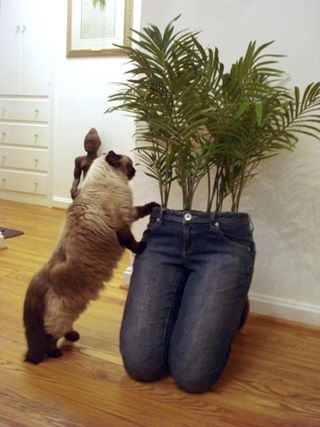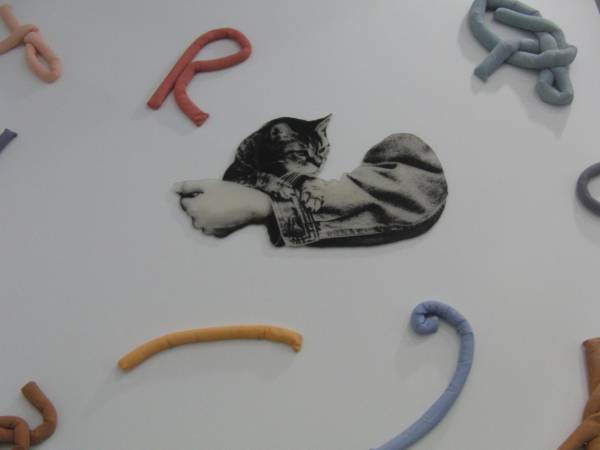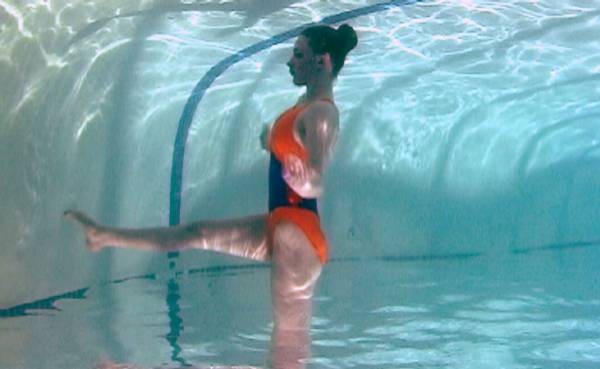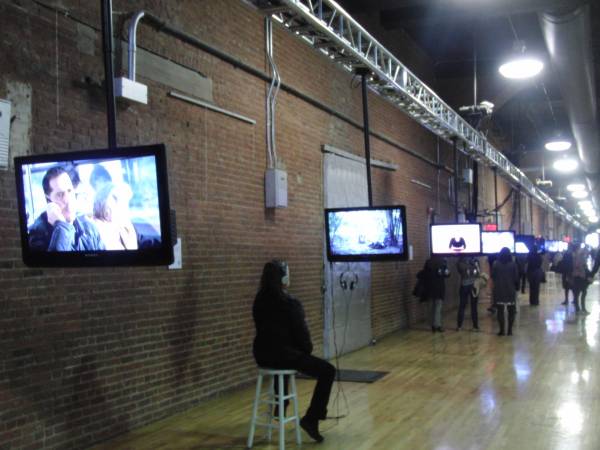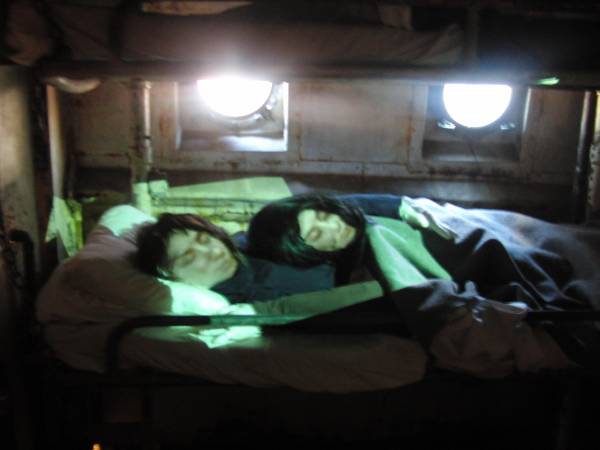
Allison Berkoy will be back on board the Frying Pan in the Lackawanna Caboose with more of her creepy but fun multimedia, lifelike installations (photo by twi-ny/mdr)
Pier 66 Maritime, the Frying Pan
West 26th St. at the Hudson River
March 3-6, $10 (March 4 VIP preview $25)
www.fountainexhibit.com
The sixth annual Fountain Art Fair, dedicated to exhibiting avant-garde works from small, independent galleries, is back on board the Frying Pan, displaying cutting-edge painting, sculpture, and installation from the most radical artists to be found during Armory Week. Following the March 3 VIP and press preview, Fountain will open its doors to the public on Friday at 12 noon with works from such galleries as What It Is, Christina Ray, Microscope, LambertArts, Cheap & Plastique, Temporary States, and, as always, the anarchist Murder Lounge down below (don’t say you weren’t warned), in addition to artists projects by Greg Haberny, Evo Love, Mark Demos, Mami Kotak, and Danni Rash & GILF! There will also be a large-scale street art installation that brings together Chris Stain, Faro, Gaia, Shark Toof, Clown Soldier, Love Me, Ellis G, Alessandro Echevarria, Lee Trice, Imminent Disaster, and Dickchicken!, and Boston’s experimental Mobius Collective will be holding four days of curated roaming and site-specific performance art pieces, called “Infiltrate!,” from Marilyn Arsem and Burns Maxey’s “Captain Burns and First Mate Arsem Discover a New Land” and Sandy and Jeff Huckleberry’s “Entrapment” to Anna Wexler and Catherine Tutter’s “Vessel for Haiti III,” Joanne Rice’s “Without,” and Alisia Lord Louise Waller’s “What Are You, Some Kind of Monster?”
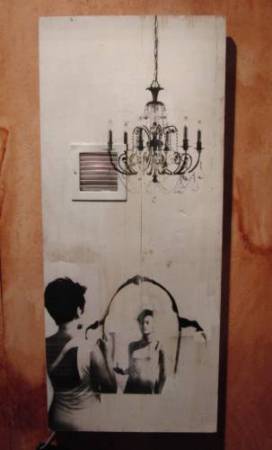
Jason Douglas Griffin’s “We Have an Understanding” can be found at the Leo Kesting booth at Fountain (photo by twi-ny/mdr)
Other special events include an opening-night reception with live performances by Gordon Voidwell, Tecla, and Generic and a Saturday-night Lomography Picture Party with Ninjasonik and NSR, all free with the standard admission price. This year, the show has a decidedly 1980s retro East Village feel; among the highlights are Jason Douglas Griffin’s painted door, “We Have an Understanding,” at Leo Kesting (the spray-painted lightbulb is part of the work but not the heater), Chris Smith’s “Rumblers Road Signs & Rusted Cars” at G-spot’s subtexture booth, JMR’s colorful live mural at Mighty Tanaka, Demos’s lighted, scratched, and pounded glass canvases, Victor Cox’s enticing small works in the enticing Murder Lounge, Carl Gunhouse’s photos of American real estate developments at Camel Art Space, and R. Nicholas Kuszyk’s delightful robot paintings and Morning Breath’s cool collages at McCaig-Welles. One of our Fountain favorites, Allison Berkoy, is back in the Lackawanna railroad car with “Another Night in the Caboose of Magical Light” (she was previously in the caboose in 2009, with Nuala Clarke there last year), a brand-new collection of captivating light and mirror projections that give life to inanimate objects, from dolls and rice to a bowl of soup, all featuring her face. Be sure to explore every nook and cranny of the 133-foot-long lightship, which was in operation from 1930 to 1965 and spent three years underwater before being rediscovered by salvagers. Fountain is the art fair for people who hate art fairs, where anything can happen — and probably will.