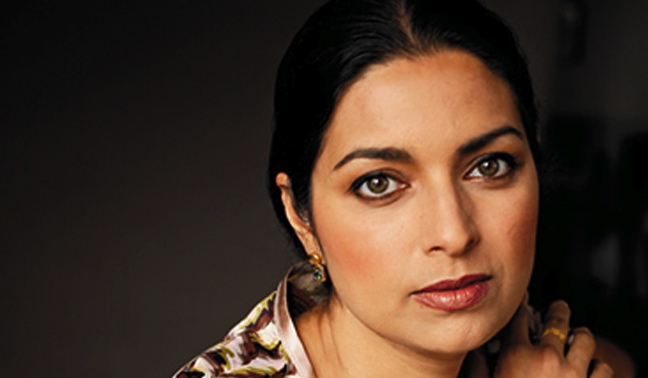
Jhumpa Lahiri will receive the BoBi (Best of Brooklyn) Award at this year’s Brooklyn Book Festival
Multiple venues in Brooklyn
Sunday, September 18, free, 10:00 am – 6:00 pm
www.brooklynbookfestival.org
Three’s just something about Brooklyn that both raises many of the world’s best writers and lures them to the Borough of Kings to do their most insightful writing. On Sunday, more than 250 writers will come together for the sixth annual Brooklyn Book Festival, with panel discussions, signings, lectures, workshops, live performances, and other events taking place at Borough Hall, Columbus Park, St. Francis College, St. Ann’s Church, and the Brooklyn Historical Society. This year’s BoBi (Best of Brooklyn) Award goes to Jhumpa Lahiri, who will be at St. Ann’s at 2:00 to speak with Liesl Schillinger. Everything is free, although some of the events require advance ticketing available one hour before program time. Below are our top ten recommendations; other participants include Colson Whitehead, John Sayles, Lawrence Block, Susan Isaacs, Madison Smartt Bell, Edmund White, Alina Simone, DJ Spooky, Pete Hamill, Russell Banks, Nicole Krauss, Larry McMurtry, Jennifer Egan, Tom Perrotta, Cory Doctorow, Dean Haspiel, J Hoberman, Phillip Lopate, Nick Bertozzi, Rita Williams-Garcia, and many more.
Laugh Your Head Off: Teen beauty pageant contestant Mad Libs! with Jon Scieszka, Libba Bray, Paul Acampora, and Tommy Greenwald, moderated by Olugbemisola Rhuday-Perkovich, Youth Stoop, Borough Hall Plaza / Columbus Park, 10:00 am
The Phantom Tollbooth at 50: Norton Juster and Jules Feiffer in conversation with Leonard Marcus, St. Francis Auditorium, 180 Remsen St., tickets required, 12 noon
Epic Confusion: Readings and discussion with Nadia Kalman, Chuck Klosterman, and Sam Lipsyte, moderated by Tiphanie Yanique, St. Francis McArdle Hall, 180 Remsen St., 12 noon
Words of Personal: Readings by Jonathan Safran Foer, Joyce Carol Oates, and Nina Revoyr, followed by a Q&A moderated by Brigid Hughes, St. Francis Auditorium, 180 Remsen St., tickets required, 2:00
Gumshoes: Eoin Colfer and Walter Mosley, moderated by David L, Ulin, St. Ann and the Holy Trinity Church, 157 Montague St., 3:00
Making Difficult Choices: Panel discussion with Cory Doctorow, Jacqueline Woodson, and Gayle Forman, moderated by Caragh O’Brien, Youth Stoop, Borough Hall Plaza / Columbus Park, 3:00
Comics Writ Large and Small: Panel discussion with Craig Thompson, Anders Nilsen, and Adrian Tomine, moderated by Meg Lemke, St. Francis Auditorium, 180 Remsen St., tickets required, 3:00
CATCH-22 at 50: Examining the classic novel with Tracy Daugherty, Bruce Jay Friedman, and Troupe, North Stage, Borough Hall Plaza / Columbus Park, 3:00
Where Are We? Panel discussion with Deborah Eisenberg, Fran Lebowitz, and Wallace Shawn, moderated by Harold Augenbraum, St. Ann and the Holy Trinity Church, 157 Montague St., 4:00
Kickstarter Conversations: A Symposium on Creative Ideas with Ted Rall, Nelson George, and Meaghan O’Connell, moderated by Yancey Strickler, North Stage, Borough Hall Plaza / Columbus Park, 4:00