Winfred Rembert tells his fascinating life story in ALL ME
ALL ME: THE LIFE AND TIMES OF WINFRED REMBERT (Vivian Ducat, 2011)
Pelham Fritz Recreation Center
18 Mount Morris Park West at 122nd St.
Thursday, February 9, free, 1:00
212-860-1380
www.allmethemovie.com
www.nycgovparks.org
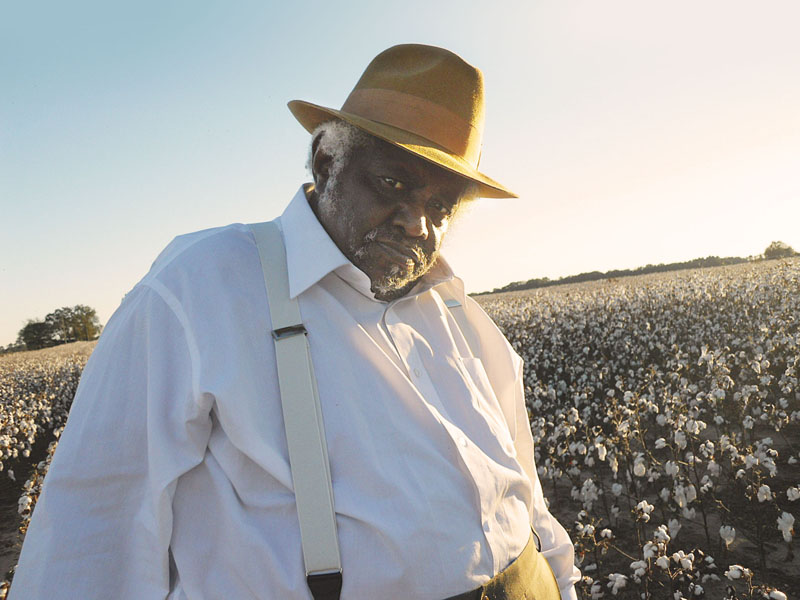
 Born in 1945 in rural Georgia to a mother who abandoned him when he was three months old, Winfred Rembert grew up picking cotton, dropped out of high school, spent time in jail and on a chain gang, and lost nearly all his teeth. But it was his years behind bars that turned him into a new man, as he learned to read and write and developed a unique art style that soon had him carving out the tales of his life on leather. Longtime journalist, producer, and writer Vivian Ducat tells Rembert’s amazing story in her engaging feature-length debut, All Me: The Life and Times of Winfred Rembert. Ducat follows the oversized Rembert, who regularly bubbles over with joy, as he returns for a show in Cuthbert, Georgia, and prepares for a big opening in New York City. “I know he’s here for a reason,” his sister Lorraine says in the film. “To help people and to be a witness through his art.” Throughout All Me, Rembert discusses many of his works, in which he uses indelible dyes on carved leather, in great detail, each one representing a part of his life, focusing on being a poor black man in a white-dominated society. It is quite poignant late in the film when he points out that his art seems to be most appreciated by whites even though it is meant as a visual history for blacks. But what really makes the documentary work is not just that Rembert is such an enigmatic, larger-than-life figure but that his art is exceptional, his self-taught, folksy style reminiscent of such forebears as Romare Bearden and Jacob Lawrence, capturing a deeply personal, intensely intimate part of the black experience in twentieth-century America. Rembert, one of the most fascinating characters you’re ever likely to come upon, will be at the Pelham Fritz Recreation Center on February 9 at 1:00 with Ducat and producer Mark Urman for a free screening of All Me, and what should be an enlightening Q&A afterward. (Rembert and Uman will also be at the Montclair Art Museum on February 16 at 7:00 as part of the fifth annual Montclair African American Film Festival, which is also free.) And if you’re as captivated by Rembert’s story as we are, you can see more of his work in his “Amazing Grace” exhibition, running through May 5 at the Hudson River Museum in Yonkers.