this week in art

CREST FEST

Crest Hardware
558 Metropolitan Ave. between Lorimer & Union
Saturday, June 30, free, 1:00 – 7:00
www.cresthardwareartshow.com

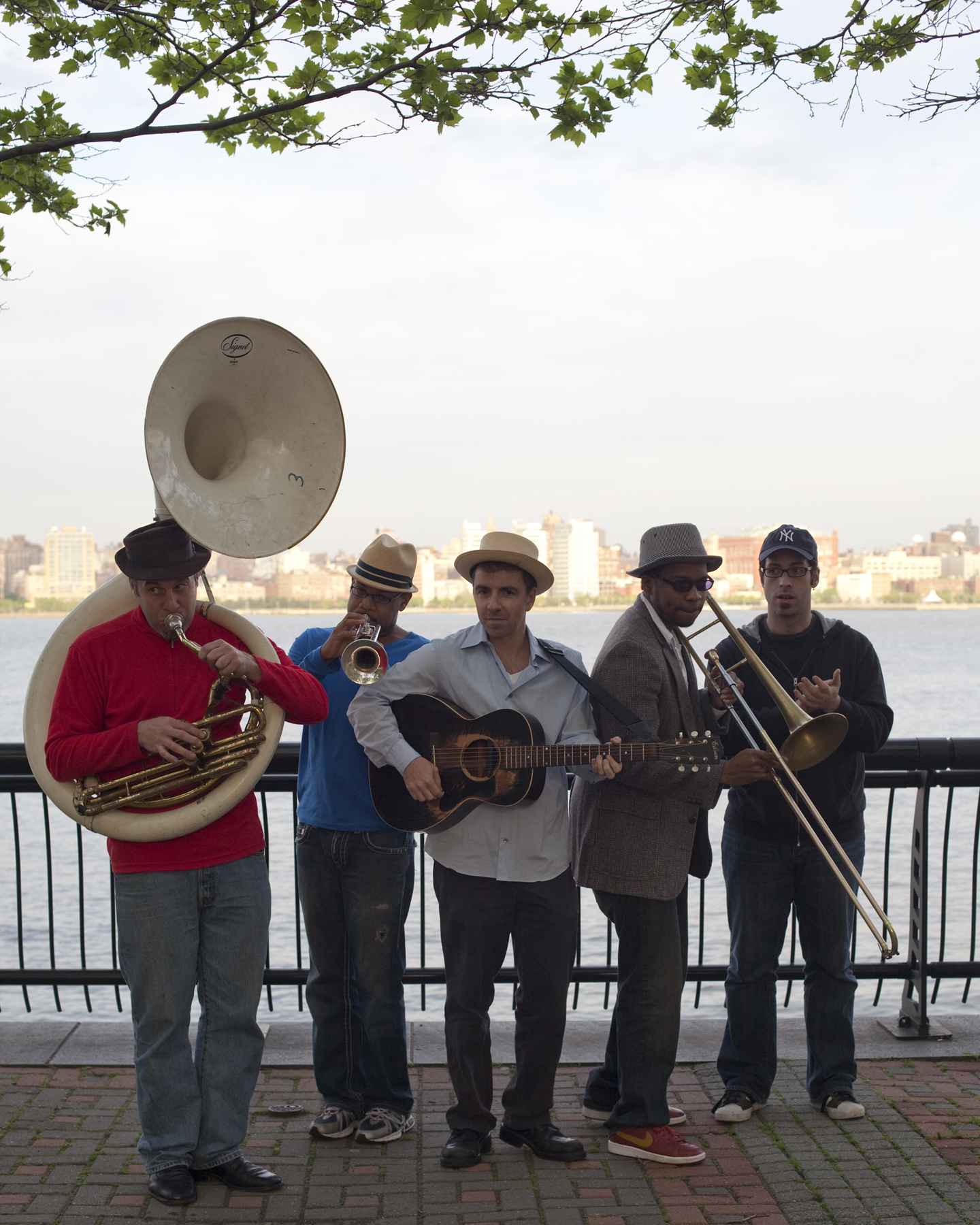
One of the grooviest events of the summer, Crest Fest is a celebration of art, music, food, crafts, and hardware. More than a hundred artists fill the Crest Hardware Store on Metropolitan Ave. with works of art that incorporate items readily available in the store and place them on the walls, racks, floor, and ceiling as if they are part of the regular merchandise — although they will cost you a little more than standard tools. Make your way through aisles and aisles of fun stuff before heading out the back to walk through the garden, grab a bite to eat, and check out some live bands. This year’s musical lineup includes PitchBlak Brass Band, Aabaraki, Workout, Hard Nips, and Grey Sky Appeal, along with DJ sets by Petey Complex, King Cut, Lucas Walters, Peter Hale, Dom Leon, and Krunk Pony. Among the vendors are Mighty Balls, Jessy’s Pastries, Tirana Jewelry, Grand Wazoo Clothing and Other Wondrous Things, Vicolo Mio, Seam, WRKN Class, Daly Pie, North Brooklyn Vineyard, Erika Day Designs, Old Hollywood, and Fantasy Clocks. The opening party and exhibit is a fundraiser for the City Reliquary, the museum and civic organization down the street on Metropolitan.

AN EVENING WITH CINEMA 16

Standish Lawder’s COLOR FILM is one of several experimental works being presented with a special new score at latest Cinema 16 event

The Kitchen
512 West 19th St. between Tenth & Eleventh Aves.
Tuesday, June 26, $12, 7:00
212-255-5793 ext11
www.thekitchen.org

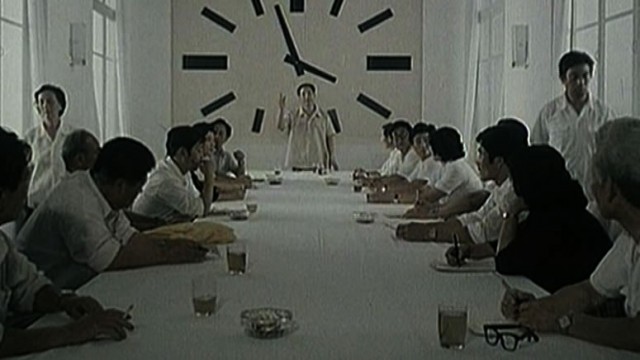
In her first Cinema 16 presentation since her June 2011 show at the Met and the April 2012 passing of original Cinema 16 founder Amos Vogel, photographer and curator Molly Surno continues to keep the experimental aesthetic alive and well with another unique program at the Kitchen. On June 26, the Los Angeles-born, Brooklyn-based Surno will pair a specially commissioned score by New York City musician and visual artist Matteah Baim with a quartet of shorts: Standish Lawder’s 1971 Color Film, in which different colored strips make their way through a projector to music by the Mothers of Invention; Sabrina Ratte’s 2010 Mirages, a kaleidoscopic collaboration with Le Révélateur; Viking Eggeling’s 1924 Symphonie Diagonale, an early abstract silent examination of time and space; and Len Lye’s 1953 Color Cry, a series of photograms initially set to Sonny Terry’s “Fox Chase.” Following the presentation, everyone is invited to the after-party across the street at Gasser & Grunert gallery, which is currently displaying Rodney Dickson’s “Painting” exhibition.

RAFAEL BARRIOS

Rafael Barrios, “Malabarismo Lineal,” stainless steel and acrylic lacquer, 2011 (photo by twi-ny/mdr)

Park Avenue Malls
Park Ave. between 50th & 68th Sts.
Through June 30
www.nycgovparks.org
rafael barrios slideshow

Baton Rouge-born Venezuelan-American artist Rafael Barrios has dotted the Park Ave. Malls between Fiftieth & Sixty-eighth Sts. with nine stainless-steel sculptures painted in primarily single-color acrylic lacquer that create fascinating optical illusions as the traffic, particularly yellow taxis, zooms by and clouds pass over the sun. The geometric constructions, in such colors as blue, white, pink, gray, and purple, look flat when seen from some angles, impossibly thin from others, and like three-dimensional cubes floating in space from other directions, displaying what the artist calls “virtualism.” The works — which feature such mysterious names as “Obtusa,” “Triphasique,” “Acrobatica,” “Centrifuga,” “Trifascica,” and “Malabarismo Lineal” — are best experienced by walking around them, as they offer up shifting perspectives that have a magical, playful quality to them. As the sixty-four-year-old Barrios, who is based in Miami, Paris, and Caracas, explains, “Volume is virtually modeled and modified in form — depending on distance — shifting with the position of the observer and the changes in light throughout the day.” The sculptures, which will remain up through the end of June, are worth revisiting if you haven’t seen them in a few months, as the summer sun and the blooming flowers and green grass that surround them add new shades of light and color.

PHOTOVILLE

Model of Photoville by Dave Shelley of United Photo Industries (photo by twi-ny/mdr)

Pier 3 Uplands, Brooklyn Bridge Park
June 22 – July 1, free
photovillenyc.org

Following hot on the heels of last month’s New York Photo Festival in DUMBO, the inaugural Photoville begins today, held in a collection of shipping containers across sixty thousand square feet on Pier 3 in Brooklyn Bridge Park. Sponsored by United Photo Industries, the show will feature exhibits from around the world, a series of workshops and talks, a dog run surrounded by a photo fence, an interactive greenhouse with camera flowers designed by André Feliciano, and a beer garden where visitors can down Brooklyn Brewery selections while watching nighttime projections and eating food from a rotating group of trucks. Getting there will be part of the fun, with a display on board the East River Ferry of shots either of the various vessels in the fleet or taken from them. Among the more than two dozen exhibitions are analog photos from Lomography, the multimedia presentation “2084” from SVA, Russell Frederick’s “Dying Breed: Photos of Bedford Stuyvesant,” Bruce Gilden’s “No Place Like Home: Foreclosures in America,” Sim Chi Yin’s “China’s Rat Tribe,” Wyatt Gallery’s “Tent Life: Haiti,” 2012 Pulse Prize winner Sigrid Viir’s “Routine Crusher,” Josh Lehrer’s “Becoming Visible” series of portraits of homeless transgender teens, Lorie Novak’s multimedia installation “Random Interference,” and Candace Gaudiani’s “Between Destinations” photos taken from inside train windows. Advance registration is recommended for such panel discussions and artist talks as “Li Hao: ‘Worshippers’” and “Cruel and Unusual: The Prisons, the Photography or Both?” on June 23, “The New Documentary” and “Human Rights Through Visual Storytelling” on June 24, “The Art of Fashion Portraiture” on June 28, “Photographs Not Taken” on June 29, and “Janelle Lynch: ‘Los Jardines de Mexico’” and “Photography as Activism” on July 1.

TWI-NY TALK — BRENDA ZLAMANY: 888

Brenda Zlamany and her daughter, Oona (far right), visit a police station in Dagangkou as part of their Taiwan journey; “Often in a new town the police station was a good place to set up the ‘studio,’” Zlamany explains (photo courtesy Brenda Zlamany)

888: PORTRAITS IN TAIWAN
Taipei Economic and Cultural Office
1 East 42nd St. between Madison & Fifth Aves.
Monday – Saturday through June 30, free, 9:00 am – 6:00 pm (9:00 -11:00 am Saturday)
212-317-7352
www.taiwanembassy.org
brendazlamany.com

Last summer, Brooklyn-based multidisciplinary artist Brenda Zlamany traveled throughout Taiwan with her Mandarin-speaking ten-year-old daughter, Oona, visiting thirty cities, towns, and aboriginal villages where Zlamany used a camera lucida to draw many of the residents, then made watercolors of them as she and Oona participated in the local culture. Brenda and Oona’s experiences are on view in the multimedia exhibition “888: Portraits in Taiwan,” which features oil paintings, behind-the-scenes videos, Zlamany’s sketchbooks, an informative, oversized map detailing their journey, and photographic projections of her subjects holding their portraits. The first part of her series “The Itinerant Portraitist,” the two-floor display is on view through the end of the month at the Taipei Economic and Cultural Office on 42nd St. Zlamany, whose previous painting series include “Bald Artists,” “Tibetans,” “Infants,” and numerous animals, discussed her working process, her relationship with her daughter, and more, shortly after the exhibition’s opening reception.

twi-ny: How did the idea for “888” come about?

Brenda Zlamany: For fifteen years I’ve painted portraits of my artist friends. Many of us paint ourselves and one another. In some ways you could say we’re professional posers. Our gaze is external. Very look at me. In 2007, I took a trip to Tibet with my daughter during which I shot thousands of photos of monks and nomads with the intent of making oil paintings when I returned. When I hung the completed Tibetan portraits in the studio beside twelve recent portraits of American artists, the artists appeared to be reaching out to the viewer, while the viewer was pulled into the portraits of the Tibetans. This contrast between “external” and “internal” gazes seemed worthy of further exploration. Taiwan seemed a good choice for such an inquiry because its indigenous cultures are somewhat removed from Western ways of thinking.

I also wanted to work in a Mandarin-speaking country because my daughter, Oona, is a fluent Mandarin speaker and could be my interpreter. She is very sweet and outgoing. We worked as a team. People were interested in us as a family. This gave us access to remote areas. People showed us a lot of hospitality.

I set out to make 888 paintings in 90 days, a reasonable challenge of 10 paintings a day. I chose 888 because 8 is associated with prosperity in Chinese culture. I told people that if they took part in the project, they would get rich. That made it easy to convince people to pose.

twi-ny: What did you look for in potential subjects?

Brenda Zlamany: I looked for a wide range of people: young, old, diplomats, tribal leaders, policemen, firemen, teachers, artists, street cleaners, fruit sellers, doctors, and hotel workers. But I learned that what I looked for and what I found in my subjects were not the same thing. When you paint someone, you make discoveries. For instance, I was staying in a convent in an aboriginal village, and five Taiwanese tourists were also there. They were middle-aged women. At first I didn’t think they were as interesting as people from the village, but I decided to paint them anyway. In doing so I learned about the depth of their friendship by observing how they posed and how they responded to one another’s portraits. The experience was very moving.

twi-ny: Although you drew men, women, and children of all ages, the show features oil paintings only of young men. What was the reasoning behind that decision?

Two of Zlamany’s subjects pose with their portraits in “888” exhibit at TECO (photo by twi-ny/mdr)

Brenda Zlamany: I was impressed with the beauty, grace, style, and directness of these young aboriginal men. There is so much creativity in how they present themselves. In many villages, one encounters them engaged in activities like break dancing, sports, computers, or just hanging out together. (The women of the same age are elsewhere and are nowhere near as self-consciously styled.) They have a lot of potential but are also at risk. And I identify with them. My life was like that early on, and I’ve been lucky. They are at the beginning of life, when there are so many unknowns. I wonder how it will go for them. But I understand this particular moment. It’s funny — as I painted people from cultures unfamiliar to me, I tried to figure out who in those cultures was me. It is said that all portraiture is ultimately self-portraiture.

twi-ny: Why did you choose to use the camera lucida?

Brenda Zlamany: The camera lucida is an instrument for drawing that was invented during the Renaissance. It enables the artist to view the subject and a superimposition of the subject on paper simultaneously. This allows for a more active involvement between the artist and the subject than does photography alone. The instrument demands direct observation, a rapport in which the subject can respond to the artist verbally or nonverbally and inform the work. For me, part of the electricity of portraiture is in the flip that occurs when the subject looks at the completed painting and becomes aware of the artist looking at him or her. We both reveal ourselves. The camera lucida enhances this exciting connection.

twi-ny: You traveled with your ten-year-old daughter throughout this journey. What do you think you learned about each other that you might not have known before?

Brenda Zlamany: I was amazed and pleased at how seriously she took her role as “head hunter” and interpreter. There were days when I thought I couldn’t make the goal, and she would set out to find great subjects to encourage me.

Because she’s fluent in Mandarin and I speak barely a word, we experienced a role reversal. Often I didn’t know what was going on as she negotiated for lodging, food, transportation. In this loss of power, I got to see what it’s like to be a kid who’s led around. I also got to see how she handles being in a power position. Mostly she was kind and fair. Although it could be frustrating for me.

We’d traveled as a team ever since she was an infant, so I already knew that she was cheerful, easygoing, fun, adventurous, and charismatic. People in Taiwan liked her, and this opened many doors. They were as interested in her as they were in the paintings.

But I discovered a major difference between us one morning when she woke up in tears and said “Mommy, we have no plan!” I replied, “We don’t need a plan. We have opportunities!” I was comfortable without a clear itinerary. One thing would lead to the next. She found that difficult to accept.

twi-ny: “888” is the beginning of your new series, the Itinerant Portraitist. What have you got planned for chapter two?

Brenda Zlamany: I’m looking for funding to travel to Southeast Asia to paint portraits of people, particularly girls, who are victims of human trafficking. Because I’ve discovered that there’s such a positive effect from “888,” I want to take it a little further and see if the work can actually make a difference in a situation where it’s really needed.

NORTHSIDE FESTIVAL 2012: DAY TWO

LIssy Trullie will be looking for love and more at Northside tonight (photo by Cory Kennedy)

The third annual Northside Festival heads into day two with its biggest show, an outdoor concert in McCarren Park featuring of Montreal, Jens Lekman, the Thermals, and Beach Fossils that should be hipster central. But don’t pass up the smaller, cheaper events at such venues as Bar Matchless, Cameo Gallery, Europa, Glasslands, Music Hall of Williamsburg, the Knitting Factory, Public Assembly, and Legion. Tonight’s promising roster includes St. Lucia, French Horn Rebellion, Lissy Trullie, Buke and Gase, and a record release party for These United States. In addition, Northside Art begins, with dozens of artists opening up their studios to visitors, and Northside Entrepreneurship continues with such panel discussions as “Fundraising for Niche Startups: Lessons from Urban Agriculture Innovators,” “Make Things Not War,” and “GZA on the Spirit of Disruption and Brooklyn.”

of Montreal, Jens Lekman, the Thermals, Beach Fossils, McCarren Park, $33.50, 5:00

Northside Art: Katie Nielsen, “Many Conversations” group show at Present Company, opening reception 6:00 – midnight, “Space Half Empty” group show at Fowler Arts Collective, opening reception 7:00 – 10:00

Neon Gold Records present: St. Lucia, French Horn Rebellion, Black Light Dinner Party, Slowdance, Lovelife, Nini Fabi, Chrome Canyon (DJ), Cameo Gallery, $15, 7:00

These United States (album release show), Grand Rapids, Your 33 Black Angels, Knitting Factory, $15, 8:00

The Whatever Blog presents: LUFF, Gold Streets, the Planes, Crazy Pills, Alyson Greenfield, Legion, $5, 8:00

PopGun presents: Lissy Trullie, the Young Rapscallions, Motive, Glasslands Gallery, $10, 8:30

LARRY RIVERS: LATER WORKS

Larry Rivers, “Art and the Artist: Mondrian,” oil on canvas mounted on sculpted foamboard, 1992 (courtesy Tibor de Nagy Gallery)

Tibor de Nagy Gallery
724 Fifth Ave. between 56th & 57th Sts.
Tuesday – Friday through June 15, free, 10:00 am – 6:00 pm
212-262-5050
www.tibordenagy.com

Born Yitzroch Loiza Grossberg in the Bronx in 1923, multidisciplinary artist and jazz saxophonist Larry Rivers, who died ten years ago at the age of seventy-eight, was a key influential figure in the ever-changing world of twentieth-century art, impossible to pigeon-hole into any one specific category or movement. This refusal to maintain the status quo is evident in his current solo show at Tibor de Nagy, which focuses on paintings and drawings made between 1975 and 2002. “A number of things strike me about Rivers’s late work. One is its range,” writes American poet and critic John Yau in the exhibition’s hardcover catalog. “He can go from doing a self-mocking send-up of his friend, the French artist Jean Hélion, to sensitively addressing the legacy of the Holocaust. This alone convinces me that his late work needs a longer and deeper look, and that his entire oeuvre needs to be reconsidered.” Indeed, the pieces on view deal with two primary subjects: three-dimensional sculpture paintings that pay homage to other artists, and poignant drawings that address family and loss, especially in regard to World War II. What first jumps out at Tibor de Nagy are brightly colored depictions of Groucho Marx, Charlie Chaplin, Piet Mondrian, Henri Matisse, Hélion, and others at work, painted on intricately sculpted foamboard that gives added life to them without feeling gimmicky. Rivers also re-creates Matisse’s “La Danse” with a more abstract vision. Meanwhile, in the back room, such poignant color pencil drawings as “The Frank Family,” “Four Seasons: Fall in the Forest of Birkenau,” and “Erasing the Past I” and “Erasing the Past II” take on a more serious tone, the yellow stars on the subjects’ tattered clothes emerging as haunting reminders of the Holocaust. While the works might evoke a wide range of emotions, from glee and wonder to sadness and pain, they are all about one thing, a past as remembered by a truly American artist.