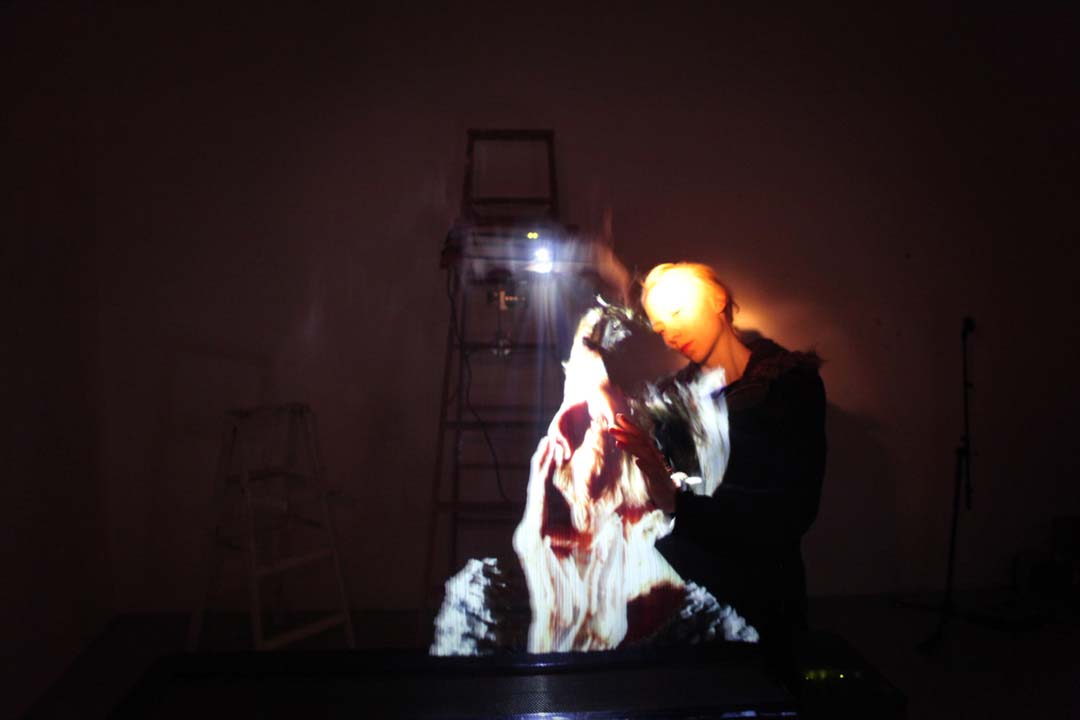
“Phosphene Variations” performance series will bring together live dancers and performance artists with their holographic versions
Location One
26 Greene St. between Grand & Canal Sts.
Exhibition runs Tuesday – Saturday through October 3, free; weekly Wednesday or Thursday performances, $10
212-334-3347
www.location1.org
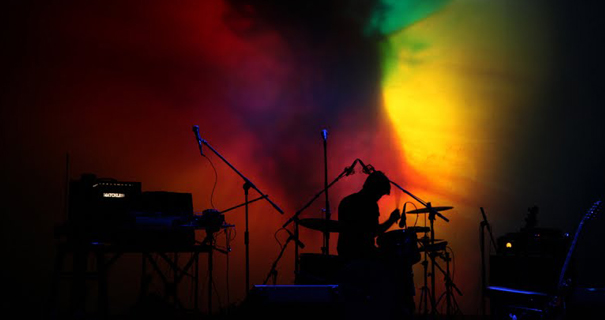
Premiered as an experimental work-in-progress in December 2010 at the Watermill Center and later presented at the National Theatre of Paris, Brooklyn-based Virginia native Jason Akira Somma’s “Phosphene Variations” is now on view at Location One in SoHo through November 17. [Ed. note: Due to technical difficulties, the exhibition was forced to close on October 3.] The interactive exhibition features free-floating holograms of such dancers and performance artists as Robert Wilson, Laurie Anderson, Mikhail Baryshnikov, Carmen DeLavallade, Bill Shannon, Frances Wessells, Jirí Kylián, and Joan Jonas, who seemingly react when “touched.” In addition, there will be weekly live performances ($10, 7:00) Wednesdays in September and October and Thursdays in November in which several of Somma’s subjects will be on hand to improvise live with their holographic image, with real-time video feedback provided by Somma and live music by electro-acoustic cellist Christopher Lancaster. Curated by dance artist Luke Miller, the schedule includes Flexors on September 26, Miss Dirty Martini, Julie Atlas Muz, and Monstah Black on October 10, Brian Brooks on October 17, Jeanine Durning and Manelich Minniefee on October 24, and Susan Marshall & Company, Bill Shannon, and Vanessa Walters on November 8, concluding on November 15 with Phosphene Redux, a closing party highlighted by the return of various of the artists who previously performed. [Ed. note: The October 10 performance will be the last one, with the others canceled as a result of the unfortunate shutdown of the exhibition.]
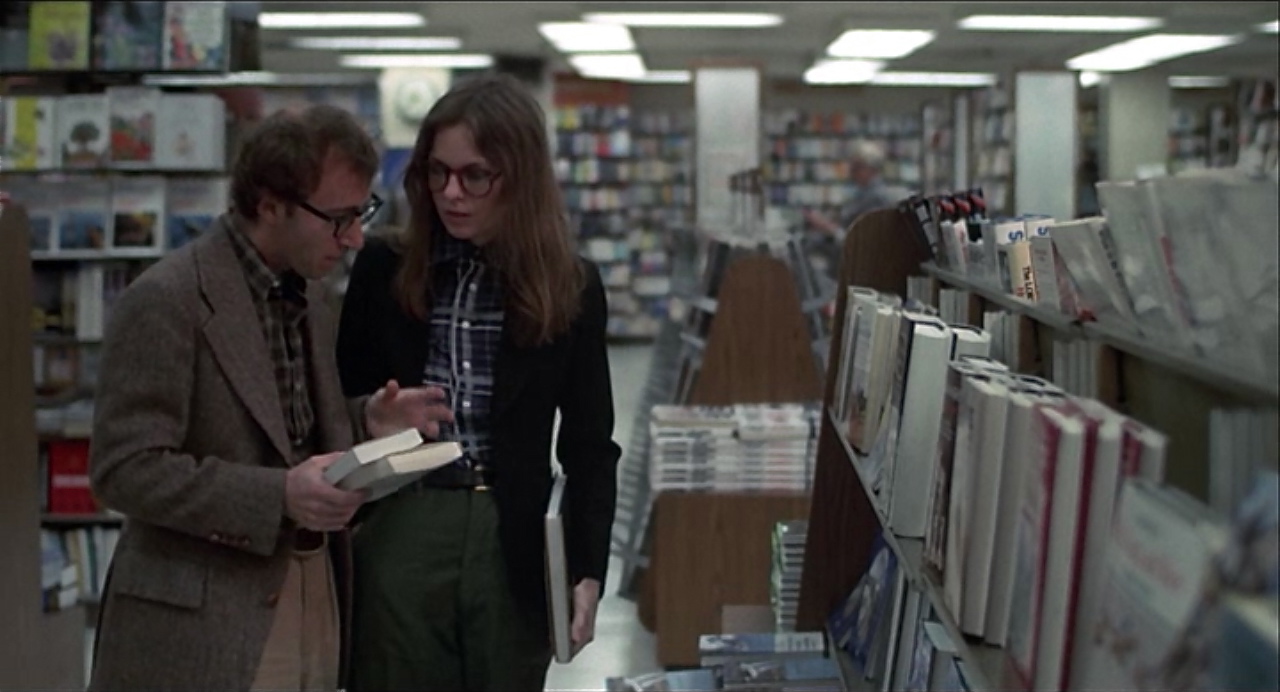
 “I feel that life is divided into the horrible and the miserable. That’s the two categories,” says Alvy Singer (Woody Allen) in Annie Hall. “The horrible are like, I don’t know, terminal cases, you know, and blind people, crippled. I don’t know how they get through life. It’s amazing to me. And the miserable is everyone else. So you should be thankful that you’re miserable, because that’s very lucky, to be miserable.” Allen’s classic 1977 Oscar-winning film — which had the working title “Anhedonia,” a medical term referring to the inability to experience pleasure — is one of the funniest, most-quoted romantic comedies in film history, a pure delight from start to finish. It’s ostensibly a luuuuuurve story about a nebbishy Jew and the ultimate WASPy goy (Diane Keaton as the title character), but it’s really about so much more: large vibrating eggs, right turns on red lights, television, Existential Motifs in Russian Literature, California, slippery crustaceans, driving through Plutonium, dead sharks, Freud, Hitler, Leopold and Loeb, religion, cocaine, Shakespeare in the Park, Buick-size spiders, planet Earth, and, well, la-di-da, la-di-da, la la. The film is screening on September 21 as part of the new Rubin Museum series “Happiness is…,” which consists of movies with a somewhat different idea of joy, including Alfred Hitchcock’s Strangers on a Train, Bob Rafelson’s Five Easy Pieces, Federico Fellini’s 8½, and Ingmar Bergman’s Cries and Whispers. Part of the larger Rubin program “