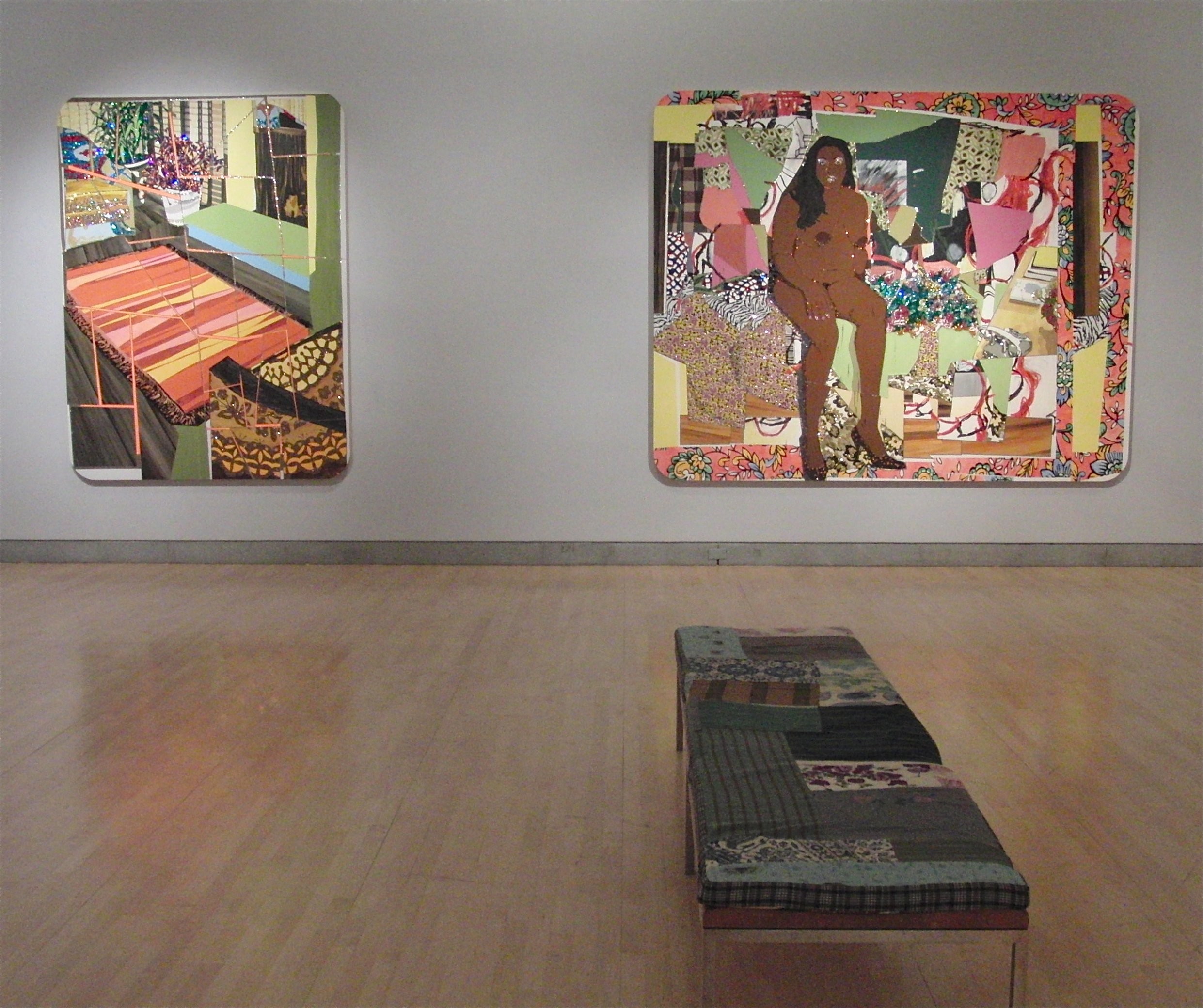
Mickalene Thomas exhibit at Brooklyn Museum includes colorful interiors, portraits, and even decorated benches (photo by twi-ny/mdr)
Brooklyn Museum
200 Eastern Parkway at Washington St.
Wednesday – Sunday through January 20, suggested contribution $10
718-638-5000
www.brooklynmuseum.org
Lehmann Maupin
540 West 26th St. / 201 Chrystie St.
Tuesday – Saturday through January 5, free
212-255-2924/212-254-0054
www.lehmannmaupin.com
Prepare to be bedazzled. It’s been quite a fall for Camden-born, Brooklyn-based artist Mickalene Thomas, who is in the midst of a quartet of exhibitions in New York City. First and foremost is “Origin of the Universe,” her first solo museum show. Continuing at the Brooklyn Museum through January 20, it consists of one hundred works, focusing on her familiar, brightly colored large-scale portraits of African American women in enamel, acrylic, and glittering rhinestones, in addition to her newer interiors and landscapes. Thomas examines both art history and the image and perception of the black woman in her work, directly referencing such paintings as Gustave Courbet’s “Le Sommeil (Sleep)” and “L’Origine du monde (The Origin of the World)” and Edouard Manet’s “Dejeuner sur l’herbe (Luncheon on the Grass),” replacing the original figures with big, bold black women often wearing afros and 1970s-style clothing (when wearing anything at all). Influenced by Carrie Mae Weems, several photographs of her models depict her subjects naked, staring directly at the viewer. Thomas creates stunning backdrops for her paintings, made up of couches, chairs, pillows, and other items influenced by the 1970-72 multivolume series The Practical Encyclopedia of Good Decorating and Home Improvement. The Brooklyn show also includes four heavily detailed interiors filled with photos, tables, lamps, books and records by black writers and musicians, and other personal elements. Thomas’s central muse, her mother, Sandra, or Mama Bush, is seen in a number of pieces, most revealingly in “Ain’t I a Woman, Sandra,” a 2009 painting paired with a short video of the photo shoot that led to the final work.
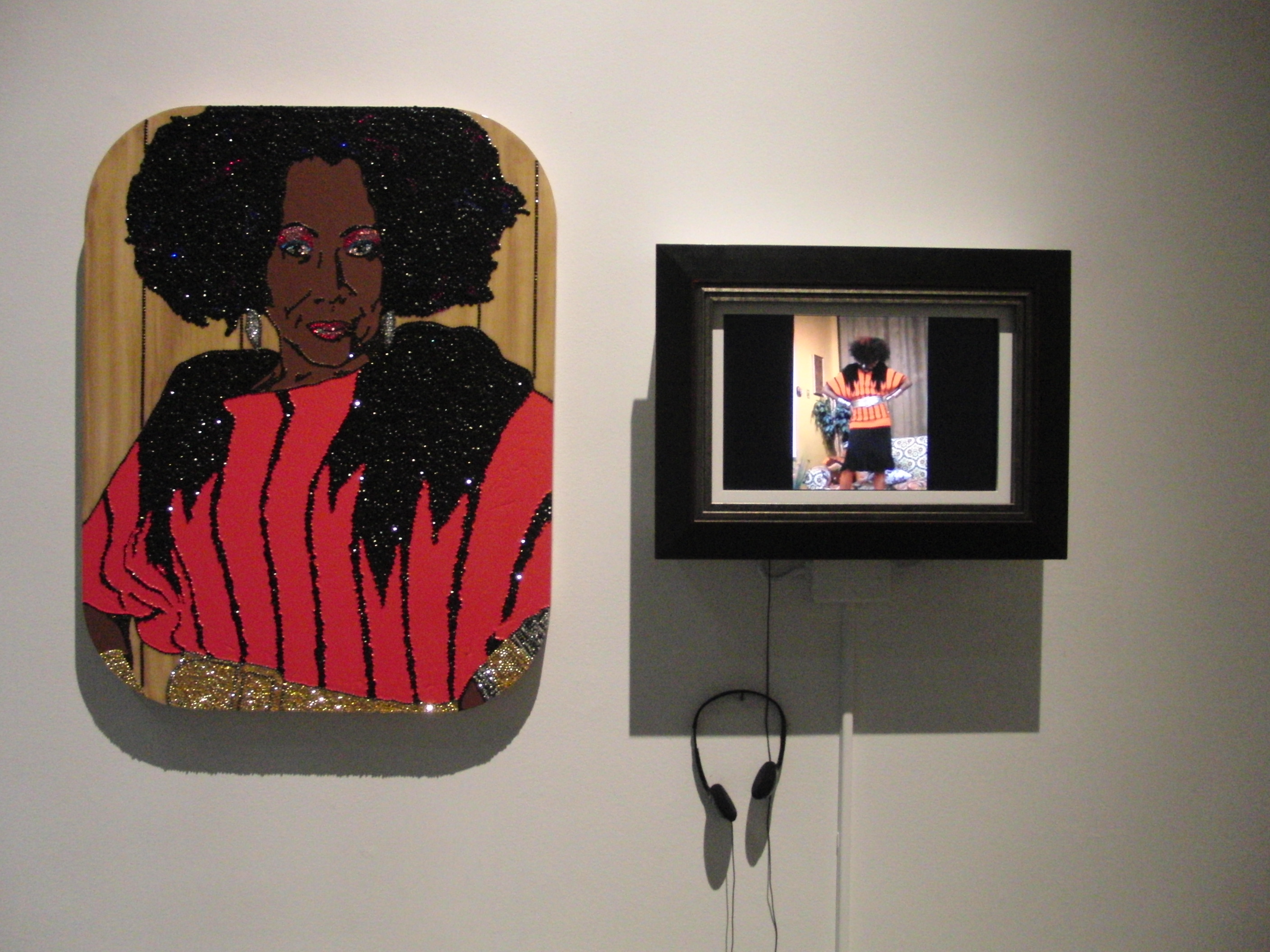
Mickalene Thomas, “Ain’t I a Woman, Sandra,” DVD and framed monitor, rhinestones, acrylic, and enamel on wood panel, 2009 (photo by twi-ny/mdr)
Thomas’s mother is the focus of the Chelsea half of the two-part “How to Organize a Room Around a Striking Piece of Art,” running at both Lehmann Maupin galleries through January 5. The West 26th St. display is anchored by the twenty-three-minute documentary Happy Birthday to a Beautiful Woman, which visitors can watch while sitting in a chair or on a couch in one of Thomas’s re-created rooms. The film looks back at the fascinating life of Sandra Bush, who can be seen in the front room in photographs and paintings. What was meant to be a loving, living tribute to her mother has now become more of a memorial, as Bush, who was battling kidney disease, passed away on November 7 at the age of sixty-one. In fact, it is hard to recognize the woman in the film, gaunt yet still elegant, as the same woman who served as her daughter’s longtime muse. The film plays continuously; it will also have a special screening November 29 at 7:00 at the Brooklyn Museum in the Iris and B. Gerald Cantor Auditorium, preceded at 6:00 by a guided tour of “Origin of the Universe.” (The film can also be seen regularly at the museum in a smaller room.)
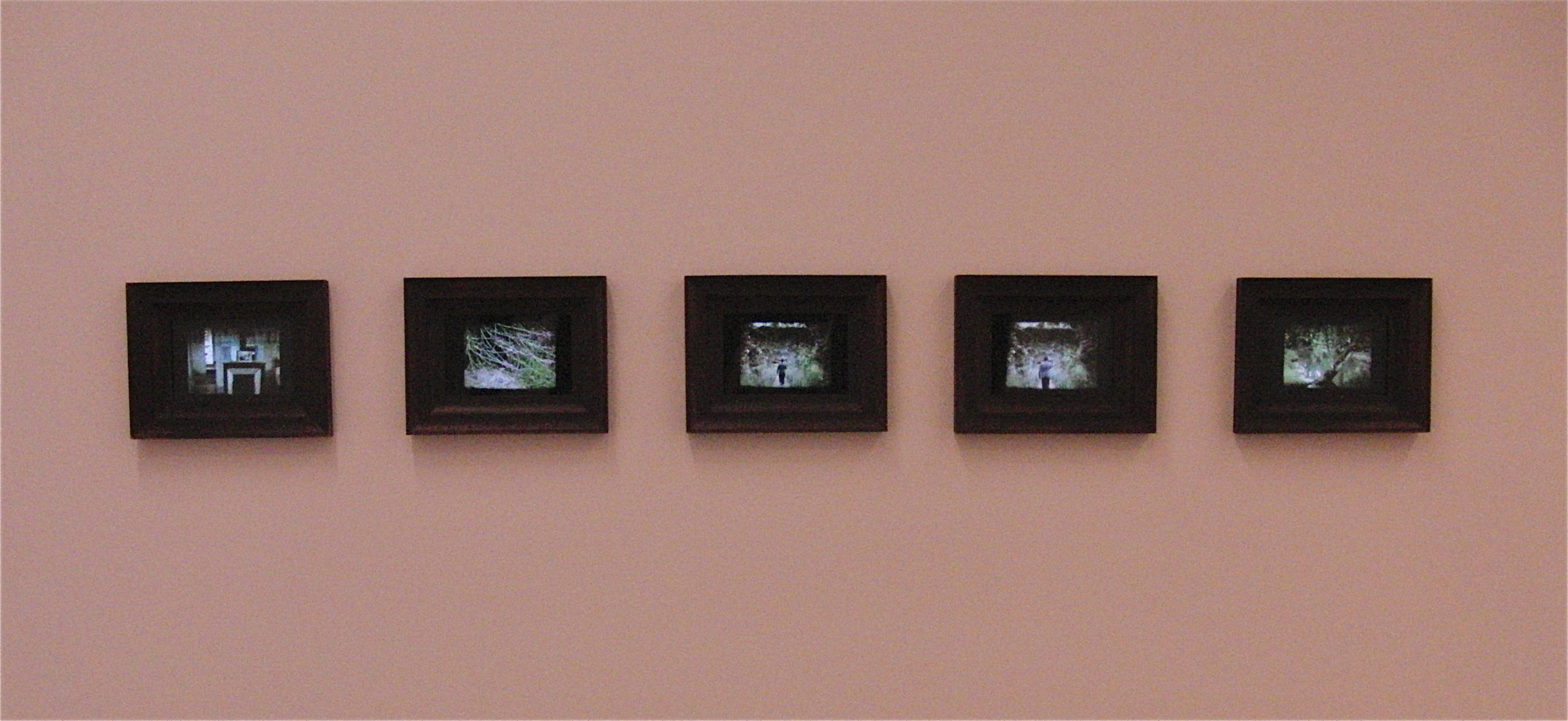
Five-channel video was made during Thomas’s residency at Giverny (photo by twi-ny/mdr)
“How to Organize a Room Around a Striking Piece of Art” continues at Lehmann Maupin’s Lower East Side gallery on Chrystie St. with four of Thomas’s 2011-12 interiors and landscapes, including “Monet’s Blue Foyer,” in addition to a five-channel video she made during her 2010 residency at Giverny. (Her wall mural “Le Jardin d’Eau de Monet” greets visitors to the Brooklyn Museum exhibition.) Thomas’s interiors and landscapes might be devoid of people, but they are no less thrilling, incorporating cubist elements, van Gogh, and Hockney in their inviting collages. One painting sits on an easel on the floor instead of hanging on the wall, as if it is an in-process oil painting of an unseen world outside the studio. The final part of Thomas’s visual assault on New York City is a 120-foot vinyl mural that was commissioned for the new Barclays Center at the intersection of Flatbush and Atlantic Aves., in which Thomas combines a brownstone, the Brooklyn Bridge, and other highlights of the borough. Overall, Thomas’s work reveals an extremely talented, multifaceted artist who is able to look backward while reaching forward, a bold woman with a strong sense of self, honoring history while forging an exciting future.
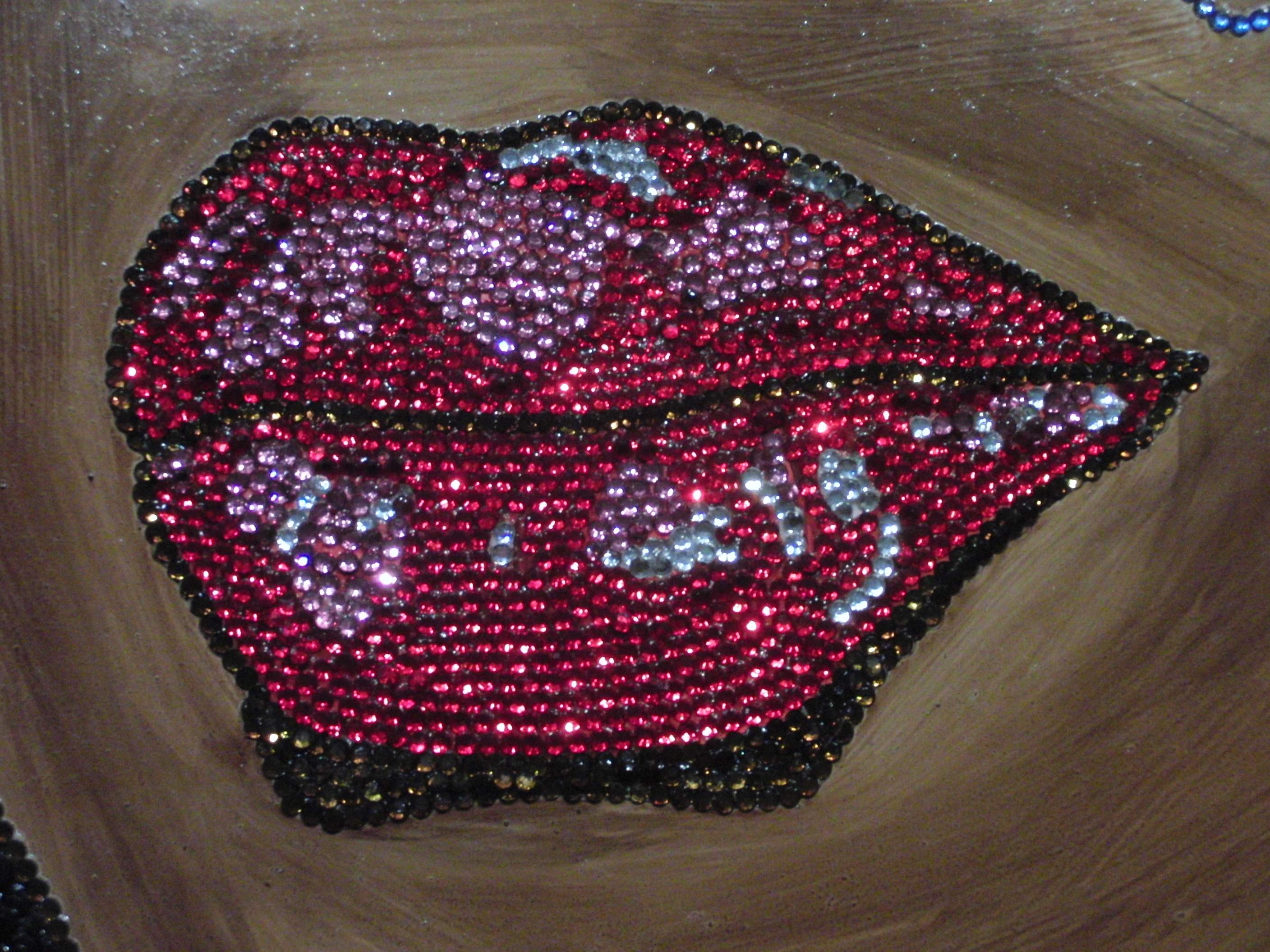
Mickalene Thomas, detail, “Qusuquzah, Une Trés Belle Négresse 2,” rhinestone, acrylic and oil on wood panel, 2011-12 (photo by twi-ny/mdr)
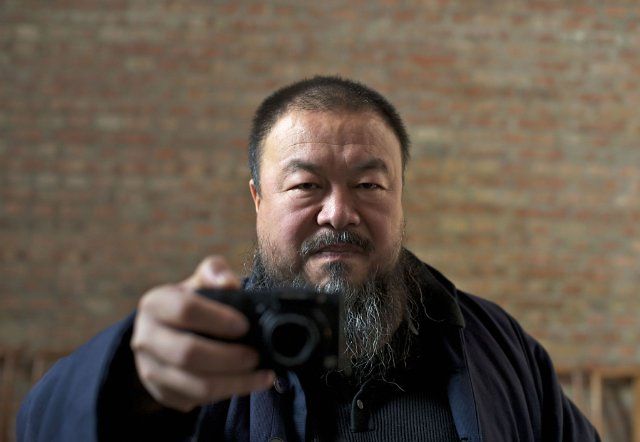
 “I consider myself more of a chess player,” Ai Weiwei says at the beginning of Never Sorry, Alison Klayman’s revealing documentary about the larger-than-life Chinese artist and dissident. “My opponent makes a move, I make a move. Now I’m waiting for my opponent to make the next move.” Over the last several years, Ai has become perhaps the most famous and controversial artist in the world, primarily since he participated in the design of Beijing National Stadium, known as the Bird’s Nest, for the 2008 Summer Olympics, then denounced the Games on political grounds. Ai gives director, producer, and cinematographer Klayman, making her first full-length film, remarkable access to his personal and professional life as he gets physically abused by Chinese police, prepares to open major exhibits in Munich and London, and visits with his young son, Ai Lao, the result of a tryst with Wang Fen, an editor on his underground films. Klayman speaks with Ai Weiwei’s devoted wife, Lu Qing, an artist who publicly fought for his freedom when he disappeared in 2011; his mother, Gao Ying, who spent time in a labor camp with her dissident-poet husband, the late Ai Quing; and such fellow Chinese artists and critics as Chen Danqing, Feng Boyi, Hsieh Tehching, and Gu Changwei, who speak admiringly of Ai’s dedication to his art and his fearless search for the truth. A round man with a long, graying bear, Ai is a fascinating, complicated character, a gentle bull who openly criticizes his country because he loves it so much. He is a social media giant, making documentaries that are available for free on the internet and revolutionizing the way Twitter and the blogosphere are used. Ai risks his own freedom by demanding freedom for all, calling for government transparency before and after he is secretly arrested, not afraid of the potential repercussions. And he is also a proud cat lover — more than forty felines regularly roam around his studio — eagerly showing off one talented kitty that has a unique way of opening a door. Ai Weiwei: Never Sorry shows Ai to be an honorable, supremely principled human being who has deep respect for the history of China and a fierce determination to improve its future, no matter the personal cost. The film completed its extended run at the IFC Center on November 8, but it will have an encore screening there on November 13, with Klayman on hand, as part of the DOC NYC festival, a week of nonfiction screenings that also includes such works as Emad Burnat and Guy Davidi’s 5 Broken Cameras, with Michael Moore in attendance; Rob Fruchtman and Lisa Fruchtman’s Sweet Dreams, with the directors and special guests participating in a discussion; and Mary Kerr’s