this week in art

FIAF OPEN HOUSE

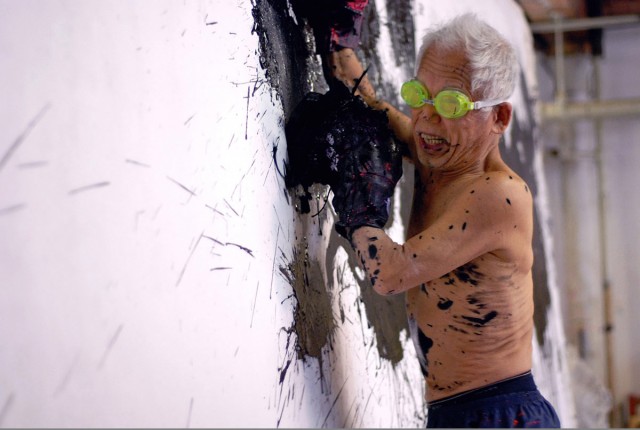
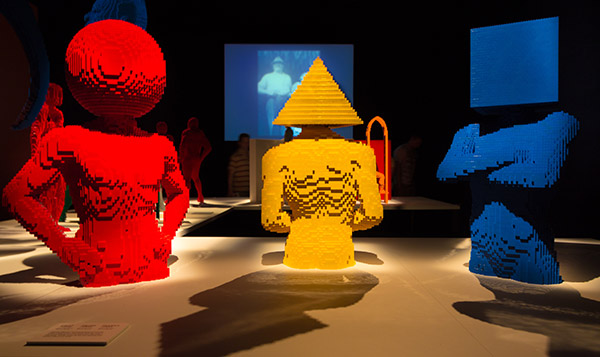
The Nature Theater of Oklahoma will be presenting an exhibit of drawings as well as episodes 4.5 and 5 of LIFE AND TIMES at FIAF this fall

The Nature Theater of Oklahoma will be presenting an exhibit of drawings as well as episodes 4.5 and 5 of LIFE AND TIMES at FIAF this fall

French Institute Alliance Française
Florence Gould Hall and Tinker Auditorium, 55 East 59th St. between Madison & Park Aves.
Le Skyroom and FIAF Gallery, 22 East 60th St. between Madison & Park Aves.
Tuesday, September 10, free, 6:00 – 8:00
212-355-6160
www.fiaf.org

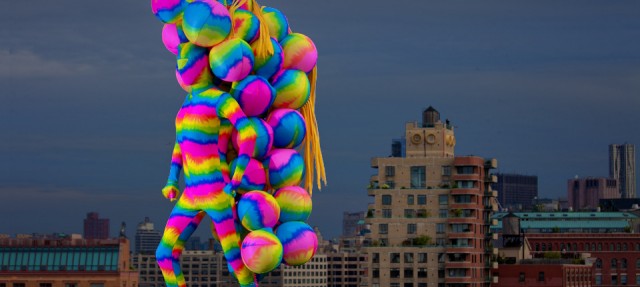
The French Institute Alliance Française is getting ready for the fall season, highlighted every year by its multidisciplinary Crossing the Line festival, with a free open house on September 10. From 6:00 to 8:00, visitors will be able to sample French wine and cheese in Tinker Auditorium, check out the Nature Theater of Oklahoma drawings exhibit “10fps” in the FIAF Gallery, receive beauty treatments in Le Skyroom, explore the new digital library Culturethèque, meet author-artist Gwenaëlle Gobé (The Diary of Stephanie: Electoral Surge) in the Haskell Library, watch Ruben Toledo’s short animated film Fashionation in Florence Gould Hall (with Toledo introducing the 7:00 screening), and take mini-French classes in the sixth-floor Language Center. Look for twi-ny’s preview of the 2013 Crossing the Line Festival next week.

LOWER EAST SIDE OPENING NIGHT: ART AND FASHION

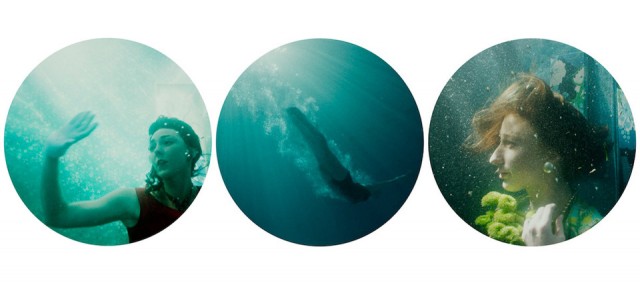
Strange Loop group show focuses on fashion design and photography (photo by Ryan Burke)

Strange Loop group show focuses on fashion design and photography (photo by Ryan Burke)

Orchard St. at Grand St. and other locations
Sunday, September 8, free, 4:00 – 8:00 pm
www.lowereastsideny.com

The Lower East Side says goodbye to the summer season and welcomes the new fall shows at the second annual Lower East Side Opening Night: Art + Fashion, taking place on Sunday, September 8, from 4:00 to 8:00. More than fifty galleries will be participating in the free block party, with opening receptions for such shows as Jella Gueramian’s “Let’s Go Further” at Allegra LaViola, “Vaginascope: Sijae Byun’s Solo Exhibition” at Tally Beck Contemporary, Katherine Bradford’s “Small Ships” at Steven Harvey Fine Art Projects, Brian Leo’s “Party’s Over, If You Want It” at S&J Project(s), and the group exhibit “dots, stripes, liquid cyber, and other platitudes: Fashion Design — Fashion Photography” at Strange Loop, which provides an excellent segue into the evening’s other highlight, the “Looks of the LES” fashion show. Curated by Amy Odell of cosmopolitan.com, the fashion show features hairstyling by Adel Atelier and makeup by Dustin Knoblauch, with presentations from such local stores as Any Old Iron, the Cast, the Dressing Room, Old Hollywood, the Great Frog, Earnest Sewn, Urban Cricket, By Robert James, and others. In addition, there will be live music by DJ Onda Skillet, Nancy, Countdown Love, DJ Anton Bass, Heaven, and Threats.

STATE OF MIND: NEW CALIFORNIA ART CIRCA 1970

Paul Kos, “Sound of Ice Melting,” two twenty-five-pound blocks of ice, eight boom microphone stands, mixer, amplifier, two large speakers, and cables, 1970/2011 (photo by twi-ny/mdr)

Paul Kos, “Sound of Ice Melting,” two twenty-five-pound blocks of ice, eight boom microphone stands, mixer, amplifier, two large speakers, and cables, 1970/2011 (photo by twi-ny/mdr)

Bronx Museum of the Arts
1040 Grand Concourse at 165th St.
Thursday – Sunday through September 8, free, 11:00 am – 6:00 (8:00 on Fridays)
718-681-6000
www.bronxmuseum.org

In the late 1960s and early 1970s, a group of West Coast artists developed an evolving brand of California Conceptualism that incorporated environmental concerns and social interaction into works that explored consumer culture and the changing political landscape with a wry sense of humor while redefining what art is and could be. Originally mounted as part of the Getty Foundation’s Pacific Standard Time series, “State of Mind: New California Art Circa 1970” continues at the Bronx Museum of the Arts through September 8, comprising approximately 150 paintings, drawings, photographs, video, performances, and installation from 60 artists. Curators Constance Lewallen and Karen Moss have arranged the splendidly designed exhibit into such thematic sections as “The Street,” “Public and Private Space,” “The Body and Performance,” “Language and Wordplay,” and “Feminism and Domestic Space,” offering an exciting, well-paced tour of a California avant-garde immersed in the counterculture revolution of the era.

Visitors are encouraged to walk through Barbara T. Smith’s “Field Piece” and trip the light fantastic (photo by twi-ny/mdr)

Visitors are encouraged to walk through Barbara T. Smith’s “Field Piece” and trip the light fantastic (photo by twi-ny/mdr)

For “Hair Transplant,” Nancy Buchanan exchanged body hair with Robert Walker. For “California Map Project,” John Baldessari spelled out the name of the state using geographic formations. Visitors can walk into Bruce Nauman’s immersive “Yellow Room (Triangular)” and prance through Barbara T. Smith’s “Field Piece,” lighting up nine-foot-tall blades of grass made of translucent resin. For her “Sitting Still” series, Bonnie Sherk took a seat in public places as people passed her by. Lowell Darling offers visitors a diploma from the Fat City School of Finds Art. Allen Ruppersberg Sunset Boulevard “Al’s Grand Hotel” is partially re-created, a 1971 project in which people could actually rent rooms and become part of the art. One of the highlights of the exhibit is a trio of video monitors showing cutting-edge, experimental short films by Chris Burden, Paul McCarthy, and Nauman that subvert the traditional nature of the creative process. For “Sound of Ice Melting,” Paul Kos surrounds a block of ice with eight microphones, which make the ice a kind of celebrity with not a whole lot to say. Other artists featured in the show are William Wegman, Martha Rosler, Ed Ruscha, Lynn Hershman, David Hammons, Eleanor Antin, Terry Fox, Allan Kaprow, and Bas Jan Ader, who literally died for his art. Although State of Mind” is a snapshot of a very specific period in the history of twentieth-century American art, it also reveals how these conceptualists not only captured the zeitgeist of the times but opened a wide artistic path for the future. The Bronx Museum is open Thursday through Sundays, and admission is always free. This week’s First Fridays program features live performances and special screenings from participants in the “Bronx Calling” Second AIM Biennial, which consists of works by such emerging New York area artists as Allison Wall, Diana Shpungin, Alejandro Guzmán, Daniele Genadry, and Alan and Michael Fleming. The evening will include Katie Cercone’s ritual-based “Queen$ Domin8tin,” Alicia Grullon’s “Cold War Karaoke Night” in which the audience can reenact cold war speeches, and the Flemings’ “Objects and Extensions,” a dance piece in which the brothers integrate their bodies into the architecture of the museum.

SUBLIMING VESSEL: THE DRAWINGS OF MATTHEW BARNEY

Matthew Barney, “Khu: Djed,” brush and ink, gold leaf, iron, and lapis lazuli on black paper in polyethylene frame, 2011 (copyright Matthew Barney / courtesy Gladstone Gallery, New York and Brussels)

Matthew Barney, “Khu: Djed,” brush and ink, gold leaf, iron, and lapis lazuli on black paper in polyethylene frame, 2011 (copyright Matthew Barney / courtesy Gladstone Gallery, New York and Brussels)

Morgan Library & Museum
225 Madison Ave. at 36th St.
Daily through September 8, $12-$18 (free Fridays from 7:00 to 9:00)
212-685-0008
www.themorgan.org
www.drawingrestraint.net

No, the banner outside the Morgan Library proclaiming that its Matthew Barney exhibition ends September 2 is not a restraint to stop drawing visitors to the show, which actually closes September 8. For the first-ever museum retrospective of his drawings, the California-born multidisciplinary artist chose two very specific venues, both of which had to be libraries: the Morgan first, followed by the Bibliothèque nationale de France. For “Subliming Vessel: The Drawings of Matthew Barney,” the Park Slope-based former college quarterback and premed student combines pieces from the institutions’ holdings with his own works and research paraphernalia to lend new insight into his creative process and influences. Since the late 1980s, Barney has been making drawings that relate to his films, installations, and live performance events, the works serving not only as rehearsals or storyboards but also acting as part of the central focus of the narrative as well as continuing into the aftermath. “I would describe a system that I’ve always visualized as an inverted pyramid, where the narrative is at the widest point, at the top of the structure,” Barney tells artist Isabelle Dervaux in an interview in the exhibition catalog. “The narrative in most projects is film-based, video-based, in some projects performance-based, but it’s the most developed aspect of the project. From there a process of distillation happens. Sculpture comes next in the sense that sculpture often tries to articulate a relationship in the narrative between characters or between places. Drawing is at the bottom of this structure and is the most distilled aspect of it. In that way it’s one of the more rewarding — possible the most rewarding part of the process, to get down to the purest form, the most distilled form of the narrative.”

Matthew Barney, “Cremaster 4: Manx Manual,” graphite, lacquer, and petroleum jelly on paper in cast epoxy, prosthetic plastic, and Manx tartan, 1994-95 (copyright Matthew Barney / courtesy Gladstone Gallery, New York and Brussels)

Matthew Barney, “Cremaster 4: Manx Manual,” graphite, lacquer, and petroleum jelly on paper in cast epoxy, prosthetic plastic, and Manx tartan, 1994-95 (copyright Matthew Barney / courtesy Gladstone Gallery, New York and Brussels)

Hanging on the walls are fully realized ink and pencil drawings, several incorporating one of Barney’s signature materials, petroleum jelly, in self-lubricating plastic frames, that relate to such ambitious projects as the five-part Cremaster Cycle film series, which explores the ascending and descending muscle that determines gender; his Drawing Restraint performances, in which he creates art while limiting his physical mobility, one of which was recently held at the Morgan (the result of which can be seen in the Clare Eddy Thaw Gallery); the OTTOshaft trilogy, in which Barney uses Oakland Raiders center Jim Otto, who wore number 00, as the impetus for an exploration of athletic endurance that also involves Harry Houdini and the Hubris Pill; De Lama Lâmina (“From Mud, a Blade”), a collaboration with musician Arto Lindsay about environmental activist Julia Butterfly Hill; and River of Fundament, inspired by Norman Mailer’s Ancient Evening, which delves into the Egyptian belief of the soul’s death and rebirth as experienced by a 1967 Chrysler Crown Imperial. Barney’s most accomplished drawings are those done in red, comprising the “River Rouge” series, while his pieces on black are the most mysterious, the details visible from only certain angles.

Matthew Barney, “River Rouge: Crown Victoria,” ink on paper in painted steel frame, 2011 (copyright Matthew Barney / Courtesy Gladstone Gallery)

Matthew Barney, “River Rouge: Crown Victoria,” ink on paper in painted steel frame, 2011 (copyright Matthew Barney / Courtesy Gladstone Gallery)

The show also includes vitrines filled with objects chosen specifically by Barney from his own collection as well as the Morgan’s that relate to his work, from Walt Whitman’s Leaves of Grass to a Diane Arbus photo of Mailer, from a third-century papyrus copy of the Egyptian Book of the Dead to a page from a thirteenth-century book depicting sailors on the back of a whale, from the Goya drawing “Locura (Madness)” to Joseph Smith’s The Book of Mormon. In addition to adding insight into Barney’s ever-evolving narrative, they reveal his endless fascination with the human body. “The first pieces I made of Vaseline were about wanting to moisten something,” he told Gerald Matt in a 2008 interview. (The quote is included in the wall text for the 1991 drawing “Delay of Game [manual] C.”) “I was thinking of all things that I was making at the time as literally extensions of my body somehow, and I wanted these objects to feel like they had just come out of me or could be put into me.” In many ways, that gets to the heart of Barney’s intense creative process and intriguing, confusing, highly abstract, and extremely stylized output. While Barney might often physically restrain himself, the worlds he has brought to life, which have oozed out of him and into him, on paper, on film, and in live performance, seem to have no limits.

PHOTOGRAPHY AND THE AMERICAN CIVIL WAR

Timothy O’Sullivan, “A Harvest of Death, Gettysburg, Pennsylvania,” albumen silver print from glass negative, 1863 (Gilman Collection, Museum Purchase, 2005)

Timothy O’Sullivan, “A Harvest of Death, Gettysburg, Pennsylvania,” albumen silver print from glass negative, 1863 (Gilman Collection, Museum Purchase, 2005)

Metropolitan Museum of Art
1000 Fifth Ave. at 82nd St.
Through August September 2, $25 adults, children under twelve free
212-535-7710
www.metmuseum.org

“First, a warning shot from the battlefield,” curator Jeff L. Rosenheim begins in the “Shadows of Ourselves” prologue to the catalog that accompanies the expansive exhibition “Photography and the American Civil War,” which continues at the Metropolitan Museum of Art through September 2. “This book is not a history of the Civil War, but rather an exploration of the role of the camera at a watershed moment in American culture.” Held in commemoration of the 150th anniversary of the Battle of Gettysburg, the wide-ranging show features more than two hundred images taken at the dawn of the art of photography, by such early camera enthusiasts as Timothy H. O’Sullivan, soldier A. J. Russell, Mathew B. Brady, George N. Barnard, and Alexander Gardner. The works include tintype studio portraits, battlefield scenes, a close-up of a runaway slave’s flayed skin, medical procedures including amputation, a haunting “Burial Party” of skeletons, a shocking photo of an “Emaciated Union Soldier Liberated from Andersonville Prison,” and shots of such key figures as Sojourner Truth, Robert E. Lee, and Abraham Lincoln.

Unknown, “[Captain Charles A. and Sergeant John M. Hawkins, Company E, ‘Tom Cobb Infantry,’ Thirty-eighth Regiment, Georgia Volunteer Infantry],” ambrotype, 1861-62 (David Wynn Vaughan Collection)

Unknown, “[Captain Charles A. and Sergeant John M. Hawkins, Company E, ‘Tom Cobb Infantry,’ Thirty-eighth Regiment, Georgia Volunteer Infantry],” ambrotype, 1861-62 (David Wynn Vaughan Collection)

Combining pure reportage with an artistic bent, the photographs changed the way the public saw the war, and themselves. As printer and photographer Andrew Gardner wrote in a caption for O’Sullivan’s “A Harvest of Death, Gettysburg, Pennsylvania,” which depicts a field of fallen solders, “Such a picture conveys a useful moral: It shows the blank horror and reality of war, in opposition to its pageantry. Here are the dreadful details! Let them aid in preventing such another calamity falling upon the nation.” These images also went on to influence such twentieth-century social realist photojournalists as Walker Evans and Dorothea Lange. In addition, the availability of cameras and portrait studios allowed the soldiers to pose for a kind of ID card that could be used to both identify them and show to their families, in full dress regalia. “Photography and the American Civil War” provides a gripping view of the war itself as well as the new ways it was being portrayed. The companion exhibition, “The Civil War and American Art,” comprising approximately sixty paintings (and another eighteen photographs) made between 1852 and 1877 by such artists as Frederic E. Church, Sanford R. Gifford, Winslow Homer, and Eastman Johnson, also runs through September 2.

EXPO 1: NEW YORK

“ProBio” looks at the future with “dark optimism” at MoMA PS 1 (photo by Matthew Septimus)

“ProBio” looks at the future with “dark optimism” at MoMA PS 1 (photo by Matthew Septimus)

MoMA PS1
22-25 Jackson Ave. at 46th Ave.
Thursday – Monday through September 2, suggested admission $10 (free with paid MoMA ticket within fourteen days), 12 noon – 6:00
718-784-2084
www.momaps1.org

The presentation of MoMA PS1’s summer exhibition, “Expo 1: New York,” smartly echoes how climate change, technology, and evolution have impacted the progression and devastation of the natural world in the twenty-first century. The show began in May with a series of modules in various locations, with some of those individual parts, including “Rain Room” at MoMA, Olafur Eliasson’s Icelandic glacier installation “Your waste of time” at PS1, Adrián Villar Rojas’s “La inocencia de los animales (The innocence of animals)” PS 1 lecture hall, and the VW Dome on Rockaway Beach, now having gone extinct, disappearing like the melting ice caps. But the show, which promotes Triple Canopy’s concept of a “dark optimism” for the future of humanity and the planet, still has several worthwhile displays at its primary hub at PS 1, examining its mission statement that “we live in a time that is marked by both the seeming end of the world and its beginning, being on the brink of apocalypse but also at the onset of unprecedented technological transformation.” Curators Klaus Biesenbach and Hans Ulrich Obrist reach back fifteen years for Meg Webster’s “Pool,” which PS 1 founder Alanna Heiss originally commissioned in 1998, a swampy water environment that could not exist without the coming together of natural materials and man-made electronic elements. Downstairs in the basement, the Cinema is offering up recent film, video games, and online content from the YouTube generation; the upcoming schedule includes the video games “Journey” and “Proteus,” Sterling Ruby’s Transient Trilogy, Althea Thauberger’s Northern, and Khavn de la Cruz’s Kalakala and Mondomanila or: How I Fixed My Hair After a Rather Long Journey, with the director on hand to discuss his work (and provide live piano accompaniment for the former). Organized by Josh Kline, “ProBio” takes a futuristic look at the intersection of technology and the human body, with intriguing cutting-edge works by such artists as Alisa Baremboym, Antoine Catala, Carissa Rodriguez, and Georgia Sagri; watch out for those Roomba-like robots scouring the floor. One offsite project still remains, Marie Lorenz’s “The Tide and Current Taxi,” which visitors can hail in New York harbor. As always at MoMA PS 1, the many rooms hold little surprises, so be sure to explore so you can also catch pieces by Charles Ray, Matthew Barney, Zoe Leonard, Steve McQueen, Mark Dion, Chris Burden, Pierre Huyghe, Agnes Denes, Ugo Rondinone, and others. And for the final week of “Expo 1,” a77’s communal courtyard installation “Colony” is taken over by Glenn O’Brien, who will be hosting “TV Party Goes to Camp.”

ROBERT IRWIN — SCRIM VEIL — BLACK RECTANGLE — NATURAL LIGHT, WHITNEY MUSEUM OF AMERICAN ART, NEW YORK (1977)

Robert Irwin’s site-specific “Scrim veil” invites visitors into its many charms and mysteries (photo by twi-ny/mdr)

Robert Irwin’s site-specific “Scrim veil” invites visitors into its many charms and mysteries (photo by twi-ny/mdr)

Whitney Museum of American Art
945 Madison Ave. at 75th St.
Wednesday – Sunday through September 1, $16-$20 (pay-what-you-wish Fridays, 6:00 – 9:00)
212-570-3600
www.whitney.org
robert irwin photo set

As the Whitney prepares for its move to the Meatpacking District in 2015, it has been combing through its holdings, mounting exhibitions (“Sinister Pop,” “Signs & Symbols,” “Real/Surreal”) that offer new ways to experience works, both familiar and not, from its collection. One significant piece is being brought back for the first and last time, as it was designed specifically for the fourth floor of Marcel Breuer’s building and cannot be shown anywhere else. In 1977, California-based artist Robert Irwin installed “Scrim veil — Black rectangle — Natural light, Whitney Museum of American Art, New York,” a deceptively simple project made of cloth, metal, black paint, and wood. At one end of the rectangular room is Breuer’s trapezoidal window, streaming in oddly shaped light. A translucent scrim runs the length of the room, hanging from the ceiling, with five and a half feet from the floor to its black metal base, allowing people to easily walk under it. In addition, a black line has been painted along the wall at the same five-and-a-half-foot height, parallel to the base of the scrim. Upon exiting the elevators, visitors are instantly transported into the compelling space, which takes a bit of time to adjust to. “Scrim veil” is something that can’t just be seen but needs to be experienced; it seems to shift with changes in the outside light and as other people make their way around it. The black metal base of the scrim and the black painted line on the walls meld together then break apart, appearing to create morphing physical elements.

Robert Irwin, “Scrim veil — Black rectangle — Natural light, Whitney Museum of American Art, New York,” cloth, metal, and wood, 1977 (photo by twi-ny/mdr)

Robert Irwin, “Scrim veil — Black rectangle — Natural light, Whitney Museum of American Art, New York,” cloth, metal, and wood, 1977 (photo by twi-ny/mdr)

In the original exhibition catalog — “Scrim veil” was part of a larger show — Irwin, who is now eighty-four and still making challenging, fascinating new work, contributed the complex essay “Notes Toward a Model,” in which he explored the nature of form, context, content, perception, abstraction, conception, experience, and response. “There is probably no such thing as a pure naïve perception of the world,” he writes in the heavily illustrated discussion. “As noted earlier, we do not begin at the beginning in such matters but already somewhere in the middle. For example: Conceive in your mind the idea of a straight line (which has only a limited actuality in nature). In extended time consider our ‘straight line’ as the basis for the compounded abstraction known as Euclidean geometry. Again in extended time, consider a world developed and structured in line with our concept — i.e., grid to city; frame and plane to painting — point-to-point as a way of procedure through life. Now, place yourself in the middle of this milieu as the actual (physical) frame of your experiential reference, your reality, and ask yourself, ‘What can I know?’” (The full catalog can be read here.) Indeed, as one travels around the room, losing track of time and space, “Scrim veil” provides personal questions and answers that explore just what it is we might know about our individual and shared environment, both physically and psychologically. Interestingly, although Irwin was against the taking of photographs during the piece’s initial 1977 run, the Whitney is allowing pictures this time around, but don’t get too caught up in trying to snap a good photo and instead just allow yourself to be enveloped in this unique and involving experience, one that will never happen again.