this week in art

FRANÇOIS XAVIER LALANNE: SHEEP STATION

François-Xavier Lalanne’s Moutons will continue grazing at Getty Station in Chelsea through October 20 (photo by twi-ny/mdr)

François-Xavier Lalanne’s Moutons will continue posing for photos and grazing at Getty Station in Chelsea through October 20 (photo by twi-ny/mdr)

Getty Station
239 Tenth Ave. at 24th St.
Extended through November 24, free
www.gettystation.com
sheep station photo set

In late August, the main colors visible at the northwest corner of Tenth Ave. and Twenty-Fifth St. were the red and white of the Getty gas station logo and the yellow and black of taxis lining up to fill up their tanks, as they have done there for decades. But on September 17, that was replaced by the green of lush grass and small trees and the black, brown, and white of more than two dozen sheep, each one cuter than the last. In the fall of 2009, ten of these “Moutons,” bronze and epoxy stone sculptures made by François-Xavier Lalanne (1927-2008), could be seen grazing on a Park Ave. meridian in Midtown, part of the exhibit ”Les Lalanne on Park Avenue,” which also included works by Lalanne’s wife, Claude. Now real estate developer and art collector Michael Shvo, in conjunction with Paul Kasmin Gallery, has installed “Sheep Station,” consisting of twenty-five sheep from François-Xavier’s “Les Noveaux Moutons” and “Mouton de Pierre” series, creating a lovely, hilly fenced-in respite in Chelsea. The male, female, and baby sheep are ever peaceful and, mostly, content, having adapted quickly to their temporary new home. Shvo even had fun with the Getty signage, using it to announce the name and length of the show. And don’t be surprised if that man watering the grass and small trees on a bright, sunny afternoon is Shvo himself. Shvo, who also collects the work of such artists as Pablo Picasso, Tom Wesselman, Alexander Calder, Jean-Michel Basquiat, Andy Warhol, and others, has a few more Getty Station installations planned once the sheep are done grazing on October 20, but he’s not telling yet what they will be. After that, he and fellow developer Victor Homes will turn the site into a luxury High Line condo.

OUTSIDE IN

Weng Fen, “Bird’s Eye View: Shenzhen,” C-print, 2002 (collection of Andrew Rayburn and Heather Guess)

Weng Fen, “Bird’s Eye View: Shenzhen,” C-print, 2002 (collection of Andrew Rayburn and Heather Guess)

CHINESE ART COLLECTION OF ANDREW RAYBURN AND HEATHER GUESS
Whitebox Art Center
329 Broome St. between Chrystie St. & Bowery
Through October 6, free (12 noon – 6:00 Saturday, 12 noon – 5:00 Sunday)
212-714-2347
www.whiteboxny.org

“Assembling a private collection is an incredibly satisfying journey,” Heather Guess writes in the catalog to the three-day gallery show “Outside In,” running at Whitebox through October 6. The two-floor exhibition features painting, photography, and sculpture from twenty-one contemporary Chinese artists, many of whom Guess visited in their studios during recent trips to Beijing and Shanghai with Chinese art expert Barbara Pollack, author of The Wild, Wild East: An American Art Critic’s Adventures in China and curator of the upcoming Tampa Museum of Art show “My Generation: Young Chinese Artists.” Guess and her husband, Andrew Rayburn, who are based in New York and Cleveland, have been collecting Chinese art since 2004; the Whitebox display includes exemplary works by Yang Fudong, Ai Weiwei, Cai Guo-Qiang, Zhang Xiaogang, and Lin Tianmiao and Wang Gongxin, among others. Chen Wei shoots such photographs as “The Door That Is Often Kept Closed” and “Some Dust” in an ever-changing room in his studio, exploring mysterious mental states and the human mind. Hai Bo’s “The Northern No. 7” and Wang Ningde’s “Some Days No. 9” offer stark counterpoints to each other; in the former, a man bicycles toward the viewer on a rural road, surrounded by emptiness, while in the latter, a man and his young son stand in grayness, their backs to the camera, as trains pass by on either side.

Ai Weiwei, “A Gift from Beijing,” teili wood and bricks, 2002

Ai Weiwei, “A Gift from Beijing,” teili wood and bricks, 2002 (collection of Andrew Rayburn and Heather Guess)

The bars of Xu Bing’s “Birdcage” are composed of words; if you make a noise at the bird, it will make a noise back. “This is not an institutional show and does not represent an encyclopedic look at Chinese contemporary art,” Pollack writes in her catalog essay. “It is a personal selection made by two collectors . . . who over the past decade have watched their interest evolve from a curiosity about China as an emerging superpower to firsthand encounters with artists in Beijing and Shanghai.” Taking its name from the 1998-99 “Inside Out: New Chinese Art” exhibit at Asia Society and SFMoMA and the Princeton University Art Museum’s 2009 “Outside In: Chinese x American x Contemporary Art,” Guess and Rayburn’s “Outside In” offers an inside look at the collectors’ “incredibly satisfying journey” that now can be enjoyed by anyone.

CHAGALL FAMILY DAY

Chagall Family Day at the Jewish Museum offers special look at new exhibit (© 2013 Artists Rights Society (ARS), New York / ADAGP, Paris./Marc Chagall)

Chagall Family Day at the Jewish Museum offers special look at new exhibit (© 2013 Artists Rights Society (ARS), New York / ADAGP, Paris./Marc Chagall)

The Jewish Museum
1109 Fifth Ave. at 92nd St.
Sunday, October 6, adults $15, children eighteen and under free, 12:00 – 4:00
212-423-3200
www.thejewishmuseum.org

The paintings of Russian-born modernist Marc Chagall are imbued with a childlike sense of wonder in their use of color and their depiction of animals and people often in the midst of flying. So it is appropriate that the Jewish Museum’s next family day celebrates the career of the master artist, who was born in Belarus and spent much of his life in France before passing away in 1985 at the age of ninety-seven. Held in conjunction with the new exhibit “Chagall: Love, War, and Exile,” which examines Chagall’s oeuvre from the 1930s until 1948, Chagall Family Day includes live performances by the Pop Ups, art workshops in which kids can make puppet characters, participate in a dream mural, and step into life-size creatures created by the Puppeteers’ Cooperative, tell personal stories through drawing and watercolor techniques, take tours of the exhibit and make sketches of three of Chagall’s paintings, and go on a gallery hunt. Chagall Family Day is recommended for children ages three and up and is free with general admission — which is always free for children eighteen and younger.

CUTIE AND THE BOXER

CUTIE AND THE BOXER

Documentary tells the engaging story of a pair of Japanese artists and the life they have made for themselves in Brooklyn

CUTIE AND THE BOXER (Zachary Heinzerling, 2013)
IndieScreen
289 Kent Ave.
October 5 (5:00 & 7:00), 8 (7:00), 9 (7:00)
347-227-8030
www.indiescreen.us
www.facebook.com/cutieandtheboxer

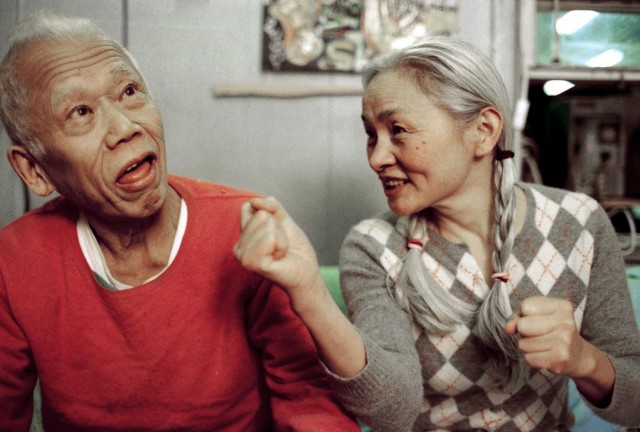
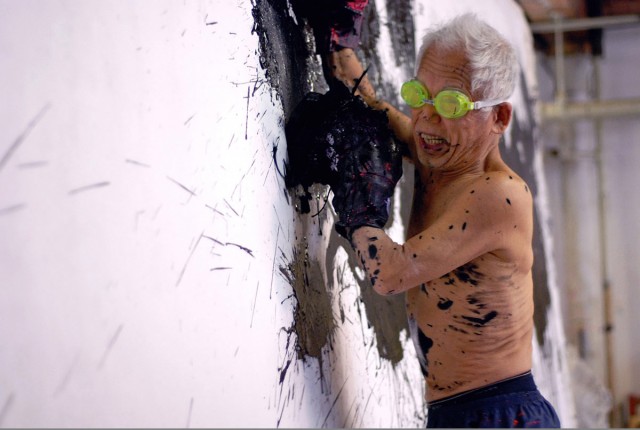
Zachary Heinzerling’s Cutie and the Boxer is a beautifully told story of love and art and the many sacrifices one must make to try to succeed in both. In 1969, controversial Japanese Neo Dada action painter and sculptor Ushio Shinohara came to New York City, looking to expand his career. According to the catalog for the recent MoMA show “Tokyo 1955-1970: A New Avant-Garde,” which featured four works by Ushio, “American art had seemed to him to be ‘marching toward the glorious prairie of the rainbow and oasis of the future, carrying all the world’s expectations of modern painting.’” Four years later, he met nineteen-year-old Noriko, who had left Japan to become an artist in New York as well. The two fell in love and have been together ever since, immersed in a fascinating relationship that Heinzerling explores over a five-year period in his splendid feature-length theatrical debut. Ushio and Noriko live in a cramped apartment and studio in DUMBO, where he puts on boxing gloves, dips them in paint, and pounds away at large, rectangular canvases and builds oversized motorcycle sculptures out of found materials. Meanwhile, Noriko, who has spent most of the last forty years taking care of her often childlike husband and staying with him through some rowdy times and battles with the bottle, is finally creating her own work, an R. Crumb-like series of drawings detailing the life of her alter ego, Cutie, and her often cruel husband, Bullie. (“Ushi” means “bull” in Japanese.) While Ushio is more forthcoming verbally in the film, mugging for the camera and speaking his mind, the pig-tailed Noriko is far more tentative, so director and cinematographer Heinzerling brings her tale to life by animating her work, her characters jumping off the page to show Cutie’s constant frustration with Bullie.

Ushio Shinohara creates one of his action paintings in CUTIE AND THE BOXER

Ushio Shinohara creates one of his action paintings in CUTIE AND THE BOXER

During the course of the too-short eighty-two-minute film — it would have been great to spend even more time with these unique and compelling figures — the audience is introduced to the couple’s forty-year-old son, who has some issues of his own; Guggenheim senior curator of Asian Art Alexandra Munroe, who stops by the studio to consider purchasing one of Ushio’s boxing paintings for the museum; and Chelsea gallery owner Ethan Cohen, who represents Ushio. But things never quite take off for Ushio, who seems to always be right on the cusp of making it. Instead, the couple struggles to pay their rent. One of the funniest, yet somehow tragic, scenes in the film involves Ushio packing up some of his sculptures — forcing them into a suitcase like clothing — and heading back to Japan to try to sell some pieces. Cutie and the Boxer is a special documentary that gets to the heart of the creative process as it applies both to art and love, focusing on two disparate people who have made a strange yet thoroughly charming life for themselves. Cutie and the Boxer is currently showing in Ushio and Noriko’s home borough of Brooklyn, where it will continue at IndieScreen through October 9.

Academy Award Nomination: Best Documentary Feature

FIRST SATURDAYS: ¡VIVA BROOKLYN!

José Campeche, “Doña María de los Dolores Gutiérrez del Mazo y Pérez,” oil on canvas, circa 1796 (courtesy Brooklyn Museum)

José Campeche, “Doña María de los Dolores Gutiérrez del Mazo y Pérez,” oil on canvas, circa 1796

Brooklyn Museum
200 Eastern Parkway at Washington St.
Saturday, March 3, free, 5:00 – 11:00 (some events require free tickets distributed in advance at the Visitor Center)
212-864-5400
www.brooklynmuseum.org

After taking September off for the annual West Indian festivities over Labor Day Weekend, the Brooklyn Museum’s free First Saturdays program returns October 5 with ¡Viva Brooklyn!, celebrating Hispanic Heritage Month. The evening will feature live performances by trombonist Chris Washburne and SYOTOS, Sofía Rei, and Cumbiagra; Richard Aste will give a curator talk on “Behind Closed Doors: Art in the Spanish American Home, 1492–1898”; there will be a screening of Icíar Bollaín’s 2010 film, También La Lluvia, which deals with Christopher Columbus and the local water supply; an art workshop will teach attendees how to make a home medallion using metal tooling; Marymount Manhattan College’s Blanca E. Vega will lead a talk and audience Q&A with writers about contemporary Latino literature; scenes from the moving play La Ruta, which deals with illegal immigration, will be read, followed by a discussion; the Calpulli Mexican Dance Company will host a participatory workshop; pop-up gallery talks will explore “American Identities: A New Look”; El Puente will present a social justice forum with community activists; and Las Comadres Para Las Americas founder and CEO Nora de Hoyos Comstock and a panel of writers will discuss Count on Me: Tales of Sisterhoods and Fierce Friendships. In addition, the galleries will be open late, giving visitors plenty of opportunity to check out “Valerie Hegarty: Alternative Histories,” “Käthe Kollwitz: Prints from the ‘War’ and ‘Death’ Portfolios,” “Divine Felines: Cats of Ancient Egypt,” “Life, Death, and Transformation in the Americas,” “Connecting Cultures: A World in Brooklyn,” and other exhibits.

HOPPER DRAWING

Nighthawks

Edward Hopper, “Nighthawks,” oil on canvas, 1942 (Friends of American Art Collection, Art Institute of Chicago)

Whitney Museum of American Art
945 Madison Ave. at 75th St.
Wednesday – Sunday through October 6, $16-$20 (pay-what-you-wish Fridays, 6:00 – 9:00)
212-570-3600
www.whitney.org

There are only five days left to see the most exciting room in any New York City museum right now, the centerpiece of the Whitney’s “Hopper Drawing” exhibit, which continues through Sunday. Although the primary focus of the show is the New York realist’s drawings and preparatory sketches, the well-curated display also includes two of Edward Hopper’s greatest paintings, installed across from each other in a spacious gallery. On one wall hangs Hopper’s most famous work, 1942’s “Nighthawks,” a bravura noir oil of light, shadow, and color in which a lone man and a couple sit at a diner counter being served by a male worker in white. Every detail in the masterful composition, inspired by a Greenwich Village street and, perhaps, the Flatiron Building, is a wonder to observe. Seeing it in this context, the viewer is able to remove all of the meta surrounding the work, the endless parodies, homages, rip-offs, and tributes that keep coming and instead just appreciate the dazzling glory of the original. It’s a genuine treat to see “Nighthawks” in New York, as it’s on loan from the Art Institute of Chicago, where it’s been ever since Daniel Catton Rich bought it from Hopper for three thousand dollars shortly after it was completed. On May 13, 1942, Hopper sent a letter to Rich, explaining, “It is, I believe, one of the very best things I have painted. I seem to have come nearer to saying what I want to say in my work, this past winter, than I ever have before.”

Edward Hopper, “Early Sunday Morning,” oil on canvas, 1930 (© Heirs of Josephine N. Hopper, licensed by the Whitney Museum of American Art)

Edward Hopper, “Early Sunday Morning,” oil on canvas, 1930 (© Heirs of Josephine N. Hopper, licensed by the Whitney Museum of American Art)

On the other side of the room, in the corner on a platform, resides one of the other very best things Hopper painted, the Whitney’s own “Early Sunday Morning.” Placed on Hopper’s easel in the corner, echoing the architectural layout in “Nighthawks,” the 1930 oil painting depicts a depression-era Seventh Ave. devoid of people as dawn breaks. Hopper re-creates a horizontal two-story building, the ground floor consisting of closed businesses with blurred names, the second floor comprising apartments with shades drawn at different levels, implying some kind of life going on inside. A fire hydrant and a barbershop pole, along with an unseen element, cast shadows, while an ominous dark rectangle in the upper right corner, contrasting with the blue of the sky, portends to the coming of monstrous skyscrapers that would signal the end of small-town living. The canvas’s deceptive simplicity is both devastating and mesmerizing, worthy of extended viewing that is sure to produce powerful emotional reactions. “Early Sunday Morning” marvelously captures an America teetering between the Great Depression and FDR’s New Deal, a moment in time when the future was as uncertain as it’s ever been. Perhaps some of those people missing in “Early Sunday Morning” found themselves still lost a dozen years later, sitting silently in a dark corner diner, wondering where things might have gone wrong. Related drawings, audio, video, and wall text further explore the creative process Hooper employed in both works, including trying to find the precise geographic locations that influenced these majestic paintings, which, seen together, shed even more light on their brilliance.

TICKET GIVEAWAY: THE ART OF THE BRICK

“Shape Heads” are part of Nathan Sawaya’s LEGO exhibition at Discovery Times Square

“Shape Heads” are part of Nathan Sawaya’s LEGO exhibition at Discovery Times Square

NATHAN SAWAYA: THE ART OF THE BRICK
Discovery Times Square
26 West 44th St. between Seventh & Eighth Aves.
Through January 5, $16.50 – $21.50
866-987-9692
www.brickartist.com
www.discoverytsx.com

For more than ten years, New York-based artist Nathan Sawaya has been using a rather unique material to create his sculptures: LEGO bricks. And not any kind of special LEGO bricks; Sawaya, a former lawyer and LEGO employee who was born in Washington and raised in Oregon, uses only store-bought LEGOs to make his awe-inspiring replicas of human bodies, animals, fruit, bridges, dinosaurs, slot machines, bowling pins, chess pieces, motorcycles, buildings, sports equipment, cars, landmarks, houses, celebrity portraits, and more. Essentially just a big kid, Sawaya, an NYU graduate, has now brought together approximately one hundred of his unique, colorful works for “The Art of the Brick,” a playful exhibition at Discovery Times Square. Put together by hand based on drawings and computer research and using glue to keep them from falling apart (primarily during shipping), the sculptures can take Sawaya anywhere from a few hours to a few months to complete, depending on their size and detail. A life-size human, for example, consists of fifteen to twenty-five thousand bricks and takes between two and three weeks to finish. In addition to the Discovery Times Square show, his miniature versions of Patience and Fortitude, the lions who guard the New York Public Library, can be seen just inside the Fortieth St. entrance.

TICKET GIVEAWAY: “The Art of the Brick” is open daily from ten a.m. until seven, eight, or nine o’clock through January 5, and twi-ny has two sets of four tickets to give away for free. Just send your name, daytime phone number, and all-time-favorite childhood building toy to contest@twi-ny.com by Friday, October 4, at 3:00 to be eligible. All entrants must be twenty-one years of age or older; two winners will be selected at random.