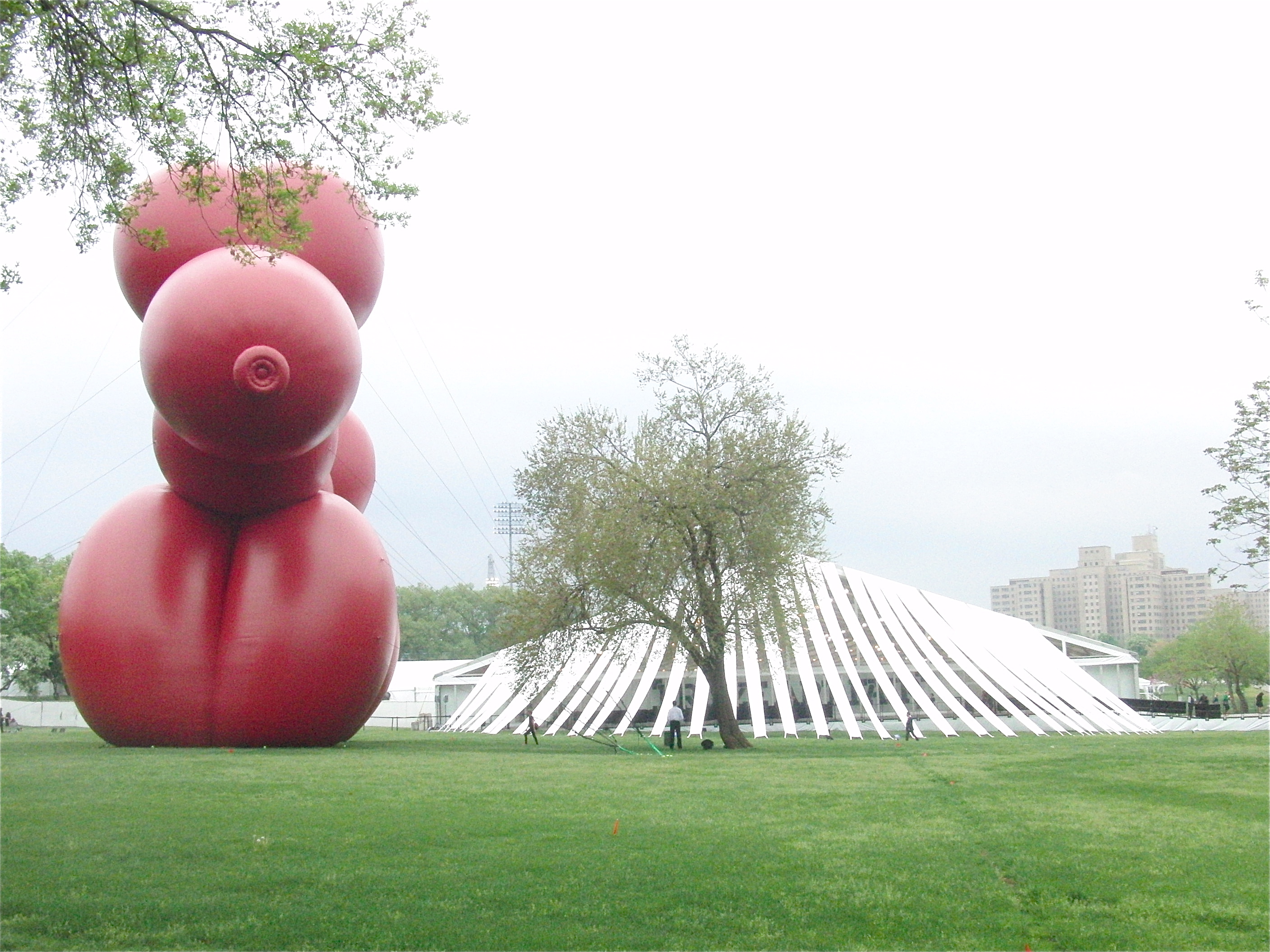
Paul McCarthy’s giant “Balloon Dog” welcomed visitors to the 2013 Frieze New York art fair (photo by twi-ny/mdr)
FRIEZE NEW YORK
Randall’s Island Park
May 9-12, $43 ($76 with catalog), 11:00 am – 6:00/7:00 pm
646-346-2845
friezenewyork.com
frieze new york 2013 online slideshow
Much like the Armory Show is the anchor of March’s art-fair extravaganza, Frieze is the centerpiece of May’s explosion, which includes no fewer than eleven fairs. Of course, Frieze is also the most expensive, with admission $43 ($76 if you want the catalog as well) and a round-trip ferry ticket going for $19. (A bus from the Guggenheim is $7; bus and ferry tickets must be purchased in advance.) Still, Frieze is a sprawling, exciting fair, with art from nearly two hundred galleries placed all around Randall’s Island. This year’s Frieze Projects feature interventions by Darren Bader, a soccer installation by Eduardo Basualdo, a playground sculpture by Eva Kotátková, an alternative Tide and Current Taxi ferry by Marie Lorenz, a piece focusing on “invisible communities” by Koki Tanaka, and a Jimi Hendrix–inspired mini-music festival by Naama Tsabar. Frieze Sounds consists of newly commissioned audio works by Keren Cytter, Cally Spooner, and Hannah Weinberger. In addition, visitors can reserve a room (prices start at $350) in Al’s Grand Hotel, a collaboration between original creator Allen Ruppersberg and Public Fiction. Food and drink will be available from Blue Bottle Coffee, Court Street Grocers, Furanku, Frankies Spuntino, Marlow & Sons, Mission Cantina, Momofuku Milk Bar, Roberta’s, and the Fat Radish, with some restaurants requiring advance reservations.
Friday, May 9
Frieze Talks: Nadya Tolokonnikova and Masha Alekhina of Pussy Riot / Zona Prava in conversation with David Remnick, 4:00
Saturday, May 10
Frieze Talks: Adam Szymczyk in conversation with Jenny Jaskey, 4:00
Sunday, May 11
Frieze Talks: The World Wide Web at 25: Terms and Conditions, with Orit Gat, Tyler Coburn, Gene McHugh, and Christiane Paul, 12 noon
Frieze Talks: Keynote Lecture by Kenneth Goldsmith, 4:00
Monday, May 12
Frieze Talks: U.S. premiere of The Act of Killing: The Director’s Cut (Joshua Oppenheimer, 2012), screening followed by Joshua Oppenheimer in conversation with Thomas Keenan and Dana Stevens, 12 noon
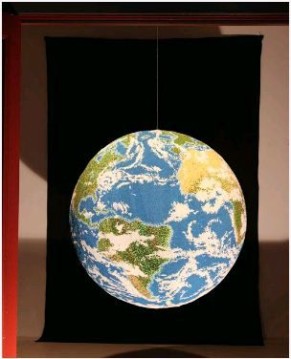
Andy Yoder’s “Early One Morning” is one of 2014’s Pule Projects
PULSE NEW YORK CONTEMPORARY ART FAIR
The Metropolitan Pavilion
125 West 18th St. between Sixth & Seventh Aves.
May 8-11, $15-$35
www.pulse-art.com
Pulse is consistently one of the best fairs of the season, with innovative works spread out in a convenient layout. Held at the Metropolitan Pavilion, Pulse consists of works from approximately fifty galleries. This year’s Pulse Projects are Andy Yoder’s “Early One Morning,” Charles Lutz’s “LOAD,” Jasmina Cibic’s “Fruits of Our Land,” Samuel Jablon’s “Poet Sculpture,” Sean Fader’s “#wishingpelt,” Shantell Martin’s “You Are You,” Simon Vega’s “The Whitney Museum of Central American Art, a Post-Apocalyptic Dream,” Tamara Gayer’s “All the World’s Affair,” and Zoe Buckman’s “Present Life.” Below is a list of the “Pulse Perspectives: New Models” talks and panel discussions.
Thursday May 8
Claire Breukel and Simón Vega, 1:00
Adarsh Alphons, Ann Fensterstock, Saul Ostrow, 3:00
Daniel Temkin and Benjamin Sutton, 6:00
Friday May 9
Mark Ellwood and Ben Hartley, 1:00
Sherry Dobbin and Carlos Pomares, 3:00
PULSE Prize Jury: discussion and announcement of the 2014 Pulse Prize winner, 6:00
Saturday May 10
Alice Gray Stites and Edward Winkleman, 1:00
Renée Vara and Patrick Regan, 3:00
Jake Yuzna and Kyle DeWoody, 6:00
Sunday May 11
Sue Stoffel, Andrew Gori, and Ambre Kelly, 1:00
Paddy Johnson, William Powhida, and Shawn Gallagher, 3:00
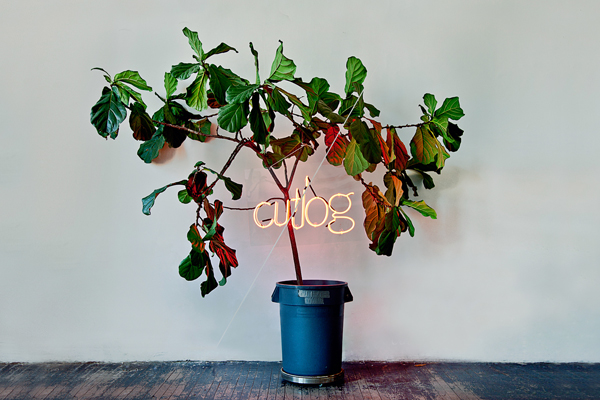
Cutlog brings cutting-edge art to the Clemente on the Lower East Side
CUTLOG
The Clemente
107 Suffolk St.
May 8-11, $15-$50
www.cutlogny.org
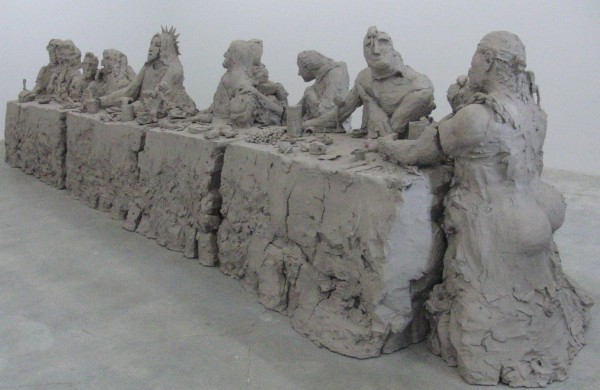
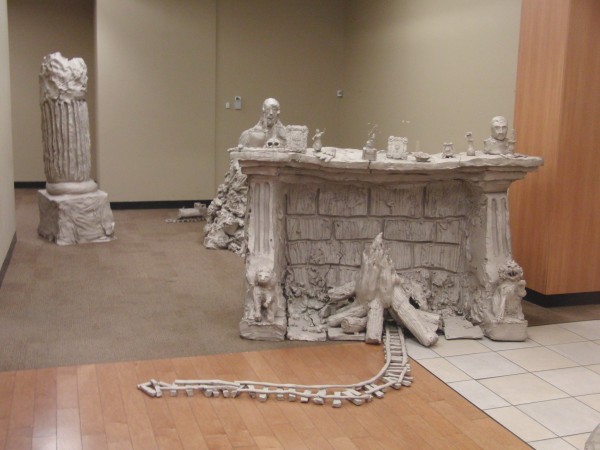
Cutlog is back for its second year, highlighting multimedia works by cutting-edge and established artists from approximately sixty galleries. Held at the Clemente on the Lower East Side, the fair features such installations as Mark L. Power’s “See God,” Guillaume Paturel’s “Shelter,” Hrafnhildur Arnardottir aka Shoplifter’s “Hairdoo for a Hallway,” Jessica Deane Rosner’s “The Ulysses Glove Project,” Joan Backes’s “Papier Mache Trees,” Igor Molochevsky’s “In Transition,” and Clara Feder’s “The Wall of Temptation.” There will also be video screenings and/or live performances by Anthony Haden-Guest, Fanni Futterknecht and Marianne Vlaschits, Robert Montgomery, Grayson Earle, Marc Grubstein, Cai Qing, and Bruno Levy & Deantoni Parks, among others.
OUTSIDER ART FAIR
Center 548
548 West 22nd St. between Tenth & Eleventh Aves.
May 8–11, $20-$100
www.outsiderartfair.com
Self-taught artists are celebrated at the Outsider Art Fair, taking place at Center 548 in Chelsea. Some seventy galleries will be exhibiting the work of artists who often worked alone in obscurity, discovered only late in life or even after death. Baumann + Muksian have created a special curated space for the show, with works by “Crystal” John Urho Kemp, Sarah Lucas, Dr. Lakra, and Lewis Smith. “From very different eras and backgrounds, these works share a common ground: a masterly executed disrespect for social conventions and artistic norms in search of enlightenment and artistic freedom,” Daniel Baumann explains about the installation.
Saturday, May 10
Lost in Translation: Jean-Michel Basquiat, Self-Taught Artist, with Brooke Davis Anderson, Eric Fretz, Lenore Schorr, and Xaviera Simmons, moderated by Paul Laster, Center 548 rooftop, 2:00
Henry Darger: 40 Years Later, Anne Hill Blanchard symposium, with Michael Bonesteel, James Brett, Jim Elledge, and Jane Kallir, moderated by Valérie Rousseau, Center 548 rooftop, 4:00

CONTEMPORARY ART FAIR NYC
The Tunnel
May 8-11, $12-$20
269 11th Ave. between 27th & 28th Sts.
www.contemporaryartfairnyc.com
The fifth Contemporary Art Fair NYC, held in the Tunnel in Chelsea, focuses on independent artists and designers and the art of the craft, with prices mostly ranging from $100 to $6,000.
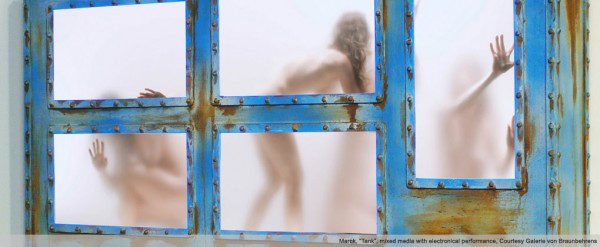
Marck, “Tank,” mixed media with electronical performance (photo courtesy Galerie von Braunbehrens)
DOWNTOWN ART FAIR
69th Regiment Armory
68 Lexington Ave. at 25th St.
May 8-11, $15-$45
www.downtownfair.com
Art Miami comes to New York for the inaugural Downtown Fair, comprising more than fifty galleries at the 69th Regiment Armory, promising to “provide a fresh alternative to acquire important never-before-exhibited works from both the primary and secondary markets in an intimate light.” The curators of No Longer Empty will give daily tours at 12:30, and there will be free shuttle bus service to and from the Frieze ferry.
Friday, May 9
A Conversation with Hunt Slonem about Bunnies!, moderated by Bruce Helander, 12:30
Lecture on 69th Regiment Armory History, with Roslyn Bernstein, 2:00
Saturday, May 10
The Curious Legacy of Collage and Its Current Affiliation to Contemporary Art, with Anthony Haden-Guest and Bruce Helander, 2:00
Sunday, May 11
Willem De Kooning, lecture by Molly Barnes, 2:00

COLLECTIVE 2 DESIGN FAIR
Skylight at Moynihan Station
360 West 33rd St. at Eighth Ave.
May 8-11, $15-$25
www.collectivedesignfair.com
The Collective Design Fair is back for its second year, highlighting the artistic, commercial, and educational aspects of contemporary and twentieth-century design. Some three dozen exhibitors will have booths at Skylight at Moynihan Station at the post office, along with special Collective Settings installations that bring together designers and gallerists, including Robert Couturier and Cristina Grajales, Jonathan Adler and Paul Donzella, David Mann and Maison Gerard, and Alan Wanzenberg and 1950. Murray Moss and Franklin Getchell have curated a solo show by Hella Jongerius, and there are also Collective Conversations that will be held Saturday and Sunday in an area designed by BroLab.
Saturday, May 10
Car Culture, Design Culture, with Andrew Smith and Josh Rubin, 11:30 am
Nordic Influence: Designers Discuss the Scandinavian Legacy, with Glenn Adamson, Wendell Castle, Cathrine Raben Davidsen, and Joseph Walsh, 1:00
Creative License: Decorating with Collectible Design, with Sarah Medford, Cristina Grajales, India Mahdavi, and Suchi Reddy, 2:30
Jewelry Design: Quick Changes in an Ancient Medium, with Jane Adlin, Michele Oka Doner, and Jennifer Trask, 4:00
Manufacturing in Place: The Next Wave in Making and Process, with Rama Chorpash, and the Haas Brothers, 5:30
Sunday, May 11
Students Designing for the Future, with Ellen Lupton and Nikki Gonnissen, 11:30 am
Twenty Questions: New Frontiers in Design, with Henry Urbach, Murray Moss, and Franklin Getchell, 1:00
Design On Demand: New Takes on Rapid Manufacturing, with Julia Kaganskiy, Janos Stone, and Mihae S. Mukaida, 2:30
Dressing the Future: Fashion and 3D Printing, with Adam Brent, Partner, Gabi Asfour, and Bradley Rothenberg, 4:00
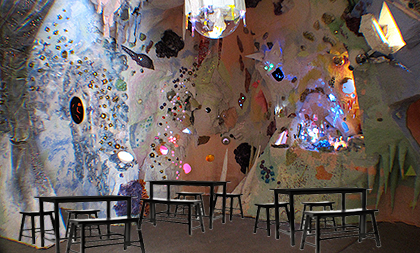
Select fair will feature a specially designed beer garden
SELECT FAIR
Altman Building
135 West 18th St.
May 8-11, $5-$20
www.select-fair.com
More than thirty galleries will have booths featuring progressive works at Select in the Altman Building, along with eight Select Project installations and four special projects, Lambert Fine Arts’ “The Directors Den,” “Meow Wolf” by a group of Santa Fe artists, Chelsea Maida’s “Sun Chandelier,” and the interactive performance piece “DOTART” by Tibor Hargitai. In addition, a beer garden will serve food and drink from Six Point Brewery and Brooklyn Bangers.
PooL takes a more low-key approach to the concept of the art fair
POOL ART FAIR
Off Soho Suites
11 Rivington St.
May 9-11, free
www.frereindependent-poolartf.squarespace.com
PooL Art Fair, from the same folks who put on March’s Independent, prefers a modest, low-key approach focusing on artists who do not have representation. The fair will include lectures, special projects and events, and curated installations at Off Soho Suites on Rivington St.
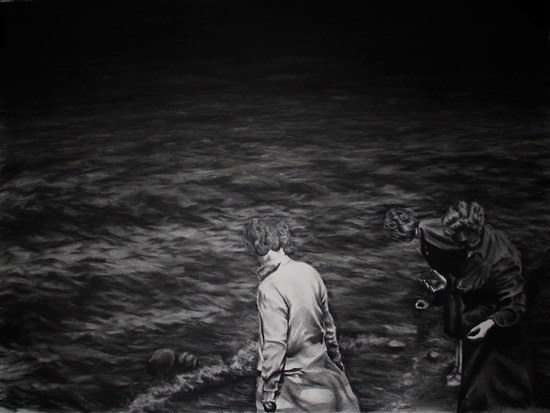
Chris Hefner, “The Americans (Shoreline),” detail, charcoal on paper, 2013
VERGE NYC
177 Prince St. between Thompson & Sullivan Sts.
May 9 – May 11, free
www.vergeartfair.com
The fifth annual boutique Verge art fair, “an ongoing experiment in art, markets, ideas, and the art culture,” consists of nearly two dozen galleries, mostly from New York, New Jersey, and Chicago, gathering at 177 Prince St., with two special exhibitions, “Tomorrow Stars” and “The Drawing Show.”
Thursday, May 8
Opening night party, free and open to the public, 6:00 – 10:00
NADA NEW YORK
Pier 36, Basketball City
299 South St. at the East River
May 9-11, free
www.newartdealers.org
More than one hundred exhibitors will take over Basketball City for the third annual NADA New York fair, including such twi-ny faves as Abrons Arts Center, the Hole, Klaus von Nichtssagend, Freight + Volume, and Eleven Rivington. The special projects include “Phaidon Presents Beta-Local and MOCAD,” including interactive community-centric installations, and “Shoot the Lobster,” a site-specific outdoor collaboration with pieces by Lena Henke and Marie Karlberg , Eli Ping, Jennie Jeun Lee, Ryan Foerster, Justin Lieberman, Denise Kupferschmidt, Eddie Martinez, Jeffrey Joyal, Bradley Kronz, Win McCarthy, and Nicholas Buffon.
Saturday, May 10
Contemporary Poetry, marathon reading with thirty poets, Tacombi Lounge, 12 noon – 6:00 pm
LittleCollector workshops by Amy Stevens and Shelter Serra, $20, 11:30 am
Sunday, May 11
LittleCollector workshops by Amy Stevens and Shelter Serra, $20, 11:30 am
El Local Club, conversation about Caribbean art practice and production, with Stefan Benchoam, Pablo Guardiola, and Radamés “Juni” Figueroa, 2:00
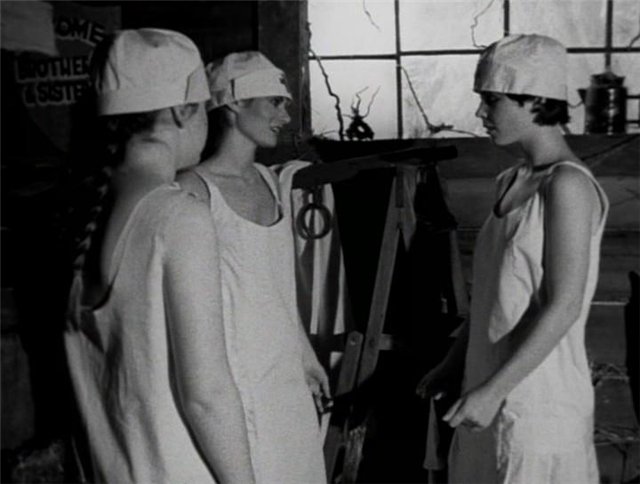
 In his first feature-length film, Canadian DIY master Guy Maddin reaches into Icelandic sagas for the ultra-low-budget Tales from the Gimli Hospital. In many ways a kind of Scandinavian Frankenstein as if directed by Ingmar Bergman and George A. Romero, the seventy-two-minute mostly black-and-white Expressionist film is a story within a story (at times within another story) that an old woman, Amma (Margaret Anne MacLeod), is telling her grandchildren (Heather and David Neale) in a hospital room where their mother lies very ill. The dark, lurid fairy tale, set in “a Gimli we no longer know,” is about Einar the Lonely (assistant director Kyle McCulloch), a shy fish smoker who does not know how to relate to other people, particularly women. Felled by an epidemic, he is brought to Gimli Hospital in Manitoba, where other men battle this dread disease, which leaves stitchlike scars on their face and body. Einar is discouraged that the patient in the bed next to him, the portly Gunnar (Michael Gottli), is treated much nicer by the nurses than he is, but he is helpless to do anything about it. Gunnar is soon telling Einar the story of his true love, Snjófridur (Angela Heck), a tragic tale with a surprising twist that brings everything full circle. A unique visual stylist who regularly pays homage to the early days of cinema, Maddin, who directed and edited the picture (and wrote the script on Post-it Notes), purposely keeps things low-tech, including poor sound dubbing and bumpy, awkward cuts, incorporating such oddities as a puppet show anesthetic, Glima wrestling, fish-oil hair gel, an ominous soundtrack, and an over-the-top minstrel in blackface (McCulloch also); Maddin (My Winnipeg, Careful) also plays the weirdo surgeon who operates on Gunnar and Einar in rather strange fashion. In 2011, Maddin, who is part Icelandic, reimagined the film in the special Performa presentation Tales From the Gimli Hospital: Reframed, a reedited version with a live score by Icelandic musicians. The amateur nature of the original work led to its being rejected by the Toronto International Film Festival for ineptitude; it went on to become an instant cult classic, holding the midnight-movie slot at the Quad for nearly a year. Tales from the Gimli Hospital is screening May 9 as part of the Rubin Museum Cabaret Cinema series “Movie Medicine,” held in conjunction with the exhibition “Bodies in Balance: The Art of Tibetan Medicine”; the festival continues May 16 with John Schlesinger’s Sunday Bloody Sunday and May 23 with Michael Bastian introducing Luchino Visconti’s Death in Venice.