this week in art

IDEAS CITY: THE INVISIBLE CITY

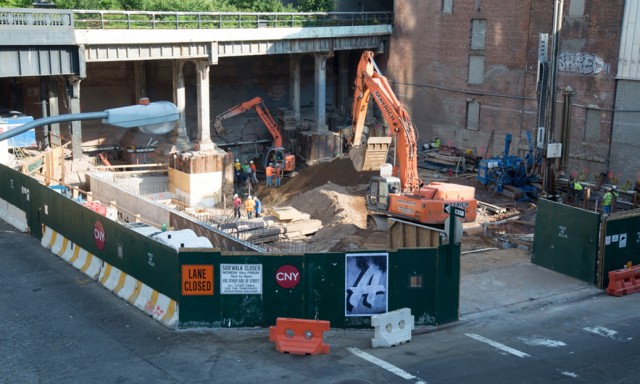
Drone painting is part of three-day Ideas City festival on the Lower East Side

Drone painting is part of three-day Ideas City festival on the Lower East Side

NEW YORK CITY FESTIVAL FOR THE FUTURE
New Museum of Contemporary Art, the Aula, Sara D. Roosevelt Park, the Cooper Union, and other Lower East Side locations
May 28-30, free – $50
www.ideas-city.org

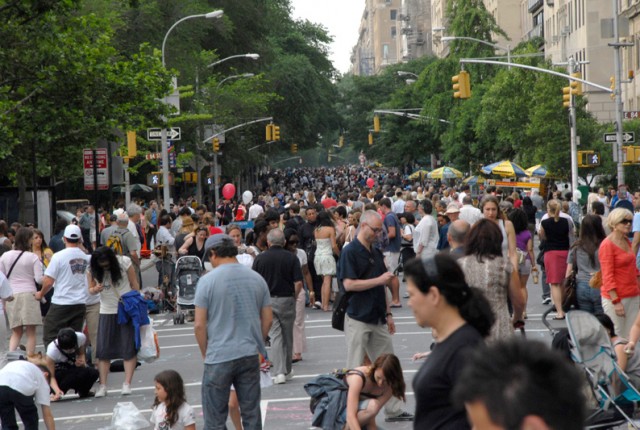
In his 1972 novel Invisible Cities, Cuban-born Italian journalist and author Italo Calvino wrote, “Cities, like dreams, are made of desires and fears, even if the thread of their discourse is secret, their rules are absurd, their perspectives deceitful, and everything conceals something else.” That quote is the inspiration for this year’s Ideas City festival, three days of panel discussions, debates, lectures, interactive art projects, music and theater, and other special presentations about the future of New York and other cosmopolitan areas. Founded by the New Museum, the festival begins on May 28 with an all-day ticketed conference, but most everything else is free, with many events requiring advance registration. On Friday, “A Performative Conference in Nine Acts” ($20) consists of nine performances at the Aula on Mulberry St. by such artists as Jordi Enrich Jorba, Penny Arcade, and Danny Hoch, while Saturday’s Street Program features outdoor projects in and around Sara D. Roosevelt Park. Below are only some of the highlights of what should be an intriguing and fascinating look at civic responsibility and how you can make a difference.

Thursday, May 28
Ideas City Conference, with screening by Rivane Neuenschwander, welcome address by Lisa Phillips and Joseph Grima, “Seeing through the Noise” keynote by Lawrence Lessig, “Hope and Unrest in the Invisible City” panel discussion with Jonathas de Andrade, Rosanne Haggerty, Yto Barrada, Micah White, and moderator Jonathan Bowles, “Make No Little Plans: Towards a Plausible Utopia” conversation with Bjarke Ingels and Kim Stanley Robinson, screening of Joshua Frankel’s Mannahatta: Studies for an Opera about Robert Moses and Jane Jacobs, “Make No Little Plans: Policy and the Invisible City” conversation with Rohit Aggarwala and Connie Hedegaard, “Full Disclosure and the Morality of Information” panel discussion with Trevor Paglen, Christopher Soghoian, Jillian C. York, and moderator Gabriella Coleman, screening of OpenStreetMap’s 2008, a Year of Edits, “Maps for the Invisible City” panel discussion with Steve Coast, William Rankin, and moderator Laura Kurgan, screening of Adam Magyar’s Stainless, 42 Street, introduction by Richard Flood, and “Finding the Invisible City” mayoral panel discussion with Annise Parker, Carmen Yulín Cruz, Svante Myrick, and moderator Kurt Andersen, Great Hall, the Cooper Union, 7 East Seventh St., free – $50, 9:30 am – 7:30 pm

ETH Zurich, Block Research Group, and others: Pop-Up Workshop + Gallery, ETH Zurich Future Garden and Pavilion, 34 East First St., 11:00 am – 6:00 pm

ETH Zurich Alumni — New York Chapter: The Invisible Feedback Loop: Architects, Infrastructure, and Public Space, ETH Zurich Future Garden and Pavilion, First Street Garden, 6:30

NEW INC and Deep Lab: Drone Painting Performance, 231 Bowery, 8:00

Social Innovation in the Data Age: Inventing a Truly Smart City takes place May 29 in the First Street Garden

Social Innovation in the Data Age: Inventing a Truly Smart City takes place May 29 in the First Street Garden

Friday, May 29
PareUp, miLES, and others — Wasted Food x Wasted Space: A Morning Dialogue over Breakfast, ETH Zurich Future Garden and Pavilion, First Street Garden, yoga at 8:00, roundtable dialogues at 9:00

Swiss Think Tank W.I.R.E., SAVIDA, and others — Social Innovation in the Data Age: Inventing a Truly Smart City, ETH Zurich Future Garden and Pavilion, First Street Garden, 12 noon

Jordi Enrich Jorba: Nomadic Place, A Performative Conference in Nine Acts, the Aula, 268 Mulberry St., 7:30

NEW INC and Deep Lab: EMA Performance, 231 Bowery, 8:00

Urban Word, Ministry of Endangered Language, and others — The POEMobile: Quechua Poetry & Projections, with Doris Loayza, Inti Jimbo, and Inkarayku, Mulberry St. between Houston & Prince Sts., 8:00 pm – 12 midnight

United States Department of Arts and Culture — People’s State of the Union: “2015 Poetic Address to the Nation,” A Performative Conference in Nine Acts, the Aula, 268 Mulberry St., 8:10

Penny Arcade: Longing Lasts Longer, A Performative Conference in Nine Acts, the Aula, 268 Mulberry St., 8:40

Danny Hoch: Excerpt from Taking Over, A Performative Conference in Nine Acts, the Aula, 268 Mulberry St., 10:45

Sharifa Rhodes-Pitts, Michael Henry Adams, and others: Last Dance, A Performative Conference in Nine Acts, the Aula, 268 Mulberry St., 11:00 pm

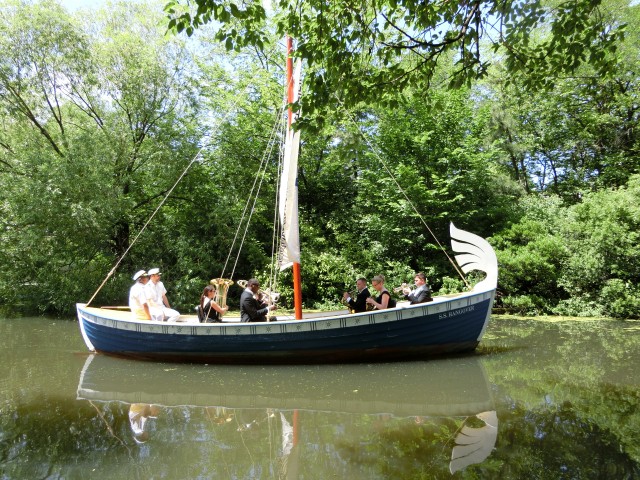
Ursula Scherrer with Brian Chase and Kato Hideki: afloat, A Performative Conference in Nine Acts, the Aula, 268 Mulberry St., 11:59 pm – 3:00 am

Abrons Arts Center invites The City of the Lost and Found (photo by Yves Marchand and Romain Meffre)

Abrons Arts Center invites visitors to “re-create an item, a feeling, or an idea they have lost in the city” (photo by Yves Marchand and Romain Meffre)

Saturday, May 30
Abrons Arts Center: The City of the Lost and Found, Street Program, Sara D. Roosevelt Park, 12 noon – 3:00 pm

Art in Odd Places: Recall, Street Program, Sara D. Roosevelt Park, 12 noon – 6:00 pm

Arte Institute, Albanian Institute New York: Surface Markers and I will play your soul, Street Program, Sara D. Roosevelt Park, 12 noon – 6:00 pm

Center for Urban Pedagogy (CUP): Sewer in a Suitcase, Street Program, Bowery between Houston & Stanton Sts., 12 noon – 6:00 pm

Circus for Construction, Austin + Mergold: The Wall Inside, Street Program, Sara D. Roosevelt Park, 12 noon – 6:00 pm

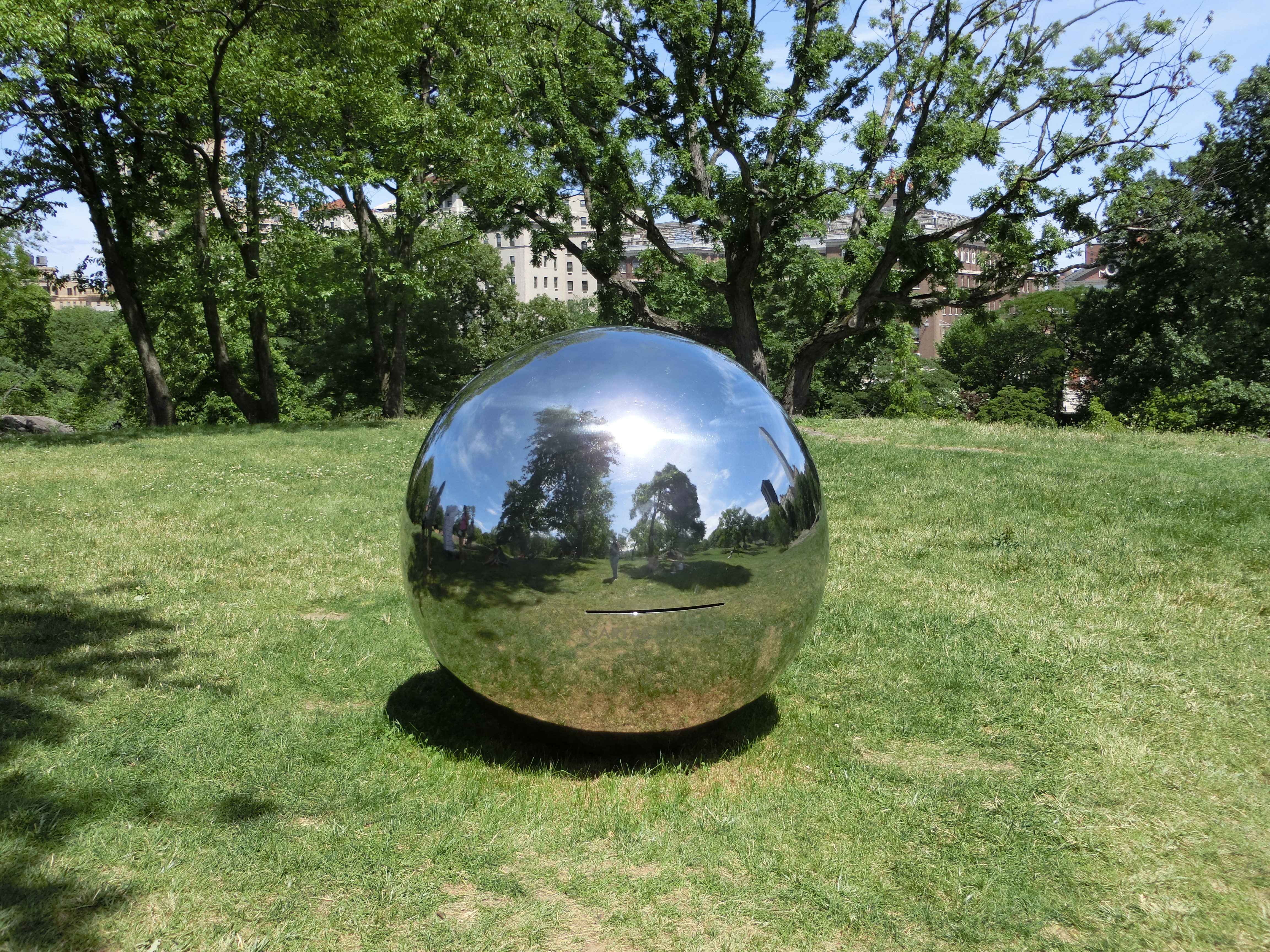
Davidson Rafailidis: “MirrorMirror,” Street Program, Sara D. Roosevelt Park at Stanton St., 12 noon – 6:00 pm

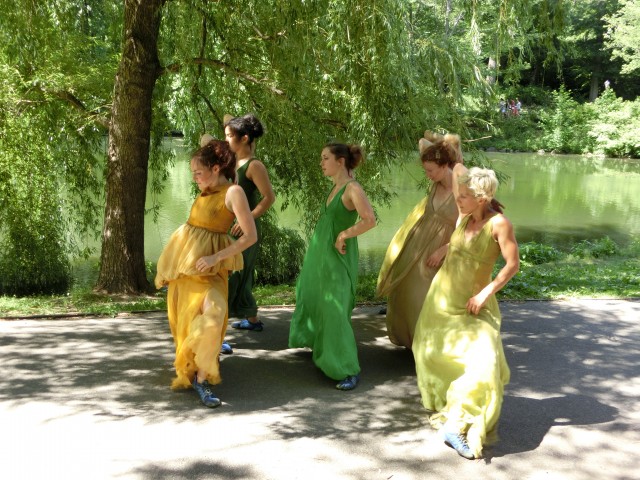
Emily Johnson/Catalyst: Conjuring Future Joy, Street Program, Bowery between Stanton & Rivington Sts., 12 noon – 6:00 pm

Hester Street Fair: Ideas City Food Court, with Brooklyn Soda Works, Doughnut Plant, Khao Man Gai NY, Luke’s Lobster, Meat Hook Sandwich, Mindful Juice, Oddfellows Ice Cream, Petee’s Pies, Red Star Sandwich Shop, and
Roberta’s, 12 noon – 6:00 pm

US Department of Arts and Culture, Endangered Language Alliance, and others: Ministry of Endangered Language, Street Program, Stanton St. & Bowery, 12 noon – 6:00 pm

Wojciech Gilewicz, Artists Alliance Inc. — RRRC: Reduce, Reuse, Recycle, Compost, Street Program, multiple locations, 12 noon – 6:00 pm

SEBASTIAN MASUDA: TIME AFTER TIME CAPSULE IN NYC

A giant, translucent Hello Kitty is collecting objects made by children for special art project (photo by twi-ny/mdr)

A giant, translucent Hello Kitty is collecting objects made by children for special art project (photo by twi-ny/mdr)

Dag Hammarskjöld Plaza
East 47th St. bet. First & Second Aves.
Through Sunday, September 13, free
www.facebook.com/sebastian.m.art
time after time slideshow

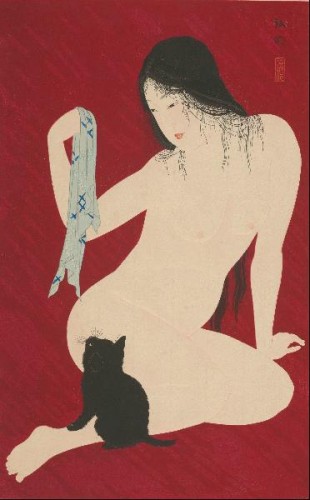
Every four years, athletes, tourists, and sports fans from around the world descend on a city for the Summer Olympics. The 2020 Games are being held in Tokyo, where artist Sebastian Masuda’s “Time After Time Capsule” will be shown, a participatory project involving large-scale translucent animal sculptures that are traveling the globe (Miami first, with Amsterdam, Beijing, Berlin, London, Los Angeles, Paris, and Kyoto also on the itinerary). In each city, they are being filled up with objects made by children during special family workshops. For New York City, Masuda has installed a nine-foot-tall Hello Kitty in Dag Hammarskjöld Plaza, just up the street from Japan Society, which is currently hosting “Life of Cats: Selections from the Hiraki Ukiyo-e Collection.” (Masuda was at Japan Society in March to talk about the work.) “‘Time After Time Capsule New York’ is a project where people’s memories — that is to say, the concept of ‘kawaii’ [cute] — is sent to the future,” Masuda recently said on Kickstarter. “I truly hope that everyone will collaborate with me and we can build our dreams together.” Be sure to get up close and personal with Hello Kitty, which was created back in 1974 by Sanrio as a marketing character and became a huge part of kawaii culture, to check out the goodies that are piling up inside, entering through the back of her head. Masuda has his own “cute” kawaii concept shop as well, 6%DOKIDOKI, in Tokyo’s Harajuku district. For the 2020 Olympics, all the objects will be placed in a super-large capsule, bringing together the hopes and dreams of children everywhere.

URS FISCHER: BIG CLAY #4

Urs Fischer’s “Big Clay #4” rises in Midtown (photo by twi-ny/mdr)

Urs Fischer’s “Big Clay #4” rises in Midtown (photo by twi-ny/mdr)

Seagram Building
375 Park Ave. between 52nd & 53rd Sts.
Through September 1, free
www.gagosian.com
big clay #4 slideshow

Four years ago, Zurich-born, New York-based artist Urs Fischer installed “Untitled (Lamp/Bear),” a twenty-three-foot-tall, nearly twenty-ton cuddly yellow teddy bear wearing a working lamp for a hat on the plaza in front of Mies van der Rohe’s Seagram Building on Park Ave.; the piece sold at auction that summer for more than $6.8 million. Fischer has now returned to that triumphant location with “Big Clay #4,” a forty-two-and-a-half-foot-tall aluminum sculpture of a piece of squeezed clay, complete with the artist’s fingerprints. When the piece was being installed, a printout of plans left near construction materials on the plaza showed the ultimate sculpture (actually for “Big Clay #3”) in multiple colors, reminiscent of Jeff Koons’s “Play-Doh” from his recent Whitney retrospective. But alas, the colors were just to help identify which section went where; the final sculpture is plain silver, twisted metal rising like the Midtown skyscrapers surrounding it, though not quite as orderly. Fischer, who has worked with such materials as bread, wax, and vegetables, here goes back to the very source, a small lump of clay that he squeezed, scanned, digitally enlarged, and now has cast for all to see but not touch.

FRIEZE ART FAIR 2015

Participants paint Jonathan Horowitz’s “100 Dots” at Frieze (photo by twi-ny/ees)

Participants paint Jonathan Horowitz’s “100 Dots” at Frieze (photo by twi-ny/ees)

FRIEZE ART FAIR
Randall’s Island Park
May 14-17, $28-$109
friezenewyork.com

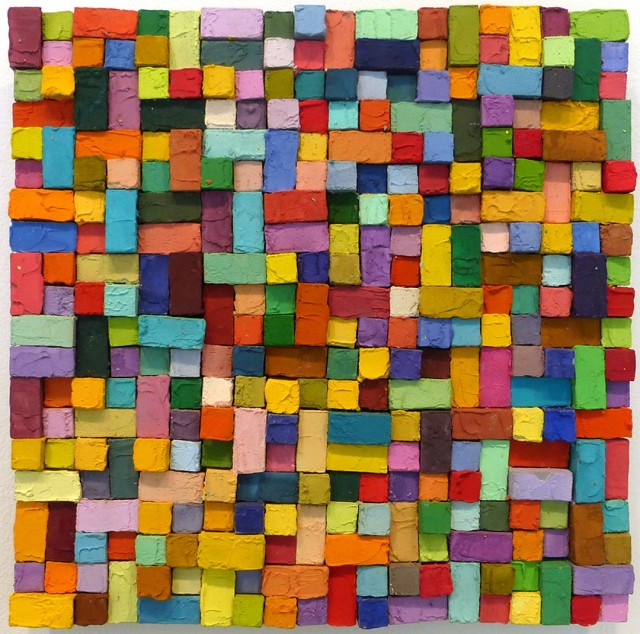
The ferry, the crowds, the food, and the fashion may all seem familiar and as well done as ever at Frieze, but what’s new under the big white tent? Well, Gavin Brown’s Enterprise got a lot of press because of Jonathan Horowitz’s participatory project, “700 Dots,” which enlisted early attendees’ minds, hearts, hands, and Instagram feeds by providing them with brushes, black acrylic paint, a white square, a $20 check, and lots of helpful support for painting a perfect eight-inch circle. The circles became part of Horowitz’s project, which actually consists of seven sets of ten-by-ten grids of 100 dots, two of which had sold for $100,000 a piece by Thursday. Single-artist stands captured most of our attention, and the Frame section, for galleries less than eight years old showing solo exhibitions, felt particularly strong. In fact, the Stand Prize, a $15,000 award sponsored by Champagne Pommery and given by a panel of distinguished judges, went to a Frame gallery for the revelatory Martha Araújo show at Galeria Jaqueline Martins (São Paulo), focusing on Araújo’s body-based performative practice in Brazil from the 1970s through the present, little known to date.

Gallerists prepare a performance of Kris Lemsalu’s “Whole Alone 2” at Temnikova & Kasela, Frieze New York 2015.

Gallerists prepare a performance of Kris Lemsalu’s “Whole Alone 2” at Temnikova & Kasela, Frieze New York 2015 (photo by twi-ny/ees)

Also in Frame, as fairgoers arrived just after eleven on Thursday morning, gallerists at Temnikova & Kasela (Tallinn, Estonia) prepared Kris Lemsalu’s “Whole Alone 2,” a sculptural installation and performance that featured a well-manicured woman under an intricately enameled and rhinestone-bedazzled tortoiseshell, while London’s Supplement Gallery showed Philomene Pirecki’s lovely and more subtly nontraditional painting, comprising old paintings processed into supports for new, and sculptures made of layers of images of previous works, processed as photographs of digital screen images and overlaid with transparencies of water droplets. The latest medium seems, somewhat bewilderingly, to be ceramics, as artists as diverse as Lucio Fontana, Milena Muzquiz, Takuro Kuwata, and Dan McCarthy all displayed glazed clay pieces, some quite beautiful, such as Fontana’s “Dolphins” and “Piatto-Battaglia,” some less so, like the scary yellow glazed smiley Face Pots by McCarthy.

MAD. SQ. ART: EXPLAINING PUBLIC ART

Jaume Plensa’s “Echo” is a prime example of the innovative public art program in Madison Square Park (photo by twi-ny/mdr)

Jaume Plensa’s “Echo” is a prime example of the innovative public art program in Madison Square Park (photo by twi-ny/mdr)

One Madison Ave. at 23rd St., twelfth floor
Monday, May 18, free with advance RSVP, 9:00 am
www.madisonsquarepark.org

One of our favorite places to experience public art is in Madison Square Park, where the Mad. Sq. Art program has featured site-specific works by Antony Gormley, Alison Saar, Roxy Paine, Rachel Feinstein, Leo Villareal, Shannon Plumb, Jim Campbell, and so many others over the years. On May 18, the park will host a morning symposium, “Explaining Public Art,” in the One Madison Ave. building, starting with a welcome from Madison Square Park Conservancy board chairman David Berliner, executive director Keats Myer, and Parks Department director of art & antiquities Jonathan Kuhn, followed by an introduction by senior curator Brooke Kamin Rappaport. Beginning at 9:15, eight Mad. Sq. Art participants will make presentations: Richard Deacon, Orly Genger, Paula Hayes, Mel Kendrick, Jaume Plensa, Jessica Stockholder, Ursula von Rydingsvard, and Teresita Fernández, whose new installation, “Fata Morgana,” is being installed right now for a June 1 opening. At 10:30, there will be three panel discussions, one on “Site” with Bill Fontana and Charles Long, moderated by Ariella Budick; a second on “Medium,” with Sandra Gibson, Luis Recoder, and Villareal, moderated by Phong Bui; and a third on “Public,” with Feinstein, Plumb, Bill Beirne, Rafael Lozano-Hemmer, and Jacco Olivier, moderated by Robin Cembalest. The symposium concludes with a keynote conversation between Bloomberg Philanthropies arts program head Kate D. Levin and Ford Foundation president Darren Walker. Admission is free, but advance RSVP, is required. New York City just wouldn’t be the same with public art, so this should be a fascinating way to gain insight into its creation and development.

WIKIPEDIA EDIT-A-THON: SELECTIONS FROM THE GUGGENHEIM COLLECTION

Attendees of the inaugural Guggathon edit new Wikipedia entries last October (photo by Kris McKay © 2014 Solomon R. Guggenheim Foundation, New York)

Attendees of the inaugural Guggathon edit new Wikipedia entries last October (photo by Kris McKay © 2014 Solomon R. Guggenheim Foundation, New York)

Solomon R. Guggenheim Museum
1071 Fifth Ave. at 89th St.
Tuesday, May 19, free with advance registration, 3:00 – 7:00
212-423-3587
www.guggenheim.org

Ever look at a Wikipedia page and want to make changes to an entry but didn’t know if you were allowed to or how to do it? On May 19 from 3:00 to 7:00, the Guggenheim is hosting its second Wikipedia Edit-a thon, as the uptown institution donates one hundred images to the online encyclopedia and invites the general public to help flesh out the entries, either at the museum or remotely. Among the images that will become part of Wikipedia Commons are works by Edgar Degas, Paul Klee, Vincent Van Gogh, and others. The Guggenheim’s inaugural Wikipedia Edit-a-thon was held last October, dedicated to museum architecture. Tuesday’s Guggathon begins with a welcome address from Guggenheim curatorial assistant Natalia Lauricella and remarks from Wikimedia NYC president Richard Knipel, who will then lead a training session for registered attendees. Then the hands-on editing — participants must bring their own laptops and power cords — takes place from 4:15 to 5:45, followed by a review of the results. At 6:00, gallery educator Lewis Kachur will give a private tour of the Thannhauser Collection.

A SECRET AFFAIR: SELECTIONS FROM THE FUHRMAN FAMILY COLLECTION

(photo by twi-ny/mdr)

Ron Mueck’s ultra-realistic “Spooning Couple” is part of “A Secret Affair” at FLAG (photo by twi-ny/mdr)

The FLAG Art Foundation
545 West 25th St. between Ninth & Tenth Aves.
Wednesday through Saturday through May 16, free, 11:00 am – 5:00 pm
212-206-0220
flagartfoundation.org

The name of the current exhibit at the FLAG Art Foundation, “A Secret Affair,” conjures thoughts of clandestine coupling. Indeed, the show, which continues through May 16, features works that explore, both as physical objects and conceptual ideas, the notion of pairs, of the double, built around what senior curator Heather Pesanti refers to in her catalog essay, “The Subversive Body,” as “meditations on the most primal and basic emotional need in life: that of human connection.” Spread across two floors of the Chelsea gallery, “A Secret Affair: Selections from the Fuhrman Family Collection” consists primarily of sculptures, along with several C-prints, that are either partnered within themselves or with another piece, by the same or a different artist. The subjects in Ron Mueck’s ultra-realistic but miniature “Two Women,” a pair of older women in heavy coats standing together but looking away, might recall fondly, or jealously, the nearby “Spooning Couple,” in which a partially naked man and woman spoon each other on a hard surface representing a bed. Meanwhile, not far away, Subodh Gupta offers a counterpart, “Spooning,” a sculpture of two large-scale stainless-steel spoons one on top of the other. In Juan Muñoz’s “Two Laughing at Each Other,” a pair of men sit in chairs halfway up a wall, not far from Maurizio Cattelan’s “Frank and Jamie,” two life-size wax figures of New York City policemen standing on their heads. In Louise Bourgeois’s “Couple,” a naked and armless man and woman, in pink fabric, face each other in a vitrine, belly to belly, while Yinka Shonibare’s “Girl Girl Ballerina” depicts a pair of headless female figures wearing colorfully patterned fabrics, hiding guns behind their backs. Gillian Wearing’s lifelike “Olia,” a topless model in jeans, finds its counterpoint in Marc Quinn’s “Sphinx (Fortuna),” a painted bronze sculpture of Kate Moss in a seemingly impossible pose. And Thomas Schütte’s patinated bronze and steel busts, “Wicht (4)” and “Wicht (7),” are on plinths next to each other, a pair of mysterious, already fading figures.

(photo by twi-ny/mdr)

Fuhrman Family Collection exhibition focuses on doubling and human connection (photo by twi-ny/mdr)

Even the single pieces in the exhibition, curated by Louis Grachos, deal with pairs. “I decided that the exhibition would focus on interrelated themes concerning the body and the figure, as well as coupling and conversation,” Grachos explains in his catalog foreword. In Charles Ray’s “Light from the Left,” the artist offers flowers to a woman, trying to make a connection. In Katharana Fritsch’s “Oktopus,” an orange cephalopod mollusc holds aloft a faceless human figure in black in one of its tentacles. Felix Gonzalez-Torres’s 1995 untitled work comprises two silver-plated brass rings flat against a wall, touching each other, evoking the magician’s trick as well as the prize one can win on a merry-go-round. Anish Kapoor’s “Blood Solid,” a red balloon-like sculpture that resembles a huge drop of blood, invites viewers to see their reflection in it, their own double. There are also works by Matthew Barney, Kiki Smith, Robert Gober, Jim Lambie, David Hammons, and Jim Hodges that provide yet more insight on the theme. In conjunction with Frieze week’s Chelsea Night, Hodges, whose “picturing: my heart” dual skulls and “First Light (Beginning of the End)” mirrored glass pieces are on display at FLAG, will be at the gallery on May 16 at 5:00 for a special closing conversation with FLAG founder Glenn Fuhrman, who owns the collection with his wife, Amanda.