this week in art

KING AND COUNTRY: SHAKESPEARE’S GREAT CYCLE OF KINGS

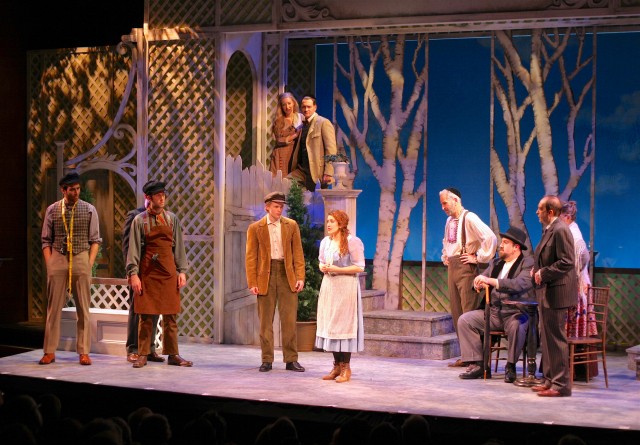
David Tennant stars as Richard II in Royal Shakespeare Company production at BAM (photo by Keith Pattison)

David Tennant stars as Richard II in Royal Shakespeare Company production coming to BAM (photo by Keith Pattison)

Brooklyn Academy of Music
BAM Harvey Theater
651 Fulton St.
March 24 – May 1, $30-$200
718-636-4100
www.bam.org

In a letter to his mistress, Lady Emma Hamilton, in 1800, Admiral Horatio Nelson wrote, “My greatest happiness is to serve my gracious King and Country, and I am envious only of glory; for if it be a sin to covet glory, I am the most offending soul alive.” BAM references that famous quote in its glorious program “King and Country: Shakespeare’s Great Cycle of Kings,” and it would be a sin not to covet it. In honor of the quadricentennial of the passing of William Shakespeare, who died in 1616 at the age of fifty-two, BAM has teamed up with the Royal Shakespeare Company and the Ohio State University to present the Henriad, four Shakespeare plays in repertory at the BAM Harvey over the course of thirty-nine days, concentrating on Kings Henry IV and V. All four works are directed by RSC artistic director Gregory Doran, with sets by Stephen Brimson Lewis, lighting by Tim Mitchell, music by Paul English, sound by Martin Slavin, movement by Michael Ashcroft, and fights by Terry King. David Tennant (Doctor Who, Broadchurch, Jessica Jones), who played the title character in Doran’s 2008 staging of Hamlet with Patrick Stewart as his father, has the lead role in Richard II, with Julian Glover as John of Gaunt, Leigh Quinn as the queen, Oliver Ford Davies as the duke of York, Sarah Parks as the duchess of York, and Jasper Britton as John of Gaunt’s son, later to become Henry IV. Britton continues his role in Henry IV, Part I, and Henry IV, Part II, with Alex Hassell as Prince Hal, Martin Bassindale as Peto and Prince John, Antony Sher (Doran’s longtime partner) as Sir John Falstaff, Parks as Mistress Quickly, and Sam Marks as Ned Poins. And Hassell then takes the throne in Henry V, with Jim Hooper as the archbishop of Canterbury, Simon Thorp as King Charles VI of France, Jane Lapotaire as Queen Isobel, Quinn as lady-in-waiting Alice, and Marks as the French constable.

HENRY IV, PART I is one of four RSC plays running at BAM through May 1 (photo by Keith Pattison)

HENRY IV, PART I is one of four RSC plays running at BAM through May 1 (photo by Keith Pattison)

“The Henriad plays are a contemplation of power and leadership — how they are acquired, maintained, and lost,” BAM publicist Christian Barclay writes in a program essay. “A host of historical and fictional characters — both high- and lowborn — revolve around the monarchs in shifting alliances. . . . The Henriad is a study of the difficult personal and ethical choices that accompany political life.” In conjunction with the plays, the Mark Morris Dance Center is hosting the master class “Embodying Shakespeare” on April 5 with Owen Horsley, Hassell, and Quinn ($25, 2:00), Doran will be in conversation with Shakespeare scholar James Shapiro on April 7 at BAMcafé ($20, 6:00), Neil Kutner, Ryan Gastelum, and Ben Tyreman will participate in the seminar “Behind the Scenes: King and Country” at BAM Fisher on April 20 ($35, 5:00), astronomer Summer Ash will lead guided tours of the sky with telescopes in “A Look at the Stars: Shakespeare and the Cosmos” April 15-17 on the BAM Fisher rooftop terrace (free, 8:30 or 9:30), and the exhibition “King and Country: Treasures from the Folger,” consisting of rare paper artifacts from the Folger Shakespeare Library in Washington, DC, will be on view at the Harvey during the run of the performances. Tickets for the shows and the special events are going quickly, so act now if you want to catch any or all of what should be a glorious Shakespeare spectacle to covet.

BETTY TOMPKINS: WORDS ON WOMEN

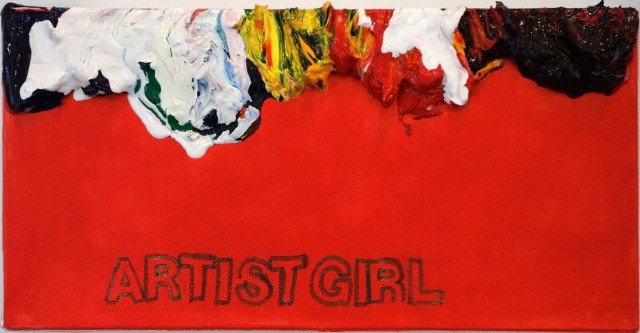
Betty Tompkins, “A Woman’s Greatest Weapon Is Her Tongue,” acrylic on canvas, 2015

Betty Tompkins, “A Woman’s Greatest Weapon Is Her Tongue,” acrylic on canvas, 2015

Who: American artist Betty Tompkins
What: Performance piece in conjunction with Women’s History Month and the exhibition “WOMEN Words, Phrases, and Stories: 1,000 Paintings by Betty Tompkins”
Where: The FLAG Art Foundation, 545 West 25th St. between Tenth & Eleventh Aves., tenth floor, 212-206-0220
When: Wednesday, March 23, free with RSVP, 6:00
Why: Washington, DC, native Betty Tompkins is best known for her controversial, large-scale photorealistic paintings, drawings, photographs, and video of intimate sexual acts. On March 23 at 6:00, she will be at the FLAG Art Foundation in Chelsea for the performance “Words on WOMEN,” held in conjunction with her exhibition there, which continues through May 14. The exhibition consists of one thousand small-scale, hand-painted acrylic on canvas works that feature words and phrases used to describe women, including “Total Babe,” “Epic Bitch,” “Girly Girl,” “Arm Candy,” “Put a Bag over Her Head,” and “Will She Ever Shut Up?” (In her request for words and phrases from others, Tompkins explained, “They can be affectionate [honey], pejorative [bitch], slang, descriptive, etc.”) On March 23, Tompkins will be at the Chelsea gallery with fifty friends and colleagues, each of whom will select twenty words from the paintings to “speak, yell, sing, and perform however they wish.” The performance, which should be empowering as well as scary and funny, will begin at 6:45. Tompkins will be back at FLAG on April 6 for an artist talk with curator and writer Alison Gingeras.

EMOTIONS / EMOTICONS: REBECCA

REBECCA

Joan Fontaine and Laurence Olivier play lovers haunted by the past in REBECCA

CABARET CINEMA: REBECCA (Alfred Hitchcock, 1940)
Rubin Museum of Art
150 West 17th St. at Seventh Ave.
Friday, March 18, $10, 9:30
212-620-5000
rubinmuseum.org

“Last night I dreamt I went to Manderley again.” The opening line of Rebecca, Alfred Hitchcock’s first Hollywood picture, instantly sends chills down the spine of anyone who has seen the film or read the book on which it is based, Daphne du Maurier’s 1938 novel of the same name. The line is spoken in voice-over by the second Mrs. de Winter (Joan Fontaine), so haunted by the first Mrs. de Winter, the recently deceased Rebecca, that she never even gets a first name, depriving her of her own identity. While serving as a paid companion to snooty wealthy matron Edythe Van Hopper (Florence Bates) on a trip to Monte Carlo, the orphaned young woman meets the dapper but dark Maxim de Winter (Laurence Olivier), an elegant widower who takes a liking to her. Following a whirlwind courtship, they are married, and Maxim takes his mousey bride to his castlelike Cornwall estate, Manderley, where she is constantly compared to and overshadowed by the ghost of Rebecca, idolized as the perfect woman by the large staff, in particular the grim housekeeper, Mrs. Danvers (Judith Anderson), who relentlessly tortures the second Mrs. de Winter. “You wouldn’t think she’d been gone so long, would you?” Mrs. Danvers tells her. “Sometimes, when I walk along the corridor, I fancy I hear her just behind me. That quick light step, I couldn’t mistake it anywhere. It’s not only in this room, it’s in all the rooms in the house. I can almost hear it now.” But just as the second Mrs. de Winter finally tries to establish herself — “I am Mrs. de Winter now” she declares to Mrs. Danvers — Maxim shares a shocking truth about the first Mrs. de Winter that turns her world inside out.

REBECCA

The second Mrs. de Winter (Joan Fontaine) is mercilessly tortured by Manderley housekeeper Mrs. Danvers (Judith Anderson)

Nominated for eleven Oscars and winner of two (for Best Picture and Best Black and White Cinematography, by George Barnes), Rebecca is a gripping Gothic thriller about fear, obsession, love, identity, and memory. Although the film is filled with Hitchcockian touches, producer David O. Selznick had a large hand in the final version, reediting and supervising several reshoots to keep closer to du Maurier’s novel. From the script, written by Robert E. Sherwood and Joan Harrison based on Philip MacDonald and Michael Hogan’s adaptation, to Franz Waxman’s dramatic score, Joseph B. Platt and Howard Bristol’s interiors, and the uncredited costumes, Rebecca is a masterpiece of precision, with fascinating undertones of incest (Olivier is more like a father to Fontaine than a lover; George Sanders plays a cad who is supposedly a cousin of Rebecca’s) and lesbianism (Mrs. Danvers’s devotion to Rebecca appears to be more than just that of a loyal employee). It’s also hard not to watch it today without thinking of such later 1940s films as Gaslight and Citizen Kane, especially that ending. An oft-delayed, financially troubled Broadway musical version has been in the works for several years, promising “the Manderley Experience,” but it’s going to be tough to top du Maurier’s book and Hitchcock’s film when it comes to telling this multilayered story of mystery and romance. Rebecca, which also stars Nigel Bruce as Maxim’s brother, Giles, Gladys Cooper as Giles’s wife, Beatrice, Reginald Denny as the manager of Manderley, and Leo G. Carroll as Rebecca’s doctor, is screening March 18 at 9:30 in the Rubin Museum Cabaret Cinema series “Emotions / Emoticons” and will be introduced by Caitlin Leffel and Jacob Lehman, authors of The Best Things to Do in New York: 1001 Ideas. The nine-week festival is being held in conjunction with the Brainwave series “Emotion,” with each film focused on a different state of mind. Rebecca is happiness (happiness?!?); future screenings include Alain Resnais’s Hiroshima, Mon Amour (anger), Jean-Luc Godard’s Contempt (love), Charles Chaplin’s The Kid (sadness), and David Lynch’s Eraserhead (disgust).

SOCIALLY CONSTRUCTED: A GUIDED HANDS-ON WORKSHOP INSPIRED BY EBONY G. PATTERSON / DANCEHALL QUEEN / SHINE

(photo by twi-ny/mdr)

Ebony G. Patterson’s “Dead Treez” examines dancehall and bling culture and the changing ideals of masculinity and gender in Jamaica (photo by twi-ny/mdr)

Museum of Arts & Design
2 Columbus Circle at 58th St. & Eighth Ave.
Socially Constructed: Thursday, March 17, free with pay-what-you-wish admission, 6:30
Dancehall Queen: Friday, March 18, $10, 7:00
Shine: Thursday, March 24, free with pay-what-you-wish admission, 7:00
Exhibit continues through April 3
212-299-7777
madmuseum.org
dead treez slideshow

Upon first seeing the Ebony G. Patterson’s “Dead Treez” at the Museum of Arts & Design, you get sucked in by the artist’s use of distinct colors, shiny accouterments, and sense of humor. But look deeper and you’ll find a lot more to consider in her first solo New York museum show. Patterson, who lives and works in Kingston, Jamaica, and Lexington, Kentucky, explores shifts in male gender identity and power that have become prevalent in dancehall culture, which has embraced a kind of metrosexuality that includes skin bleaching. Utilizing methods generally associated with women, Patterson has created five floor tapestries, wallpaper, and a tableau of male mannequins that could have been pulled from a window on Fifth Ave. Heavily adorned with floral patterns and bling, the tapestries actually depict murder victims, while the mannequins are surrounded by toys, bricks, liquor bottles, and other objects that send mixed messages. Meanwhile, in the Tiffany Jewelry Gallery, Patterson’s “. . . buried again to carry on growing . . .” comprises large glass cases filled with dazzling flowers that are all actually poisonous, while hidden in the vitrines are dead bodies and pieces of jewelry that evoke violence, combining beauty and turmoil in intriguing ways.

On March 17 at 6:30, MAD is hosting a special hands-on workshop concentrating on the social aspects of making tapestries and textile works, long considered women’s work, while also evolving into a way to share important stories; the event takes place in a sixth-floor classroom and is free with pay-what-you-wish admission. On March 18 at 7:00 ($10), MAD will screen Rick Elgood and Don Letts’s Jamaican classic Dancehall Queen in conjunction with the exhibit. And on March 24 at 7:00 (free with pay-what-you-wish admission), Northwestern University art history professor Krista Thompson will discuss her 2015 book, Shine: The Visual Economy of Light in African Diasporic Aesthetic Practice, putting it in context with Patterson’s exhibition, which continues through April 3. “Krista Thompson’s work was very important to me; she was researching the use of light in diasporic cultures, and as I began to think about my work more critically, I started to see glitter for what it is: It is light, it is illumination,” Patterson explains.

THE BALLAD OF GENESIS AND LADY JAYE: A FILM OF TRANSFORMATION

THE BALLAD OF GENESIS AND LADY JAYE takes audiences behind the scenes of a very unusual love story

THE BALLAD OF GENESIS AND LADY JAYE (Marie Losier, 2011)
Rubin Museum of Art
150 West 17th St. at Seventh Ave.
March 13 – April 3, various days and times
212-620-5000
rubinmuseum.org
www.balladofgenesisandladyjaye.com

Experimental director Marie Losier tells a very different kind of love story in the intimate documentary The Ballad of Genesis and Lady Jaye, her debut feature-length film. In 1993, British industrial music legend Genesis P-Orridge, the founder of such highly influential groups as Psychic TV, Throbbing Gristle, and COUM Transmissions (and who changed his name from Neil Andrew Megson in 1971), married Jacqueline Mary Breyer, a nurse and singer who then changed her name to Lady Jaye Breyer P-Orridge. The two artists were so madly in love that they decided to become a single “pandrogynous” unit known as Breyer P-Orridge, undergoing various forms of plastic surgery to look more alike. Both their life and their music were influenced by the literary cut-up style developed by Brion Gysin and William S. Burroughs, but the film itself has the feel that it too was cut up and randomly put back together, resulting in a seriously flawed and fractured narrative that has fascinating individual moments that don’t form a cohesive whole. Mixing in home movies, staged reenactments, archival concert footage, voice-over narration by Genesis, and new interviews (with such friends and colleagues as Tony Conrad, Marti Domination, Lili Chopra, and Peaches), Losier never quite gets to the heart of the matter. Much of the film feels as if something’s missing, as if the director got too close to her subjects and assumed the audience can fill in certain gaps. As she says in the project’s production notes, “The film will attempt to present the incredible complexity of Genesis’ personality from many different angles, most especially my subjective point of view. From my earliest films, my feeling has been that when shooting real life subjects, my very presence changes the reality of what I am filming. Therefore, I am not a neutral participant, but one equally engaged and inspired by what is happening in front of my camera.” As personal and revealing as the film gets at times, much of it also seems forced and overly arty. The Ballad of Genesis and Lady Jaye is screening at various days and times through April 3 at the Rubin Museum in conjunction with the new site-specific interactive-exchange exhibition “Genesis Breyer P-Orridge: Try to Altar Everything.”

GREGORY CREWDSON: CATHEDRAL OF THE PINES

Gregory Crewdson, “The Barn,” digital pigment print, 2014 (© Gregory Crewdson)

Gregory Crewdson, “The Barn,” digital pigment print, 2014 (© Gregory Crewdson)

Gagosian Gallery
522 West 21st St. between Tenth & Eleventh Aves.
Extended through Saturday, March 12, free, 10:00 am – 6:00 pm
212-741-1717
www.gagosian.com

In Ben Shapiro’s 2012 documentary, Gregory Crewdson: Brief Encounters, Brooklyn-born photographer Gregory Crewdson says, “My pictures are about a search for a moment — a perfect moment.” In such series as “Twilight,” “Dream House,” and “Beneath the Roses,” Crewdson captures that critical in-between moment, creating fictional cinematic images in which something seems to have just happened, or is about to happen, but he leaves it up to viewers to create their own narratives. Those were followed by “Sanctuary,” in which he photographed abandoned sets at the Cinecittà studios in Rome, black-and-white shots of postapocalyptic architecture devoid of people. It was almost as if he was saying goodbye to his movie-like oeuvre, his trademark style that was part Alfred Hitchcock, part David Lynch. For two years, while going through a painful divorce, Crewdson did not pick up his camera, but he’s back with an intimate, personal series, “Cathedral of the Pines,” taken in and around his new home in Becket, Massachusetts. The large-scale photographs, each one 37.5 x 50 inches framed, focus on seemingly downtrodden friends and relatives, including his daughter, Lily, his new partner, Juliane Hiam, and Hiam’s children, in contemplative poses under an arched bridge, on the back of a pickup truck, in a living room, in a kitchen, in a barn. The crystal-clear, deep-focus photos combine the indoors and the outdoors, human figures and nature, as the subjects look forlornly into an imaginary abyss. The men and women are surrounded by snowy mounds, lush green trees, a rolling river. As opposed to Crewdson’s previous series, in which the photos were like movie stills, these Hopper-esque scenarios capture heart-rending moments that are palpable, that feel like they come closer to approaching reality than his more fantastical creations, like we’re intruding on these people’s difficult, domestic lives, like we have compromised their privacy.

Gregory Crewdson, The Pickup Truck, Digital pigment print, 2014 (© Gregory Crewdson)

Gregory Crewdson, “The Pickup Truck,” digital pigment print, 2014 (© Gregory Crewdson)

In “Reclining Woman on Sofa,” a naked woman lies on a couch, her body mimicking the icy pond out her window. In “The Motel,” a distraught couple sits on a porch, almost disappearing into the snowy scene. In “Seated Woman on Bed,” a woman in a nightgown waits on the corner of her bed, part of her visible in a mirror, the blanket arranged to show that she slept alone. And in “The Shed,” a woman stands outside the door of a nearly empty wooden shed, her hands coated in mud, her head down, as if giving up. The photos might be wrapped in sadness, as if the subjects are all dealing with some kind of loss, but there is a serene beauty to them. “It was deep in the forests of Becket, Massachusetts, that I finally felt darkness lift, experienced a reconnection with my artistic process, and moved into a period of renewal and intense creative productivity,” Crewdson says about the series, which in many ways is a natural progression, a culmination, of everything he has done before. What comes next for the photographer? In October 2006, Crewdson told the Guardian, “I think I’d be a terrible movie maker because all I know is the one image. I’m not really that interested in the before or after. I want the story to remain unresolved.” But Crewdson appears to not be done with cinema quite yet; it was recently announced that he and Hiam will adapt Carla Buckley’s The Deepest Secret into a film.

KINETIC PAINTING: AN ART BOOK SERIES EVENT

carolee schneeman kinetic painting

Who: Carolee Schneemann with Kathy Battista, Jenny Jaskey, and David Levi Strauss
What: Celebration of the release of Carolee Schneeman monograph Kinetic Painting (Prestel, February 2016, $60), edited by Sabine Breitwieser
Where: New York Public Library, Stephen A. Schwarzman Building, Celeste Auditorium, Fifth Ave. at 42nd St., 917-275-6975
When: Wednesday, March 9, free, 6:00
Why: In Kinetic Painting, editor Sabine Breitwieser writes, “Schneeman’s vital contributions to the establishment of a feminist art practice, her ‘painting constructions,’ her choreography and performances, and her experimental films, whose full significance has not yet been recognized: these are only some facets of her oeuvre, and a thorough review of her prodigious output, which now spans six decades and reflects the period’s social and technological changes in its extraordinary diversity, has been long overdue.” The fully illustrated monograph seeks to rectify that, and on March 9, Schneeman will be at the New York Public Library to talk about her career, joined by Kathy Battista, director of Contemporary Art at Sotheby’s Institute of Art; Jenny Jaskey, director and curator of the Artist’s Institute; and writer, cultural critic, and professor David Levi Strauss. The monograph was published on conjunction with a major retrospective of Schneeman’s work at the Museum der Moderne Salzburg, which was organized by Breitwieser and Branden Joseph. A book signing will follow the discussion.