this week in art

DanceAfrica — SENEGAL: DOORS OF ANCIENT FUTURES

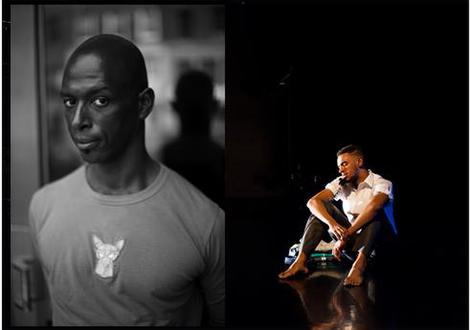
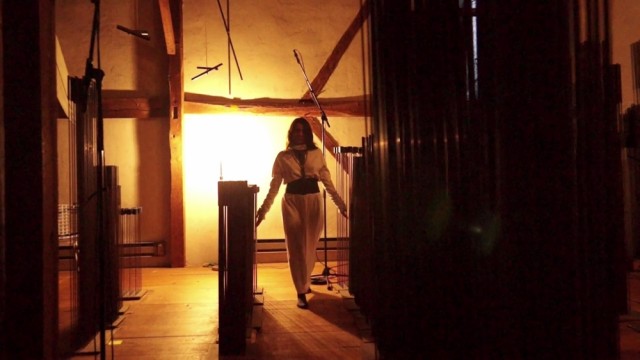
WAATO SiITA will be celebrating its native Senegal at DanceAfrica at BAM this weekend (photo courtesy of the artist)

WAATO SiiTA will be celebrating its native Senegal at DanceAfrica at BAM this weekend (photo courtesy of the artist)

Brooklyn Academy of Music
BAM Howard Gilman Opera House, BAMcafé, BAM Rose Cinemas
30 Lafayette Ave. between Ashland Pl. & St. Felix St.
May 27-30, free – $60
718-636-4100
www.bam.org

For its thirty-ninth season, BAM’s extraordinary DanceAfrica program takes audiences to Senegal, celebrating “Doors of Ancient Futures.” The Memorial Day weekend festivities, under the leadership of new artistic director Abdel R. Salaam (from Forces of Nature) and beloved artistic director emeritus Chuck Davis, feature performances in the Howard Gilman Opera House by the Senegalese troupes Les Ballets de la Renaissance Africaine “WAATO SiiTA” and Compagnie Tenane, Senegalese legend Germaine Acogny (“the Mother of Contemporary African Dance”), and Brooklyn’s own BAM/Restoration DanceAfrica Ensemble, joined by Forces of Nature founding member Dyane Harvey-Salaam and Reverend Nafisa Sharriff. Be on the lookout for both traditional and contemporary movement, including krumping, popping, and breakdancing. There will also be a late-night dance party May 28 in the BAMcafé with DJ Tony Humphries, workshops on May 30 with WAATO SiiTA choreographer Pape Moussa Sonko, a FilmAfrica series consisting of ten films screening in BAM Rose Cinemas (including Nicolas Cissé’s Le Terreau de L’Espoir, Yared Zeleke’s Lamb, and Jason Silverman and Samba Gadjigo’s Sembene!), and the oh-so-fab outdoor DanceAfrica Bazaar (May 28-30), chock-full of vendors selling African products, from clothing and music to jewelry and food.

EVA HESSE

Eva Hesse

The too-brief life and career of artist Eva Hesse is explored in heartbreaking documentary

EVA HESSE (Marcie Begleiter, 2016)
Film Forum
209 West Houston St.
Wednesday, May 25, through Thursday, June 9, 3:15 & 8:35
212-727-8110
www.evahessedoc.com
filmforum.org

“All of my stakes are in my work. I have given up in all else. I do feel I am an artist, and one of the best. I do, deeply,” German artist Eva Hesse explains in Eva Hesse, the debut feature by Marcie Begleiter, which is being brought back by popular demand for two screenings per day from May 25 through June 9 at Film Forum, following runs there and at Cinema Village. Begleiter, who has previously written the play Meditations: Eva Hesse and directed the short film Eva Hesse, Walking the Edge, examines Hesse’s too-brief life and career, as she dealt with feelings of alienation and deep loss through her art. “The power of her purpose was more important than what was going on in her life,” fellow artist and friend Rosie Goldman points out. Born in Germany in 1936, Hesse was determined to be an artist from an early age, first turning to drawing and painting, then to sculpture. The film features narration taken from Hesse’s journals, interviews, and letters between her, her main confidant, Sol LeWitt, and her father, William; Eva is voiced by Selma Blair, LeWitt by Patrick Kennedy, and William by Bob Balaban. Begleiter speaks with such contemporaries of Hesse’s as Richard Serra, Carl Andre, Nancy Holt, Dan Graham, Mike Todd, Roberth Mangold, Sylvia Plimack Mangold, and Hesse’s husband, Tom Doyle, who seems a little too trite given how they eventually parted. She also meets with Whitney curator and Hesse scholar Elisabeth Sussman, photographer Barbara Brown, art writer Lucy Lippard, and Hesse’s sister, Helen Hesse Charash, who sheds light on her sibling’s difficult childhood. But at the center of it all is Hesse’s inspiring art, which challenged the status quo as Expressionism shifted into Minimalism. “I will paint against every rule,” Hesse wrote, and she took that approach with all of her creations, including sculptures made of latex, metal, fiberglass, wire, and other industrial materials. The film firmly sets Hesse within the framework of the tumultuous era in which she worked, the 1960s, a time of great social and artistic change, but she still comes off as a lonely woman who could express herself only through her art. It’s both a sad and exhilarating documentary, a paean to the critical role art can play in life.

CALLY SPOONER: A LECTURE ON FALSE TEARS AND OUTSOURCING

Cally Spooner will deliver a performance lecture on her site-specific installation at the New Museum on May 25 (photo courtesy the New Museum)

Cally Spooner will deliver a performance lecture on her site-specific installation at the New Museum on May 25 (photo courtesy the New Museum)

Who: Cally Spooner
What: Performance lecture
Where: New Museum of Contemporary Art, 235 Bowery at Prince St., 212-219-1222
When: Wednesday, May 25, $15, 7:00
Why: In her New Museum Lobby Gallery installation “On False Tears and Outsourcing,” her first solo institutional presentation in the United States, British multidisciplinary artist Cally Spooner explores issues of communication, power, and the human body, inspired by the scene in Gustave Flaubert’s Madame Bovary in which Emma receives a farewell letter from Rodolphe signed with a fake tear. The site-specific piece is choreographed with and performed by Holly Curran, Maja Ho, Emily McDaniel, Ashton Muniz, José Rivera Jr., Maggie Segale, and Jennifer Tchiakpe in different configurations. Spooner, who has previously staged “He’s in a Great Place! (A film trailer for And You Were Wonderful, On Stage)” at the Tate Modern, “And You Were Wonderful, On Stage” at the National Academy, and “It’s About You” on the High Line, will be at the New Museum on May 25 to deliver a performance lecture in conjunction with the installation.

ON BROADWAY: FROM RENT TO REVOLUTION

on broadway

Rizzoli Bookstore
1133 Broadway at 26th St.
Monday, May 23, RSVP only, 6:30
212-759-2424
rizzolibookstore.com
www.broadwaycares.org

Before word of mouth, before the reviews, before the public sees the cast and sets and hears the dialogue and music, a Broadway show attempts to define itself — and sell tickets — by establishing a look, a unique brand, via posters, billboards, and advertisements. For the last twenty years, SpotCo, originally known as Spot Design, has been at the forefront of this business, working on campaigns for more than three hundred clients, including eight Pulitzer Prize winners and the last eight winners of the Tony for Best Musical. The company’s history is celebrated in the new coffee-table book On Broadway: From Rent to Revolution (Rizzoli, April 2016, $45), which explores SpotCo’s branding of such shows as Rent, Chicago, The Vagina Monologues, Doubt, Avenue Q, Hair, Once, Kinky Boots, Fun Home, and Hamilton. “What separates SpotCo’s oeuvre from what has come before and makes it so astounding is that as a whole it has no recognizable visual style, in a business that was long thought to rely on exactly that, no matter how hackneyed and clichéd,” author and graphic designer extraordinaire Chip Kidd writes in his foreword. “The only thing that unites them all is an unwavering sense of intelligence and the apparent belief that their audience is comprised of people who can think, intuit, and take a chance on something they haven’t quite experienced before.” The book also features text by SpotCo founder Drew Hodges and producers, composers, illustrators, playwrights, artistic directors, photographers, and actors (Harvey Fierstein, Cherry Jones, Lin-Manuel Miranda, Patrick Stewart, Sting) detailing the various campaigns, in addition to an introduction by former company maid David Sedaris. On May 23, the Rizzoli Bookstore will host the annual Broadway Cares / Equity Fights AIDS charity event while also celebrating On Broadway: From Rent to Revolution; the evening will include a red carpet entrance for numerous stars of the Great White Way, an auction of original art, and more.

GLIMMERGLASS FESTIVAL AT NYBG: AN EVENING OF WORLD-CLASS OPERA

The Glimmerglass Opera will preview 2016 summer festival at the New York Botanical Garden on May 26

The Glimmerglass Opera will preview 2016 summer festival at the New York Botanical Garden on May 26 (photo of 2015 Glimmerglass production of Mozart’s THE MAGIC FLUTE by Karli Cadel/The Glimmerglass Festival)

The New York Botanical Garden
2900 Southern Blvd., Bronx
Thursday, May 26, $35, 6:00
718-817-8700
www.nybg.org
glimmerglass.org

Opera in the Bronx? On May 26, as part of its 125th anniversary, the New York Botanical Garden will offer a sneak peek at this summer’s Glimmerglass Festival at a special one-night-only program. The evening begins at 6:00 with a viewing of the gallery section of the new exhibition “Impressionism: American Gardens on Canvas,” which features gardens curated by Francisca Coelho in the style of works by Childe Hassam, John Singer Sargent, and other artists, along with Impressionist paintings and sculptures. At 7:00 in Ross Hall, soprano Alison King, mezzo-soprano Zoie Reams, tenor Chaz’men Williams-Ali, baritone Johnathan McCullough, and pianist Kevin Miller will perform excerpts from a new Belle Époque production of Giacomo Puccini’s La bohème, Gioachino Rossini and Giovanni Gherardini’s The Thieving Magpie, Stephen Sondheim and Hugh Wheeler’s Sweeney Todd, and Robert Ward’s Pulitzer Prize-winning adaptation of Arthur Miller’s The Crucible, as well as past favorites, presented by Glimmerglass artistic and general director Francesca Zambello and the Young Artists Program. Following the performance, ticket holders are invited to the Enid A. Haupt Conservatory to see the garden part of the Impressionism exhibition. The Glimmerglass Festival takes place July 8 to August 27 in Cooperstown and also includes Laura Karpman and Kelley Rourke’s new Youth Opera: Wilde Tales, discussions with New York State attorney general Eric Schneiderman and journalist Jeffrey Toobin on The Crucible, Sondheim on Sweeney Todd, and Supreme Court Justice and opera lover Ruth Bader Ginsburg in addition to master classes, lounges, preview brunches, and more.

THE ART OF DRAWING: A CONVERSATION WITH ERIC FISCHL

Ernst Ludwig Kirchner, “Street Life in Dresden,” lithograph on heavy cream Japan paper, 1908

Ernst Ludwig Kirchner, “Street Life in Dresden,” lithograph on heavy cream Japan paper, 1908

Who: Eric Fischl and Jane Kallir
What: Discussion about the work of Ernst Ludwig Kirchner and the evolution of drawing over the last century
Where: Galerie St. Etienne, 24 West 57th St. between Fifth & Sixth Aves., 212-245-6734
When: Wednesday, May 18, free, 6:30
Why: “Ecstatic drawing is the foundation of the new art,” German Expressionist painter and Die Brücke cofounder Ernst Ludwig Kirchner said in 1919. On May 18, New York City native and painter and sculptor Eric Fischl will be at Galerie St. Etienne in Midtown to discuss “The Art of Drawing” with gallery owner Jane Kallir, held in conjunction with the exhibition “Ernst Ludwig Kirchner: Featuring Watercolors and Drawings from the Robert Lehman Collection,” which continues through July 1. The exhibition comprises more than fifty pen-and-ink drawings, woodcuts, watercolors, etchings, and lithographs by Kirchner, who committed suicide in 1938 at the age of fifty-eight, shortly after the Nazis detained or destroyed more than six hundred of his works. “Just as he preferred moving models, Kirchner himself moved as he drew, changing position or walking through town with a sketchbook in hand. He drew every day and nearly everywhere he went, filling at least 180 sketchbooks, over 12,000 sheets,” Kallir writes in her extensive exhibition essay. “Drawing is the key to Kirchner’s art, and his sketches are the key to his drawings. But the sketches should not be viewed as studies per se. Rather, the sketches birthed new forms, conceived in the throes of ‘ecstatic’ experience, that ‘crystallized and hardened’ in subsequent pictures.” Fischl, whose work includes such series as “Art Fair,” “Corrida in Ronda,” “The Travel of Romance,” “Ten Breaths,” and “The Bed, the Chair . . .” in addition to the MTA mosaic “The Garden of Circus Delights” in Penn Station, will lend insight into his own creative process as well. Free advance reservations are not required but recommended and can be made here.

WANDERLUST: SLEEPWALKER BY TONY MATELLI

(photo by twi-ny/mdr)

A group of women pose with Tony Matelli’s “Sleepwalker” on the High Line (photo by twi-ny/mdr)

The High Line
Eleventh Ave. from 34th St. to Gansevoort St.
“Wanderlust” through March 17, 2017
Open daily, free, 7:00 am – 11:00 pm
www.thehighline.org
sleepwalker high line slide show

It’s all about context. In June 2014, there was a furor at Wellesley when students at the all-woman college protested against the installation of Tony Matelli’s “Sleepwalker” sculpture, a lifelike rendering of a bald white man in nothing but his tighty-whities, eyes closed and arms outstretched. While he is meant to be in the midst of harmless somnambulation, hundreds of women signed an online petition that claimed that the work “has become a source of apprehension, fear, and triggering thoughts regarding sexual assault for some members of our campus community”; others playfully mocked the work, creating virtual images of it dressed in school T-shirts and the like. Matelli responded by telling CBS Boston, “I think that these people are misconstruing this work. I think they’re seeing something in this work that isn’t there. But who am I to say how people should react to this?” Ultimately, the statue had to be removed after being spray-painted and subsequently broken in protest. A few months later, I encountered a different casting of “Sleepwalker” on the rooftop deck of the Marlborough Chelsea, where it was just him and me; at the time, I wrote that I found it to be “intriguing and humorous, not threatening at all, perhaps even symbolic of an America that often seems to be half asleep.” Of course, I’m not a college-age woman, and the sculpture is not by the side of the road in some woods.

Tony Matelli’s “Sleepwalker” gets a hug from a happy stranger on the High Line (photo by twi-ny/mdr)

Tony Matelli’s “Sleepwalker” gets a hug from a happy stranger on the High Line (photo by twi-ny/mdr)

“Sleepwalker” has now made its way to the High Line, where it awaits visitors by the Fourteenth St. entrance as part of the group show “Wanderlust.” On a recent Saturday afternoon, I watched as people huddled around it, many wondering if it were an actual real person, waiting for him to make a sudden movement. Kids reached out to touch a hand, a young man sniffed its head, and tourists posed in silly positions with the work. There were hugs, funny faces, selfies, and an abundance of smiles after initial hesitation. At Wellesley, “Sleepwalker” was steeped in controversy. At the Marlborough Chelsea, it was somewhat of a lonely, pathetic creature. And now, on the High Line, one of the city’s most attractive destinations, it has become a novelty; there was even an official photo contest on April 23 “inviting visitors to the park to post their most creative photo inspired by Tony Matelli’s sculpture ‘Sleepwalker.’” It’s a far cry from the spray-painted version surrounded by police tape on the Wellesley campus. Art affects people in different ways, and “Sleepwalker” is a stunning example of that. It also says a lot about where we are as a culture in the twenty-first century.