this week in art

PANORAMA NYC FOOD

panorama food

Panorama: Music Art Technology
Randall’s Island Park
July 22-24, $125 per day ($230 VIP), $369 for three-day pass ($699 VIP), ferry $25 per day, shuttle $30 per day
www.panorama.nyc

Once upon a time, the food at all-day music festivals was little more than hot dogs, burgers, cotton candy, soda, and pretzels. But the foodie revolution has changed all that, and now festivals of all genres rely on artisinal food trucks and booths to feed hungry concertgoers. Panorama NYC is right on top of the trend with some of the best food vendors in the five boroughs. Taking place July 22-24 on Randall’s Island with such performers as Arcade Fire, Sia, LCD Soundsystem, the National, Kendrick Lamar, Alabama Shakes, and Sufjan Stevens, Panorama also boasts a pretty impressive gourmet lineup of nearly four dozen eateries. Among the food purveyors, with gluten-free and vegan options available, of course, are American Cut, Arancini Bros., Asia Dog, Bareburger, the Beatrice Inn, Dough, Khe-Yo, Landhaus, MatchaBar, Melt Bakery, the NoMad, Pasquale Jones, Roberta’s, Sushi Azabu, Tica’s Tacos, and Waffle de Lys. Although you don’t go to such festivals as Panorama for the food, it’s a lot more fun when you can chow down on some quality eats and drinks while watching eleven hours of music in the hot sun.

EDGAR DEGAS: A STRANGE NEW BEAUTY

Edgar Degas, Frieze of Dancers, oil on fabric, ca. 1895, (the Cleveland Museum of Art, gift of the Hanna Fund)

Edgar Degas, “Frieze of Dancers,” oil on canvas, ca. 1895, (the Cleveland Museum of Art, gift of the Hanna Fund)

Museum of Modern Art
Floor 6, Special Exhibitions Gallery North
11 West 53rd St. between Fifth & Sixth Aves.
Daily through Sunday, July 24, $25
212-708-9400
www.moma.org

The splendidly curated MoMA exhibit “Edgar Degas: A Strange New Beauty” reveals the French artist’s dazzling, experimental work with monotypes, manipulating their tools and processes as if he were using a predigital, hands-on version of Photoshop. Born in Paris in 1834, Hilaire-Germain-Edgar Degas discovered the monotype technique in the mid-1870s, allowing him to expand his creativity and do things that no one else had done before. He “is no longer a friend, a man, an artist! He’s a zinc or copper plate blackened with printer’s ink, and plate and man are flattened together by his printing press whose mechanism has swallowed him completely!” etcher Marcellin Desboutin wrote in an 1876 letter, recounted in curator Jodi Hauptman’s introduction in the exhibition catalog. “The man’s crazes are out of this world. He now is in the metallurgic phase of reproducing his drawings with a roller and is running all over Paris, in the heat wave — trying to find the legion of specialists who will realize his obsession. He is a real poem! He talks only of metallurgists, lead casters, lithographers, planishers!” Degas indeed got his hands dirty, smudging ink, scratching plates, and painting over prints in a whirlwind of artistic fervor. Degas covered many of the same topics he had in his oil paintings and drawings, but employing etching, drypoint, and aquatint gave him a virtual freedom that he took full advantage of. In “Actresses in Their Dressing Rooms,” state 1 of 5 is gray and shady, the characters and interior harder to define than in the fifth state. One of two printings of “An Admirer in the Corridor” is like a ghostly version of the other. The monotype-on-paper “Ironing Women” is cleverly paired with the larger oil on canvas “A Woman Ironing,” capturing Degas’s differing takes on a domestic scene. But it’s not only the multiples that highlight Degas’s process. More abstract works such as “The River” and “Factory Smoke” are filled with a lovely mystery. Other subjects that Degas investigates include women in baths and brothels, putting on stockings, and reclining in bed.

Edgar Degas

Edgar Degas, “Autumn Landscape,” monotype oil on paper, 1890 (private collection)

Perhaps the biggest surprise is the series of landscapes from the 1890s, stunning monotypes of roads, mountains, and the moonrise that range from figurative to abstract. Of course, it is Degas’s love of performance, particularly of singers and dancers, that stands out. The same trio of dancers is the focus of “Ballet Scene” and “Three Ballet Dancers,” but in the latter Degas has drawn in pastel over the monotype, adding sparkling pinks. The black-and-white “Café Singer” is almost like a negative image of the colorful “Singers on the Stage”; in the pair, one can also see Degas’s passion for light as gas lamps became electric bulbs. Be sure to grab one of the available magnifying glasses to marvel in every little detail. Degas’s obsession with multiple images also found its way into his oil paintings and pastels, as seen in “Frieze of Dancers” and two versions of “Dancer Adjusting Her Slipper.” It’s all a tour de force that delights in this lesser-known aspect of Degas’s oeuvre. “He who is such an anarchist! In art, of course, and without knowing it!” Camille Pissarro wrote in an 1891 letter to his son referenced in Richard Kendall’s catalog essay, “An Anarchist in Art: Degas and the Monotype.” Anarchy may never have looked so good. The exhibition, named after a quote about Degas’s work from poet Stéphane Mallarmé, is supplemented with several of Degas’s sketchbooks in addition to etchings by his friend and fellow artist Ludovic Napoléon Lepic; the show continues through July 24, with the participatory program “Endless Repetition” led by Elisabeth Bardt-Pellerin on July 19 and 21 at 11:30.

TOM SACHS: TEA CEREMONY

(photo by twi-ny/mdr)

“Tom Sachs: Tea Ceremony” is first solo show not by Isamu Noguchi in thirty-year history of museum (photo by twi-ny/mdr)

Noguchi Museum
9-01 33rd Rd. at Vernon Blvd.
Wednesday – Sunday through July 24, $10 (free all day Fridays)
718-204-7088
www.noguchi.org
tomsachs.com

“In Space Program, we dampen our destabilizing heart-brain feedback system by getting outside of ourselves in service to others through an ancient process called tea ceremony,” narrator Pat Manocchia says in Van Neistat’s 2015 film A Space Program, which details Tom Sachs’s Mars expedition based on his 2012 immersive installation in the Park Avenue Armory. Once on Mars, Lt. Sam Ratanarat and Cmdr. Mary Eannarino reconnect with their earthly ways by sitting down for some tea. That tea ceremony, or chanoyu, is the subject of its own exhibition at the Noguchi Museum in Long Island City, where “Tom Sachs: Tea Ceremony” continues through July 24. DIY bricolage artist Sachs’s work is structured around process, ritual, and technique, using found objects and items that can be bought in any hardware store or rummaged from the street, including plywood, glue, nails, Con Ed barriers, and latex paint. The Noguchi Museum show features several rooms of works both associated with the tea ceremony directly and representative of Sachs’s oeuvre as a whole; part of the museum’s thirtieth anniversary, it is the first solo show by an artist other than Isamu Noguchi to be mounted there. “Sachs, like Isamu Noguchi, is a cultural synthesizer committed to the traditional American dream of a pluralistic, crazy quilt society,” senior curator Dakin Hart writes in the Tea Manual that serves as a kind of exhibition catalog. “Both believe that our best futures have at least a foot in the past; that technology should affirm craft; that the most sustaining serenities are tinged with chaos; that polarities like East and West can exist harmoniously in productively ambiguous relationships; that the conceptual and the formal are not hand and glove but earth and atmosphere; and that the balkanization of creativity into categories such as ‘art’ and ‘design’ is nonsense.”

(photo by Genevieve Hanson)

Tom Sachs works on “Tea Ceremony” at Noguchi Museum (photo by Genevieve Hanson)

“Tom Sachs: Tea Ceremony” is divided into such rooms as “Tea Garden,” “Sachs’ Culture of Tea,” “The Prehistory of Tea in Space,” and “A Capsule Retrospective,” with works arranged much like Noguchi’s have been since the museum opened in 1985, largely organized so visitors can walk around the sculptures on the floor. The centerpiece is the Tea Garden, which features an entrance gate, waiting arbors, a hibachi, a bonsai tree, a stupa, a koi pond, an incinerator toilet, and a tea house with a Japanese scroll painting of Muhammad Ali among other objects, in addition to several sculptures by Noguchi. During the run of the exhibition, the museum hosted a handful of live ceremonies with tea expert Johnny Fogg and Sachs, for whom this is no mere lark. “Mourning the loss of spirituality in our capitalist environment, we admire Tea’s integration of humility, prosperity, and spirituality. In the studio, it serves to sanctify our ritual of bricolage,” Sachs writes in the manual. “Despite the elitism, there are many beautiful, transcendental elements in the formality of Tea. Its core values: purity, harmony, tranquility, and respect ring true across time and space.” Of course, this being Sachs, his vast sense of humor is also on display, though always touched with a genuine sincerity and, at times, playful political statements. A tool cabinet holds a fire extinguisher, bottles of vodka topped by Jimi Hendrix heads, and a knife labeled “Beelzebub.” A Yoda Pez dispenser stands like a Buddha surrounded by the candy. “The Eleven Satanic Rules of Earth” advises that “if a guest in your lair annoys you, treat them cruelly and without mercy.” A pair of pieces reference Star Wars and Star Trek, and a white foamcore McDonald’s mop bucket, perhaps the most ergonomically functional example of that object ever made, resides nobly in a corner. It’s all an enchanting combination of fun and reverence, of veneration and mirth. But nothing is included merely for the sake of being included. “I don’t look at art as something separate and sacrosanct. It’s part of usefulness,” states the eighth of ten reasons listed in “Why ‘Tom Sachs: Tea Ceremony’ at the Noguchi Museum? A Formal Proof in Noguchi’s Words.” An expanded edition of the exhibition will travel to the Yerba Buena Center for the Arts in San Francisco in September, where Sachs will also debut “Space Program: Europa,” a bricolage journey to Jupiter’s icy moon. And you can catch “Tom Sachs: Boombox Retrospective, 1999-2016” at the Brooklyn Museum through August 14.

BRONX MUSEUM SUMMER SEASON OPEN HOUSE

David Thomson and Jonathan Gonzalez will perform solos as part of summer season open house at Bronx Museum

David Thomson and Jonathan Gonzalez will perform solos as part of summer season open house at Bronx Museum

Bronx Museum of the Arts
1040 Grand Concourse
Wednesday, July 13, free, 6:00 – 8:00
718-681-6000
www.bronxmuseum.org

The Bronx Museum of the Arts’ annual summer open house takes place on July 13 at 6:00, celebrating not only the season but the opening of three new exhibitions. At 6:30, BAX/Dancing While Black Fellow Jonathan Gonzalez will perform Arthur Aviles’s In the Garden of Mi Amigo El id in the galleries, followed at 7:15 by a solo work by artist-choreographer and Bronx native David Thomson in the North Wing on the second floor. Attendees will also get a sneak peek at the new exhibitions “Art AIDS America,” “CAZA: Rochele Gomez, Margaret Lee, Alejandra Seeber,” and “En Foco Presents Mask: Photographs by Frank Gimpaya,” with member tours of the first at 5:00 and the third at 5:30. In addition, the Keith Haring Foundation – Project Street Beat Mobile Medical Unit of Planned Parenthood of New York City will be on hand. (On Saturday, July 16, at 3:00, Robb Hernández, PhD, and Joey Terrill will lead a free public tour of “Art AIDS in America” sponsored by AIDS Center of Queens County and AIDS Healthcare Foundation.)

THE RUBIN BLOCK PARTY

Rubin Block Party

Rubin Block Party will have Nepalese-inspired theme this year (photo courtesy Rubin Museum of Art)

Rubin Museum of Art
West 17th St. between Sixth & Seventh Aves.
Sunday, July 17, free (including free museum admission all day), 1:00 – 4:00
rubinmuseum.org

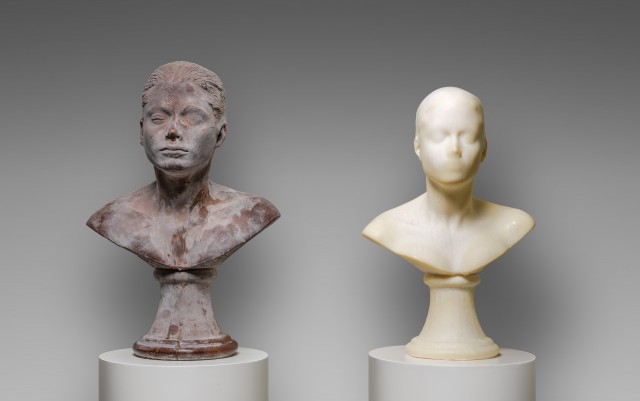
Block parties are a type of social ritual, so it is rather apropos that the Rubin Museum of Art’s annual summer block party, taking place on July 17 on Seventeenth St., is being held in conjunction with the exhibition “Nepalese Seasons: Rain and Ritual,” which runs through March of next year. Hopefully it won’t rain between 1:00 and 4:00, when the museum will host Nepalese-inspired music and dance by Dikyi, Sonam Rinzin with Brooklyn Raga Massive, and Kabina Maharjan Singh and her son; educational activities with KathaSatha, Walung Community of North America, Yulha Fund (“Voice of the Himalayas”), and Mero Gaon; traditional Nepali dress demonstrations with Adhikaar; interactive weaving demonstrations with Grassroots Movement in Nepal; yoga with Susan Verde; art workshops in which participants can make rainsticks, frog masks, pinwheels, prayer flags, flower garlands, and hybrid animals; an interactive “Karma Chain” weather ritual; henna tattoos; Himalayan food from Café Serai; ice cream from Van Leeuwen; and more. In addition, the museum will be open for free all day long (11:00 am – 6:00 pm), so you can check out such exhibits as “Gateway to Himalayan Art,” “Masterworks of Himalayan Art,” “Genesis Breyer P-Orridge,” and “Sacred Spaces” in addition to “Nepalese Seasons: Rain and Ritual,” with museum tours and gallery searches for children. Namaste!

TICKET ALERT: PANORAMA NYC

panorama

Who: Arcade Fire, Alabama Shakes, Major Lazer, Kendrick Lamar, the National, Sufjan Stevens, LCD Soundsystem, Sia, A$AP Rocky, many more
What: Panorama NYC music and art festival
Where: Randall’s Island Park
When: July 22-24, $125 per day ($230 VIP), $369 for three-day pass ($699 VIP), ferry $25 per day, shuttle $30 per day
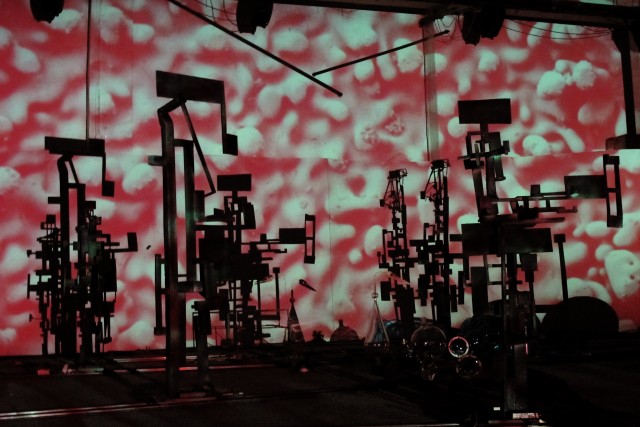
Why: Goldenvoice, the promoters behind such festivals as Coachella, Stagecoach, FYF, Hangout, Firefly, and Splash House as well as 2008’s All Points West at Liberty State Park, is giving it another go in the metropolitan area this summer with Panorama NYC, a three-day fest taking place on Randall’s Island July 22-24. The innovative Panorama Stage, which features a wraparound HD video screen that is 30 feet high and 170 feet long, will host such bands as Arcade Fire, Alabama Shakes, Major Lazer, and Silversun Pickups on Friday, Kendrick Lamar, the National, Blood Orange, and Foals on Saturday, and LCD Soundsystem, Sia, Run the Jewels, and Kurt Vile & the Violators on Sunday. Meanwhile, the Pavilion stage boasts such groups as Schoolboy Q, FKA Twigs, and Broken Social Scene on Friday, Sufjan Stevens, Flosstradamus, and Daughter on Saturday, and A$AP Rocky, Grace Potter, and SZA on Sunday. At the more intimate Parlor you can catch DJ Khaled, Netsky, and Madlib on Friday, Kaytranada, Alunageorge, and Horse Meat Disco on Saturday, and Classixx, Tourist, and Holy Ghost! on Sunday. (Complete set times are below.) The festival also features the Despacio dance floor, created by James Murphy of LCD Soundsystem and David and Stephen Dewaele of Soulwax with recording engineer John Klett. In addition, the Verge will be presenting the Lab, a seventy-foot video dome and projection Façade that will house seven multimedia digital art experiences, consisting of Emilie Baltz and Philip Sierzega’s “Cotton Candy Theremin,” Future Wife’s “Visceral Recess,” Dave & Gabe’s “Hyper Thread,” Gabriel Pulecio AKA lustix’s “Infinite Wall,” Mountain Gods’ “Giant Gestures,” Red Paper Heart’s “The Art of Pinball,” and Zachary Lieberman’s “Reflection Study.” Keep watching twi-ny for more coverage of Panorama as the big weekend approaches.

panorama friday

panorama saturday

panorama sunday

LIZZI BOUGATSOS: THE LAST HOPE

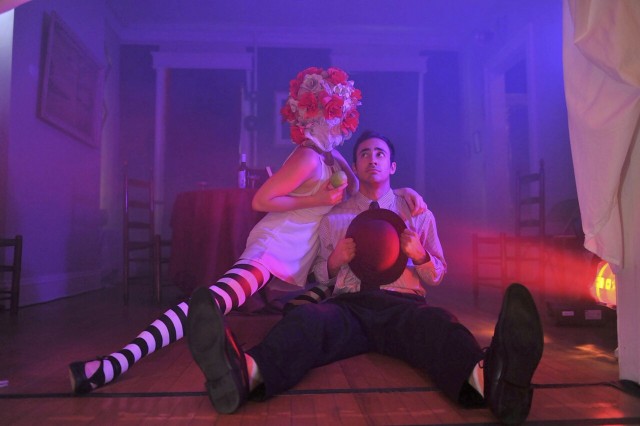
Lizzie Bougatsos will present a site-specific performance at MAD on July 8 (photo by Brian DeGraw)

Lizzi Bougatsos will present a site-specific performance at MAD on July 8 (photo by Brian DeGraw)

MADactivates: PERFORMANCE AT MAD
Museum of Arts and Design
2 Columbus Circle at 58th St. & Eighth Ave.
Friday, July 8, $20, 7:00
212-299-7777
madmuseum.org

Queens native Lizzi Bougatsos, leader of Gang Gang Dance, will be at the Museum of Arts and Design on July 8, giving a specially commissioned performance in conjunction with the exhibition “Atmosphere for Enjoyment: Harry Bertoia’s Environment for Sound.” Bertoia, who died in 1978, was a jewelry and chair designer who also created sounding sculptures that he housed in his Pennsylvania barn. For the exhibition, Bougatsos, who performed “ENERGY CHANCE” at MoMA in 2014 as part of “John Cage: There Will Never Be Silence,” created a sound and video recording at the Sonambient Barn with Brian DeGraw for the show, “We Echo Now His Love”; on Friday night, she will enact the site-specific performance “The Last Hope” at MAD, interacting with works in the exhibit. On July 15, Robert Aiki Aubrey Lowe (aka Lichens), who made “Spell Casting” at the barn, will perform “Levitation Praxis Pt. 4” at MAD.