
Postcards from the Edge benefit raises money for Visual AIDS by selling artworks for only $85
Sikkema Jenkins
530 West 22nd St. between Tenth & Eleventh Aves.
January 25 preview party: $85 (includes two raffle tickets), 5:00 – 8:00
January 26-27, suggested admission $5
www.visualaids.or
One of the most exciting art fundraisers of the year is also among the most affordable. The fifteenth annual Visual AIDS Postcards from the Edge benefit sale takes place January 26-27 at Sikkema Jenkins in Chelsea, where more than 1,300 postcard-size works of art will be available for a mere $85 each. They are by emerging and established artists, including some of the most famous in the world, but the works are displayed anonymously; you find out who made a specific piece only after you pay for it. So you have two main choices: Select the work you like best, or join in the guessing game and try to grab one that you think might be by a major artist and be worth far more than you paid for it. The sale begins Friday night with a preview party, with the $85 admission fee getting you an exclusive advance look at the entire exhibition (so you know just where to go the next day), along with a silent auction and two raffle tickets. (The grand prize is first pick of the postcards Saturday morning.) In order to get in, you might have to step over people who are camping out overnight for Saturday’s sale, where admission is a suggested donation of five bucks and you get a free fifth postcard when you buy four. There should still be some left over for Sunday as well, when the purchase of two earns you a complimentary third. The impressive list of participating artists includes Ed Ruscha, Kara Walker, John Baldessari, Ann Hamilton, Bill Viola, Marilyn Minter, Arturo Herrera, Catherine Opie, Lawrence Weiner, Kiki Smith, Christian Marclay, Moyra Davey, Donald Baechler, John Waters, Rirkrit Tiravanija, Julie Mehrehtu, Joel Shapiro, Patty Chang, Ross Bleckner, Nancy Burson, William Pope.L, Kim Beck, Jack Pierson, Vito Acconci, William Wegman, Fred Wilson, and Will Barnet. All proceeds go to Visual AIDS, whose mission for twenty-five years has been to “utilize art to fight AIDS by provoking dialogue, supporting HIV+ artists, and preserving a legacy, because AIDS is not over.”



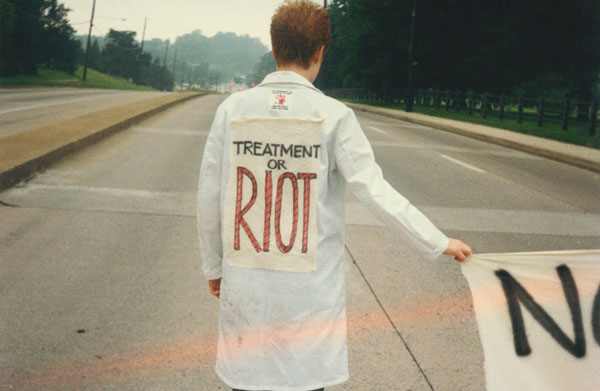
 Contemporary activists stand to learn a lot from the gripping documentary How to Survive a Plague. For his directorial debut, longtime journalist David France, one of the first reporters to cover the AIDS crisis that began in the early 1980s, scoured through more than seven hundred hours of mostly never-before-seen archival footage and home movies of protests, meetings, public actions, and other elements of the concerted effort to get politicians and the pharmaceutical industry to recognize the growing health epidemic and do something as the death toll quickly rose into the millions. Focusing on radical groups ACT UP and TAG (Treatment Action Group), France follows such activist leaders as Peter Staley, Mark Harrington, Larry Kramer, Bob Rafsky, and Dr. Iris Long as they attack the policies of President George H. W. Bush, famously heckle presidential candidate Bill Clinton, and battle to get drug companies to create affordable, effective AIDS medicine, all while continuing to bury loved ones in both public and private ceremonies. France includes new interviews with many key activists who reveal surprising details about the movement, providing a sort of fight-the-power primer about how to get things done. The film also shines a light on lesser-known heroes, several filled with anger and rage, others much calmer, who fought through tremendous adversity to make a difference and ultimately save millions of lives. How to Survive a Plague is screening at the Film Society of Lincoln Center through January 24, celebrating its Oscar nomination for Best Documentary Feature.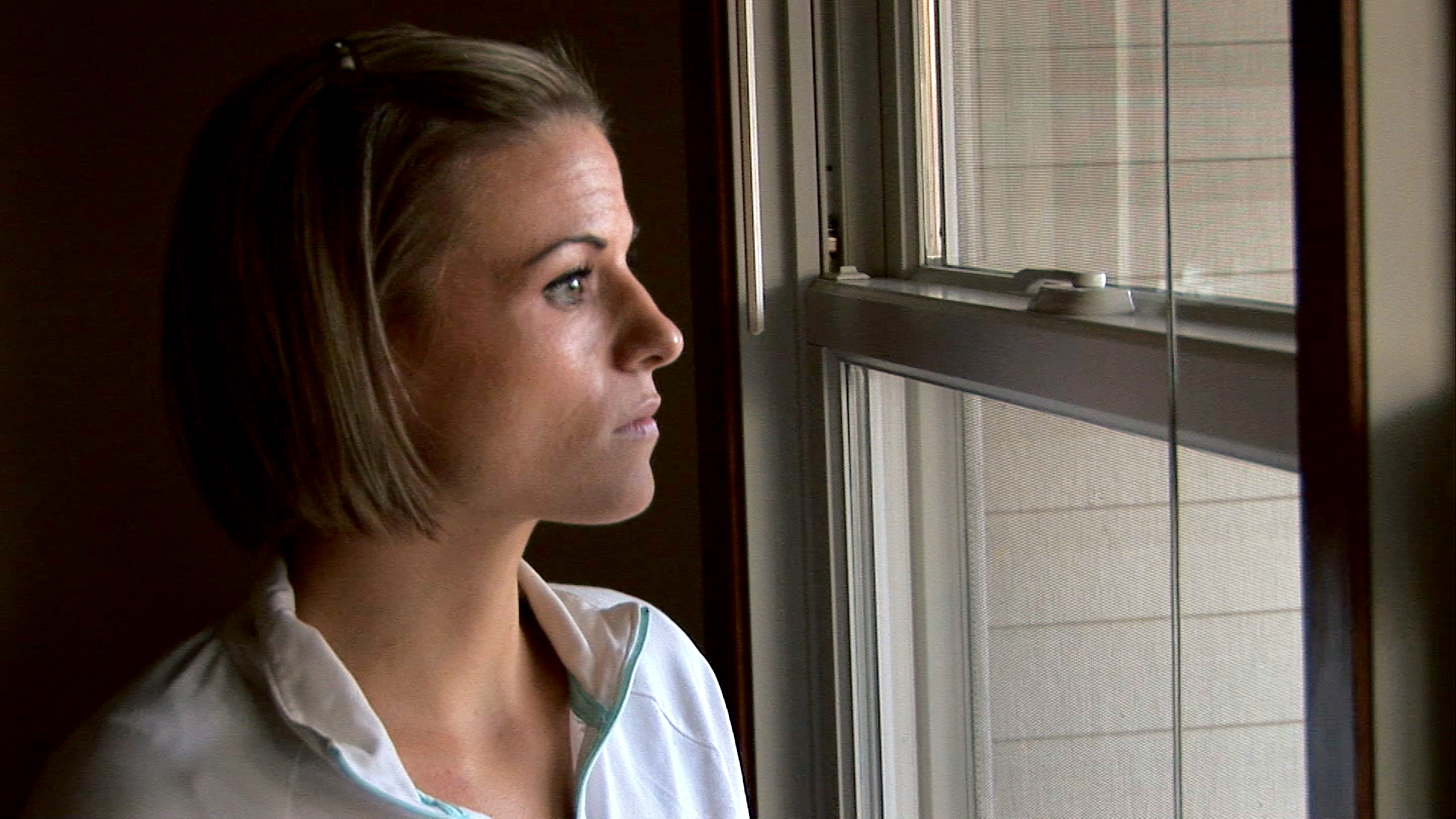
 Kirby Dick’s The Invisible War is one of the bravest, most explosive investigative documentaries you’re ever likely to see. Dick (This Film Is Not Yet Rated) busts open the military’s dirty little secret, revealing that episodes of horrific sexual abuse such as the Tailhook scandal are not an aberration but a prime example of a rape epidemic that seems to an accepted part of military culture. Dick speaks with many women and one man who share their incredible stories, describing in often graphic detail the sexual abuse they suffered, then faced further abuse when they reported what had happened. Their superiors, some of whom were the rapists themselves, either looked the other way, laughed off their allegations as no big deal, or threatened the victims’ careers. Dick includes remarkable Defense Department statistics — the government admits that approximately one out of every five female soldiers suffers sexual abuse and that there were nineteen thousand violent sex crimes in 2010 alone — even as such military officials as Dr. Kaye Whitley, Rear Admiral Anthony Kurta, and Brigadier General Mary Kay Hertog make absurd claims that they are satisfied with the way they are handling the alarming trend. The central figure in the film is Kori Cioca, a former member of the Coast Guard whose face was broken when she was raped by a superior and now keeps getting denied necessary medical services from the VA. Such courageous women as USAF Airman 1st Class Jessica Hinves, former Marine Officer Ariana Klay, USN veteran Trina McDonald, USMC Lieutenant Elle Helmer, USN Lieutenant Paula Coughlin, and even Special Agent Myla Haider of the Army Criminal Investigation Command also open up about the physical and psychological damage the abuse has left on their lives and careers. Inspired by Helen Benedict’s 2007 Salon.com article “The Private War of Women Soldiers,” Dick and producer Amy Ziering (The Memory Thief) have presented a searing indictment of an endemic military culture that has to come to an end, and fast. The Invisible War, which earned Dick and Ziering last year’s Nestor Almendros Award for courage in filmmaking at the Human Rights Watch Film Festival at Lincoln Center, is back at the Elinor Bunin Munroe Film Center for a brief run through January 24, celebrating its Oscar nomination for Best Documentary Feature.