twi-ny recommended events

MARTHA GRAHAM DANCE COMPANY: MYTH AND TRANSFORMATION

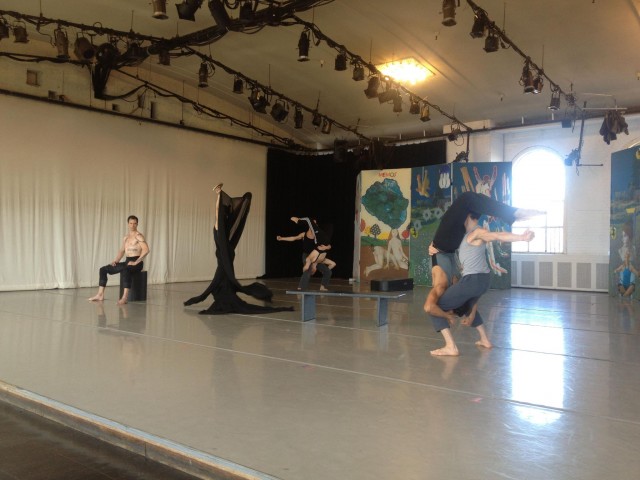
The Martha Graham Dance Company rehearses for its Joyce season, which runs February 20 - March 3

The Martha Graham Dance Company rehearses for its Joyce season, which runs February 20 – March 3

Joyce Theater
175 Eighth Ave. at 19th St.
February 20 – March 3, $10-$59
212-645-2904
www.joyce.org
www.marthagraham.org

It’s been nearly twenty-two years since legendary dancer and choreographer Martha Graham, one of the most influential people in the history of American modern dance, passed away, in 1991 at the age of ninety-six, but her company has continued her vast legacy with both old and new pieces that fit her vision. “A dance reveals the spirit of the country in which it takes root,” she wrote in 1937. “No sooner does it fail to do this than it loses its integrity and significance.” The Martha Graham Dance Company, under the artistic direction of Janet Eilber since 2005, will be at the Joyce from February 20 through March 3, presenting three programs called “Myth and Transformation,” which examine aspects of contemporary storytelling through movement. Program A pairs two Greek myths retold in provocative ways: Graham’s 1962 sexually driven Phaedra, with music by Robert Starer and sculptural décor by Isamu Noguchi, and 2002’s The Show (Achilles Heels), a dance-theater piece commissioned by the White Oak Dance Project and created, directed, and choreographed by Richard Move, with a score by Arto Lindsay, songs by Debbie Harry, and scenic art by Nicole Eisenman. Program B features three postwar Graham pieces that also relate Greek tales, beginning with 1946’s Cave of the Heart, inspired by the story of Medea and featuring music by Samuel Barber; 1947’s Night Journey, which examines the Oedipus myth from the point of view of Jocasta, with music by William Schumann; and a new, spare version of that same year’s Errand into the Maze, loosely based on the Theseus myth, with music by Gian Carlo Menotti, directed by Luca Veggetti and performed by Miki Orihara and others without the usual costumes and set design, as those elements were destroyed by Hurricane Sandy. Program C includes Cave of the Heart; the New York premiere of Doug Varone’s Lamentation Variation, set to Ravel, along with previous Variations by Yvonne Rainer (2012) and Bulareyaung Pagarlava (2009); the world premiere of Veggetti’s From the Grammar of Dreams, with music by Kaija Saariaho and text from Sylvia Plath; and an excerpt from Graham’s 1948 ensemble piece Diversion of Angels, with music by Norman Dello Joio and introductory film by Peter Sparling.

There will be several special events during the season, including a gala on February 21 featuring the “Moon” duet from Graham’s Canticle for Innocent Comedians and The Show (Achilles Heels), introduced by Patricia Field and with live musical accompaniment by Harry; a dance chat following the February 22 performance; a University Partner Showcase on February 23 with Graham classics performed by college and high school students; a preshow talk on February 28 led by Susan Thomasson; and the Fall and Recovery benefit on February 26, which will raise funds to help restore the costumes and sets destroyed by the hurricane, consisting of From the Grammar of Dreams; “Moon”; an excerpt from The Show (Achilles Heels); excerpts from Rust, a work-in-progress by Nacho Duato with music by Arvo Pärt; Graham’s 1935 Panorama performed by three dozen local high school students; and the 1935 Graham solo Imperial Gesture, reimagined by Kim Jones. Among the participants at the benefit will be Wendy Whelan and Ask la Cour (performing an excerpt from Christopher Wheeldon’s After the Rain), Michelle Dorrance (improvisation), Maria Kowroski and Martin Harvey (George Balanchine’s Slaughter on Tenth Avenue), Irina Dvorovenko (Mikhail Fokine’s Dying Swan), David Neumann (DOSE), and Francesca Harper (TBA).

STRANGER THAN FICTION: A MAN VANISHES

A MAN VANISHES (NINGEN JŌHATSU) (Shôhei Imamaura, 1967)
IFC Center
323 Sixth Ave. at West Third St.
Tuesday, February 19, $16, 8:00
Series runs Tuesday nights at 8:00 through February 26
212-924-7771
www.ifccenter.com

Japanese filmmaker Shohei Imamura blurs the lines between reality and fiction in his cinéma vérité masterpiece, A Man Vanishes. The 1967 black-and-white documentary delves into one of Japan’s annual multitude of missing persons cases, this time investigating the mysterious disappearance of Tadashi Ôshima, a plastics wholesaler who vanished during a business trip. Imamura sends out actor Shigeru Tsuyuguchi (The Insect Woman, Intentions of Murder) to conduct interviews with Ôshima’s fiancée, Yoshie Hayakawa, who develops an interest in her inquisitor; Yoshie’s sister, Sayo, who quickly finds herself on the defensive; business associates who talk about Ôshima’s drinking, womanizing, and embezzling from the company; and several people who remember seeing Sayo together with Ôshima, something she adamantly denies despite building evidence. Throughout the 130-minute work, the film references itself as being a film, culminating in Imamura’s pulling the rug out from under viewers and calling everything they’ve seen into question in an unforgettable moment that breaks down the fourth wall and explodes the very nature of truth and cinematic storytelling itself. It also explores individual identity and just how much one really knows those closest to them. Originally supposed to be the first of a twenty-four-part series exploring two dozen missing-persons cases, A Man Vanishes ended up being such a challenging undertaking that it was the only one Imamura made, but what a film it is; it would be more than a decade before he returned to fiction, with 1979’s Vengeance Is Mine, which led the way to a spectacular final two decades that also included The Ballad of Narayama, Eijanaika, Black Rain, The Eel, Dr. Akagi, and Warm Water Under a Red Bridge. The amazing A Man Vanishes is screening February 19 at the IFC Center as part of the Tuesday-night series “Stranger than Fiction,” followed by a Q&A with documentarian Amir Bar-Lev (The Tillman Story, Fighter) and John Walter (How to Draw a Bunny).

FELIX DE WELDON: IWO JIMA MONUMENT

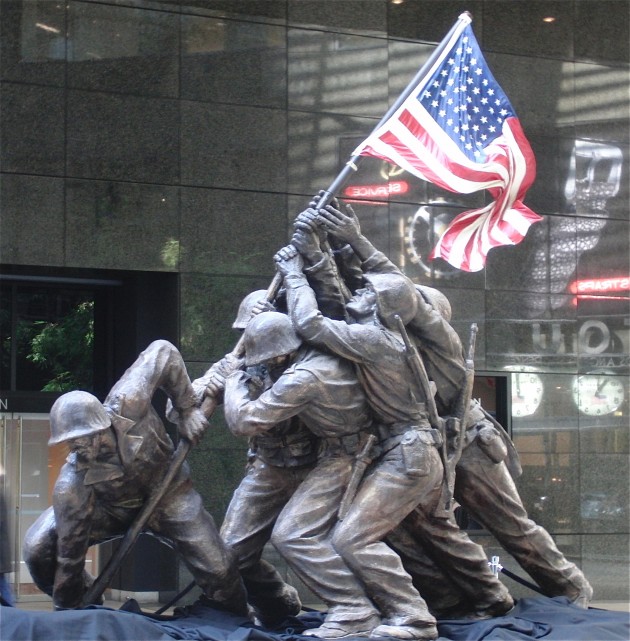
Felix de Weldon’s classic Iwo Jima Monument is on view in Midtown prior to Bonhams auction (photo by twi-ny/mdr)

Felix de Weldon’s classic Iwo Jima Monument is on view in Midtown prior to Bonhams auction (photo by twi-ny/mdr)

WORLD WAR II: THE PACIFIC THEATER
Bonhams / 590 Atrium
580/590 Madison Ave. at 57th St.
Through February 21, free
Auction begins on February 22 at 1:00 pm
www.bonhams.com
iwo jima monument slideshow

On Friday, February 22, the 281st birthday of the Father of Our Country, a stunning piece of American history is being auctioned off at Bonhams in Midtown. Lot 163, estimated to sell for $1.2-$1.8 million, is the original cast-stone version of Felix de Weldon’s Iwo Jima statue, the sculpture based on the famous Pulitzer Prize-winning AP photograph taken by Joe Rosenthal on February 23, 1945, of five Marines and one sailor raising the U.S. flag atop Mount Suribachi after a hard-fought victory on the Japanese island. (Since 2007, the work has been on board the Intrepid Sea, Air, and Space Museum.) Part of the “World War II: The Pacific Theater” sale, the five-ton statue, which stands twenty feet high including the flag (twelve feet, two inches without) and is eight feet, one inch long, is the smaller sibling of the statue that resides outside Arlington National Cemetery. Austrian-born American sculptor Felix de Weldon, who served in the navy during WWII and became a U.S. citizen in 1945, sculpted three of the figures from real life, the other three from photos, as they had died in action; the men are Sgt. Michael Strank, Cpl. Harlon Block, PFC Franklin Sousley, PFC Rene Gagnon, PFC Ira Hayes, and PM2 John Bradley. “When I saw the picture of the Iwo Jima flag raising, actually, on the same deadline as the flag raising took place, I was so deeply impressed by its significance, its meaning,” de Weldon told Jerry N. Hess of the Harry S. Truman Library in 1969, “that I imagined that it would arouse the imagination of the American people to show the forward drive, the unison of action, the will to sacrifice, the relentless determination of these young men. Everything was embodied in that picture.” De Weldon captured that same embodiment in his thrilling sculpture, which will spend the next few days on view in the 590 Atrium, amid people having lunch, entrances to various stores, two of Zhan Wang’s shiny silver stainless-steel abstract “Jiashanshi” sculptures, and, oddly enough, several pieces from Bonhams’ March 19 sale, “Fine Japanese Works of Art.”

THE TONEBURST LAPTOP ENSEMBLE

Wesleyan’s Toneburst Laptop Ensemble will play electronic works by Paula Matthusen, Doug Van Nort, and Wil Smith in Brooklyn on Sunday night

Wesleyan’s Toneburst Laptop Ensemble will play electronic works by Paula Matthusen, Doug Van Nort, and Wil Smith in Brooklyn on Sunday night

The (OA) Can Factory
232 Third St. at Third Ave., ground floor
Sunday, February 17, free, 9:30
www.share.dj

The Toneburst Laptop Ensemble (TLE) makes its public debut Sunday night, playing at SHARE at the Old American Can Factory in Gowanus. Formed at Wesleyan under the directorship of composer Paula Matthusen, assistant professor of music at the Connecticut institution, TLE performs specially commissioned works in addition to pieces from the electronic music canon. Consisting of Ian Anderson, Ashlin Aronin, Tobias Butler, Dylan Bostick, Nathan Friedman, Jessie Marino, and Alex Lough, the new ensemble will perform three works in Brooklyn: Matthusen’s 2007 electroacoustic “lathyrus”; a selection from Albany-based experimental musician and sonic researcher Doug Van Nort’s “Genetic Orchestra” series; and Brooklyn-based composer and performer Wil Smith’s “Static Line,” which was written for Jody Redhage and the 2009 New Directions Cello Festival. The free TLE performance, which also includes live video samples and manipulation developed by Lough using an original patch he created in the Jitter programming environment, is part of SHARE’s mission to “blur the boundary between its participants and spectators, [engaging] all in a continually changing dialog on art and culture.”

GEORGE BELLOWS

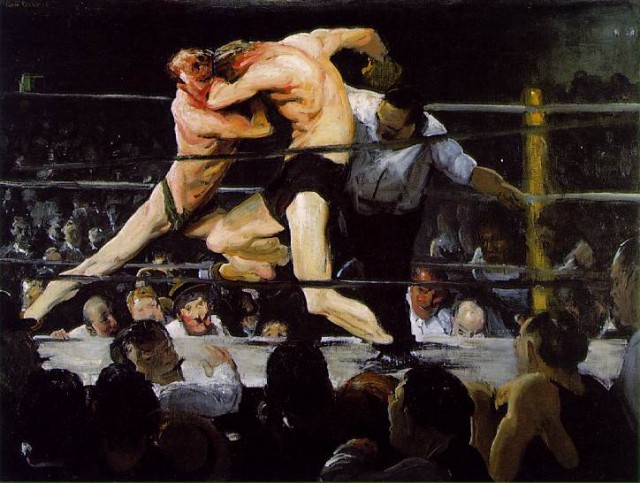
George Bellows, “Stag at Sharkey’s,” oil on canvas, 1909 (The Cleveland Museum of Art, Hinman B. Hurlbut Collection)

George Bellows, “Stag at Sharkey’s,” oil on canvas, 1909 (The Cleveland Museum of Art, Hinman B. Hurlbut Collection)

Metropolitan Museum of Art
Iris and B. Gerald Cantor Exhibition Hall, Gallery 999
1000 Fifth Ave. at 82nd St.
Through February 18, $25 adults, children under twelve free
212-535-7710
www.metmuseum.org

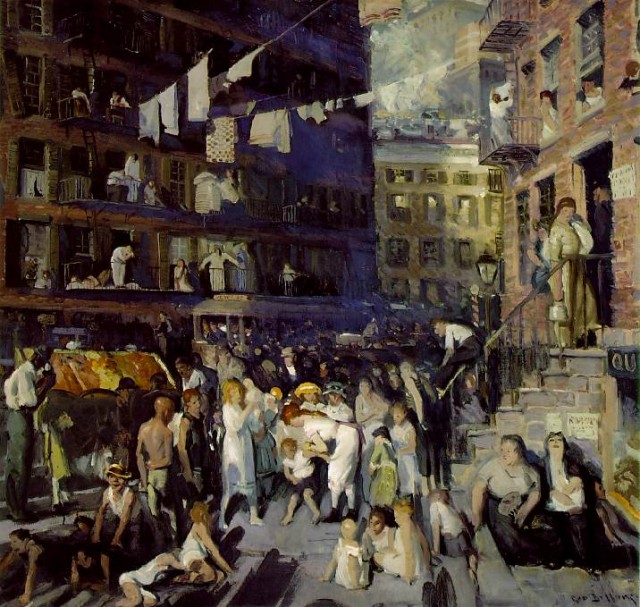
This is the last weekend to see the Metropolitan Museum of Art’s career-redefining exhibition on painter George Bellows. Simply titled “George Bellows,” the show explores the surprising diversity displayed by the Columbus, Ohio-born Ashcan artist who died too early, suffering a ruptured appendix and passing away from peritonitis in January 1925 at the age of forty-two. Bellows is best known for his spectacular boxing paintings, canvases that come alive with action and fury. In “Stag at Sharkey’s,” made during a period when boxing was illegal — Sharkey’s was a fight club across the street from Bellows’s studio on Broadway and 66th St. — every muscle and sinew bursts forth on the boxers’ bodies as they lunge at each other, the referee providing a visual counterbalance as the rapt crowd looks on. But Bellows, who moved to New York in 1904, was much more than a one-genre wonder. “Paddy Flanagan” is a striking portrait of a street kid, the palette and pose evoking the Old Masters. The darkness of “Forty-two Kids,” in which naked boys go for a dip on a ratty peer in the East River, stands in stark contrast to the bright, sunny “Beach at Coney Island.” Bellows’s creative process is examined in a series of sketches, drawings, and watercolors that result in the tour-de-force “The Cliff Dwellers,” which focuses on a busy, crowded street on the Lower East Side.

George Bellows, “Cliff Dwellers,” oil on canvas, 1913 (Los Angeles County Museum of Art, Los Angeles County Fund)

George Bellows, “Cliff Dwellers,” oil on canvas, 1913 (Los Angeles County Museum of Art, Los Angeles County Fund)

Bellows echoed Winslow Homer in such sea paintings as “Churn and Break” and “The Big Dory” and Pierre-Auguste Renoir in the family portrait “Emma and Her Children,” captured unique views of the Hudson River in “Pennsylvania Excavation” and “Rain on the River,” depicted high-end, grassy sports in “Polo at Lakewood” and “Tennis at Newport,” and detailed the horrors of war in general, and WWI specifically, in a controversial Goya-esque series featuring acts of violence that were later disputed. The show concludes with Bellows’s 1924 work “Dempsey and Firpo,” with Luis Ángel Firpo knocking heavyweight champion Jack Dempsey through the ropes and out of the ring at the Polo Grounds; the canvas is painted in a much more flat, graphic style than his previous boxing canvases made fifteen years earlier. A baseball player in college, Bellows learned about art primarily by visiting museums, including the Met itself, which served as a major influence on his work, so it is only appropriate that the Met is home to this must-see show, the first major career retrospective of the extremely talented, underrated artist since the mid-1960s and one that reveals him to be a masterful chronicler of life in early-twentieth-century America.

LIKE SOMEONE IN LOVE

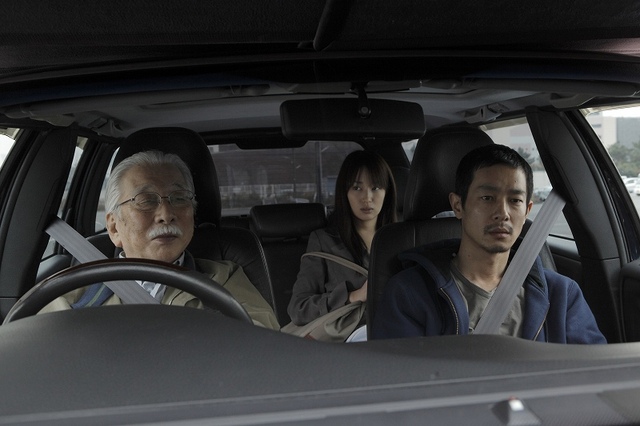
The lives of three very different individuals intertwine in Abbas Kiarostami’s remarkable LIKE SOMEONE IN LOVE

LIKE SOMEONE IN LOVE (Abbas Kiarostami, 2012)
Film Society of Lincoln Center, Elinor Bunin Munroe Film Center, 144 West 65th St. between Broadway & Amsterdam Ave., 718-636-4100
Landmark Sunshine Cinema, 143 East Houston St. between First & Second Aves., 212-330-8182
Opens Friday, February 15
www.ifcfilms.com

Following the Tuscany-set Certified Copy, his first film made outside of his home country, master Iranian auteur Abbas Kiarostami heads to Japan for the beautifully told Like Someone in Love. Rin Takanashi stars as Akiko, a sociology student supporting herself as an escort working for bar owner and pimp Hiroshi (Denden). An older, classy businessman, Hiroshi insists that Akiko is the only person to handle a certain client, so, despite her loud objections, she is put in a cab and taken to meet Takashi (Tadashi Okuno), an elderly professor who seems to just want some company. But soon Akiko unwittingly puts the gentle old man in the middle of her complicated life, which includes her extremely jealous and potentially violent boyfriend, Noriaki (Ryō Kase), and a surprise visit from her grandmother (Kaneko Kubota). Taking its title from the song made famous by, among others, Ella Fitzgerald, Like Someone in Love is an intelligent character-driven narrative that investigates different forms of love and romance in unique and engaging ways. Kiarostami (Taste of Cherry, Close-Up) and cinematographer Katsumi Yanagijima, who has worked on numerous films by Takeshi Kitano, establish their visual style from the very beginning, as an unseen woman, later revealed to be Akiko, is on the phone lying to her abusive boyfriend about where she is, the camera not moving for extended periods of time as people bustle around her in a crowded bar. As is often the case with Kiarostami, who has said that his next film will be set in Italy, much of the film takes place in close quarters, including many in cars, both moving and parked, forcing characters to have to deal with one another and face certain realities they might otherwise avoid. Takanashi is excellent as Akiko, a young woman trapped in several bad situations of her own making, but octogenarian Okuno steals the show in the first lead role of a long career that has primarily consisted of being an extra. The soft look in his eyes, the tender way he shuffles through his apartment, and his very careful diction are simply captivating. Despite his outstanding performance, Okuno is committed to returning to the background in future films, shunning the limelight. A jazz-filled film that at times evokes the more serious work of Woody Allen, another director most associated with a home base but who has been making movies in other cities for a number of years now, Like Someone in Love is like a great jazz song, especially one in which the notes that are not played are more important than those that are.