Environmental activists and just plain folk fight the power in A FIERCE GREEN FIRE
A FIERCE GREEN FIRE: THE BATTLE FOR A LIVING PLANET (Mark Kitchell, 2012)
Cinema Village
22 East 12th St. between University Pl. & Fifth Ave.
Opens Friday, March 1
212-924-3363
www.cinemavillage.com
www.afiercegreenfire.com
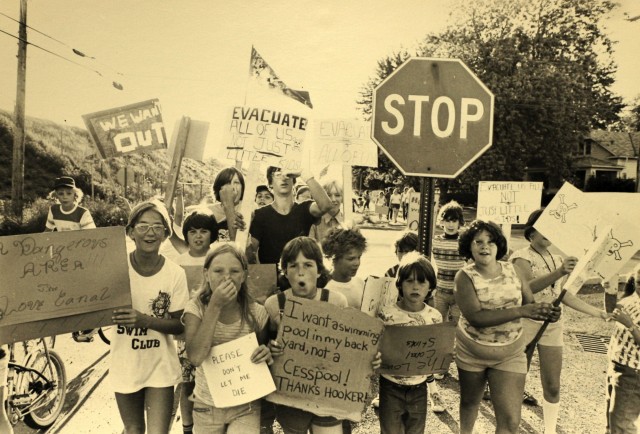
 A lot of documentaries wear their hearts on their sleeves, pushing a specific agenda, but as far as agenda go, A Fierce Green Fire: The Battle for a Living Planet has a pretty good one. Directed by Mark Kitchell (Berkeley in the Sixties), the film serves not only as a history of the environmental movement around the world but also demonstrates how one person can indeed make a difference. But the hundred-minute documentary does itself no favors by using several narrators who are certain to infuriate conservative Republicans and naysayers, ensuring that the film is most likely going to preach only to the converted and not spread its vital message to a more mainstream audience. A Fierce Green Fire is divided into five thematic sections, narrated by Robert Redford, Ashley Judd, Van Jones, Isabel Allende, and Meryl Streep, respectively. Using archival footage and new interviews, Kitchell examines David Brower and the Sierra Club’s fight to prevent a dam project in the Grand Canyon; Lois Gibbs’s struggle to prove the alarming health problems at Love Canal; Paul Watson, Sea Shepherd, and Greenpeace’s mission to save the whales; Chico Mendes’s bravery trying to protect the Amazon rainforest; and the continuing controversy over climate change as seen through the work of such activist organizations as Paul Hawken’s Blessed Unrest. Inspired by Philip Shabecoff’s 1993 book, the film features such talking heads as Whole Earth Catalog publisher Stewart Brand, Earth Day organizer Doug Scott, NRDC founder John Adams, former Sierra Club leader Carl Pope, environmental justice advocate Robert Bullard, Greenpeace cofounder Rex Weyler, WWF conservation biologist Thomas Lovejoy, and legendary naturalist Bill McKibben in addition to Gibbs, Hawken, and Watson. While it’s fascinating to learn that the environmental movement really took off once NASA broadcast images of the earth taken from space, revealing the beautiful fragility of the planet, much of the documentary is told in a fairly stagnant manner, more like an expanded news report than a theatrical film. Still, it shares some intriguing insights and, in celebrating a group of individuals from around the world who fought the power (and sometimes even won), goes a long way in showing that every little step matters.
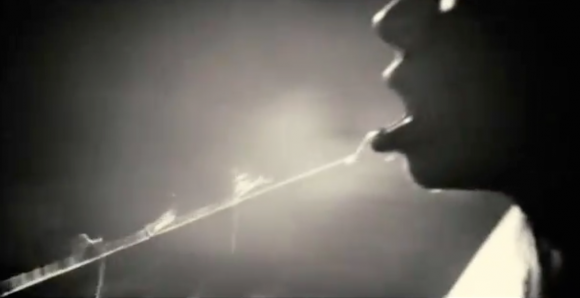
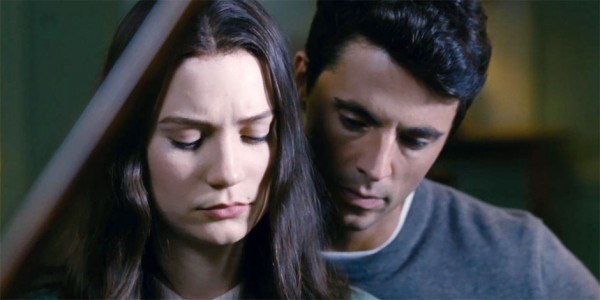
 Korean auteur Park Chan-wook has made some of the most suspenseful, violent films of the last twenty years, creating compelling characters caught in untenable situations. Most well known for his Vengeance Trilogy — Sympathy for Mr. Vengeance, Oldboy, and Lady Vengeance — he has also written and directed such features as the military thriller Joint Security Area, the horror film Thirst, and the futuristic romantic comedy I’m a Cyborg But That’s OK. As part of a retrospective at the Museum of the Moving Image, being held in conjunction with the theatrical release of his first English-language film, Stoker, the Astoria institution will be screening a trio of Park’s intriguing shorts. N.E.P.A.L. Never Ending Peace and Love is based on the true story of Chandra Gurung, a Nepali woman who went to Korea to find employment, only to wind up in a mental institution when no one could understand her language and instead thought she was an unstable woman speaking gibberish. Chandra appears at the beginning and end of the film, most of which is shot in black-and-white from her vantage point, as if the viewer is experiencing exactly what Chandra went through. It’s a fascinating film made for the National Human Rights Commission of Korea. In Cut, part of the 2004 Asian Scream Team omnibus Three . . . Extremes, which also includes short works by Hong Kong’s Fruit Chan (Dumplings) and Japan’s Takashi Miike (Box), Park turns up the gore level with the tale of a film director (Lee Byung-hun) and his wife (Kang Hye-jeong) who are kidnapped by a crazed extra (Lim Won-hee) who threatens to slice off her fingers one at a time unless the director kills a small child in the room. There’s plenty of bloody violence here, but the overall execution is lacking. Several years later, Park teamed up with codirector Park Chan-kyong — and took the dual name PARKing CHANce — for 2011’s thirty-three-minute Night Fishing, which was shot using multiple iPhone 4s (before adding special effects in postproduction). Alone by a river, fisherman Gi-suk (Oh Kwang-rok) makes a very unusual catch — a beautiful young woman (Lee Jeong-hyeon) who seems to have mysterious powers. The film, winner of the Golden Bear, opens very strangely, with a music video by the UhUhBoo Project, before turning into a meditation on love and loss, highlighted by a bizarre, mystical twist that adds to the surreal nature of the story. Seen together, the three shorts lend yet more perspective on a filmmaker always willing to take risks while understanding the essential nature of narrative.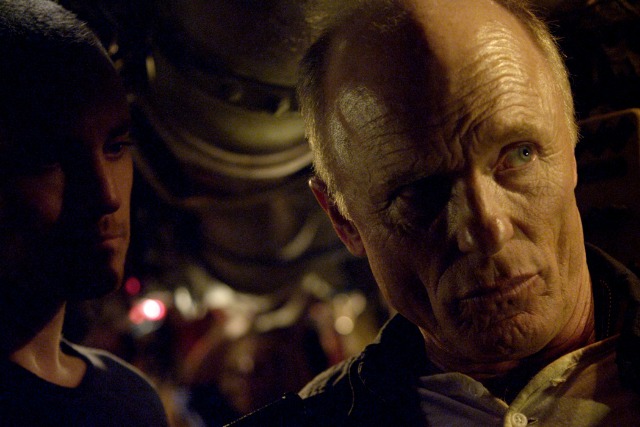
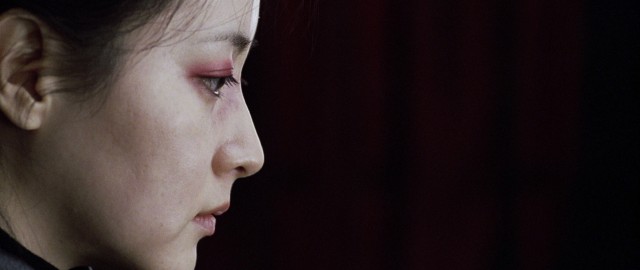
 Park Chan-wook’s awesome revenge trilogy (following Sympathy for Mr. Vengeance and Oldboy) comes to a stirring conclusion with the thrilling tale of Lee Geum-ja (Lee Young-ae), a beautiful thirty-one-year-old woman who has just been released from prison after serving thirteen years for the kidnapping and murder of a five-year-old boy (Nam Song-woo). While behind bars, Geum-ja plotted out a detailed, complex plan to gain revenge on her co-conspirator (Oldboy’s Choi Min-sik as Mr. Baek), who harbors a dark secret. As Geum-ja, known as both “Angel” and “Witch,” visits each former prisoner participating in the elaborate set-up, Park flashes back to reveal the woman’s original crime and her relationship to Geum-ja — who is also being followed by a wacky preacher with a great hairdo (Kim Byeong-ok). Now working in a bakery, Geum-ja has become a magical pastry chef as part of her scheme to feed Mr. Baek his just desserts, but, as Park shows rather gruesomely, vengeance — and repentance — comes with a heavy price. As with the first two parts of this masterful series, Lady Vengeance serves up a cunning concoction of bizarre characters, stunning surprises, existential exegesis, and plenty of psychological terror. You need not have seen the first two to love this one; in fact, all three films are stand-alones as well as stand-outs. Lady Vengeance is screening on March 3 at 6:00 as part of a Museum of the Moving Image/Korea Society tribute to Park in conjunction with the release of his first English-language film,