twi-ny recommended events

TURTLE HILL, BROOKLYN

TURTLE HILL

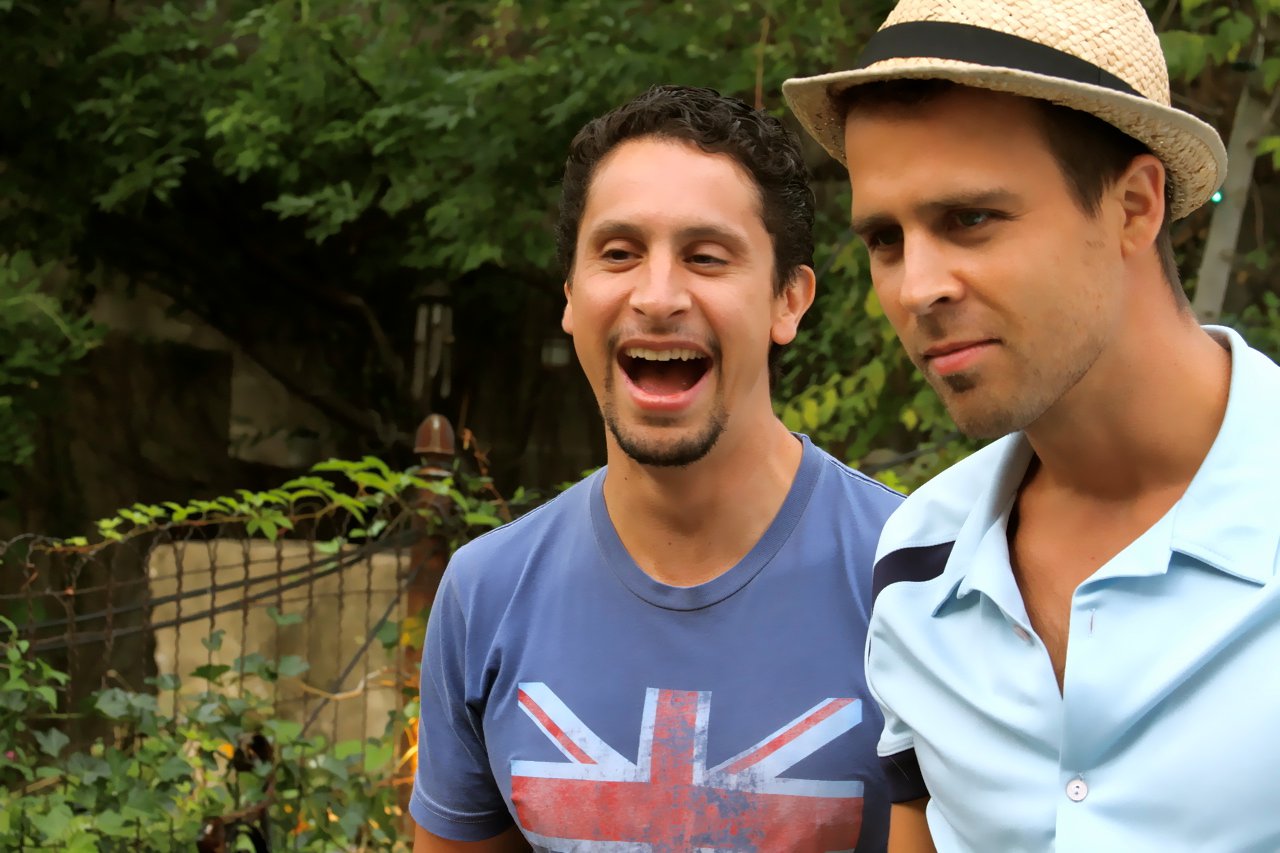
Real-life partners Ricardo Valdez and Brian W. Seibert wrote, produced, and star in film set in their Brooklyn apartment

TURTLE HILL, BROOKLYN (Ryan Gielen, 2011)
Quad Cinema
34 West 13th St.
Opens Friday, May 3
212-255-2243
www.quadcinema.com
www.turtlehillbrooklyn.com

If director Ryan Gielen’s Turtle Hill, Brooklyn feels real, that’s because it was written and produced by real-life partners Brian W. Seibert and Ricardo Valdez, who star as on-screen couple Will (Seibert) and Mateo (Valdez), and takes place in their Sunset Park apartment, in a neighborhood they have redubbed “Turtle Hill” for this gentle, understated slice-of-life drama. It’s Will’s thirtieth birthday, and Mateo is getting ready to throw a big party in their backyard patio. But when Will’s sister unexpectedly shows up early in the morning and suddenly discovers that her brother is gay — and is clearly not okay with that kind of lifestyle — Will and Mateo start examining themselves and their relationship as friends start arriving for the celebration, where there’s lots of food and drink as well as discussions about politics, same-sex marriage, immigration, drugs, discrimination, and America itself, none of which comes off as pedantic. Things, however, threaten to become volatile when a gym trainer stops by, exciting Will and unnerving Mateo. Shot with a handheld camera by Andrew Tank Rivara, the film invites the audience into the party, as if they are guests as well, surrounded by friends and family. (Indeed, many of the guests are friends of Seibert and Valdez’s.) It’s a welcoming atmosphere filled with believable situations and characters, even though Seibert and Valdez have explained that the plot is not autobiographical. And the film avoids the potential pitfalls of pushing a gay agenda by simply allowing the story to play out organically, resulting in an involving tale about two people in love, facing a pivotal moment in their lives together. A film festival hit across the country, Turtle Hill, Brooklyn, which won the Audience Award for Best Narrative Feature at 2011’s NewFest, opens May 3 at the Quad, with Gielen, Seibert, and Valdez participating in Q&As following the 7:00 and 9:00 screenings on Friday and Saturday.
UNMADE IN CHINA

UNMADE IN CHINA

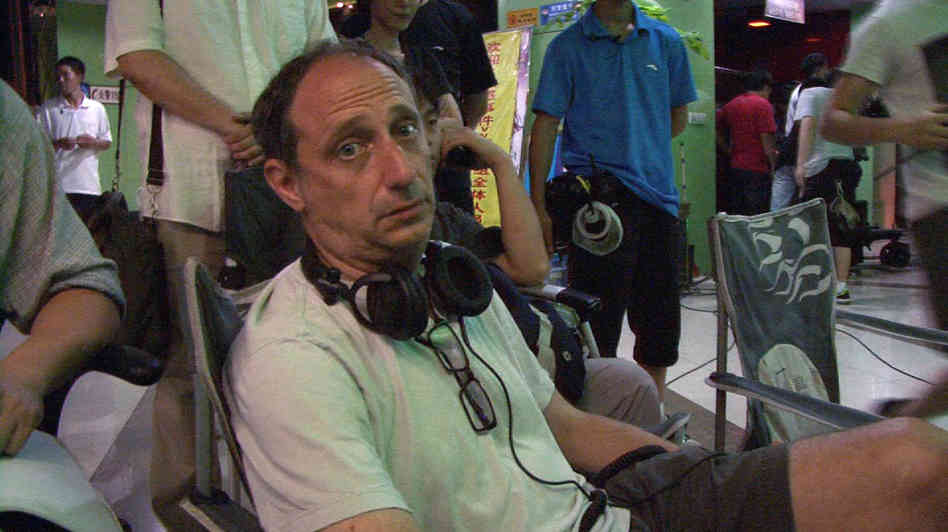
Filmmaker Gil Kofman has a rather rough go of it trying to make a thriller in China

UNMADE IN CHINA (Tanner King Barklow & Gil Kofman, 2012)
Cinema Village
22 East 12th St. between University Pl. & Fifth Ave.
Opens Friday, May 3
212-924-3363
www.unmadeinchinamovie.com
www.cinemavillage.com

When Gil Kofman goes to the Far East to make the Chinese thriller Case Sensitive in Xiamen, he has no idea what he’s really in for. Fortunately, Tanner King Barklow tags along to document the very strange events, which are revealed for all to see in Unmade in China. Working off the theme that a film is made in the writing, shooting, and editing, Kofman shows how in this case his film, written in English but translated into Chinese, is actually unmade in those three elements. In order to get his film made (or unmade), Kofman, an LA-based playwright (American Magic) and director (The Memory Thief) who was born in Nigeria and raised in Kenya, Israel, and New York City, goes through a string of crazy situations as he and his team have to essentially bribe local Chinese officials to get permits, the producer keeps delaying wiring him the necessary funds, the translators keep radically altering the script, actors are regularly replaced without notice, and the police may or may not be watching his every move. “We’re on a poisoned shoot,” he says. “I think we’re getting corrupted the more we stay here.” Barklow intercuts scenes of Kofman sharing his tale with an audience at a screening with Kofman in China facing problem after problem and mugging for the camera. Several times over the course of the film, Barklow, one of the producers of the Oscar-nominated documentary The Invisible War, tells Kofman that huge veins are breaking out across his forehead, visible signs of the intense pressure he’s experiencing as he refuses to give up. “Now I know why they chose death over exile in the old Greek days,” the nebbishy Kofman says at one point, “which never made sense until I came to China.” Although Barklow and Kofman, credited as codirectors on the film, try too hard to make grand major cultural statements about East vs. West, capitalism vs. communism, resulting in comparisons that are more than a bit of a stretch, and Kofman whines a whole lot, Unmade in China still manages to be fun to watch, primarily to see what kind of calamity will strike next. Named Best Documentary at the Sydney Underground, Edmonton International, and Bloody Hero International Film Festivals, Unmade in China opens May 3 at Cinema Village for a one-week run.

SOMETHING IN THE AIR

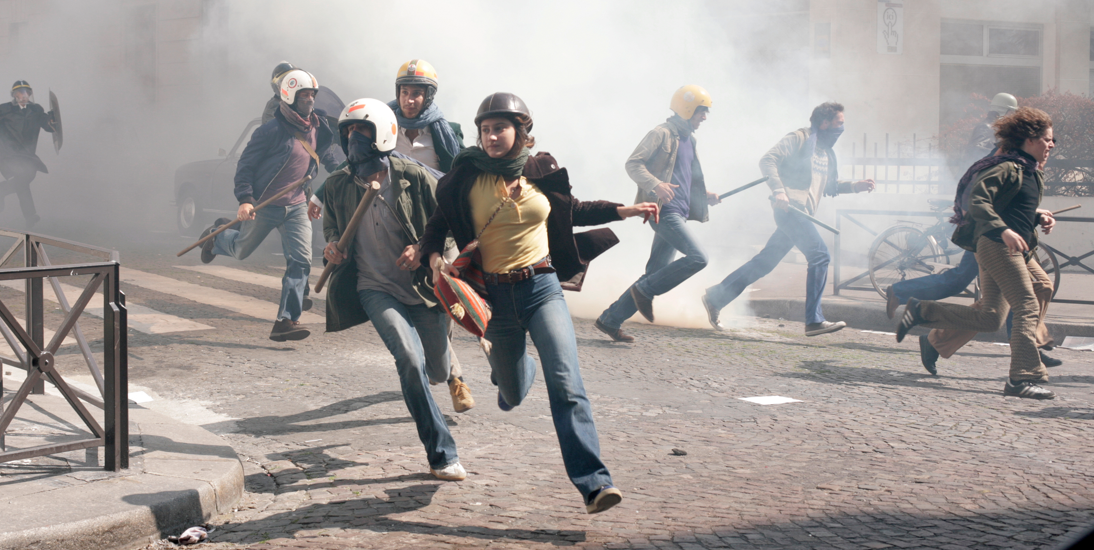
The cultural revolution on the early 1970s is back in Olivier Assayas’s SOMETHING IN THE AIR

SOMETHING IN THE AIR (APRÈS MAI) (Olivier Assayas, 2012)
IFC Center, 323 Sixth Ave. at Third St., 212-924-7771
Lincoln Plaza Cinema, 1886 Broadway at 63rd St., 212-757-2280
Opens Friday, May 3
www.ifcfilms.com

Olivier Assayas’s autobiographical coming-of-age tale Something in the Air is a fresh, exhilarating look back at a critical period in twentieth-century French history. In this sort-of follow-up to his 1994 film about 1970s teenagers, Cold Water, which starred Virginie Ledoyen as Christine and Cyprien Fouquet as Gilles, Something in the Air features newcomer Clément Métayer as a boy named Gilles and Lola Créton (Goodbye First Love) as a girl named Christine, a pair of high school students who are part of a growing underground anarchist movement. Following a planned demonstration that is violently broken up by a special brigade police force, some of the students cover their school in spray paint and political posters, leading to a confrontation with security guards that results in the arrest of the innocent Jean-Pierre (Hugo Conzelmann), which only further emboldens the anarchists. But their seething rage slowly changes as they explore the transformative world of free love, drugs, art, music, travel, and experimental film. Assayas (Les Destinées sentimentales, Summer Hours) doesn’t turn Something in the Air — the original French title is actually Après Mai, or After May, referring to the May 1968 riots — into a personal nostalgia trip. Instead it’s an engaging and charming examination of a time when young people truly cared about something other than themselves and genuinely believed they could change the world, filled with what Assayas described as a “crazy utopian hope for the future” at a New York Film Festival press conference. The talented cast also includes Félix Armand, India Salvor Menuez, Léa Rougeron, and Carole Combes as Laure, both Gilles’s and Assayas’s muse. Assayas fills Something in the Air with direct and indirect references to such writers, artists, philosophers, and musicians as Syd Barrett, Gregory Corso, Amazing Blondel, Blaise Pascal, Kasimir Malevitch, Max Stirner, Alighiero Boetti, Joe Hill, Soft Machine, Georges Simenon, Frans Hals, and Simon Ley (The Chairman’s New Clothes: Mao and the Cultural Revolution), not necessarily your usual batch of 1970s heroes who show up in hippie-era films. Writer-director Assayas, editors Luc Barnier and Mathilde Van de Moortel, and cinematographer Éric Gautier move effortlessly from France to Italy to England, from thrilling, fast-paced chases to intimate scenes of young love to a groovy psychedelic concert, wonderfully capturing a moment in time that is too often marginally idealized and made overly sentimental on celluloid. “We’ve got to get together sooner or later / Because the revolution’s here,” Thunderclap Newman sings in their 1969 hit “Something in the Air,” which oddly is not used in Assayas’s film, continuing, “And you know it’s right / and you know that it’s right.” Indeed, Assayas gets it right in Something in the Air, depicting a generation when revolution required a lot more than clicking a button on the internet.
FIRST SATURDAY: JOHN SINGER SARGENT WATERCOLORS

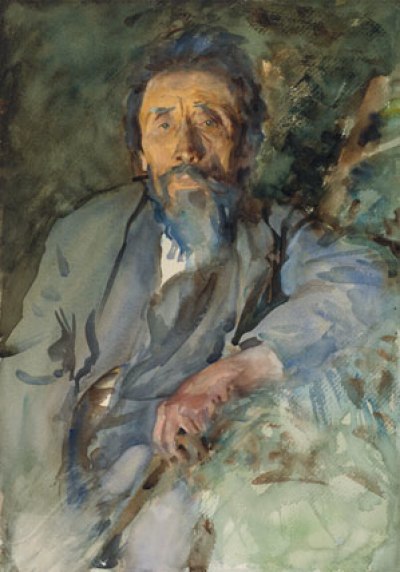
John Singer Sargent, “A Tramp,” translucent watercolor and touches of opaque watercolor, circa 1904–6 (courtesy Brooklyn Museum)

John Singer Sargent, “A Tramp,” translucent watercolor and touches of opaque watercolor, circa 1904–6 (courtesy Brooklyn Museum)

Brooklyn Museum
200 Eastern Parkway at Washington St.
Saturday, May 4, free, 5:00 – 11:00 (some events require free tickets distributed in advance at the Visitor Center)
212-864-5400
www.brooklynmuseum.org

The Brooklyn Museum celebrates its collaboration with the Museum of Fine Arts, Boston, “John Singer Sargent Watercolors,” in the May edition of the free monthly First Saturday program. There will be several gallery talks, including one by curator Teresa Carbone, on the show, which brings together ninety-three pieces from the two institutions. In addition, there will be an art workshop in which participants will make their own watercolor postcard, pop-up immersive theatrical happening inspired by Sargent’s paintings, a garden party with a photo booth and swing music by Les Chauds Lapins, a book-club talk with Janet Wallach on Desert Queen: The Extraordinary Life of Gertrude Bell (whom Sargent painted), screenings of Lisa Duva’s Cat Scratch Fever and Dominique Monfery’s Eleanor’s Secret, live performances by Layali El Andalus, Jesse Boykins III, Young Magic, and East Village Radio DJ Hannah Rad, and more. The galleries will remain open late so visitors can also check out “LaToya Ruby Frazier: A Haunted Capital,” “Käthe Kollwitz: Prints from the ‘War’ and ‘Death’ Portfolios,” “‘Workt by Hand’: Hidden Labor and Historical Quilts,” “Gravity and Grace: Monumental Works by El Anatsui,” “Raw/Cooked: Marela Zacarias,” and other exhibitions.

THE WORKS — KAREN BLACK: FIVE EASY PIECES

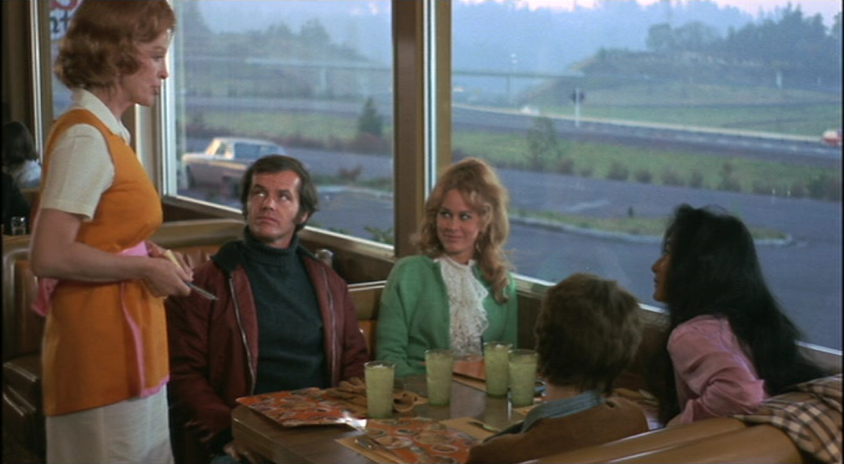
Jack Nicholson, sitting next to Karen Black, is about to place the most famous sandwich order in film history

Jack Nicholson, sitting next to Karen Black, is about to place the most famous sandwich order in film history

FIVE EASY PIECES (Bob Rafelson, 1970)
Nitehawk Cinema
136 Metropolitan Ave. between Berry St. & Wythe Ave.
May 3-4, 12:15 am
718-384-3980
www.nitehawkcinema.com

A key film that helped lead 1960s cinema into the grittier 1970s, Bob Rafelson’s Five Easy Pieces is one of the most American of dramas, a tale of ennui and unrest among the rich and the poor, a road movie that travels from trailer parks to fashionable country estates. Caught in between is Bobby Dupea (Jack Nicholson), a former piano prodigy now working on an oil rig and living with a well-meaning but not very bright waitress, Rayette (Karen Black). When Bobby finds out that his father is ill, he reluctantly returns to the family home, the prodigal son who had left all that behind, escaping to a less-complicated though unsatisfying life putting his fingers in a bowling ball rather than tickling the keys of a grand piano. Back in his old house, he has to deal with his brother, Carl (Ralph Waite), a onetime violinist who can no longer play because of an injured neck and who serves as the film’s comic relief; Carl’s wife, Catherine (Susan Anspach), a snooty woman Bobby has always been attracted to; and Bobby’s sister, Partita (Lois Smith), a lonely, troubled soul who has the hots for Spicer (John Ryan), the live-in nurse who takes care of their wheelchair-bound father (William Challee). Rafelson had previously directed the psychedelic movie Head (he cocreated the Monkees band and TV show) and would go on to make such films as The King of Marvin Gardens, Stay Hungry, and Black Widow; written by Carole Eastman, Five Easy Pieces fits flawlessly in between them, a deeply philosophical work that captures the myriad changes the country was experiencing as the Woodstock Generation was forced to start growing up. The film suffers from some unsteady editing primarily in the earlier scenes, but it is still a gem, featuring at least two unforgettable scenes, one that takes place in a California highway traffic jam and the other in a diner, where Bobby places an order for the ages. And as good as both Nicholson, who earned the first of seven Best Actor Oscar nominations, and Black, who was nominated for Best Supporting Actress, are, Helena Kallianiotes nearly steals the picture as a crazy woman railing against the ills of the world from the backseat of Bobby’s car. Five Easy Pieces is screening at 12:15 am on May 3 & 4 as part of Nitehawk Cinema’s “The Works” series focusing on otherworldly actress and goddess Karen Black, the sexy, cross-eyed star of such films as Nashville, The Great Gatsby, Invaders from Mars, and the unforgettable Trilogy of Terror. Artist and filmmaker Aïda Ruilova will introduce the Friday-night show. The Nitehawk mini-retrospective continues with Alfred Hitchcock’s Family Plot (May 17-18), Jack Smight’s Airport 1975 (May 31 – June 1), and John Schlesinger’s The Day of the Locust (June 14-15), all of which prominently feature Black, who has been battling cancer now for several years.

COUNTRY BRUNCHIN’: THE SEARCHERS

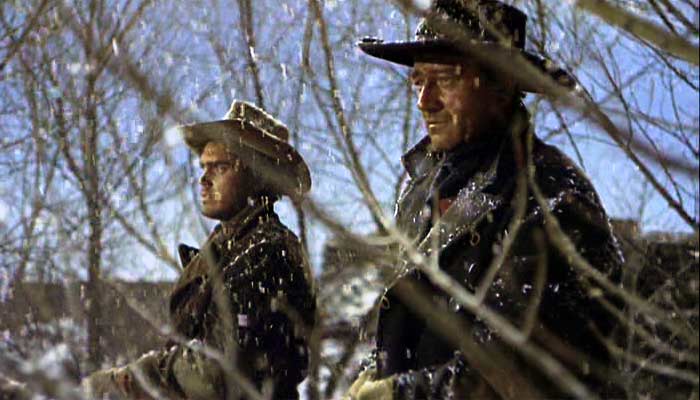
In iconic Western, Jeffrey Hunter and Ethan Edwards search for Natalie Wood, with very different motives

THE SEARCHERS (John Ford, 1956)
Nitehawk Cinema
136 Metropolitan Ave. between Berry St. & Wythe Ave.
Saturday, May 4, $16, 11:30 am
718-384-3980
www.nitehawkcinema.com

That’ll be the day when someone tries to claim there’s a better Western than John Ford’s ethnocentric look at the dying of the Old West and the birth of the modern era. Essentially about a gunfighter’s attempt to find and kill his young niece, who has been kidnapped and, ostensibly, ruined by Indians, The Searchers is laden with iconic imagery, inside messages, and not-so-subtle metaphors. Hence, it is no accident that John Wayne’s son, Patrick, plays an ambitious yet inept officer named Greenhill. The elder Wayne stars as Ethan Edwards, a tough-as-nails Confederate veteran seeking revenge for the murder of his brother’s family; he’s also out to save Debbie (Natalie Wood) from the Comanches, led by a chief known as Scar (Henry Brandon), by ending her life, because in his world view, it’s better to be dead than red. Joining him on his trek is Debbie’s adopted brother, Martin Pawley (Jeffrey Hunter), who wants to save her from Edwards. The magnificent film balances its serious center with a large dose of humor, particularly in the relationships between Ethan and Martin and Ethan with his Indian companion, Look (Beulah Archuletta). And keep your eye on that blanket in front of the house. The Searchers is screening as part of Nitehawk Cinema’s “Country Brunchin’” series and will be preceded by a live set by New York City postpunk folkers Tatters and Rags.
WORLD NOMADS TUNISIA

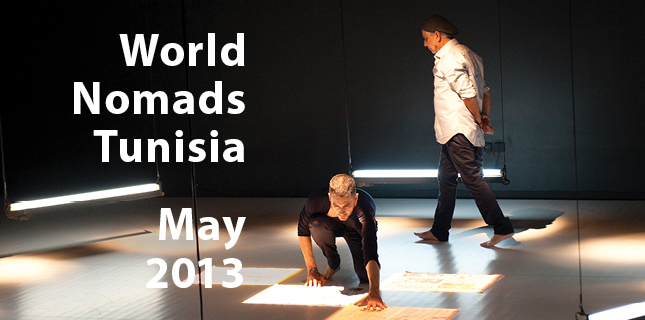
Jonah Bokaer’s THE ULYSSES SYNDROME is part of FIAF festival focusing on the past, present, and future of Tunisia

Jonah Bokaer’s THE ULYSSES SYNDROME is part of FIAF festival focusing on the past, present, and future of Tunisia

French Institute Alliance Française (and other venues)
Florence Gould Hall, 55 East 59th St.
Le Skyroom, 22 East 60th St.
Tinker Auditorium, 55 East 59th St.
May 1 – June 1, free – $40
212-355-6100
www.fiaf.org

After having explored the art and culture of Africa, Haiti, Lebanon, and Morocco in past years, FIAF’s 2013 World Nomads festival heads to Tunisia this spring for a month of multidisciplinary programs that look at the history of the small North African nation, particularly within the context of the recent revolution that led to the downfall of dictator Zine El Abidine Ben Ali. The now-biennial festival begins on May 3 ($35, 8:00) with a concert in Florence Gould Hall featuring singer Sonia M’Barek and the Al-Bustan Seeds of Culture ensemble, followed by a reception with Tunisian delicacies. Also on Friday night (free, 7:00), brother-and-sister choreographers Selma and Sofiane Ouissi will debut a twelve-minute video in Tinker Auditorium about Tunisian women potters. On May 4 (free), visitors are encouraged to add their own message of peace to a canvas supplied by Tunisian graffiti artists eL Seed and Jaye at the New Museum’s Ideas City street festival on Rivington St. On May 6 ($40, 12:30), Syhem Belkhodja, Dora Bouchoucha, Kenza Fourati, Lina Lazaar Jameel, and Leila Souissi will gather at FIAF for the English-language panel discussion “The Role of Women in Tunisian Society,” which includes lunch and wine. The next afternoon (free, 1:00), Belkhodja, Bouchoucha, Lazaar Jameel, and Amna Guellali will be joined via Skype by Hélé Béji and El Iza Mohamedou for the “Women in Tunisia” talk “Art, Women & Politics” at White Box, which is also hosting a free Tunisian photography exhibition highlighting work by Héla Ammar, Amine Boussoffara, Wassim Ghozlani, Amine Landoulsi, Zied Ben Romdhane, Rim Temimi, and Patricia Triki that is part of the World Nomads visual arts program “The After Revolution.” Tuesday in May ($10), FIAF will screen Tunisian movies curated by Bouchoucha as part of its weekly CinémaTuesdays series, including such films as Moufida Tlatli’s The Silences of the Palace and Hinde Boujemaa’s It Was Better Tomorrow. Tinker Auditorium will be turned into a traditional Souk, or Tunisian craft market, May 8-10 (free, 5:30 – 8:00), with food and crafts available for purchase. On May 9-10 ($25, 8:00), choreographer Jonah Bokaer delves into his relationship with his Tunisian-born father in the meditative The Ulysses Syndrome, set to a Mediterranean soundscape. On May 12 (free, reception at 6:00), eL Seed and Jaye will be at 5Pointz in Long Island City to create a mural with Meres One and others and screen a film about them. On May 14 ($25, 8:00), Radhouane El Meddeb will perform the solo piece Sous leurs pieds, le paradis, which honors the role of women in Tunisian society, set to music by Oum Kaithoum. Singer Ghalia Benali will take the stage at FIAF on May 15 ($25, 8:00), Tunisian DJs will spin at CATCH Roof on May 15 (free, 10:30), and Emel Mathlouthi will perform previously banned songs on May 22 ($25, 8:00) at FIAF. In addition, throughout the festival the FIAF Gallery will host a multimedia exhibition with works by Héla Ammar, Amel Ben Attia, Nicène Kossentini, Mouna Jemal Siala, and Mohamed Ben Slama that focuses on women artists and the aftermath of the revolution.