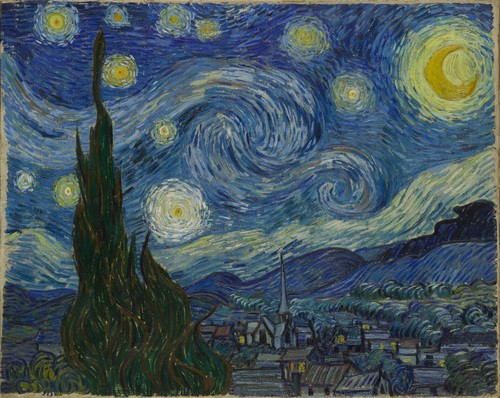
Visitors can now see such works as Vincent van Gogh’s “The Starry Night” at MoMA seven days a week, with the first one hundred visitors getting in free every Tuesday in May (photo courtesy MoMA / Acquired through the Lillie P. Bliss Bequest)
Museum of Modern Art
11 West 53rd St. between Fifth & Sixth Aves.
Tuesday, May 7, 14, 21, 28, 10:30 am – 5:30 pm
Free admission for the first one hundred visitors
212-708-9400
www.moma.org
Every Friday afternoon, there is a long line at the Museum of Modern Art, when admission is free from 4:00 to 8:00. Meanwhile, on Tuesdays, stray people gather at the entrances, frantically searching their guidebooks to confirm that the museum is actually closed on that day. That latter situation is about to change, as MoMA has just announced that they now will be open seven days a week, with Tuesday hours, 10:30 am – 5:30 pm, that match the rest of the week except Friday, which is of course open later. MoMA is actually getting the jump on the Met, which earlier announced that it will also open its doors every day, adding Monday to its schedule, but that begins in July. To celebrate the new policy, MoMA will be offering free admission Tuesdays in May to the first one hundred visitors, an ample savings of $25 per adult, $18 per senior, and $14 per student. (Children sixteen and under who are not part of a group are always free.) Among the many exhibitions currently on view are “Claes Oldenburg: The Street and the Store” and “Claes Oldenburg: Mouse Museum / Ray Gun Wing,” “Artist’s Choice: Trisha Donnelly,” “Wait, Later This Will Be Nothing: Editions by Dieter Roth,” “Henri Labrouste: Structure Brought to Light,” “9 + 1 Ways of Being Political: 50 Years of Political Stances in Architecture and Urban Design,” “Bill Brandt: Shadow and Light,” and “Hand Signals: Digits, Fists, and Talons.” It’s first come, first served, so you better start lining up soon to take advantage of this temporary offer.
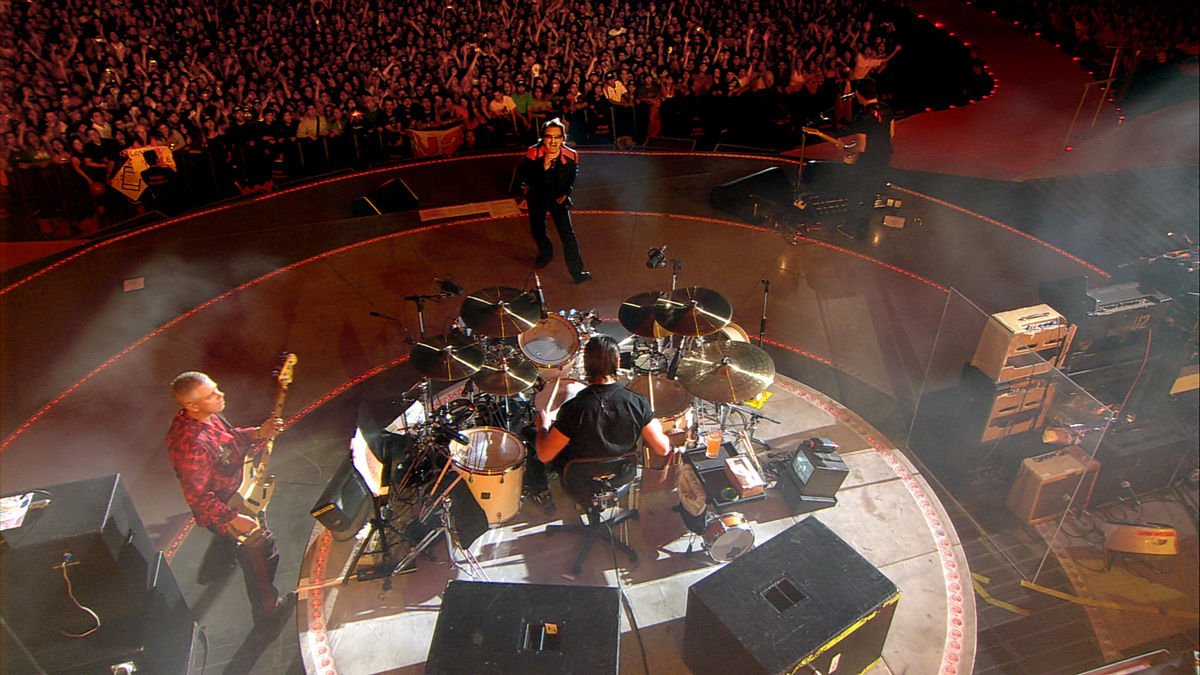
 When we caught U2’s Vertigo Tour at the Garden in June 2006, we were up in the rafters, looking down at tiny dots that just happened to be drummer Larry Mullen Jr., bass player Adam Clayton, guitarist the Edge, and singer Bono. But the World’s Most Important Band is front and center for everyone to see in U2 3D, the first-ever full-length film shot in Digital 3-D, directed by Catherine Owens and Mark Pellington. Using as many as eighteen specially equipped digital cameras and recording decks, Owens, who has been U2’s visual content director since ZooTV, captures the Irish band during stadium shows in South America and Mexico, focusing on the March 1-2 concerts at Estadio la Plata in Buenos Aires. The new technology, previously used for sporting events, has a fascinating layered effect that sucks in viewers — yes, who are wearing special glasses (not unlike the specs Bono used to wear as the Fly) — placing them right in the middle of the action as the band powers through an exultant setlist that, if not quite ideal, includes “Vertigo,” “New Year’s Day,” and “Pride (In the Name of Love).” You can’t help but reach out for Bono as he seemingly jumps out of the screen while singing “Touch me” during “Beautiful Day,” and then you’ll swear he’s reaching out only to you when he stares into the camera during “Sunday Bloody Sunday” and promises to “wipe your tears away.” And when tens of thousands of fans all bop up and down in unison to “Where the Streets Have No Name,” forming a propulsive wave, you’ll feel a rush beneath your seat that moves up into your gut. Owens and Pellington (Arlington Road) incorporate the band’s hypertextual stage show into the new format, as digitized figures, words, symbols, and letters from the large screens behind the band seem to float right in front of your face. The concert footage is supplemented with extreme close-ups shot onstage without an audience, and the energy level severely drops at these times, although Mullen’s drum kit looks amazing in 3-D. As straight-ahead concert movies go, U2 3D is among the best ever made, a unique theatrical experience that will blow you away. U2 3D is screening in Dolby Digital 3-D at the Museum of the Moving Image on May 7 at 7:00 as part of the series “Play This Movie Loud!” and “Sonos and VEVO Present: The Director’s Studio” and will be preceded by a discussion with Pellington and chief curator David Schwartz.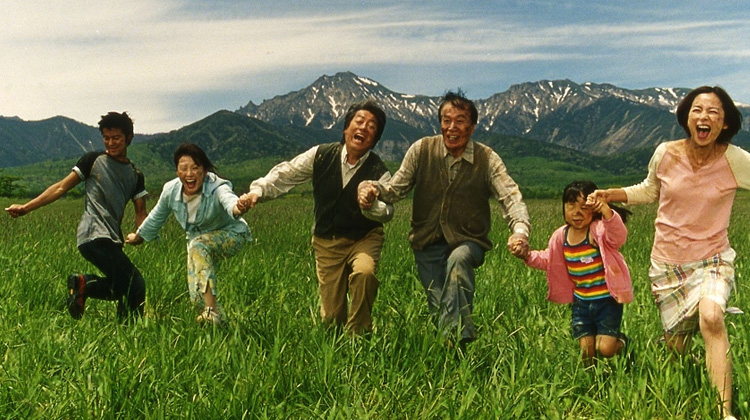
 Japanese genre king Takashi Miike, who has made more than one hundred films in his twenty-two-year career, outdoes himself in The Happiness of the Katakuris, an endlessly inventive tale of the Katakuris, a family that moves to the middle of nowhere to run a country inn. The only problem is that when guests finally arrive, they all end up dead — in bizarre, ridiculous ways — and the father decides to bury them instead of reporting the incidents, in order to protect the inn and the family’s future. Miike (Ichi The Killer, Audition, Thirteen Assassins) masterfully mixes comedy, romance, Claymation, music, murder, and mayhem in this enormously entertaining and highly original movie that is filled with a never-ending bag of surprises. The Happiness of the Katakuris is screening in a 35mm print May 7 at 8:15 as part of the IFC Center series “The Modern School of Film” and will be followed by a discussion with Brooklyn-based choreographer Mark Morris; the series continues May 9 with John M. Stahl’s 1945 melodrama Leave Her to Heaven, with Neil LaBute on hand to talk about it, May 13 with Andrei Tarkovsky’s The Mirror and Bill T. Jones, and May 28 with Vittorio De Sica’s Miracle in Milan and Laurie Anderson.

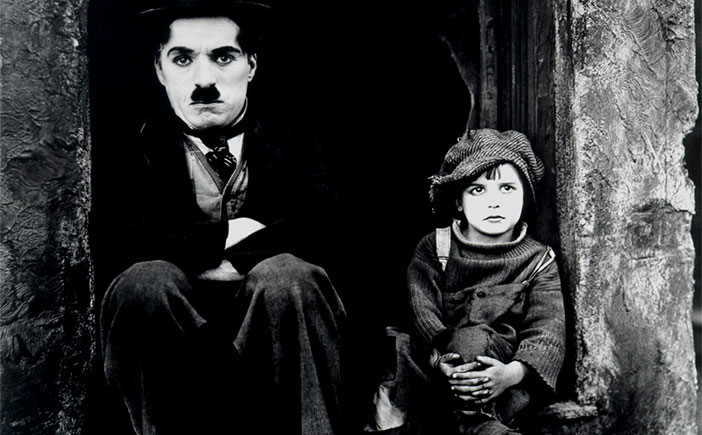
 Charlie Chaplin’s first feature, The Kid, was a breakthrough for the British-born silent-film star, a touching and tender sixty-eight-minute triumph about a poor soul getting a second chance at life. When a baby arrives at his doorstep, a Tramp (Chaplin) first tries to ditch the boy, but he ends up taking him to his ramshackle apartment and raising him as if he were his own flesh and blood. Although he has so little, the Tramp makes sure the child, eventually played by Jackie Coogan, has food to eat, clothes to wear, and books to read. Meanwhile, the mother (Edna Purviance, Chaplin’s former lover), who has become a big star, regrets her earlier decision and wonders where her son is, setting up a heartbreaking finale. In addition to playing the starring role, Chaplin wrote, produced, directed, and edited the film and composed the score for his company, First National, wonderfully blending slapstick comedy, including a hysterical street fight with an angry neighbor, with touching melodrama as he examines poverty in post-WWI America, especially as seen through the eyes of the orphan boy, played beautifully by Coogan, who went on to marry Betty Grable, among others, and star as Uncle Fester in The Addams Family. Chaplin’s innate ability to tell a moving story primarily through images reveals his understanding of cinema’s possibilities, and The Kid holds up as one of his best, alongside such other silent classics as 1925’s The Gold Rush and 1931’s City Lights. The Kid is screening on May 5 at 11:00 am as part of the Film Forum Jr. series for kids and families and will be preceded by a Little Rascals short and a Chaplin Dress-Alike Contest; the series continues May 12 with Alfred Hitchcock’s 1956 version of The Man Who Knew Too Much and May 19 with François Truffaut’s Small Change.