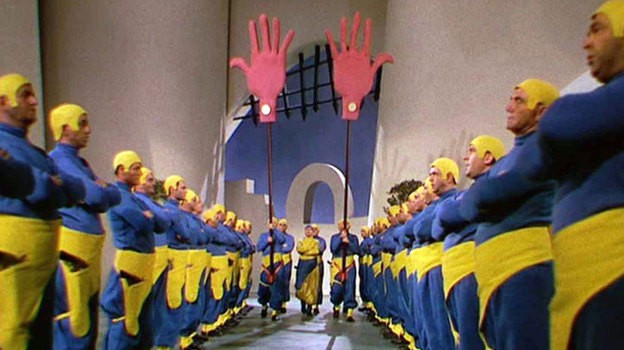
THE 5,000 FINGERS OF DR. T is the only live-action film written by Dr. Seuss
SUMMER ON THE HUDSON — MOVIES UNDER THE STARS: THE 5,000 FINGERS OF DR. T (Roy Rowland, 1953)
Riverside Park South, Pier 1 at West 70th St.
Wednesday, July 24, free, 8:30
www.nycgovparks.org
 Advertised as “the first Wonderama,” The 5,000 Fingers of Dr. T is also the first — and only — film written directly for the screen by Ted Geisel, also known as Dr. Seuss. Geisel famously disowned it upon its release, declaring it a “debaculous fiasco” and refusing to discuss it in his memoir. But the Technicolor fantasy is actually far from a fiasco, although it is surreal, bizarre, and very, very strange. Tommy Rettig (Lassie) stars as Bartholomew Collins, a young boy who hates taking piano lessons from the awful Dr. Terwilliker (Hans Conried, who played Uncle Tonoose on Make Room for Daddy and voiced such animated villains as Captain Hook and Snidely Whiplash). In his dreams, Bart finds himself trapped at the Terwilliker Institute, an evil place where Dr. T has hypnotized Bart’s widowed mother, Heloise (Mary Healy), into being his assistant and eventual bride, and where the Collins’s friendly plumber, August Zabladowski (Peter Lind Hayes, who was married to Healy in real life), is installing sinks in cells to be occupied by five hundred kids who are being forced to perform by Dr. T on an enormous winding piano that has 480,000 keys. Meanwhile, musicians who play other instruments are imprisoned in the dungeon, leading to one of the film’s best production numbers. Lost in a German Expressionist-type world, designed by Rudolph Sternad (Judgment at Nuremburg), filled with long shadows, tilted buildings, and evil lurking around every corner, Bart tries desperately to save his mother, the plumber, and himself — and once again be part of a “normal” family. Geisel came up with the story and wrote the screenplay with Allan Scott (So Proudly We Hail); Geisel also wrote the lyrics, with music by Frederick Hollander. However, most of the songs ended up on the cutting-room floor, with only six appearing in the film, which might actually be a good thing, because the musical numbers, save for “Dungeon Shlim Shlam,” are the weakest part of the movie (even if it got nominated for an Oscar for Best Scoring of a Musical Picture). Directed by Roy Rowland with a strong hand from producer Stanley Kramer, The 5,000 Fingers of Dr. T also features some ingenious set pieces and engaging contraptions among its overall weirdness. The film is screening July 24 as part of the “Summer on the Hudson: Movies under the Stars” series in Riverside Park; for a day-by-day listing of free summer movie screenings in New York City, go here.

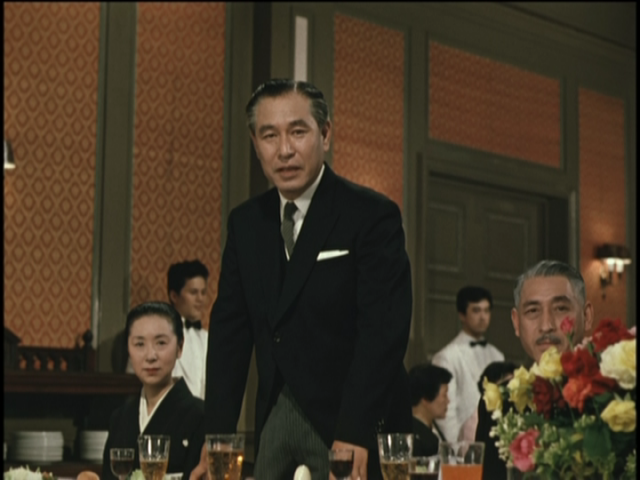
 Yasujirō Ozu’s first film in color, at the studio’s request, is another engagingly told exploration of the changing relationship between parents and children, the traditional and the modern, in postwar Japan. Both funny and elegiac, Equinox Flower opens with businessman Wataru Hirayama (Shin Saburi) giving a surprisingly personal speech at a friend’s daughter’s wedding, explaining that he is envious that the newlyweds are truly in love, as opposed to his marriage, which was arranged for him and his wife, Kiyoko (Kinuyo Tanaka). Hirayama is later approached by an old middle school friend, Mikami (Ozu regular Chishu Ryu), who wants him to speak with his daughter, Fumiko (Yoshiko Kuga), who has left home to be with a man against her father’s will. Meanwhile, Yukiko (Fujiko Yamamoto), a friend of Hirayama’s elder daughter, Setsuko (Ineko Arima), is constantly being set up by her gossipy mother, Hatsu (Chieko Naniwa). Hirayama does not seem to be instantly against what Fumiko and Yukiko want for themselves, but when a young salaryman named Taniguchi (Keiji Sada) asks Hirayama for permission to marry his older daughter, Setsuko (Ineko Arima), Hirayama stands firmly against their wedding, claiming that he will decide Setsuko’s future. “Can’t I find my own happiness?” Setsuko cries out. The widening gap between father and daughter represents the modernization Japan is experiencing, but the past is always close at hand; Ozu and longtime cowriter Kōgo Noda even have Taniguchi being transferred to Hiroshima, the scene of such tragedy and devastation. Yet there is still a lighthearted aspect to Equinox Flower, and Ozu and cinematographer Yuharu Atsuta embrace the use of color, including beautiful outdoor scenes of Hirayama and Kiyoko looking out across a river and mountain, a train station sign warning of dangerous winds, the flashing neon RCA Victor building, and laundry floating against a cloudy blue sky. The interiors are carefully designed as well, with objects of various colors arranged like still-life paintings, particularly a red teapot that shows up in numerous shots. And Kiyoko’s seemingly offhanded adjustment of a broom hanging on the wall is unforgettable. But at the center of it all is Saburi’s marvelously gentle performance as a proud man caught between the past, the present, and the future. Equinox Flower is screening July 23 at Film Forum, which is holding a “Reprise Presentation” of its earlier, extensive Ozu series with encore screenings of eight of the works, concluding with Tokyo Twilight and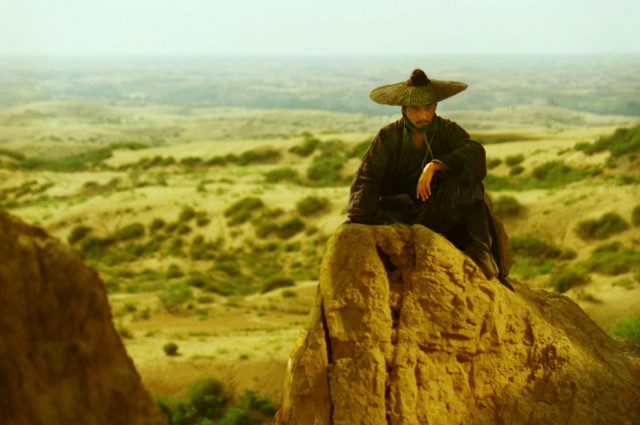
 Back in 1993, writer-director Wong Kar-wai’s Ashes of Time was released, a thinking man’s martial arts epic inspired by Jin Yong’s The Eagle-Shooting Heroes novels. With numerous versions in circulation and the original negatives in disrepair, Wong (Chungking Express, In the Mood for Love) decided to painstakingly reedit and restore the film fifteen years later, renaming it Ashes of Time Redux. The plot – which is still as confusing as ever — revolves around Ouyang Feng (Leslie Cheung), a loner who lives in the desert, where people come to him when they need someone taken care of. Every year he is visited by Huang Yaoshi (Tony Leung Ka Fai), who keeps him informed of the world outside jianghu — especially about his lost love (Maggie Cheung). Meanwhile, Murong Yang (Brigitte Lin) has demanded that Ouyang kill Huang for having jilted his sister, Murong Yin (also played by Lin), who in turn hires Ouyang to kill Yang. There’s also a blind swordsman (Tony Leung Chiu Wai), a peasant girl with a basket of eggs (Charlie Young), a poor, rogue swordsman (Jacky Cheung), and a bottle of magic wine that can erase memories. Or something like that. But what’s most impressive about Ashes of Time Redux is Christopher Doyle’s thrilling, swirling cinematography, which sweeps the audience into the film, and Wu Tong’s rearranged score, based on the original music by Frankie Chan and Roel A. Garcia and featuring soaring cello solos by Yo-Yo Ma. The film is screening July 21 as part of the Museum of the Moving Image series “Wong Kar-wai,” which continues with such other works by the Hong Kong Second Wave auteur as Days of Being Wild, As Tears Go By, In the Mood for Love, 2046, and his latest, The Grandmaster, for a special “Fist and Sword” event with Wong present.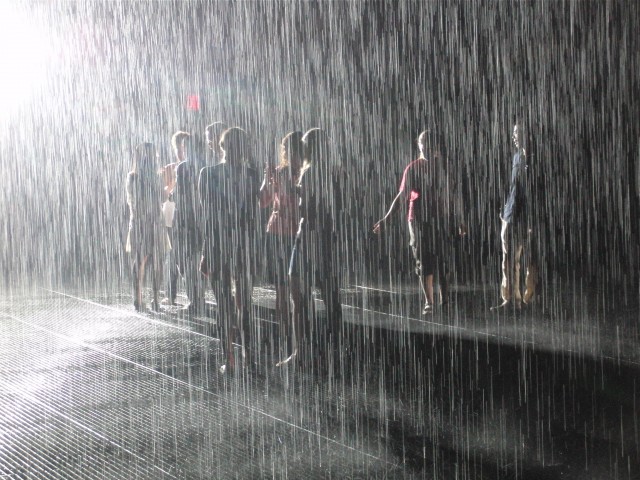
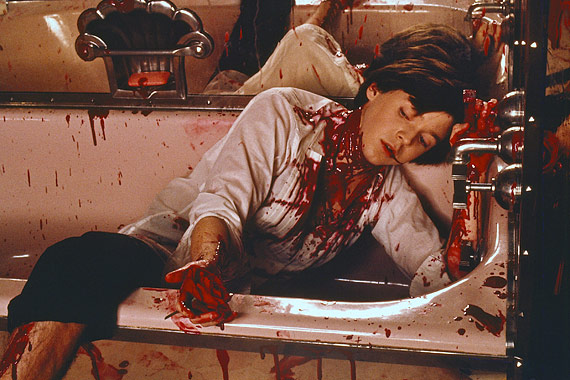
 Bud Cort (Harold) and Ruth Gordon (Maude) are magnificent in this glorious black comedy from director Hal Ashby (The Last Detail, Shampoo, Being There) and writer Colin Higgins (Foul Play, 9 to 5). Harold is an eighteen-year-old rich kid obsessed with death, regularly flirting with suicide. Maude is a fun-loving, free-spirited senior citizen approaching her eightieth birthday. Ashby throws in just the right amount of post-1960s social commentary, including a very funny antiwar scene, without becoming overbearing, as this could have been a maudlin piece of sentimental claptrap, but instead it’s far from it. Even the Cat Stevens soundtrack (“If You Want to Sing Out, Sing Out,” “Tea for the Tillerman,” “Where Do the Children Play?”) works. Harold and Maude is a tender, uproarious, bittersweet tale that is one of the best of its kind, completely unforgettable, enlightening, and, ultimately, life-affirming in its own odd way. Harold and Maude is screening in a DCP projection July 22 at 8:00 as part of the IFC Center series “Queer/Art/Film” and will be followed by a discussion with Chilean multidisciplinary artist, musician, and director Sebastián Silva (Crystal Fairy, Iwannawin & Friends). The monthly series, which consists of films selected by gay New York City artists, concludes August 19 with Stephen Frears’s My Beautiful Laundrette, picked by Brooklyn-born visual artist Chitra Ganesh.