twi-ny recommended events

HONG KONG DRAGON BOAT FESTIVAL 2013

Hong Kong Dragon Boat Festival

Hong Kong Dragon Boat Festival is set for this weekend in Flushing Meadows Corona Park

Flushing Meadows Corona Park
Saturday, August 10, and Sunday, August 11, free, 8:30 am – 6:00 pm
718-767-1776
www.hkdbf-ny.org

More than twenty-three hundred years ago, ailing and exiled Chinese minister and master poet Qu Yuan walked into the Miluo River, intent on ending his life via ritual suicide. His followers’ race to save him, and to honor his spirit by throwing dumplings into the water, is the folklore behind the annual Hong Kong Dragon Boat Festival, taking place this weekend in Flushing Meadows Corona Park. More than 150 teams will be participating in seventy-three races over the two days, in special dragon boats that can hold as many as twenty crewmembers; among the many competitors are the Schuykill Dragons, the NYHQ Baby Catchers, the Misfits, the Puff Puff Dragons, NY Presbyterian Lower Manhattan Hospital Poseidon, Dragonflies, NYSE Roar, JPMC White Tiger, DEP Dragon Pipers, TASCA Vikings, NYCB Queens Dragons, JPMC Vermillion Bird, MSKCC White Dragons, and Philadelphia Flying Phoenix Premier Flame. The twenty-third annual festivities also include live music and dance, martial arts demonstrations, food booths, and a family-friendly arts and crafts tent featuring the Balloon Man, calligraphy, rice doll making, face painting, kite building, origami, bead stringing, and more. The performances begin on Saturday morning at 10:30 with the Chinese Music Ensemble of New York and continue with Lion and Dragon Dancers with percussionists at the 11:30 opening ceremonies, indie rockers BAAM at 1:00, I Giullari di Piazza music and dance at 2:00, and Shaolin Masters at 3:00. Sunday’s lineup gets under way at 10:00 with Damien Bassman and his Broadway friends, followed by American tap dancing at 11:00, the Bailen Brothers at noon, Mariachi Aguila y Plata at 1:00, the Mawuena Kodjovi Trio at 2:00, and Shaolin Masters at 3:00.
SUMMER STREETS: VOICE TUNNEL BY RAFAEL LOZANO-HEMMER

(photo by twi-ny/mdr)

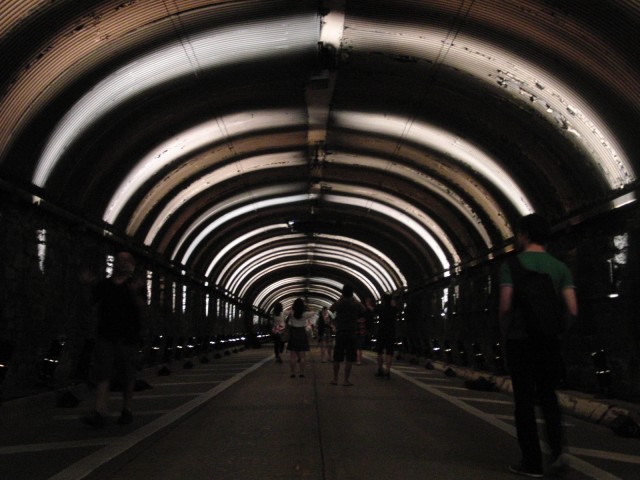
Rafael Lozano-Hemmer’s “Voice Tunnel” welcomes pedestrians into the Park Ave. Tunnel for the first time ever (photo by twi-ny/mdr)

SUMMER STREETS
Park Ave. Tunnel, 33rd – 40th Sts.
Saturday, August 10 & 17, free, 7:00 am – 1:00 pm
www.nyc.gov
voice tunnel slideshow

In such multimedia projects as “Open Air,” “Semioptics for Spinoza,” “First Surface,” and “Voice Array,” Mexican-born Canadian electronic artist Rafael Lozano-Hemmer has used light, sound, movement, and touch to create interactive, immersive installations that require public participation. In 2008, his “Pulse Park” measured the heart rate of individuals in Madison Square Park and turned those biometric rhythms into beams of light that radiated across the oval lawn. Lozano-Hemmer’s latest New York piece, “Voice Tunnel,” is the highlight of this year’s “Summer Streets” festival, in which the city closes down Park Ave. to vehicular traffic for three successive Saturdays (August 3, 10, and 17) from 7:00 am to 1:00 pm, instead encouraging people to walk, jog, run, bike, blade, and stroll down the famous thoroughfare and make their way to five rest stops filled with special free activities.

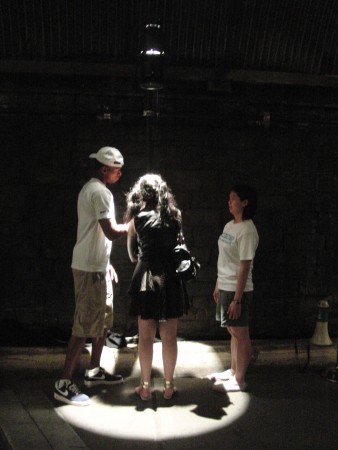
Visitors add their voice to affect light and sound in interactive tunnel installation (photo by twi-ny/mdr)

Visitors add their voice to affect light and sound in interactive tunnel installation (photo by twi-ny/mdr)

For “Voice Tunnel,” part of Lozano-Hemmer’s “Relational Architecture” series, the artist has installed three hundred theatrical spotlights that line both sides of the tunnel, projecting arcs of light that race across the ceiling, then go dark. The speed and frequency of the chasing lights are directly impacted by people’s voices; near the center of the tunnel, visitors can say anything they want into a microphone box, lasting between one and five seconds, with volume mattering. The word or phrase can then be heard echoing among the one hundred and fifty loudspeakers in the tunnel, mixing with the sounds of the previous eighty-nine participants. (Try to seek out the exact speaker that is emitting your recording.) Up to five hundred people are allowed in the tunnel at a time, and that is a first; the tunnel, which runs from Thirty-Third to Fortieth St., has been closed to pedestrians since it was built in 1834. Try not to get too caught up in taking pictures and video and instead let the light and sound envelop you, since without your involvement, nothing would happen. It’s also fascinating to realize that Lozano-Hemmer, who refers to his oeuvre as “antimonuments for alien agency,” is primarily using old-fashioned, more analog-type materials for “Voice Tunnel,” although everything is processed through a central computer station. “Depending on what is happening that day, you might see a very wide variety of different reactions, and that’s what I’m excited about,” Lozano-Hemmer says about the project. “I’m excited that this platform is out of my control.” “Voice Tunnel” is an enticing, engaging, and just plain fun display; don’t miss it.

FRONT/ROW CINEMA: HUGO

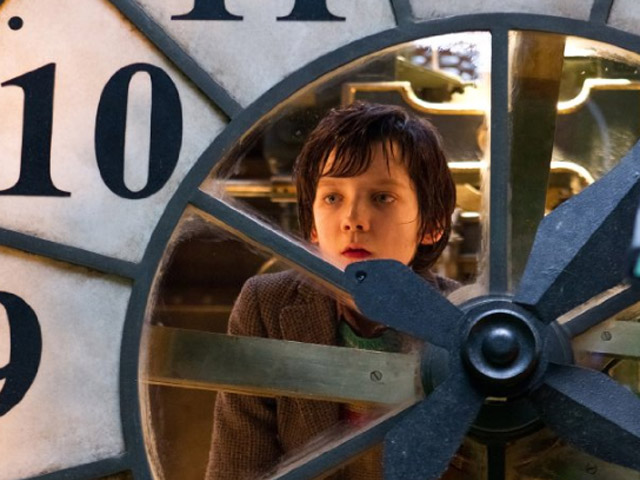
Asa Butterfield stars as a homeless orphan on a mission in Martin Scorsese’s 3-D adventure

SEE/CHANGE: HUGO (Martin Scorsese, 2011)
South Street Seaport
Corner of Front & Fulton Sts.
Saturday, August 10, free, dusk
www.southstreetseaport.com
www.hugomovie.com

Martin Scorsese wears his cinematic heart on his sleeve in his first family-friendly film, Hugo. Based on Brian Selznick’s Caldecott-winning 2007 illustrated historical-fiction novel The Invention of Hugo Cabret, the 3-D movie follows the adventures of the title character, a homeless orphan boy (Asa Butterfield) who survives by his wits in a Paris train station in the early 1900s. He spends his days stealing small bits of food, winding the big clock, avoiding Inspector Gustav (Sacha Baron Cohen), and trying to find parts for an automaton he is rebuilding, hoping it will have a message for him from his father (Jude Law). He soon makes his only friend, a girl named Isabelle (Chloë Grace Moretz) who is being raised by her godparents, the bitter Papa Georges (Ben Kingsley) and his wife, Mama Jeanne (Helen McCrory). When it turns out that Papa Georges is the one and only Georges Méliès, who made the world’s first science-fiction film, A Trip to the Moon, among hundreds of others, then was thought to have died in obscurity, all of his work destroyed, Hugo and Isabelle, along with the help of film historian René Tabard (Michael Stuhlbarg), are determined to resurrect Papa Georges and his reputation. Gorgeously shot by Robert Richardson and featuring marvelous period sets by Dante Ferretti, Hugo is beautiful to look at, the camera roaming through the immense train station and up the tall clock tower like in a Jules Verne story. Such side plots as the budding romances between a café owner (Frances de la Tour) and the newspaper seller (Richard Griffiths) and between Gustav and a shy flower girl (Emily Mortimer) feel forced, and the main narrative meanders its way into treacly territory as all the parts slowly come together. At its heart, Hugo is a movie about the love of movies, paying tribute to the early cinema of Méliès, Harold Lloyd, and others but it gets too stuck on the underlying theme of the preservation of old films, one of Scorsese’s driving forces. Still, Hugo is a visual treat in which Scorsese makes the most of 3-D technology, particularly in the first half, before things get a little too sticky (and slickly) sweet, even for a children’s film. Hugo, which was nominated for eleven Oscars and won five technical awards — Best Cinematography, Best Art Direction, Best Visual Effects, Best Sound Editing, and Best Sound Mixing — is screening August 10 as part of the South Street Seaport’s “Front/Row” “See/Change” series, which continues August 14 with The Amazing Spider-Man, August 17 with Chicago, and August 21 with Back to the Future. For a day-by-day listing of free summer movie screenings throughout New York City, go here.
FUN CITY — NEW YORK IN THE MOVIES 1967-75: YOU’RE A BIG BOY NOW

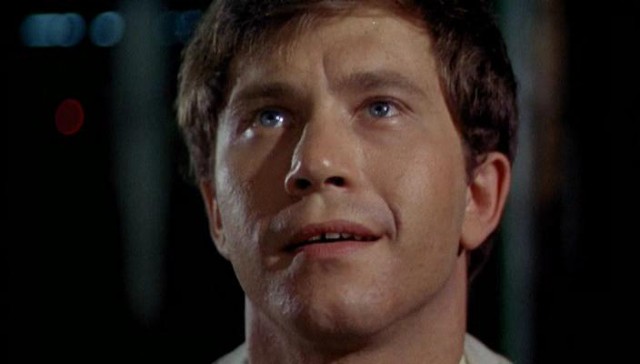
Peter Kastner is determined to make a new life for himself in the big city in early Coppola film

Peter Kastner is determined to make a new life for himself in the big city in early Coppola film

YOU’RE A BIG BOY NOW (Francis Ford Coppola, 1966)
Museum of the Moving Image
35th Ave. at 36th St., Astoria
Saturday, August 10, free with museum admission, 2:00
Series runs August 10 – September 1
718-777-6800
www.movingimage.us

Poor Bernard Chanticleer (Peter Kastner). His mother (Geraldine Page) sends him locks of her hair and pays a prudish landlord (Julie Harris), aided by a tough cop (Dolph Sweet), to make sure no girls visit him in his new apartment. Bernard’s father (Rip Torn) rules over him with an iron fist in the basement of the New York Public Library. A nice, innocent young woman (Karen Black in her first major role) is interested in him, but he wants a psycho go-go dancer/actress (Elizabeth Hartman). Meanwhile, he is getting all the wrong advice from his best friend (Tony Bill). Francis Ford Coppola’s little-known romantic comedy — his second feature, following Dementia 13 — earned Page an Academy Award nomination, Kastner a BAFTA nomination as Most Promising Newcomer, and a Palme d’Or nomination at Cannes. Coppola uses the New York City settings with a charming intelligence and wit, whether Bernard is chasing a kite across the Sheep Meadow, wandering through the Times Square peep shows, or being chased through the New York Public Library. The Lovin’ Spoonful supplies the fabulously sixties soundtrack. Based on David Benedictus’s novel, You’re a Big Boy Now kicks off the Museum of the Moving Image series “Fun City: New York in the Movies 1967-75,” with guest curator J. Hoberman on hand to introduce the film. The festival, which runs August 10 through September 1, includes a wide range of works made in and about the Big Apple, from such familiar favorites as Rosemary’s Baby, The French Connection, Superfly, Midnight Cowboy, and Dog Day Afternoon to such lesser-known treats as Bye Bye Braverman, The Angel Levine, Little Murders, The Landlord, and Dick Fontaine’s 1970 documentary, Norman Mailer vs. Fun City.
ZIPPER: CONEY ISLAND’S LAST WILD RIDE

ZIPPER (photo by Amy Nicholson)

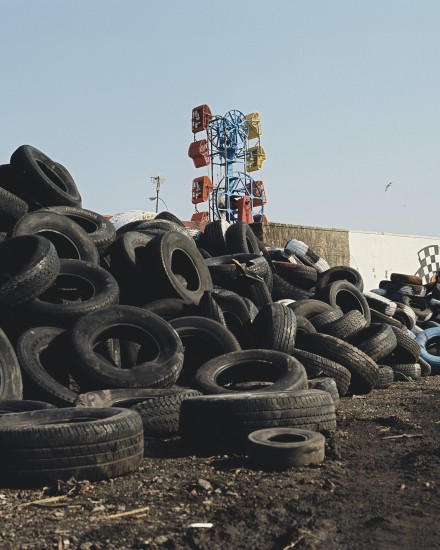
The Zipper ride serves as a central focus on what is happening to Coney Island in new documentary (photo by Amy Nicholson)

ZIPPER: CONEY ISLAND’S LAST WILD RIDE (Amy Nicholson, 2012)
IFC Center
323 Sixth Ave. at West Third St.
August 9-29
212-924-7771
www.ifccenter.com
www.zipperfilm.com

The past, present, and future of Coney Island as an amusement park mecca is explored through the microcosm of one specific attraction in Amy Nicholson’s bittersweet documentary, Zipper: Coney Island’s Last Wild Ride. Since the mid-to-late 2000s, the New York City government and private developers have been pursuing controversial plans to rezone the Coney Island district, with proposals for high-rise condos, chain stores and restaurants, and new, modern rides to replace the old-time classics, which are being torn down one at a time. But even as agreements are made, contracts are signed, and games and amusements evicted, Coney Island has not turned into a futuristic fantasyland, instead filled with empty lots as everyone battles over what to put where, with hundreds of millions of dollars at stake. Nicholson focuses on the crazy Zipper ride, in which customers are locked in a cage, then lifted high in the air and twisted and turned in multiple directions; she speaks at length with longtime Coney Island resident and Zipper owner Eddie Miranda and his crew of Jerry, Joey, Don, and Larry, who together represent what Coney Island is all about — a gritty, very real, and historic place where people flock to have fun, free of corporate greed and suburban sameness. Nicholson also meets with the big-time players in the controversy, including several members of the New York City Economic Development Corporation and the Department of City Planning (Amanda Burden, Seth W. Pinsky), Thor Equities head Joe “Coney Island Joey” Sitt, and city councilman Dominic Recchia, as they offer their views on what should be done with the beachfront property. Nicholson (Muskrat Lovely) also captures numerous protests and public meetings where people gather to try to save and protect the indelible nature and unique character of Coney Island, a one-of-a-kind location. Although Nicholson clearly has an agenda — in her official director’s statement, she explains, “My hope is to share this story with anyone who appreciates the noisy, unfettered, chaotic, all-welcoming, anything goes atmosphere of a place like Coney Island; the one place in the world where you wouldn’t find an Applebee’s” — she doesn’t get overly nostalgic about the former resort destination, instead presenting the facts, which are not pretty. Zipper is running August 9-13 at the IFC Center, with Nicholson participating in several Q&As on Friday, Saturday, and Sunday.

CONEY ISLAND HISTORY DAY 2013

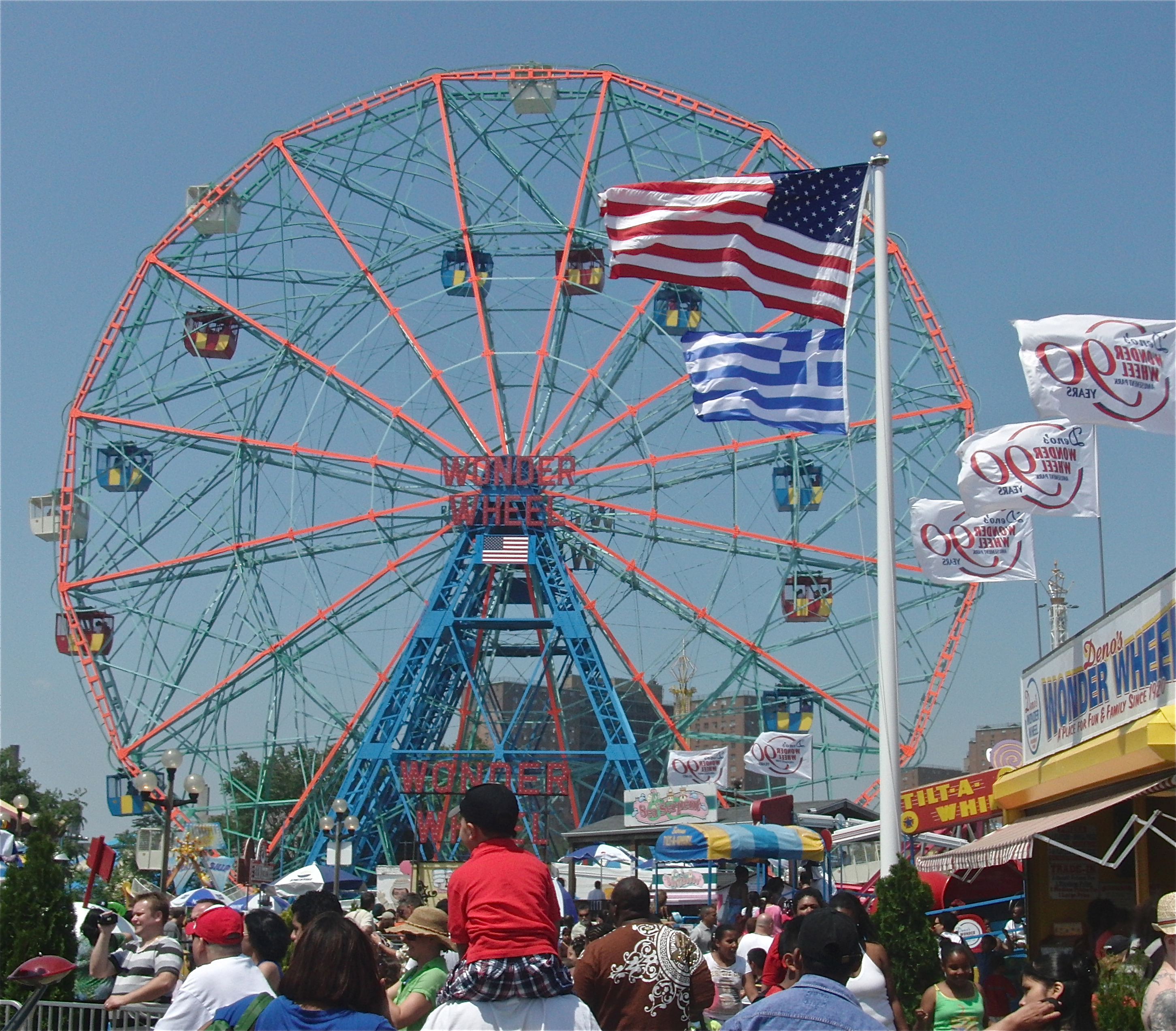
Deno’s Wonder Wheel is central attraction on Coney Island History Day (photo by twi-ny/mdr)

Coney Island History Project & Deno’s Wonder Wheel Park
West 12th St. Dreamland Pedestrian Plaza
Saturday, August 10, free, 1:00 – 6:00
www.coneyislandhistory.org

As the future of Coney Island remains in doubt, with the government and developers battling over how to rezone the famed district and take away the charm of the People’s Playground, the location’s storied past will be celebrated on August 10 at the third annual Coney Island History Day. This year’s old-timey festivities feature live entertainment from the Banjo Rascals, organ grinders from the Automatic Musical Instrument Collectors Association and the Carousel Organ Association of America, Professor Phineas Feelgood’s World of Magic, HumanToon/Street Sorcerer Kevin C Carr, and the Lady Circus. Visitors are encouraged to dress up in 1920s costumes, take a trivia test, and offer their own stories to the Oral History Archive. In addition, the Coney Island History Project will open its latest exhibition, “The History of Deno’s Wonder Wheel: Three Generations,” exploring one of the world’s greatest amusement-park attractions.

DOWNTOWN DANCE FESTIVAL

DOWNTOWN DANCE FESTIVAL
August 11-15, Battery Park, free, 12 noon or 1:00
The Dance WE Made: August 9, 10, 12, multiple locations
La Intrusa Danza, August 12-13, multiple locations
www.batterydance.org

Despite undergoing major renovations, Battery Park will once again host the annual Downtown Dance Festival, now in its the thirty-second year. The festivities begin on Sunday, August 11, at 1:00, with performances by the Battery Dance Company, Greece’s Chapter Two, Dancing Earth, Limón Dance Company, SLK Ballet, and France’s Vendetta Methea & Co. Monday at noon features Chapter Two and Dancing Earth, Tuesday at noon Limón Dance Company and Vendetta Mathea & Co., and Wednesday at noon Battery Dance Company, SLK Ballet, England’s the Dance WE Made, and Spain’s La Intrusa Danza. The Dance WE Made, in which dancer and choreographer Tim Casson creates a perpetual work in progress based on moves demonstrated to him by random people on the street, will also be at the South Street Seaport on August 9 from 11:00 am to 2:00 pm, Bowling Green on August 10 from 11:00 to 1:00, and City Hall from 3:00 to 5:00. La Intrusa Danza, which consists of Virginia García and Damián Muñoz, will also be at City Hall Plaza on August 12 at 5:00 and 55 Water St. on August 13 at 5:00. The programming concludes in Battery Park on August 15 at noon with the Erasing Borders Festival of Indian Dance, with Rama Vaidyanathan, Rani Khanam, Vijaya Lakshmi, Rahul Acharya, and the Gurukul Dance Company.