twi-ny recommended events

CBGB FESTIVAL — THE PROMISE: THE MAKING OF DARKNESS ON THE EDGE OF TOWN

THE PROMISE: THE MAKING OF DARKNESS ON THE EDGE OF TOWN (Thom Zimny, 2010)
Landmark Sunshine Cinema
143 East Houston St. between First & Second Aves.
Thursday, October 10, 5:30
Festival runs October 9-12
212-330-8182
www.landmarktheatres.com
www.cbgb.com

After the breakout success of Born to Run in 1975, Bruce Springsteen became embroiled in a lawsuit over control of his music that prevented him from going into the studio to make the highly anticipated follow-up. Springsteen found himself at a crossroads; “You didn’t know if this would be the last record you’d ever make,” he says in the revealing behind-the-scenes documentary The Promise: The Making of Darkness on the Edge of Town. Combining archival footage of the Darkness sessions shot by Barry Rebo with new interviews with all the members of the E Street Band in addition to producers Jimmy Iovine, Jon Landau, and others, editor and director Thom Zimny melds Bruce’s past with the present, delving deep into Springsteen’s complex, infuriating, and fiercely dedicated creative process. “I had to disregard my own mutation,” Springsteen says at one point, regarding his battle to avoid getting caught up in the hype that came with Born to Run, so he decided that his next album would be “a meditation on where are you going to stand.” Rebo captures Springsteen and the E Street Band — from a bare-chested Bruce to a bandanna-less Steve Van Zandt — rehearsing and recording alternate takes of familiar songs as well as tunes that would later wind up on such albums as The River and Tracks, opening up Bruce’s famous notebooks and examining his intense creative process, which included throwing away dozens and dozens of songs that he believed just didn’t fit within his vision of what Darkness should be. Two of the most fascinating parts of the The Promise involve Patti Smith discussing “Because the Night,” explaining that the lyrics she added are about her waiting for her boyfriend at the time (and later husband), Fred “Sonic” Smith, to call her, and Toby Scott talking about mixing the Darkness record to get the sound pictures in Bruce’s head onto vinyl. The Promise: The Making of Darkness on the Edge of Town is screening October 10 at the Landmark Sunshine as part of the CBGB Festival, which also includes such other music-related films as Bad Brains: A Band in DC, Big Star: Nothing Can Hurt Me, Iggy and the Stooges Raw Power Live — In the Hands of the Fans, Stevie Nicks: In Your Dreams, and Nick Mead’s Clarence Clemons: Who Do I Think I Am.
NEW YORK CITY BALLET: CONTEMPORARY CHOREOGRAPHERS

(photo by Paul Kolnik)

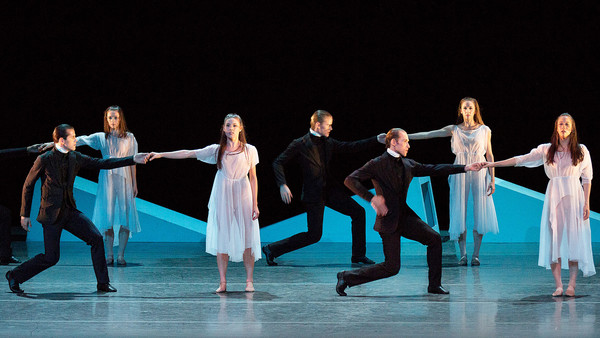
Eight dancers explore the Salem Witch Trials in Angelin Preljocaj’s SPECTRAL EVIDENCE (photo by Paul Kolnik)

David H. Koch Theater
20 Lincoln Center Plaza
Tuesday, October 8, 7:30, Thursday, October 10, 7:30, and Saturday, October 12, 2:00, $29-$159,
212-496-0600
www.nycballet.com

The fall edition of the New York City Ballet’s Contemporary Choreographers makes for a splendid evening at the David H. Koch Theater, featuring a trio of works from three immensely talented artists. The program begins with a slightly revised version of forty-year-old English choreographer Christopher Wheeldon’s 1998 American School of Ballet piece Soirée Musicale, set to Samuel Barber’s “Souvenirs Ballet Suite, Op. 28” from 1955. Wheeldon, a former NYCB principal who left his company, Morphoses, in 2010 and was named artistic associate of the Royal Ballet in 2012, has fun with ballet tropes and sexual innuendo in Soirée Musicale, the men in tuxedoes, the women in long tutus, proceeding through a waltz, a schottische, a tango, a two-step, and a lovely pas de deux (Lauren Lovette and Zachary Catazaro) before bringing all together for the grand finale. Next, fifty-six-year-old French filmmaker and choreographer Angelin Preljocaj presents the world premiere of the dazzling Spectral Evidence, set to half a dozen previously recorded John Cage works, some with vocals. Preljocaj, who formed Ballet Preljocaj in December 1984 and created La Stravaganza for NYCB in 1997, uses the Salem Witch Trials as inspiration for Spectral Evidence, with four male dancers (Robert Fairchild, Adrian Danchig-Waring, Amar Ramasar, and Taylor Stanley), in priestly black outfits with white collars, and four women dancers (Tiler Peck, Megan Fairchild, Georgina Pazcoguin, and Gretchen Smith), in long off-white dresses with sinful patches of red. The set makes fascinating use of white wedges that transform into various other objects, including angled slides and a coffin. Spectral Evidence is a mesmerizing piece that could have gone on all night.

Robert Fairchild searches for his true love in Alexei Ratmansky's NAMOUNA, A GRAND DIVERTISSEMENT (photo by Paul Kolnik)

Robert Fairchild searches for his true love in Alexei Ratmansky’s NAMOUNA, A GRAND DIVERTISSEMENT (photo by Paul Kolnik)

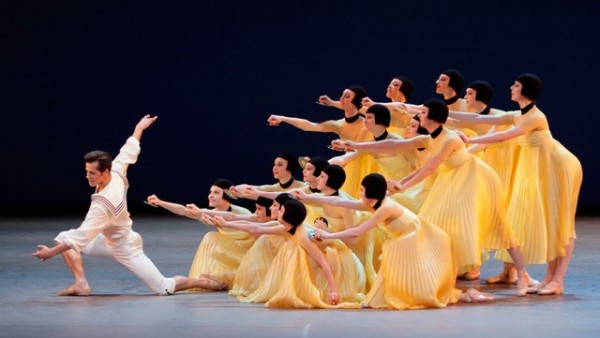
The program concludes with forty-five-year-old Russian choreographer Alexei Ratmansky’s 2010 Namouna, A Grand Divertissement, set to nineteenth-century composer Édouard Lalo’s “Namouna.” Ratmansky, the former director of the Bolshoi Ballet and the first artist in residence at American Ballet Theatre, takes on classical ballet clichés in the piece, which features seven primary dancers (Sterling Hyltin, Tyler Angle, Jenifer Ringer, Sara Mearns, Megan Fairchild, Daniel Ulbricht, and Abi Stafford) and another two dozen troupe members smoking cigarettes, acting out scenes reminiscent of silent film, and picking on one poor sailor who is trying to find his love. The costumes, by Marc Happel and Rustam Khamdamov, range from long-flowing yellow gowns and wigs that evoke both Cleopatra and Louise Brooks to bronze outfits and tight-fitting hats that recall Fritz Lang’s Metropolis to colorful body-hugging tops and short skirts accompanied by swim caps. The piece does get repetitive and goes on a bit too long, but it’s still vastly entertaining. This Contemporary Choreographers program, which repeats on October 8, 10, and 12, should appeal to both adventurous ballet regulars as well as those predisposed to more modern dance.

FRANÇOIS XAVIER LALANNE: SHEEP STATION

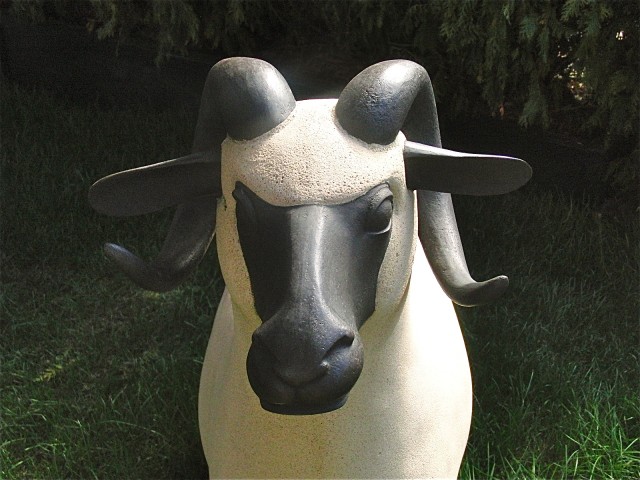
François-Xavier Lalanne’s Moutons will continue grazing at Getty Station in Chelsea through October 20 (photo by twi-ny/mdr)

François-Xavier Lalanne’s Moutons will continue posing for photos and grazing at Getty Station in Chelsea through October 20 (photo by twi-ny/mdr)

Getty Station
239 Tenth Ave. at 24th St.
Extended through November 24, free
www.gettystation.com
sheep station photo set

In late August, the main colors visible at the northwest corner of Tenth Ave. and Twenty-Fifth St. were the red and white of the Getty gas station logo and the yellow and black of taxis lining up to fill up their tanks, as they have done there for decades. But on September 17, that was replaced by the green of lush grass and small trees and the black, brown, and white of more than two dozen sheep, each one cuter than the last. In the fall of 2009, ten of these “Moutons,” bronze and epoxy stone sculptures made by François-Xavier Lalanne (1927-2008), could be seen grazing on a Park Ave. meridian in Midtown, part of the exhibit ”Les Lalanne on Park Avenue,” which also included works by Lalanne’s wife, Claude. Now real estate developer and art collector Michael Shvo, in conjunction with Paul Kasmin Gallery, has installed “Sheep Station,” consisting of twenty-five sheep from François-Xavier’s “Les Noveaux Moutons” and “Mouton de Pierre” series, creating a lovely, hilly fenced-in respite in Chelsea. The male, female, and baby sheep are ever peaceful and, mostly, content, having adapted quickly to their temporary new home. Shvo even had fun with the Getty signage, using it to announce the name and length of the show. And don’t be surprised if that man watering the grass and small trees on a bright, sunny afternoon is Shvo himself. Shvo, who also collects the work of such artists as Pablo Picasso, Tom Wesselman, Alexander Calder, Jean-Michel Basquiat, Andy Warhol, and others, has a few more Getty Station installations planned once the sheep are done grazing on October 20, but he’s not telling yet what they will be. After that, he and fellow developer Victor Homes will turn the site into a luxury High Line condo.

NYFF 51: REVIVALS: BOY MEETS GIRL

BOY MEETS GIRL

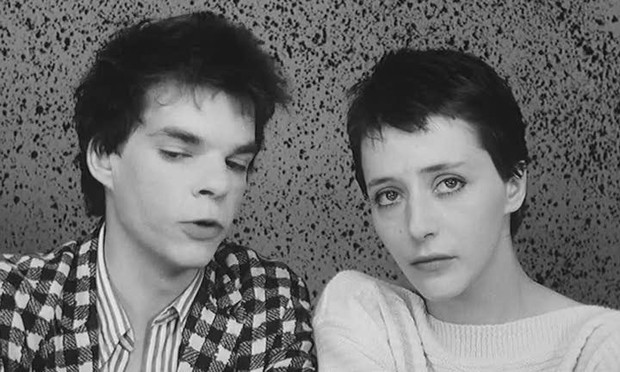
Alex (Denis Lavant) and Mireille (Mireille Perrier) share their unique views on life in Leos Carax’s Nouvelle Vague tribute

BOY MEETS GIRL (Leos Carax, 1984)
Film Society of Lincoln Center
Francesca Beale Theater, 144 West 65th St. between Broadway & Amsterdam Ave.
Wednesday, October 9, 6:00
Revivals section continues through October 11
212-355-6160
www.filmlinc.com

French auteur Leos Carax learned a lot about making movies during his stint as a critic for Cahiers du cinéma, the magazine that came to represent the Nouvelle Vague movement of the 1950s. Born Alexandre Oscar Dupont in a Paris suburb in 1960, Carax released his first feature-length film in 1984, Boy Meets Girl, a black-and-white homage to the legacy of Jean-Luc Godard, François Truffaut, and Claude Chabrol as well as King Vidor, Buster Keaton, and Ingmar Bergman. Yet despite its obvious influences, Boy Meets Girl triumphs as a uniquely told tale of a strange young man named Alex (Carax’s onscreen alter ego, Denis Lavant) and his oddball adventures in search of love and truth. Dumped by Florence (Anna Baldaccini), he fakes his way into a party, where he finds Mireille (Mireille Perrier), a suicidal model who is intrigued by him. Carax, who would go on to make such well-received films as Mauvais Sang, Pola X, and Holy Motors, fills Boy Meets Girl with wonderful little touches, beautifully photographed in long takes by Jean-Yves Escoffier, from a repeating black-and-white clothing pattern and a battle with a pinball machine to a sudden burst of tap-dancing and a mysterious meeting along the Seine. Alex is a warped version of Jean-Pierre Léaud’s Antoine Doinel, but even though Alex as a lead character is no match for Truffaut’s seminal figure in the history of twentieth-century cinema, it’s still impossible to take your eyes off him as he continues to do and say a whole lot of very weird and unpredictable things. Boy Meets Girl is screening on October 9 at 6:00 at Lincoln Center’s Francesca Beale Theater as part of the Revivals section of the fifty-first New York Film Festival, comprising eleven works made between 1946 and 2000 that are worth a second (or first) look. The series also includes Luchino Visconti’s Sandra, Apichatpong Weerasetakhul’s Mysterious Object at Noon, Arthur Ripley’s The Chase, and Carax’s Mauvais Sang, among others.

OUT IN THE DARK

OUT IN THE DARK

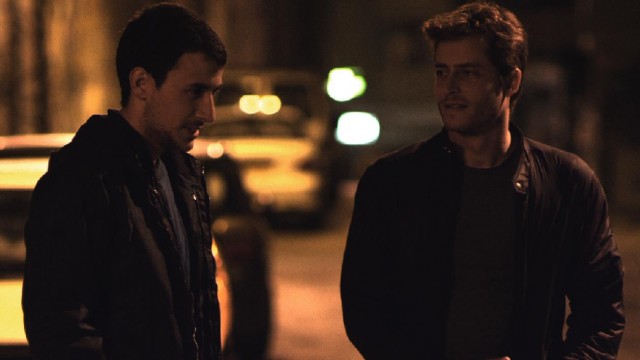
Palestinian student Nimr (Nicholas Jacob) and Israeli lawyer Roy (Michael Aloni) fall in love and face danger in OUT IN THE DARK

OUT IN THE DARK (Michael Mayer, 2012)
Cinema Village
22 East 12th St. between University Pl. & Fifth Ave.
212-924-3363
www.outinthedarkthemovie.com
www.cinemavillage.com

Israeli-born, L.A.-based director Michael Mayer’s debut feature film, Out in the Dark, is a gripping romantic thriller about two men forced to make dangerous choices if they want their love to survive. One night in a Tel Aviv gay club, Israeli lawyer Roy (Michael Aloni) and Palestinian student Nimr (Nicholas Jacob, in his acting debut) instantly hit it off. Roy works in his father’s business, and his parents (Alon Oleartchik and Cheli Godenberg) accept his sexuality. But Nimr, who lives in Ramallah and has just received a permit to cross the border in order to take an important class in Tel Aviv, has to hide his sexual orientation from his younger sister, Abir (Palestinian singer Maysa Daw), his mother, Hiam (Khawlah Haj), and his older brother, Nabil (Jameel Khouri), who is part of a local gang that has it in for gays and Palestinian collaborators. So when Nimr’s permit is revoked by a hard-line Israeli officer, Gil (Alon Pdut), who insists that Nimr give him information, Roy and Nimr have to fight for their relationship — and, perhaps, their lives. Written by Mayer with Yael Shafrir, Out in the Dark is photographed in intimate, dark close-ups by Ran Aviad that heighten the emotional tension. The story never gets polemic or takes sides, as it shows that there are good and bad people in both Israel and Palestine, providing a microcosm of the long, violent stalemate that has led to so many individuals paying a severe personal price. Winner of Audience Awards at eight film festivals around the world (in addition to other prizes), Out in the Dark is currently screening at Cinema Village.
OUTSIDE IN

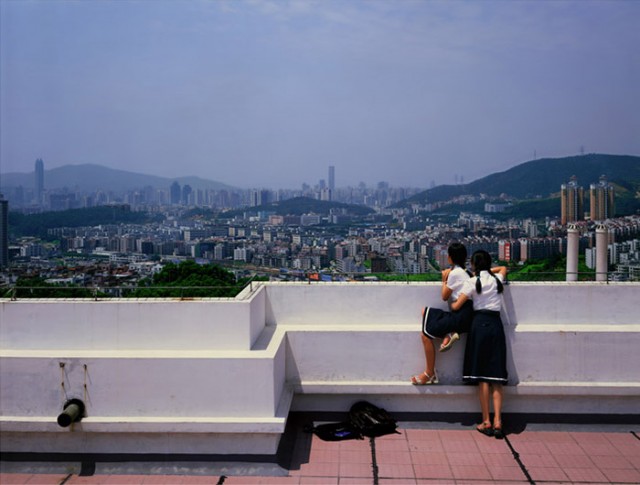
Weng Fen, “Bird’s Eye View: Shenzhen,” C-print, 2002 (collection of Andrew Rayburn and Heather Guess)

Weng Fen, “Bird’s Eye View: Shenzhen,” C-print, 2002 (collection of Andrew Rayburn and Heather Guess)

CHINESE ART COLLECTION OF ANDREW RAYBURN AND HEATHER GUESS
Whitebox Art Center
329 Broome St. between Chrystie St. & Bowery
Through October 6, free (12 noon – 6:00 Saturday, 12 noon – 5:00 Sunday)
212-714-2347
www.whiteboxny.org

“Assembling a private collection is an incredibly satisfying journey,” Heather Guess writes in the catalog to the three-day gallery show “Outside In,” running at Whitebox through October 6. The two-floor exhibition features painting, photography, and sculpture from twenty-one contemporary Chinese artists, many of whom Guess visited in their studios during recent trips to Beijing and Shanghai with Chinese art expert Barbara Pollack, author of The Wild, Wild East: An American Art Critic’s Adventures in China and curator of the upcoming Tampa Museum of Art show “My Generation: Young Chinese Artists.” Guess and her husband, Andrew Rayburn, who are based in New York and Cleveland, have been collecting Chinese art since 2004; the Whitebox display includes exemplary works by Yang Fudong, Ai Weiwei, Cai Guo-Qiang, Zhang Xiaogang, and Lin Tianmiao and Wang Gongxin, among others. Chen Wei shoots such photographs as “The Door That Is Often Kept Closed” and “Some Dust” in an ever-changing room in his studio, exploring mysterious mental states and the human mind. Hai Bo’s “The Northern No. 7” and Wang Ningde’s “Some Days No. 9” offer stark counterpoints to each other; in the former, a man bicycles toward the viewer on a rural road, surrounded by emptiness, while in the latter, a man and his young son stand in grayness, their backs to the camera, as trains pass by on either side.

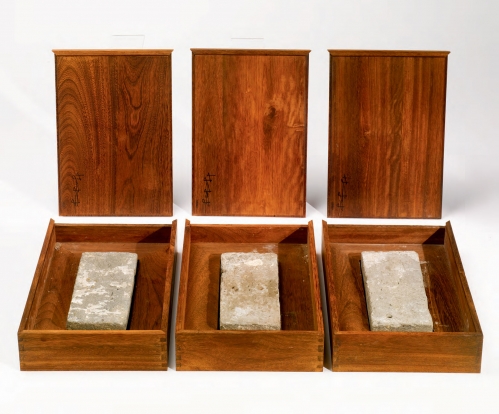
Ai Weiwei, “A Gift from Beijing,” teili wood and bricks, 2002

Ai Weiwei, “A Gift from Beijing,” teili wood and bricks, 2002 (collection of Andrew Rayburn and Heather Guess)

The bars of Xu Bing’s “Birdcage” are composed of words; if you make a noise at the bird, it will make a noise back. “This is not an institutional show and does not represent an encyclopedic look at Chinese contemporary art,” Pollack writes in her catalog essay. “It is a personal selection made by two collectors . . . who over the past decade have watched their interest evolve from a curiosity about China as an emerging superpower to firsthand encounters with artists in Beijing and Shanghai.” Taking its name from the 1998-99 “Inside Out: New Chinese Art” exhibit at Asia Society and SFMoMA and the Princeton University Art Museum’s 2009 “Outside In: Chinese x American x Contemporary Art,” Guess and Rayburn’s “Outside In” offers an inside look at the collectors’ “incredibly satisfying journey” that now can be enjoyed by anyone.

CHAGALL FAMILY DAY

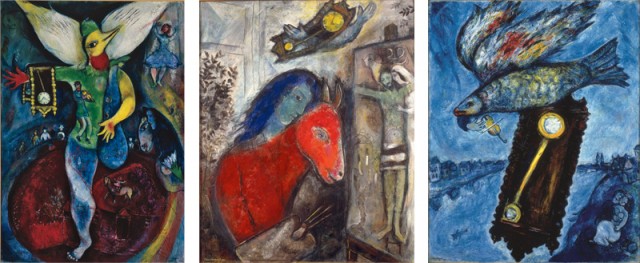
Chagall Family Day at the Jewish Museum offers special look at new exhibit (© 2013 Artists Rights Society (ARS), New York / ADAGP, Paris./Marc Chagall)

Chagall Family Day at the Jewish Museum offers special look at new exhibit (© 2013 Artists Rights Society (ARS), New York / ADAGP, Paris./Marc Chagall)

The Jewish Museum
1109 Fifth Ave. at 92nd St.
Sunday, October 6, adults $15, children eighteen and under free, 12:00 – 4:00
212-423-3200
www.thejewishmuseum.org

The paintings of Russian-born modernist Marc Chagall are imbued with a childlike sense of wonder in their use of color and their depiction of animals and people often in the midst of flying. So it is appropriate that the Jewish Museum’s next family day celebrates the career of the master artist, who was born in Belarus and spent much of his life in France before passing away in 1985 at the age of ninety-seven. Held in conjunction with the new exhibit “Chagall: Love, War, and Exile,” which examines Chagall’s oeuvre from the 1930s until 1948, Chagall Family Day includes live performances by the Pop Ups, art workshops in which kids can make puppet characters, participate in a dream mural, and step into life-size creatures created by the Puppeteers’ Cooperative, tell personal stories through drawing and watercolor techniques, take tours of the exhibit and make sketches of three of Chagall’s paintings, and go on a gallery hunt. Chagall Family Day is recommended for children ages three and up and is free with general admission — which is always free for children eighteen and younger.