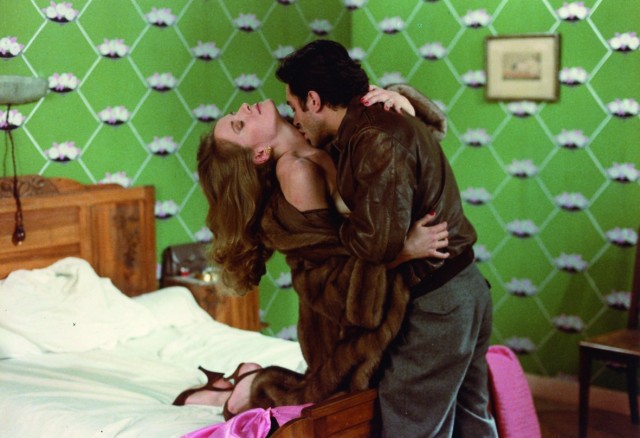
Edith (Dominique Sanda) and François (Richard Berry) find each other in Jacques Demy’s dark but colorful French musical
CINÉSALON: UNE CHAMBRE EN VILLE (A ROOM IN TOWN) (Jacques Demy, 1982)
French Institute Alliance Française, Florence Gould Hall
55 East 59th St. between Madison & Park Aves.
Tuesday, February 11, $13, 4:00 & 7:30
212-355-6100
www.fiaf.org
From the very opening of Une Chambre en Ville (A Room in Town), French New Wave director Jacques Demy announces that the 1982 musical melodrama is going to be something a little different. As a rising sun changes color over a construction site across the Loire River, what appear to be closing credits run up the screen, set to Michel Colombier’s romantic score, as if the film is ending. But Demy and cinematographer Jean Penzer are only getting started, shifting from black-and-white to color to black-and-white again as they cut to the hard streets of 1955 Nantes, where a shipyard strike is under way. Riot police are in a stand-off with hundreds of male and female strikers, characters on both sides singing instead of talking and shouting — in a scene that eerily evokes Tom Hooper’s Les Misérables, which came thirty years later. Soon the intricate plot unfolds, as the striking, and broke, François Guilbaud (Richard Berry), who is renting a room from former baroness Margot Langlois (Danielle Darrieux) and dating doe-eyed Violette Pelletier (Fabienne Guyon), instantly falls for femme fatale Edith Leroyer (Dominique Sanda), Mme. Langlois’s recently married daughter, who is already fed up with her impotent cheapskate of a husband, television salesman Edmond Leroyer (Michel Piccoli). The over-the-top drama plays out in wonderfully garish rooms of deep, intoxicating colors, which are echoed by Rosalie Varda’s (daughter of Demy and Agnès Varda) costumes, which even go so far as to have Violette wearing violet and Edith going bare beneath her luxurious fur coat, with no one changing clothes over the course of the two days in which the story takes place. As the strike continues, the main characters connect with one another in good and bad ways, especially when straight razors and guns are involved.
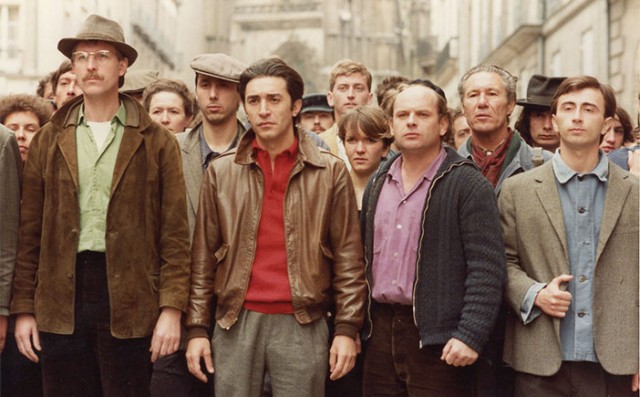
Striking workers are ready to fight for their rights in Jacques Demy’s UNE CHAMBRE EN VILLE
Writer-director Demy, who transformed the movie musical in the 1960s with The Umbrellas of Cherbourg and The Young Girls of Rochefort (the latter also featuring Darrieux), includes no Hollywood-like set pieces in Une Chambre en Ville, no dancing, no choruses — essentially, no real songs at all. Instead, all of the dialogue is sung by the actors (or dubbed in by someone else) as if in regular conversation. Inspired by a real shipyard strike in his hometown of Nantes in 1955, Demy takes on such concepts as wealth, class, authority, home, family, and, most of all, love — both real and imagined, unrequited and lustful — in the vastly underrated film, which is quite entertaining and very funny despite its dark themes. And be on the lookout for more echoes of Les Misérables throughout. A new digital restoration of Une Chambre en Ville is screening February 11 at 4:00 & 7:30 as part of the FIAF CinéSalon series “Remastered & Restored: Treasures of French Cinema”; the later screening will be presented by New Yorker writer Adam Gopnik, and both shows will be followed by a wine reception. The three-month festival continues with such other recently restored French classics as Max Ophüls’s Lola Montès (introduced by Lola Montes Schnabel), Claude Chabrol’s The Color of Lies (costar Jacques Gamblin will no longer introduce the film), and Jean-Pierre Melville’s Two Men in Manhattan.

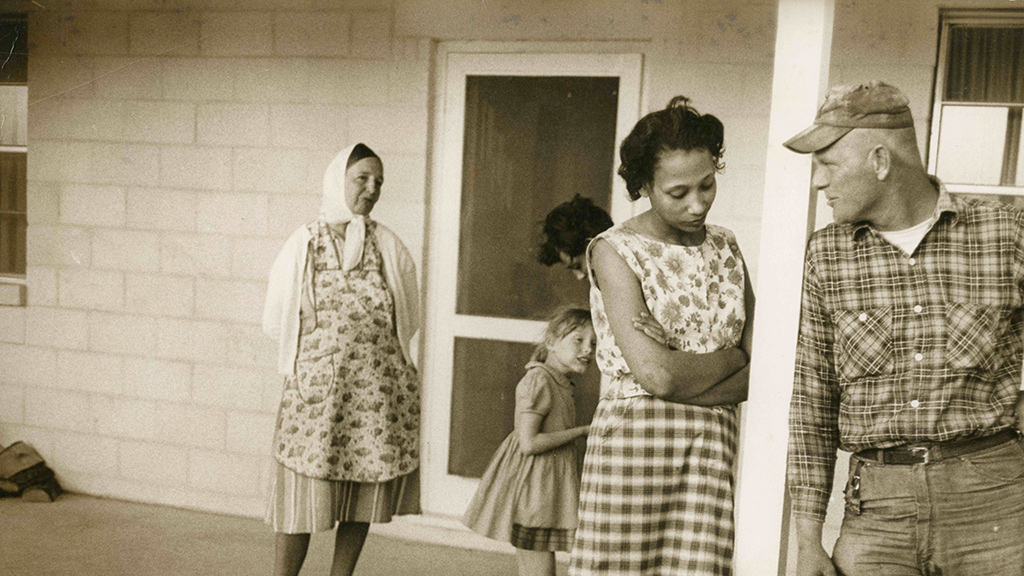
 On June 2, 1958, Richard Loving and Mildred Jeter got married in Washington, DC. Shortly after returning to their Virginia home, Loving, a white man, and Jeter, a black and Native American woman, were arrested and imprisoned by the local sheriff, facing prison sentences because interracial marriage was illegal in their home state. Banished from Virginia, they spent nine years fighting in the courts, and their remarkable tale is now being told in the 2012 Oscar shortlisted documentary The Loving Story. First-time director Nancy Buirski, who founded the Full Frame Documentary Film Festival, and editor Elisabeth Haviland James weave together never-before-seen archival footage shot by photojournalist Grey Villet, old news reports and interviews, and family home movies with new interviews with the Loving children and lawyers Bernard S. Cohen and Philip J. Hirschkop, who were ready to take the case to the U.S. Supreme Court if necessary. One of the many fascinating aspects of the film is that Richard and Mildred had no desire to be trailblazers fighting miscegenation laws; they were just a man and a woman who had fallen in love at first sight and wanted to live happily ever after, in a community that fully accepted their situation. They of course have the perfect last name, because The Loving Story is a story of love and romance as much as it is about an outdated legal system, bigotry, and white supremacy. And it is more relevant than ever, with the issue of same-sex marriage dividing much of the nation. Told in a procedural, chronological format, The Loving Story is also absolutely infuriating, since this all happened not very long ago at all, with many of the protagonists and antagonists still alive — and race still being such a central issue in America. An HBO production, The Loving Story is having a special Valentine’s Day screening at the Maysles Cinema. (Buirski’s second film,

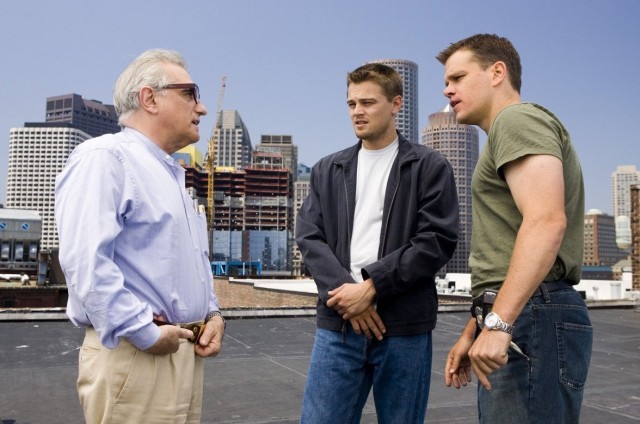
 Based on Andrew Lau and Alan Mak’s awesome Infernal Affairs (2002), Martin Scorsese’s relatively faithful remake, The Departed, moves the relentless action and intrigue from Hong Kong to the mean streets of Boston, where it is hard to tell cop from criminal. Just out of the academy, Colin Sullivan (Matt Damon) rises quickly to detective in the Special Investigations Unit, but he’s actually in cahoots with master crime lord Frank Costello (Jack Nicholson). Meanwhile, Billy Costigan (an excellent Leonardo DiCaprio), training to become a cop, is sent deep undercover (including a prison stint) to infiltrate Costello’s gang, with only Captain Queenan (Martin Sheen) and Sergeant Dignam (a very funny and foul-mouthed Mark Wahlberg) aware of the secret mission. Sullivan and Costigan are like opposite sides of the same persona; in between them stands Costello — and Madolyn (Vera Farmiga), a psychiatrist who is in a relationship with one and is doctor to the other. As both the cops and the criminals search desperately for their respective rats, no one can trust each other, leading to lots of blood and a spectacular finale. Nicholson has a field day as the aging gangster, chewing up mounds of scenery in his first film with Scorsese, who returned to peak form with his best work since 1990’s Goodfellas. The film was nominated for five Oscars, winning four, for Best Director, Best Film Editing (Thelma Schoonmaker), Best Adapted Screenplay (William Monahan), and Best Picture, while Wahlberg was nominated for Best Supporting Actor.