Cary Grant and Grace Kelly turn up the glamor quotient in Hitchcock thriller set on the French Riviera
TO CATCH A THIEF (Alfred Hitchcock, 1955)
Film Forum
209 West Houston St.
Sunday, February 23, 3:30, 5:40, 8:00
Monday, February 24, 1:30, 4:00
The Complete Hitchcock: February 21 – March 27
The Hitchcock 9: February 21 – May 4
212-727-8110
www.filmforum.org
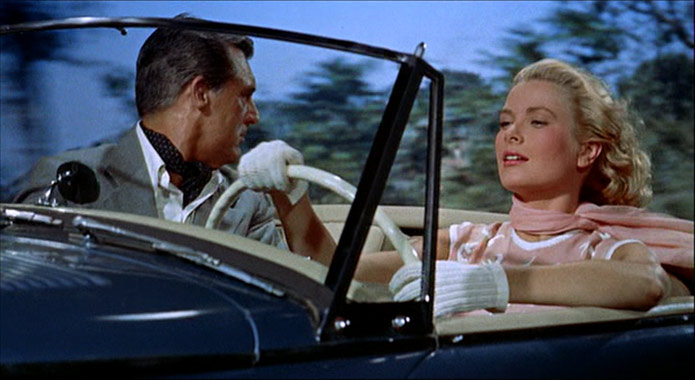
 Is he or isn’t he? In Alfred Hitchcock’s glamorous thriller set on the French Riviera, Cary Grant stars as John Robie, a famous burglar known as the Cat who has supposedly retired but is suddenly believed to be responsible for a rash of new jewelry thefts. Determined to prove his innocence and catch the real thief, he enlists the help of Lloyd’s of London insurance agent H. H. Hughson (John Williams), who supplies him with a list of women on the Riviera who have expensive baubles ripe for the taking. At the top of the list are the Americans Jessie Stevens (Jessie Royce Landis) and her gorgeous daughter, Francie (a radiant Grace Kelly), who teases Robie, hinting that she might in fact be the Cat — if he isn’t. As Robie avoids the cops and looks to his old friends in the French Resistance for further help, the tension heats up, leading to a climax that takes place on the rooftops of the French Riviera. Grant’s third of four outings with Hitchcock and Kelly’s third and final turn with the suspense master is an exciting “who’s doing it” featuring the dream pairing of two of Hollywood’s most beautiful and talented superstars, filled with just the right amount of comedy and romance in a glorious setting. Look for Alfie to make his appearance early on, causing Grant to do a double take in the back of a bus. To Catch a Thief is screening February 23-24 as part of Film Forum’s “The Complete Hitchcock,” which runs through March 27 and includes all of the Master of Suspense’s feature narratives; the series also encompasses “The Hitchcock 9,” which continues through May 4 and consists of all nine of Hitch’s surviving silents, each one accompanied by Steve Sterner on piano. In addition, the Paley Center will be hosting “The Complete Hitchcock: Television” on March 29-30 and April 5-6, consisting of all episodes of Alfred Hitchcock Presents that the master directed, as well as documentaries, interviews, and other bonuses.
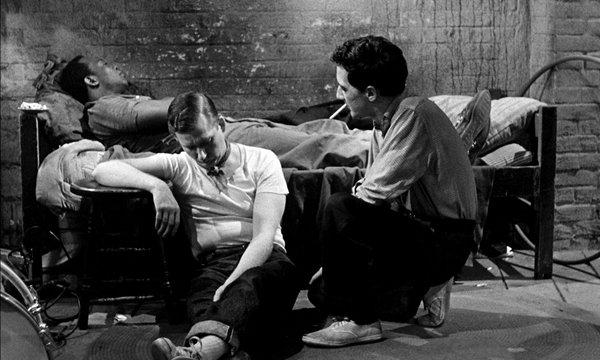

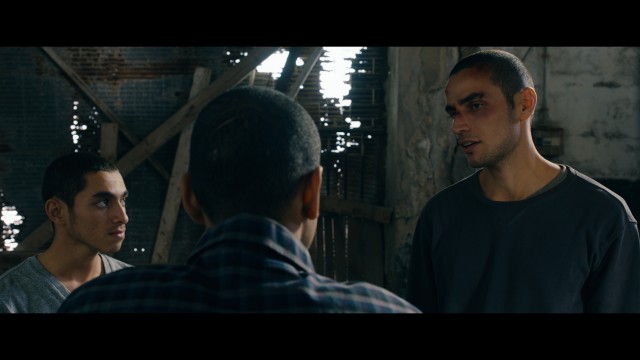
 Nazareth-born Palestinian director Hany Abu-Assad explores friendship, trust, and young love in occupied Palestine in the taut thriller Omar, the second of his films to be nominated for an Oscar for Best Foreign Language Film, following 2005’s Paradise Now. Lee Strasberg Institute graduate Adam Bakri makes an impactful film debut as the title character, a serious young man who works in a pita-making shop and climbs over the separation wall every day to meet with his childhood friends Tarek (Eyad Hourani) and Amjad (Samer Bisharat), who are planning on taking action as freedom fighters. Omar also secretly sees Tarek’s sister, Nadja (Leem Lubany), but they are worried about what Tarek might do if he finds out about their burgeoning romance. Shortly after the three friends assassinate an Israeli soldier, Omar is captured and tortured as Agent Rami (Waleed F. Zuaiter) tries to get him to divulge the name of the shooter. But Omar refuses to collaborate until Rami gives him no choice, and even then he thinks he can beat the system. Winner of the Special Jury Prize at the Un Certain Regard section at Cannes, Omar is a tense, powerful tale that doesn’t overplay the political battle between Israel and Palestine (although it’s rather unkind to the Israeli police), instead concentrating on how the seemingly impossible situation affects four young people, all portrayed by first-time actors who show much promise, particularly Bakri, who has a compelling physical presence, and sixteen-year-old Lubany, who has a tender face and mesmerizing eyes. Zuaiter, a Palestinian American who has appeared in numerous English-language films and stage productions and is one of Omar’s producers, plays Agent Rami with a mysterious calm reminiscent of Mandy Patinkin’s Saul Berenson on Homeland, a show in which Zuaiter played terrorist Afsai Hamid in one episode. Regardless of where you stand on the Israel-Palestine conflict in the West Bank, it’s difficult not to get caught up in Abu-Assad’s intricate story.
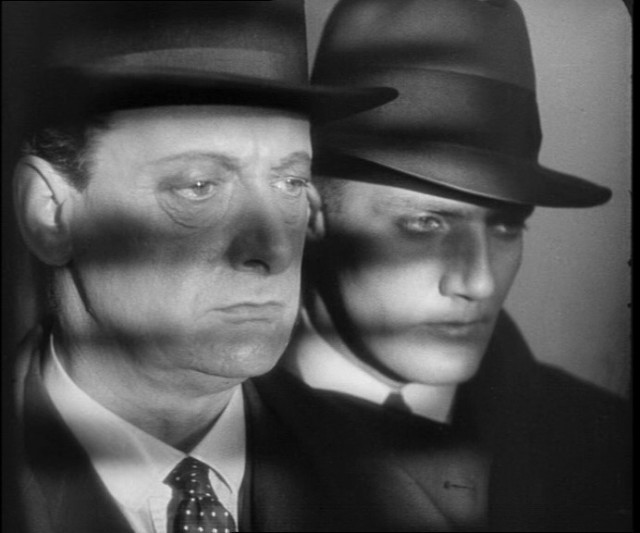
 Last summer, BAMcinématek presented restored versions of all nine of Alfred Hitchcock’s surviving silent works, and now “The Hitchcock 9” will be shown at Film Forum from February 21 through May 4 in conjunction with the larger series “The Complete Hitchcock,” which includes all of the Master of Suspense’s films, along with a few surprises. Both series begin Friday with the silent version of Blackmail, accompanied by Steve Sterner on the piano. Based on the play by Charles Bennett, Hitchcock’s 1929 thriller is both his last silent picture as well as his first sound film. The transition is evident from the very beginning, eight glorious minutes of a police arrest with incidental music only, highlighted by an unforgettable mirror shot (courtesy of cinematographer Jack E. Cox) as the cops close in on their suspect. After those opening moments, the film switches to a talkie in the nonsilent version, as New Scotland Yard detective Frank Webber (John Longden) gets into a fight with his girlfriend, Alice White (Anny Ondra, later to become the longtime Mrs. Max Schmeling), who goes off on a secret rendezvous with a slick artist named Crewe (Cyril Ritchard). When things go horribly wrong at Crewe’s studio, Frank assures Alice that he will help her, but slimy ex-con Tracy (Donald Calthrop) has other ideas, thinking he can use some inside information to make a small killing. After shooting the picture with sound — including having Ondra’s dialogue spoken off-screen by Joan Barry because Ondra’s Eastern European accent was too thick — Sir Alfred filmed some scenes over again in silence, resulting in two versions of this splendid psychological thriller, both laced with elements of German Expressionism and early film noir as well as flashes of Edgar Allan Poe’s “The Tell-Tale Heart” and Fyodor Dostoyevsky’s Crime and Punishment. Look for Hitch as the man on the subway being menaced by a young boy.