twi-ny recommended events

POOR YELLA REDNECKS

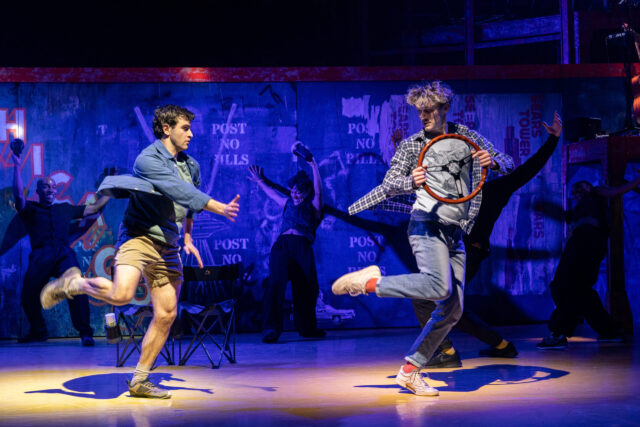
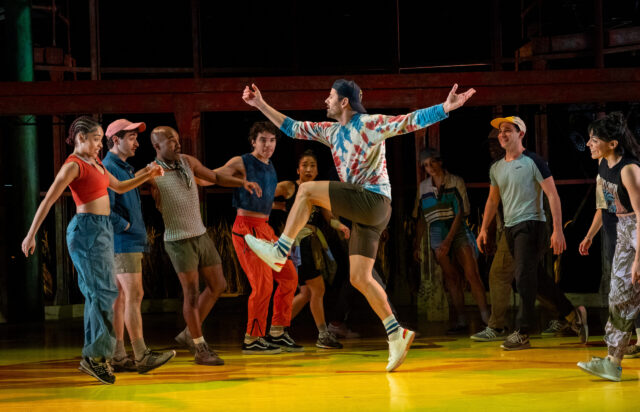
The cast of Poor Yella Rednecks occasionally breaks out into hip-hop songs (photo by Jeremy Daniel)

POOR YELLA REDNECKS
MTC at New York City Center – Stage I
131 West Fifty-Fifth St. between Sixth & Seventh Aves.
Tuesday – Sunday through December 3, $89-$109
212-581-1212
www.manhattantheatreclub.com
www.nycitycenter.org

Arizona-born Vietnamese American playwright and screenwriter Qui Nguyen follows up his semiautobiographical Vietgone with Poor Yella Rednecks, making its New York premiere at MTC at New York City Center — Stage I through December 3.

In praising Vietgone, I wrote, “Passionately directed by [May] Adrales with a frenetic warmth, the hip-hop immigrant tale — with a sweet nod to Hamilton — is colorful and energetic.” I am happy to say the same thing about Poor Yella Rednecks, except it’s even better than its predecessor.

Once again, the play begins with Nguyen (Jon Norman Schneider), called the playwright, explaining that not everything we are about to see actually happened. “This story is based on true events. All heavily researched. All one hundred percent historically accurate. Well, at least according to my mom.”

It’s August 7, 2015, and Nguyen is sitting at a table, interviewing his mother, Tong (Maureen Sebastian), for a play about how she left Vietnam and began a new life in America. But she thinks it’s a terrible idea and the reason why he is poor. “No one want to hear story about old woman who speak bad English with bald son,” she says. She ultimately agrees to talk with him but with a few important rules: “I don’t want you to only tell happy thing. I see your other play. You like to write romantic and funny. But no life is all romance. And it is not all fun. Sometimes it is hard. We Vietnamese. We good at being hard. I want it to be true and hard.” Another rule relates to speech: “If this going to be my play, I want all the white people to sound like the way I hear them. Let them hear all the stupid stuff they say. . . . And finally, I want to talk good.”

Thus, when Vietnamese characters speak with each other, it is in perfect English, substituting for Vietnamese so the audience can understand what they’re saying. But when a Vietnamese character is actually speaking English, it is in broken English. For example, when the older Tong talks to her son in broken English, that is how she is pronouncing the language; however, when she speaks in perfect English, she is actually talking to him in Vietnamese. It’s handled beautifully by Adrales and the cast, a constant reminder of the immigrant experience.

Tong takes him back to Arkansas in 1975, when she met her future husband, Nguyen’s father, Quang, at a relocation camp named Fort Chaffee, then moved to El Dorado. When the playwright says that it must have been love at first sight, Tong replies, “Mm-hmm. And Santa Claus is real, as is the Easter Bunny, and capitalism works for everybody.”

The playwright (Jon Norman Schneider) interviews his mother (Samantha Quan) in Poor Yella Rednecks (photo by Jeremy Daniel)

The action then shifts to the past as Tong and Quang (Ben Levin) fall in love even though she is still dating Bobby (Paco Tolson) and he is still married to Thu (Samantha Quan), who is raising their two children in Vietnam. Five years later, Quang and Tong are living in a trailer with her mother, Huong (Quan), a foul-mouthed, cynical smoker who takes care of Quang and Tong’s son, Little Man, while Tong works at a local diner and Quang hangs out with his hapless friends, including his bestie, Nhan (Jon Hoche). In an ingenious move, Little Man is a puppet, designed by David Valentine, that is voiced and operated by Schneider as the playwright, essentially the adult son playing himself as a child. It works wonderfully, especially when Huong teaches Little Man how to defend himself.

When Nhan announces that he’s moving to Houston to find better opportunities and it turns out that Quang hasn’t quite settled things with Thu yet, Tong starts to reevaluate who she is and what she wants out of life.

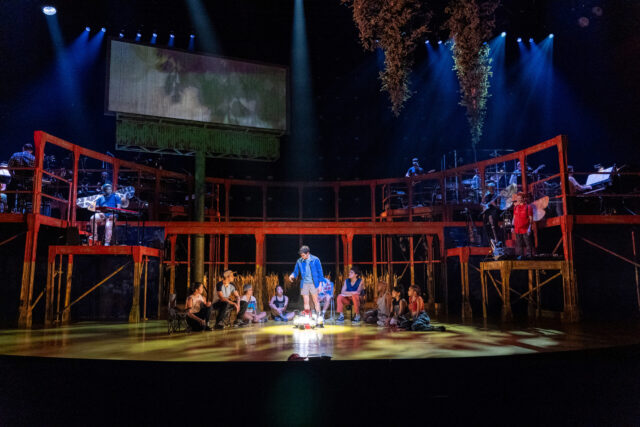
Tim Mackabee’s set is structured around five large neon letters — Y, E, L, L, A — that occasionally light up in different colors and are moved around to expose smaller sets attached to them, from a living room and a bar to the diner and a fast-food joint. They were designed to evoke the letters in the fabled Hollywood sign; just as that sign beckons wannabe stars to California from all over the world, the Y-E-L-L-A letters represent the American dream that Asians have when they emigrate from their countries to the United States — and encounter hatred, bigotry, language barriers, and other elements that do not make their transition easy. Several scenes also occur in and around a pickup truck, revealing that the vehicle is a favorite not only for a certain stereotyped group of white men who like country music and beer.

The big letters, along with comic-book-like projections by Jared Mezzocchi, are also a nod to Nguyen’s success as a writer for Marvel Studios and founder of the New York–based Vampire Cowboys troupe; Nguyen even has Marvel legend Stan Lee (Tolson, who portrayed the playwright in Vietgone) show up once in a while and deliver statements about heroes. Valérie Thérèse Bart’s costumes hit their target, and Lap Chi Chu’s lighting ranges from bold to intimate.

As in Vietgone, the cast, nearly all of whom appeared in that show at South Coast Rep and/or MTC, displays their vast talents by often breaking out into exciting raps; the original music is by sound designer Shane Rettig, arranged by Kenny Seymour, choreographed by William Carlos Angulo, and with music direction by Cynthia Meng. “I know you think I’m joking — what the hell am I smoking? / But being next to you is what got my heart thumping / Our kiddies will be cuties, bring over that fine bootie / Nothing’s gonna stop us with our combined beauty,” Quang declares. “Let me reintroduce myself / I’m better known as that shorty that you up and left / I must be crazy, baby — thought you were dead / We threw a funeral to commemorate your death,” Thu announces. “Cuz I’m more than just pretty, my brain is damn witty / Gimme one hot second — Imma run this city / Yo, say that I shouldn’t — I’m my own woman / Stronger than any man and twice as good looking,” Tong proclaims. “Even if they mad at you, you gotta be true to you / Every scar you wear, you show the shit that you went through / Ya gotta stand strong, be strong, head strong, ya ain’t wrong / So come on listen close, this here’s our fight song,” Huong tells Little Man.

Jon Norman Schneider (left) portrays the playwright and his younger puppet self in New York premiere from MTC (photo by Jeremy Daniel)

Nguyen (She Kills Monsters, Living Dead in Denmark) and Adrales (The Strangest, Golden Shield) are in total sync; nearly every minute rings true, and the pace never lags. Schneider (The Coast Starlight, Once Upon a (korean) Time) is warm and charming as the playwright, Hoche (King Kong, Life of Pi) is a hoot as Nhan and various rednecks, Levin is hunky as Quang, Quan is cute and lovable as Huong, Tolson (The Knight of the Burning Pestle, Children of Vonderly) gives Bobby an unexpected edge, but Sebastian (The Best We Could: A Family Tragedy, Soul Samurai) steals the show as Tong, who stares adversity right in the face but refuses to give up, in many ways representing the Asian diaspora in America.

Early on, right before the official interview begins, Tong tells her son, “Let me tell you what kind of story white people want to hear.” He asks, “Wait, why only ‘white people?’” She replies, “Because only white people like to watch a play.” He argues, “All sorts of people watch plays, Mom.” To which she counters, “Yes, all sorts of white people. It look like a Fleetwood Mac concert. It so white. . . . Maybe I don’t want to dig up old history just so you can make a few dollar on play white people won’t like.”

At the matinee I saw, the audience appeared to be at least half Vietnamese or Vietnamese American, both young and old, and they and the white people reacted in unison to the unconventional, important story taking place onstage. Eliciting a wide range of emotions, the show accomplishes what theater does best, bringing people of different backgrounds together to focus on the human condition, reaching into the past while giving us hope for the future.

[Mark Rifkin is a Brooklyn-born, Manhattan-based writer and editor; you can follow him on Substack here.]
DOC NYC: NEIRUD

Filmmaker Fernanda Faya explores a lost part of her family’s past in Neirud

NEIRUD (Fernanda Faya, 2023)
Available online through November 26
Festival runs November 8-26 at IFC Center, SVA Theatre, Village East by Angelika, and Bar Veloce, $13-$30
www.docnyc.net
www.neirudfilm.com

“Who was Neirud?” Brazilian filmmaker Fernanda Faya asks in her poignant documentary, Neirud, making its international premiere at DOC NYC.

When Fernanda was an infant, her father, Edgard, bought a camcorder, taking lots of home movies of her. When she got older, Faya because curious about the woman she knew as her aunt, Élida Neirud dos Santos, who was best friends with Edgard’s mother, Grandma Nely. Faya’s mother was Jewish, and her father came from a nomadic Roma circus clan; Neirud was Black.

One afternoon, long after Nely’s death, Faya starts asking Neirud about her life. Neirud, was born in 1935 in São Francisco de Assis in Rio Grande do Sul, what Faya describes as Brazil’s whitest region, then raised in Livramento. Her parents sent her to live with a white family, where she was responsible for all the chores.

Neirud ran away when she was eight and became a nanny in Porto Alegre. When she was twelve, she joined the Great Circus Real Palassius. Fascinated by what she has learned in just a few minutes, Faya tells Neirud that she wants to conduct a more in-depth interview. Unfortunately, Neirud passed away a few months later, in 2014.

Neirud had left nothing behind; her apartment was empty: no clothes, no photos, no notebooks or journals. So Faya began a nearly ten-year-journey to find out everything she could about Nely, Neirud, and the circus, where the two women had met and where Neirud developed into an intimidating circus wrestler known as Mulher Gorila.

“I never really understood what they did, so in my mind, Aunt Neirud became a superhero, and Gorilla Woman, her circus persona, was her secret identity,” Faya says in voice-over narration. “Aunt Neirud became the only living memory of this circus history.”

The more Faya digs, the more she uncovers, unraveling the mystery of her aunt and grandmother. The story involves homosexuality, a military coup, racism, the church, and colorful balls on the beach.

Featuring a score by Brazilian guitarist and composer Chico Pinheiro, Neirud is a bittersweet documentary. Because of the whitewashing of history and selective memory, Faya (One for the Road) only knew so much about her family, and it’s a shame that she didn’t know more about her grandmother and aunt while they were still alive. At the same time, it is exciting to follow her as the truths slowly emerge and their beautiful, complicated, and important stories are told at last.

[Mark Rifkin is a Brooklyn-born, Manhattan-based writer and editor; you can follow him on Substack here.]
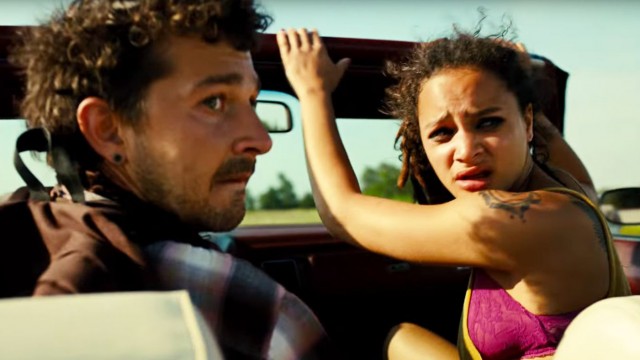
DOC NYC: ANGEL APPLICANT

Ken August Meyer explores his connection to Swiss-German artist Paul Klee in Angel Applicant

ANGEL APPLICANT (Ken August Meyer, 2023)
Available online through November 26
Festival runs November 8-26 at IFC Center, SVA Theatre, Village East by Angelika, and Bar Veloce, $13-$30
www.docnyc.net
angel-applicant.com

During the pandemic, I watched a Zoom play called UnRavelled about Canadian scientist Anne Adams, who, in 1994, at the age of fifty-three, became obsessed with Maurice Ravel’s “Bolero” and made a remarkable painting based on the musical work, which Ravel composed for dancer Ida Rubenstein in 1928, when he was fifty-three. As it turns out, both Adams and Ravel had the same serious brain disease, one that affects memory while lighting a creative fuse.

I was thinking about that play while watching Ken August Meyer’s Angel Applicant, in which Meyer becomes obsessed with Swiss-German painter Paul Klee, who suffered from systemic scleroderma, a diseases that attacks connective tissue and for which there is still no cure. Meyer was diagnosed with the same life-threatening disease, which ultimately spurred him to make this film, although he had little previous cinematic experience. Meyer is particularly taken by Klee’s later period, when the scleroderma affected Klee’s work significantly. Meyer believes that he can understand what Klee is saying in these canvases and how it relates to their shared, rare autoimmune disease.

In the film, Meyer, who wrote, directed, and edited it and produced it with director of photography Jason Roark, explains, “It’s really an odd sort of comfort for me. It’s not particularly cheerful, nor is it as colorfully inventive as his earlier work, but I’m obsessed with it. It really speaks to me like a strange language of cryptic codes and symbols that I can’t help but interpret for myself. And I know this is gonna sound completely crazy and pretty pretentious, but some of these paintings feel like they’re messages sent in a bottle just for me.”

Meyer, a former drugstore stock boy, Zamboni driver, graphic designer, and advertising art director, reviews his old family photos and home videos and intercuts them with images of Klee’s drawings and paintings, including Portrait White-Brown Mask, Atrophy, Insula Dulcamara, As Time Passes By, and High Spirits. He examines several of them in depth, decoding their meaning from a health standpoint while visually comparing them to shots of him undergoing testing and getting results in which the colors, shapes, and lines evoke elements of Klee’s work. “They are testaments that destruction can feed creation and make something so ugly so beautiful,” says Meyer, who studied art and design at the School of Visual Communication Design at Kent State University.

The film also features several reenactments of key moments from Meyer’s life. One takes place in a store where two women thought that Meyer, his body stiff from the disease, was actually a mannequin. “Did he also feel like a stiff, broken doll?” he asks, wondering whether Klee, known as the Bauhaus Buddha, had felt similarly. In addition, he flies to Bern to meet with one of Klee’s grandchildren, Alexander Klee, who cofounded the Zentrum Paul Klee and passed away in 2021 at the age of eighty.

Even as his condition worsens, Meyer refuses to give in, documenting his life as he gets married and has a child, who he wants to see grow up. He continues to get bad news about his health, but he keeps the camera going and doesn’t lose his sense of humor. “Fear was becoming the new order [in the world]. And somehow, it even found my home address,” he says, zooming in on a “Consider Cremation!” mailing he received.

Meyer named the film after a ghostly 1939 painting by Klee as well as his newfound belief that maybe angels do exist. When he asks, “How long do I have? And what comes after that?,” we fully believe that he’s not done yet. It’s also a question that we all ask ourselves, whether we’re ill or not.

[Mark Rifkin is a Brooklyn-born, Manhattan-based writer and editor; you can follow him on Substack here.]
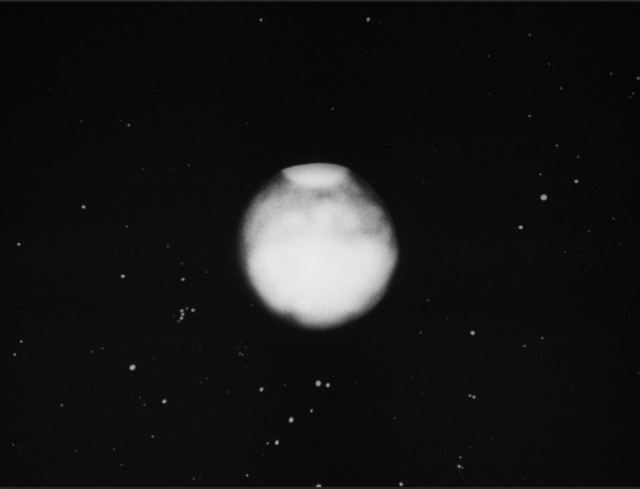
THE WILD PARROTS OF TELEGRAPH HILL 4K RESTORATION

Mark Bittner feeds several cherry-headed conures in The Wild Parrots of Telegraph Hill

THE WILD PARROTS OF TELEGRAPH HILL (Judy Irving, 2003)
New Plaza Cinema @Macaulay Honors College
35 West Sixty-Seventh St. between Central Park West & Columbus Ave.
Opens Friday, November 17
newplazacinema.org
pelicanmedia.org

Judy Irving begins her 2003 documentary, The Wild Parrots of Telegraph Hill, with a shot of a skeptical passerby who has stopped to watch Mark Bittner as he cares for a flock of forty-five cherry-headed conures, also known as red-masked parakeets, living in the trees outside his apartment.

“They’re not really wild if you have names for them, if you don’t mind my saying,” the man claims. “You feed them out of your hands, you have names for them, and they come up to you like they’re your pets. . . . Well, whatever.” He then shrugs and walks away.

The exchange doesn’t bother Bittner at all; he gleefully answers the suspicious man’s doubts and just continues doing what he’s doing, a big smile on his face.

It’s an extremely clever way to start the film, which opens November 17 in a brand-new 4K twentieth anniversary digital restoration at New Plaza Cinema. With the question of Bittner’s relationship with the birds resolved right up front, Irving, who served as director, producer, editor, and cinematographer, is free to now follow Bittner’s odd life choice.

Born in Vancouver, Washington, in 1951, Bittner moved from Seattle to Berkeley when he was twenty and then to San Francisco with the goal of making it as a rock-and-roll musician, in search of a “real transformation.” In 1993, he became infatuated with the conures, some of whom had previously been pets and others that had been born in the wild. Over the course of several years, he devoted his life to them, giving them names, caring for them when they were ill, watching out for predatory hawks, and keeping a somewhat scientific journal of their comings and goings and their individual personalities.

As if he’s sharing the plot of a soap opera, he talks about Scrapper and Scraperella’s breakup; discusses the pairing of Picasso and Sophie; introduces us to Fanny, Gibson, Flap, Pushkin, and Olive; sings to Mingus to get him dancing; vacuums up the mess the birds make in his apartment; nurses Tupelo; and bonds deeply with Connor, the only blue-crowned conure in the flock, an older bird who cannot find a mate or best friend. Connor is not unlike Bittner, a single man with thick glasses, a bushy beard and mustache, and a long ponytail who apparently has no close friends either.

“I don’t think of myself as an eccentric,” he says in his calm, relaxing voice.

Inspired by such Beat writers as Gary Snyder and Jack Kerouac, Bittner is a kind of throwback, an easygoing Bohemian going with the flow, living for free without a paying job. “It wasn’t a plan; it just happened,” he says about his caring for the birds. “It was what I was doing while I was trying to figure out what that thing would be, my idea of where I was going to go in my life. But it became the thing that I’m doing. It’s magic that way.”

But that magic threatens to disappear when he is forced to leave his apartment and has to figure out what will happen to the birds.

Irving, who appears in the film, originally intended the project to be a short but ended up compiling thirty hours of 16mm footage over a few years on a shoestring budget. “When I first met him, I thought Mark was an inarticulate hippy recluse and he thought I was an ecofeminist lesbian,” she writes in a new article for Talkhouse. That changed as filming continued.

A companion piece to Bittner’s 2004 memoir of the same name (the book has the added subtitle A Love Story . . . with Wings), The Wild Parrots of Telegraph Hill is a tender and touching — and colorful — look at not just one man’s dedication to conures but the connection between humanity and nature, as well as the need for people to be a part of something, like a bird in a flock. We are not built for solitude. And that comes to fruition in a sweet shocker of a finale involving Irving (Pelican Dreams, Dark Circle), who will be at New Plaza Cinema for Q&As following the 6:10 screening on November 17 and the 2:40 shows on November 18 and 19.

Meanwhile, Bittner is working on his next book, Street Song, which will be accompanied by an album featuring such originals as “Poppa John,” “The Arrow You Want,” and “You’re So Peaceful” and covers of tunes by Van Morrison, Bob Dylan, and the Beatles.

[Mark Rifkin is a Brooklyn-born, Manhattan-based writer and editor; you can follow him on Substack here.]
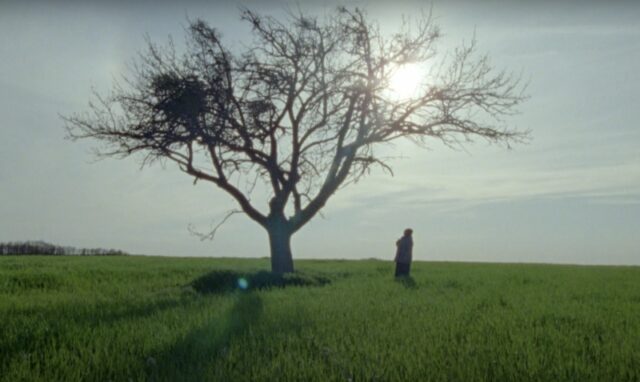
REVERSE SHOT AT 20: SELECTIONS FROM A CENTURY: MANAKAMANA

MANAKAMANA

A mother and daughter eat ice cream in experimental documentary Manakamana

MANAKAMANA (Stephanie Spray & Pacho Velez, 2013)
Museum of the Moving Image
35th Ave. at 36th St., Astoria
Saturday, November 18, 12:30, & Sunday, November 19, 3:30
Festival continues through November 26
www.manakamanafilm.com
movingimage.us

If you’re an adventurous filmgoer who likes to be challenged and surprised, the less you know about Pacho Velez and Stephanie Spray’s Manakamana, the better. But if you want to know more, here goes: Evoking such experimental films as Michael Snow’s Wavelength, Hollis Frampton’s Zorns Lemma, and Andy Warhol’s Screen Tests as well as the more narrative works of such unique auteurs as Jim Jarmusch and Abbas Kiarostami, Manakamana is a beautiful, meditative journey that is sure to try your patience at first. The two-hour film, which requires a substantial investment on the part of the audience, takes place in a five-foot-by-five-foot cable car in Nepal that shuttles men, women, and children to and from the historic Manakamana temple, on a pilgrimage to worship a wish-fulfilling Hindu goddess. With Velez operating the stationary Aaton 7 LTR camera — the same one used by Robert Gardner for his 1986 documentary Forest of Bliss — and Spray recording the sound, the film follows a series of individuals and small groups as they either go to or return from the temple, traveling high over the lush green landscape that used to have to be traversed on foot before the cable car was built. A man and his son barely acknowledge each other; a woman carries a basket of flowers on her lap; an elderly mother and her middle-age daughter try to eat melting ice-cream bars; a pair of musicians play their instruments to pass the time.

A heavy metal band takes a picture of themselves in meditative documentary

A heavy metal band takes a picture of themselves in meditative documentary

Each trip has its own narrative, which must be partly filled in by the viewer as he or she studies the people in the cable car and the surroundings, getting continually jolted as the car glides over the joins. The film is a fascinating look into human nature and technological advances in this era of surveillance as the subjects attempt to act as normal as possible even though a camera and a microphone are practically in their faces. Produced at the Sensory Ethnography Laboratory at Harvard, Manakamana consists of eleven uncut shots of ten-to-eleven minutes filmed in 16mm, using rolls whose length roughly equals that of each one-way trip, creating a kind of organic symbiosis between the making and projecting of the work while adding a time-sensitive expectation on the part of the viewer.

A film well worth sticking around for till the very end — and one that grows less and less claustrophobic with each scene — Manakamana is screening November 18 and 19 as part of the Museum of the Moving Image series “Reverse Shot at 20: Selections from a Century,” honoring the twentieth anniversary of the film publication Reverse Shot, which has been its in-house journal since 2014; the two-month retrospective highlights twenty-first-century works touted by what was originally a stapled zine. Velez will be present at the November 19 show to discuss the film; both screenings will be preceded by the 2014 video Reverse Shot Talkie: Stephanie Spray & Pacho Velez. “Spray and Velez’s film calls attention to attention, the ways our thoughts and perceptions slowly drift and return during long durations spent looking at certain subjects or familiar scenarios,” Leo Goldsmith wrote in Reverse Shot.

DOWN IN DALLAS TOWN: FROM JFK TO K2

Alan Govenar returns to Dealey Plaza in Down in Dallas Town: From JFK to K2

Who: Film director Alan Govenar
What: New York City theatrical premiere of Down in Dallas Town From JFK to K2, with 7:00 screenings opening weekend followed by director Q&As
Where: Cinema Village, 22 East 12th St. between University Pl. & Fifth Ave.
When: November 17-23
Why: In conjunction with the sixtieth anniversary of the assassination of President John F. Kennedy at the age of forty-six on November 22, 1963, poet, writer, folklorist, photographer, and filmmaker Alan Govenar travels back to Dealey Plaza to take another look at that fateful day and how it has impacted contemporary society in the documentary Down in Dallas Town: From JFK to K2, opening November 17 at Cinema Village. Govenar mixes archival audio and television footage with new interviews of eyewitnesses, Kennedy experts, tourists, musicians, and more, including the first-ever interview of Mary Ann Moorman, who talks about her iconic Polaroid snapshot of the event. The film also explores many of the songs written about JFK and the murder, by such groups as the Dixie Nightingales, Los Conquistadores, the Southern Bell Singers, Freddy King, and the Sensational Six. Along the way, Govenar wonders whether JFK’s policies could have prevented the rampant homelessness, designer drug epidemic, and gun violence so prevalent in America today.

In previous films, Govenar examined tattoo legends (Tattoo Uprising), the NEA’s National Heritage Fellowships (Extraordinary Ordinary People), multidisciplinary artist Sidiki Conde, who has lost the use of his lower body (You Don’t Need Feet to Dance), and a nameless hotel that became a gathering place for Allen Ginsberg, Peter Orlovsky, Gregory Corso, William S. Burroughs, and others (The Beat Hotel). Here he turns his attention to a moment in American history that caused a paradigm shift that is still felt today. “Kennedy was the best president we had. I wish we still had him,” Robert from Maine tells Govenar. Down in Dallas Town is more than just another movie about JFK, and Govenar will be at Cinema Village for Q&As following the 7:00 screenings opening weekend to take it even further.

MERRY ME

An Angel (Shaunette Renée Wilson), Lt. Shane Horne (Esco Jouléy), and Dr. Jess O’Nope (Marinda Anderson) seek out latest merryment from Hansol Jung (photo by Joan Marcus)

MERRY ME
New York Theatre Workshop
79 East Fourth St. between Second & Third Aves.
Tuesday – Sunday through November 19, $65-$75
www.nytw.org

Rising star Hansol Jung finishes a busy 2023 with her third production, Merry Me, continuing at New York Theatre Workshop through November 19. The year began with the exhilarating and unpredictable Wolf Play at MCC, followed by the confusing and overly self-referential Romeo and Juliet. Merry Me falls somewhere in between, but it is certainly worth catching before it closes.

As the audience enters the theater, songs are blasting through the speakers, by Melissa Etheridge, Peaches, and Tegan & Sara, all longtime lesbian faves. “Do you like my playlist? You’re welcome,” says our host and narrator, the Angel (Shaunette Renée Wilson) from Angels in America, to open the show.

Merry Me mixes Tony Kushner, Greek tragedy (Aeschylus’s Oresteia, Homer’s Odyssey), William Wycherly’s seventeenth-century Restoration comedy The Country Wife, and Shakespeare into a frenetic tale about sex as power. It takes place on a naval base camp on a “Naval basecamp of A Nation’s most prestigious navy on an Island not far from Another Nation’s most vulnerable coast cities,” wonderfully depicted by set designer Rachel Hauck as a wall of tents as if seen from high above. A small door sits at stage right, a military foot locker stage left. Above are two white clouds amid a blue sky.

There’s a bit of a furor at the encampment, where an electric blackout is hampering the navy’s ability to defend itself. Curiously, the only devices that work are vibrators. Lt. Shane Horne (Esco Jouléy), known as “God’s gift to lady parts of all shapes, colors, and vintages,” is just out of the brig, having served time for bedding Gen. Aga Memnon’s (David Ryan Smith) wife, Clytemnestra (Cindy Cheung). The androgynous Horne, inspired by The Country Wife womanizer Harry Horner, looks fabulous in a camouflage tank top that reveals bulging muscles and tattoos. Horne and their therapist, Dr. Jess O’Nope (Marinda Anderson), who has trouble making decisions — her name is a riff on “yes or no” — concoct a plan in which the doctor will falsely report that “Lieutenant Shane Horne has been zapped, nuked, and lobotomized and returned to the world as Straight as a Road through Nevada!” Thus “converted,” Horne will be able to pursue, unabated, their “merries,” referring to orgasms.

Meanwhile, the general’s son, Pvt. Willy Iphigenia Memnon (Ryan Spahn), is trying to assert his military acumen with his father and his sexual prowess with his wife, Mrs. Sapph Memnon (Nicole Villamil). “I’m a woke white man,” he tells Dr. O’Nope. “I can come to pretend to understand extremities I do not fully comprehend by mansplaining and then apologizing. . . . What if I have been conditioned all my life to believe I am excellent above all other types of humans while not really being trained to work as hard? What if I am actually quite medium in talent, tenacity, and general interestingness and I know I have not developed a mental capacity to bridge the discrepancy between the genius I self-identify to be and the mediocre lump of ego that I actually am?”

As the apt-named Willy struggles with his conscience, Horne keeps up their search for pleasure, demanding, “I want my orgasm.”

Mrs. Sapph Memnon (Nicole Villamil) and Pvt. Willy Memnon (Ryan Spahn) are joined by a surprise guest (Shaunette Renée Wilson) in Merry Me (photo by Joan Marcus)

“The principal concern for women is not having an orgasm. But a woman has to take responsibility for her own orgasms,” Dr. Ruth said in 2010. Merry Me is, well, like an orgasm. Sometimes it explodes, sometimes it disappointingly falls flat, and other times it teases, tickles, and titillates.

The ninety-minute show can’t quite find its center, although it does occasionally locate its G-spot; Jung and director Leigh Silverman (Grand Horizons, On the Exhale), her regular collaborator, along with the cast, are having an absolute blast, which is infectious up to a point. Aficionados of Greek drama may enjoy the Homeric references sprinkled liberally throughout, but the narrative can get overwhelmed by repeated jokes, too many pop-culture references, and a nearly endless stream of double entendres — “It’s my fault, General. I have distracted your dear wife. I asked her to come,” Horne explains — while also having a lot to say about gender, sexuality, war, and the theater itself. Sometimes less is more, as with the navy’s small insignia, a slingshot, comparing sexual freedom to David’s battle with Goliath.

Lt. Shane Horne (Esco Jouléy) makes her case in wild and woolly Merry Me (photo by Joan Marcus)

Alejo Vietti’s costumes counter military fatigues with the blue-and-white outfit worn by Clytemnestra and the red dress adorning Sapph, a sly tip of the cap to America, along with the Angel’s fab getup, which is dazzling. Barbara Samuels’s lighting and Caroline Eng and Kate Marvin’s sound are bold and brash.

The excellent cast is led by Shaunette Renée Wilson (La Race, The Resident), who makes a spectacular appearance as the Angel, and Jouléy (Wolf Play), who is likely to turn you on as Horne no matter your orientation. Anderson (You Will Get Sick, Sandblasted), Cheung (Catch as Catch Can, Golden Child), Smith (Arden of Faversham, The Death of the Last Black Man in the Whole Entire World AKA the Negro Book of the Dead), Spahn (Moscow Moscow Moscow Moscow Moscow Moscow; Jane Anger, or . . .), and Villamil (Wolf Play, Lessons in Survival) provide solid support, at the ready for whatever is to come.

Merry Me makes for some fine merriment, even if the ending is a bit, er, anticlimactic.

[Mark Rifkin is a Brooklyn-born, Manhattan-based writer and editor; you can follow him on Substack here.]