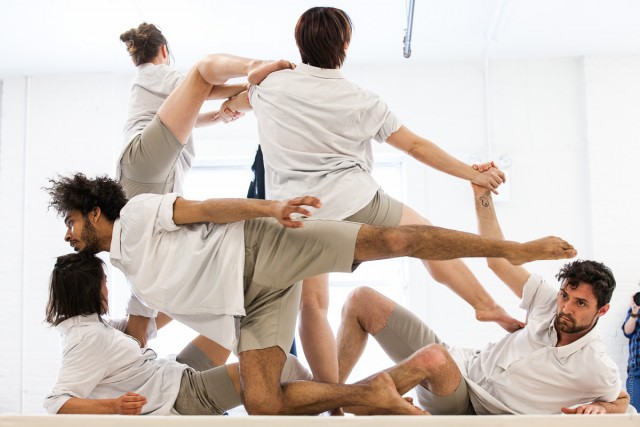
Performers come together in unique ways in Faye Driscoll’s THANK YOU FOR COMING (photo by Maria Baranova)
THANK YOU FOR COMING: DANCE
Danspace Project
131 East Tenth St. between Second & Third Aves.
March 6-8, 11, 13-15, $15-$20, 8:00
866-811-4111
www.danspaceproject.org
www.fayedriscoll.com
In her bold, innovative works, California-born, New York–based choreographer Faye Driscoll explores ritual and relationships between the performers themselves as well as the audience. Anything can happen in Driscoll’s pieces, which have included such successes as You’re Me, 837 Venice Boulevard, and There is so much mad in me. Her latest work, Thank You for Coming, which makes its debut March 6–15 at Danspace, is the first of a trilogy — the working titles are “Dance,” “Play,” and “Space” — that continues her examination of the mind and body as well as society’s interconnectivity. An early version of “Dance” was presented last year as part of the 92nd St. Y’s “Stripped/Dressed” series, and it featured five performers locked together for much of the time; they also interacted with the audience directly.
Driscoll is also a master collaborator, working with a wide range of musicians, visual artists, designers, and theater directors. Last year she choreographed Nick Vaughan and Jake Margolin’s “A Marriage: 1 (Suburbia),” and this year they return the favor by contributing their unique visual design to Thank You for Coming. “Nick and I have absolutely loved Faye’s work for a long time, and getting to collaborate with her on this process from such an early stage in development has been a pretty amazing experience,” Margolin explained. “It’s a process unlike any we’ve been a part of before and has led to some really unexpected and exciting stuff. It has been really eye opening in terms of what a process can be and what it can look like. It’s been inspiring watching as Faye unflaggingly chases rigor and perfection in material that still manages to feel spontaneous and organic.” (Nick and Jake’s new exhibition, “A Marriage: 2 (West-er),” runs March 8 – April 12 at the Invisible Dog in Brooklyn.) Driscoll discussed her process, collaboration, fundraising, and more a few days before Thank You for Coming was set to open.
twi-ny: You presented an early version of this work last year at the 92nd St. Y. How has it changed since then? I see that the dancers now include Alicia Ohs, who worked with you on You’re Me, and Sean Donovan, who made a guest appearance in Nick and Jake’s “A Marriage: 1 (Suburbia).”
Faye Driscoll: Yes, it’s funny because for me in some sense I think the Y version was complete in and of itself. But the cast shifted, designers got involved, and new ideas emerge and old ideas either went deeper or got thrown out. So you will still see the Y material, but hopefully it is also a totally new work. What’s exciting to me about this project is that it reflects my process of generating a lot of ideas and then evolving them into each other and making new iterations and offshoots that will continue forward into my next work — because it’s an interconnected series. With Thank You for Coming (the series) I have set up a process of producing work that reflects my process of creating work — which is often making things in excess, and with many possible versions — and in the meantime I am building a company of performers and designers around a long-term project.
twi-ny: Thank You for Coming continues your very direct relationship with the audience and your exploration of social experience and interconnectedness, both in title and execution. Why do you think you are so drawn to this aspect of performance?
FD: I think I have always been interested in performance as a ritual of expression, protest, transformation, and basically one gigantic act of mirroring with the performers and audience. I don’t buy this idea that in order to be socially engaged you have to adapt to a certain way of being; I think we are all socially engaged whether we like it or not — or maybe whether we choose to deal with it or not. I am not saying I am totally dealing with it in this work, but I am trying. I am trying through my own formal and aesthetic experiments to expand my perception of this interconnection, and maybe others will feel that or maybe they won’t.
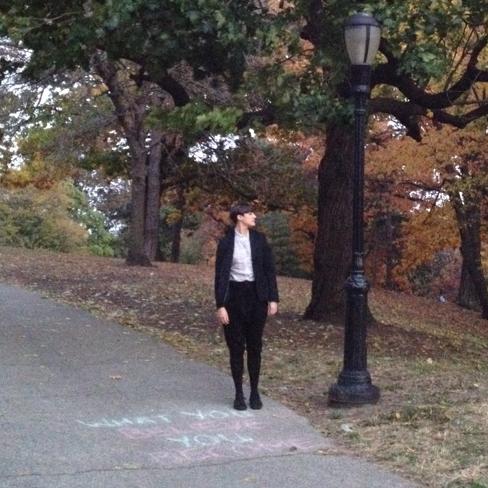
Choreographer Faye Driscoll continues down her creative path, one that leads to Danspace Project this month (photo by Hedia Maron)
twi-ny: In 2009, you were one of fifty artists chosen by the New Museum for its “Younger Than Jesus” triennial, and just recently you were named a Guggenheim Fellow. What was it like when you found out about the latter? What kind of impact has it had on you?
FD: I have been blushing all year from having gotten the Guggenheim. I feel so honored. It just makes me want to make my work stronger. There can be some internal pressure involved. But I have always felt pressure when I am making things; it’s just that I feel a little bit more visible now.
twi-ny: Like so many choreographers, you have turned to Kickstarter to help finance projects. What has that experience been like? Are you a good fundraiser?
FD: Please donate! That is what Kickstarter has done to me! Which maybe is an essential trait of a good fundraiser? The willingness to ask and keep asking without shame. Being a choreographer, you have to be it all — grant writer, fundraiser, administrator, stage manager, public speaker, floor sweeper. It’s truly exhausting. I think I am a better choreographer than I am any of the other hats I wear, but I try hard because it’s what the work needs. And I have more help now than I ever have and I am super grateful for that. Even though Kickstarter is extremely stressful, it’s also really amazing. We have more than two hundred people backing us — that feels pretty good. It takes the power out of some monolithic “funding entity” and into our own hands. But doing a Kickstarter campaign can seriously consume your life. I really want us to reach our goal — please back us! See, I’m obsessed.
twi-ny: You have collaborated with a wide range of artists, from Young Jean Lee and Nick and Jake to Taylor Mac and Cynthia Hopkins. What are the secrets of being a strong collaborator?
FD: I love collaborating with these people. I learn so much and it keeps me on my toes. I think being a good collaborator is having the willingness to serve the project, not just your ideas and tastes.
twi-ny: Do you have a dream collaborator?
FD: I am dying to work with Ann Hamilton.
twi-ny: In 2007, you told Feministing that in fifty years, you’d like to be remembered as a rebellious, honest, dangerous choreographer who had a lot of fun. How do you think you’re doing so far?
FD: Oh wow. I’m not sure. OK, I think Fun is my F word. I think it can be a big no-no in the avant-garde world. And honestly sometimes in my personal life I have a hard time relaxing. But in my work I have a lot of fun. Maybe because then I am taking fun seriously? Not sure. I think there is something in fun and play that is a kind of key to all transformation. And isn’t really good fun also a little bit dangerous?
(Ed. note: Advance tickets for Thank You for Coming are sold out, but there will be a wait list before every show beginning at 7:15. You can contribute to the production via Kickstarter here.)
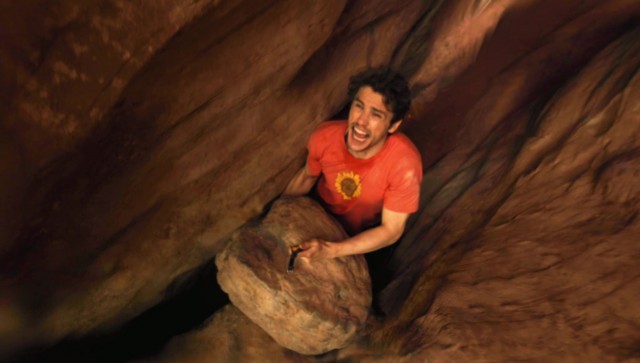
 The prospect of sitting through a ninety-five-minute movie that primarily takes place in close quarters as a young hiker tries to break free of a rock that has pinned him near the bottom of an isolated crevice in Utah’s Blue John Canyon for five days is not exactly promising, whether you suffer from claustrophobia or can take only so much James Franco in one sitting. In addition, you’re likely to know pretty much everything that happens, since the story of Aron Ralston’s true-life fight for survival was all over the news back in 2003 and became a bestselling autobiography, Between a Rock and a Hard Place. But in the hands of Oscar-winning director Danny Boyle, the visual mastermind behind such films as Trainspotting, 28 Days Later, the underrated Sunshine, and Slumdog Millionaire, 127 Hours keeps the suspense in high gear, anchored by Franco’s raw, emotional, Oscar-nominated performance as adventurer Ralston. Over the course of more than five days, Ralston records video diary entries for his parents, carefully preserves his tiny water supply, gets excited when he can stick his foot out to catch a brief ray of sunlight, and uses a dull knife to try to cut through his arm. Every morning a raven flies overhead, as if waiting for him to die so he can scavenge his body. But Ralston immerses himself in fantasies and memories, attempting to keep his mind operating to come up with a way to get free. Watching the film is both agonizing and exhilarating; don’t be surprised if you feel guilty gulping your large soda and munching on your supersized popcorn while Ralston preciously measures his liquid intake by the milliliter. 127 Hours is another cinematic triumph by one of today’s most innovative directors, starring twenty-first-century-man Franco, who writes poetry and short stories, appears in avant-garde videos, curates art exhibitions, adapts classic novels into offbeat films, directs dance theater, is studying for his PhD at Yale and teaching at other colleges, is a novelist, and will soon be on Broadway playing George in Of Mice and Men — and he’s still only in his midthirties. The IFC Center is paying tribute to the unstoppable Franco — he is so ubiquitous that a few months ago, we were discussing his version of As I Lay Dying while we were on our way to see an off Broadway show, and when we sat down, it turned out that we were sitting right behind Mr. Franco. FrancoFest runs March 5-12 with screenings of 127 Hours, Rob Epstein and Jeffrey Friedman’s Howl (in which Franco plays Allen Ginsberg), Harmony Korine’s Spring Breakers, William Friedkin’s Cruising, Gus Van Sant’s My Own Private Idaho, and such Franco-directed flicks as Sal, My Own Private River, Good Time Max, The Broken Tower, As I Lay Dying, The Ape,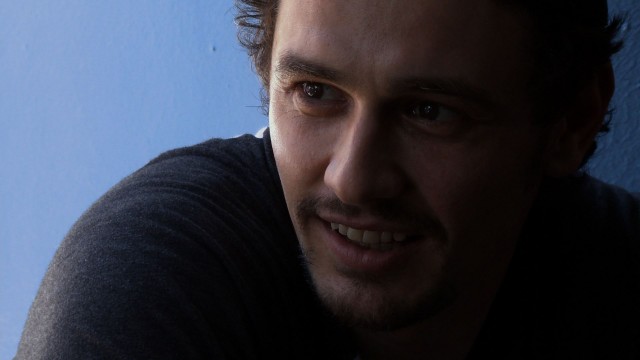
 In his 2013 autobiography, The Friedkin Connection, writer-director William Friedkin delves into his controversial 1980 film, Cruising, explaining, “I cut at least half an hour from the club scenes and the murder scenes. I had purposely let these scenes of pornography and violence run long, knowing they’d be cut and I’d be left with the story I wanted to tell. Despite these cuts, the film pushes the boundaries of what is acceptable in an R-rated film, something the critics were quick to point out.” Cruising, which stars Al Pacino as an undercover cop hunting a serial killer in New York City’s underground gay community, was a critical and financial flop; the Variety reviewer wrote, “If this is an R, then the only X left is actual hardcore.”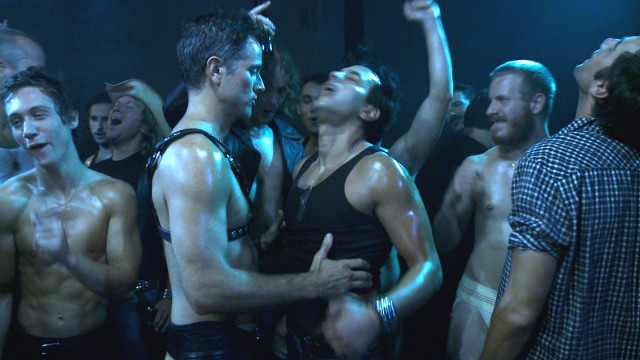


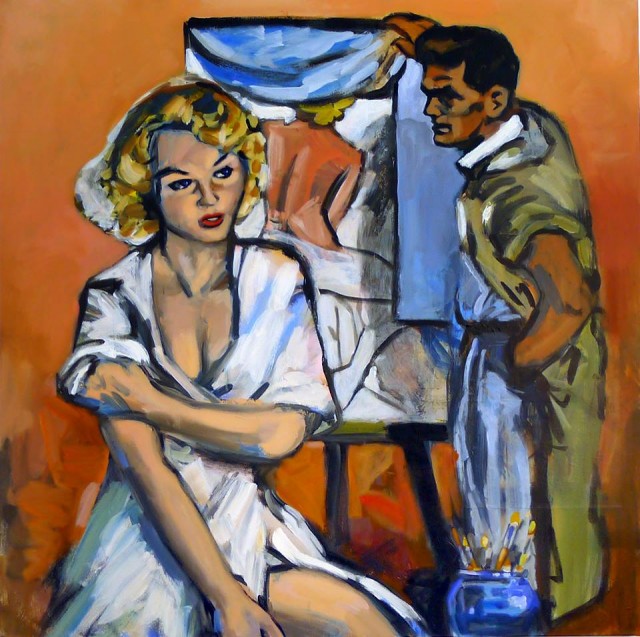
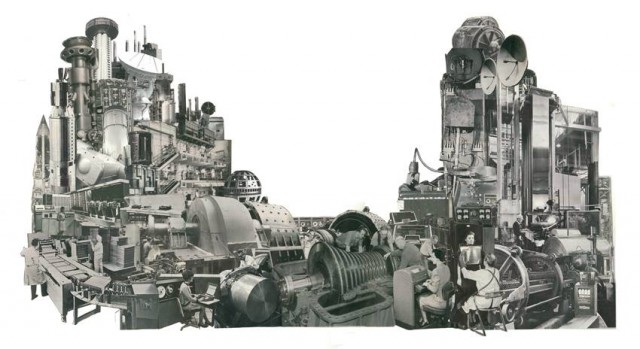


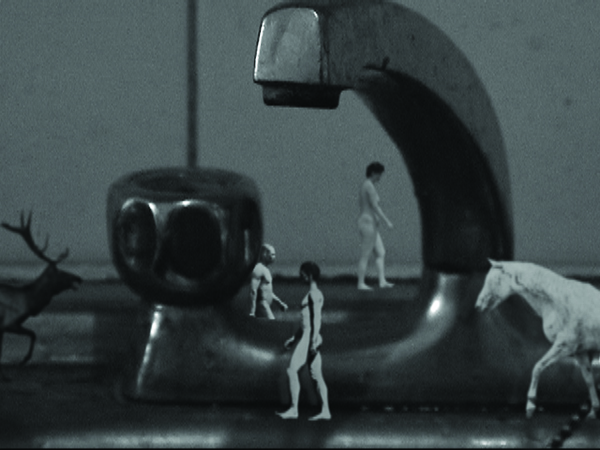
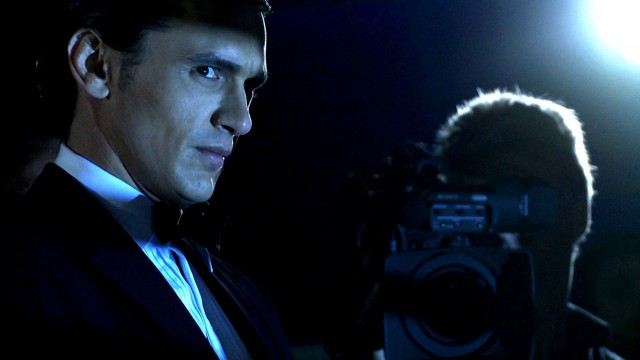
 Okay, we have an important confession to make: We can’t get enough James Franco. There, we said it. And we are truly excited about the IFC Center’s FrancoFest, a nine-day cinematic tribute to the California-born actor, screenwriter, director, artist, poet, teacher, philanthropist, college student, novelist, Oscar cohost, dance-theater enthusiast, fragrance spokesman, bon vivant, and soon-to-be Broadway star. We’re not about to fault him for wanting to get the most out of life. He’s also not afraid to poke fun of his own image, which he does in Francophenia (Or: Don’t Kill Me, I Know Where the Baby Is). The film follows Franco as he prepares for a critical scene for General Hospital, the soap opera in which he has portrayed a visual artist named Franco on and off since 2009. Dressed in a sharp tux, the fictional Franco is getting ready for the opening of his new exhibition at the Museum of Contemporary Art in Los Angeles as well as plotting to commit murder. He eagerly meets with adoring fans and speaks with the media, but as day turns to night, he starts doubting himself, although it’s not clear which Franco is suffering the psychological dilemma. In whispered voice-overs by codirector Ian Olds and cowriter Paul Felten, the actor/character becomes overwhelmed with fear and paranoia. “What’s gonna happen to me? Can you tell me?” he says, adding, “What was I thinking?” But he then remembers who he is and seeks to gain control. “I made this machine, and all the parts are moving perfectly, just as they should. I’m the foreman of the factory. I made this happen, all of it. And it’s brilliant. It’s a masterpiece,” he murmurs. The ramblings also take shots at his own “Being James Franco” persona as he declares, “Look at this: I’m everywhere. I’m the light of this world. I begat this motherf&*ker. What have you ever made?” Is Franco/Franco/Franco in on all the jokes or the subject of derision? Who cares, since it all seems to be in such good, self-referential fun. Francophenia is screening March 6 & 10 at the IFC Center, with Franco and Olds on hand for the first showing to talk about the work. FrancoFest runs March 5-13 with screenings of Danny Boyle’s 127 Hours, Rob Epstein and Jeffrey Friedman’s Howl (in which Franco plays Allen Ginsberg), Harmony Korine’s Spring Breakers, William Friedkin’s Cruising, Gus Van Sant’s My Own Private Idaho, and such Franco-directed flicks as Sal, My Own Private River, Good Time Max, The Broken Tower, As I Lay Dying, The Ape, and his latest, Interior. Leather Bar, which he directed with Travis Mathews, with Franco present at various screenings the first four days.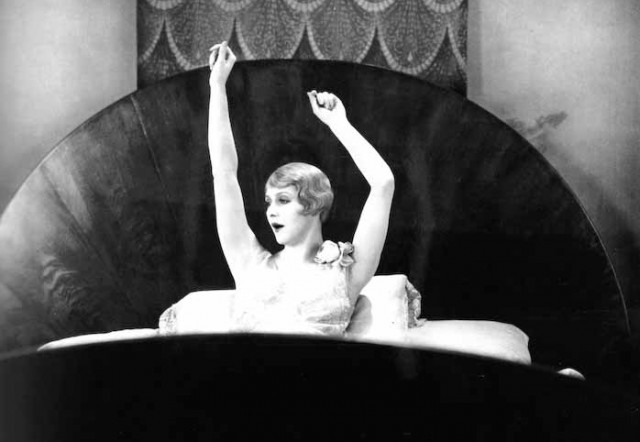
 Loosely based on a Noël Coward play that was recently made into a film starring Colin Firth, Jessica Biel, and Kristin Scott Thomas, Alfred Hitchcock’s Easy Virtue is another of the Master of Suspense’s cleverly told melodramas, a risqué tale of a woman unfairly placed in a lurid situation. Isabel Jeans stars as Larita Filton, a loving wife whose husband, Aubrey (Franklin Dyall), has commissioned her portrait by painter Claude Robson (Eric Bransby Williams). Just as Claude makes a play for Larita, she fights him off and Aubrey walks in. He misinterprets the scene, shots ring out, the artist is dead, and Claude files for a highly publicized divorce case in which Larita is found guilty of misconduct. Trying to put her notorious past behind her, she heads for the Mediterranean, where she meets John Whittaker (Robin Irvine), a wealthy mama’s boy who falls instantly in love with her and brings her back to his parents’ country estate. But once there, Whittaker’s nasty mother (Violet Farebrother) and conniving sisters (Dacia Deane and Dorothy Boyd) do everything they can to ruin the relationship, seeking to uncover Larita’s history while also attempting to put her son back together with longtime family friend Sarah (Enid Stamp Taylor). Easy Virtue, which features yet another Hitchcock blonde, is a gripping film about honesty, reputation, individuality, and character as an innocent woman is forced to face undeserved consequences in the superficial world of high society. Hitchcock, who makes his cameo holding a walking stick, gliding past Larita while she sits by a tennis court, includes several wonderful touches involving circles and ovals, from a close-up of a judge’s wig to a shot through a tennis racket’s strings to a dining room dominated by a group of elongated, haloed saints on one wall. Easy Virtue is also one of Hitchcock’s dourest silent melodramas, lacking any comic relief as a wronged woman desperately tries to right her life. Easy Virtue is screening on March 4 at 6:45 as part of the Film Forum series “The Hitchcock 9,” with live piano music by Steve Sterner. “The Hitchcock 9” continues through May 4 with Blackmail, The Pleasure Garden, Champagne, The Farmer’s Wife, The Ring, Downhill, and The Manxman (all featuring Sterner on piano), in conjunction with “The Complete Hitchcock,” which runs through March 27 and includes all of Sir Alfred’s feature narratives. In addition, the Paley Center will be hosting