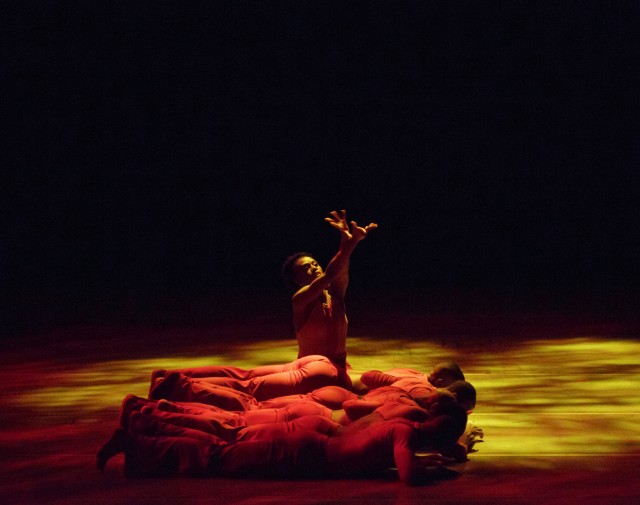
Robert Moses’s THE PLEASURE OF THE LESSON will makes its Ailey company premiere at City Center (photo by Paul Kolnik)
New York City Center
130 West 56th St. between Sixth & Seventh Aves.
December 3 – January 4, $25-$150
212-581-1212
www.alvinailey.org
www.nycitycenter.org
Alvin Ailey American Dance Theater has something extra special to celebrate this year, as the company prepares for its annual holiday season at City Center. Their founder, Alvin Ailey, who started the troupe in 1958 and passed away in 1989, will be posthumously honored with the Presidential Medal of Freedom on November 24, to be accepted by current AAADT artistic director Robert Battle. In addition, longtime chairman of the board Joan H. Weill is retiring, going out with a bang, as more than $40 million has been raised in her honor so far for in the Campaign for Ailey’s Future. The season begins December 3 with an opening-night gala featuring Battle’s Unfold, with live music by Romanian soprano Angela Gheorghiu, the company premiere of Hofesh Schechter’s Uprising, and the Ailey classic Revelations, also with live music. Making its world premieres over the course of the month are Matthew Rushing’s Odetta, a tribute to the singer-songwriter and activist, and Robert Moses’s The Pleasure of the Lesson, while the other company premieres are Christopher Wheeldon’s After the Rain (Pas de Deux), Asadata Dafora’s Awassa Astrige / Ostrich, and Jacqulyn Buglisi’s Suspended Women.
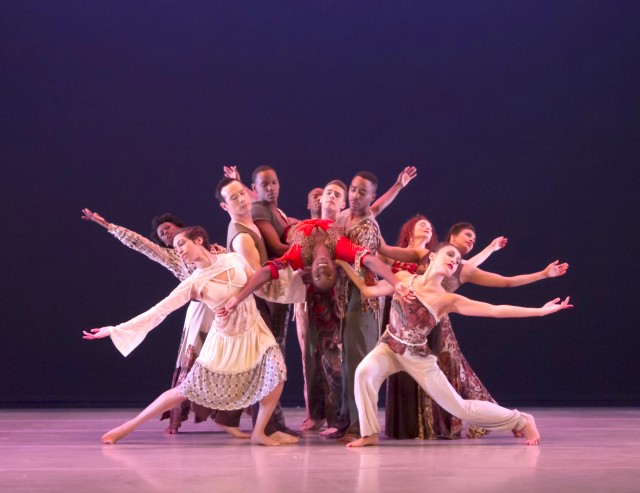
Matthew Rushing’s ODETTA honors the singer-songwriter and activist on the fiftieth anniversary of the Civil Rights Act (photo by Steve Wilson)
Continuing through January 4, the season also includes new productions of Ulysses Dove’s Bad Blood and Hans van Manen’s Polish Pieces; the always popular “Ailey/Ellington” program, consisting of Night Creature, Pas de Duke, The River, and Revelations; Saturday afternoon family matinees followed by Q&As with the dancers; and “Celebrating the Women of Ailey,” a presentation on December 16 honoring the fabulous Linda Celeste Sims, Hope Boykin, and the rest of the Ailey women with Cry, Night Creature, an excerpt from Vespers, and Revelations. Among the returning favorites are David Parsons’s blinding Caught, Ronald K. Brown’s elegant Four Corners and Grace, Ohad Naharin’s rapturous Minus 16, Battle’s dizzying Takademe, and Bill T. Jones’s D-Man in the Waters (Part 1). And for New Year’s Eve, Revelations will be performed by past and present members of the company.

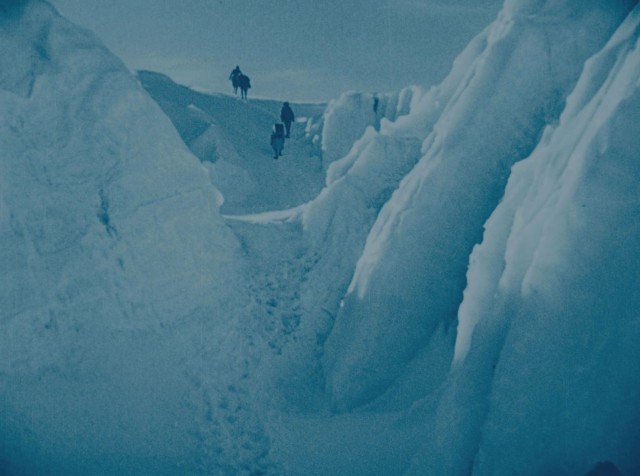
 In 1924, two British men, among the most famous mountaineers of their time, George Mallory and Andrew “Sandy” Irvine, set out with a large team to climb to the summit of Everest. Their amazing journey was documented by Captain John Noel, who used a hand-cranked camera with an impressive telephoto lens and sent the footage via yak to a lab in Darjeeling to be developed. The resulting black-and-white film, The Epic of Everest, is a poetic document of the third attempt to scale Everest, a mountain the Tibetans called “Chomo-Lung-Ma,” or Goddess Mother of the World. The eighty-seven-minute silent film has been digitally restored by the British Film Institute in a beautiful version that is making its New York premiere November 14 at the Rubin Museum, where it will be shown more than a dozen times through December 21, with most screenings introduced by a special guest and some followed by Q&As. The Epic of Everest, which is also ethnographically important for its (at times ethnocentric) depiction of local Tibetan culture, includes several scenes of Mount Everest tinted in blue, red, and violet; the ice-blue Fairyland section is especially breathtaking. Meanwhile, the restored intertitles display such dramatic text as “There is nowhere here any trace of life or man. It is a glimpse into a world that knows him not. Grand, solemn, unutterably lonely, the Rongbuk Glacier of Everest reveals itself.” and “Nor can one wonder at the invention that has clothed this extraordinary peak with a sacred character. What a terrifying thing it is! What an immensity of size, height and power it possesses!”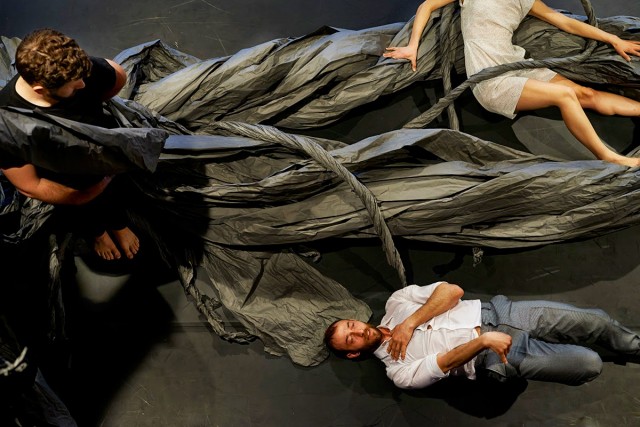
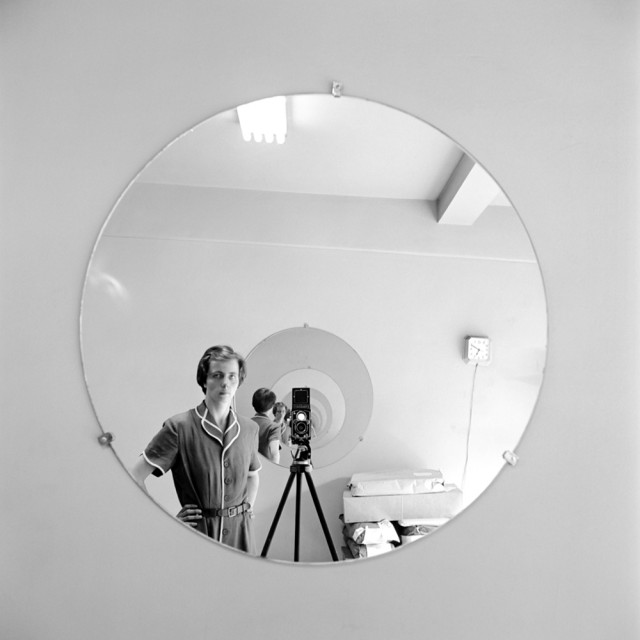
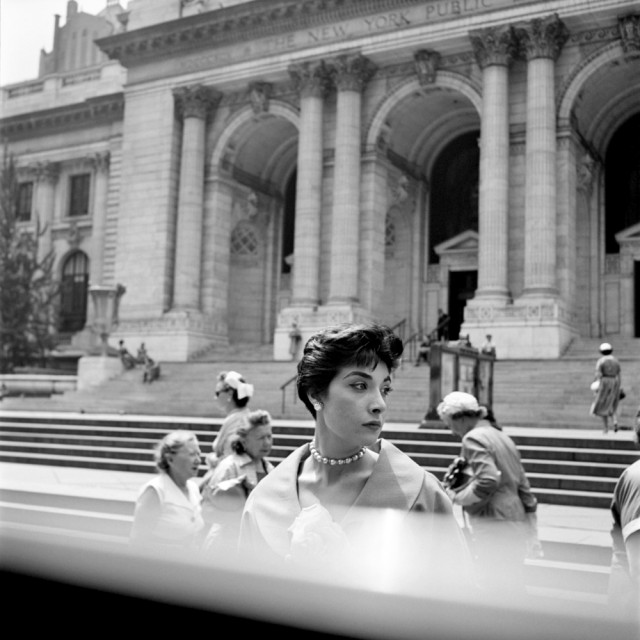
 By their very nature, street photographers take pictures of anonymous individuals, capturing a moment in time in which viewers can fill in their own details. In the wonderful documentary Finding Vivian Maier, codirectors John Maloof and Charlie Siskel turn the lens around on a street photographer herself, attempting to fill in the details of the curious life and times of Vivian Maier, about whom very little was known. “I find the mystery of it more interesting than her work itself,” says one woman for whom Vivian Maier served as a nanny decades earlier. “I’d love to know more about this person, and I don’t think you can do that through her work.” In 2007, while looking for historical photos for a book on the Portage Park section of Chicago, Maloof purchased a box of negatives at an auction. Upon discovering that they were high-quality, museum-worthy photographs, he set off on a mission to learn more about the photographer. Playing detective — while also developing hundreds of rolls of film, with thousands more to go — Maloof meets with men and women who knew Maier as an oddball, hoarding nanny who went everywhere with her camera and shared little, if anything, about her personal life. “I’m the mystery woman,” Maier says in a color home movie. Her former employers and charges, including talk-show host Phil Donahue, debate her background, the spelling and pronunciation of her name, her accent, and how she might have felt about a documentary delving into her secretive life.