twi-ny recommended events

NAM JUNE PAIK: BECOMING ROBOT

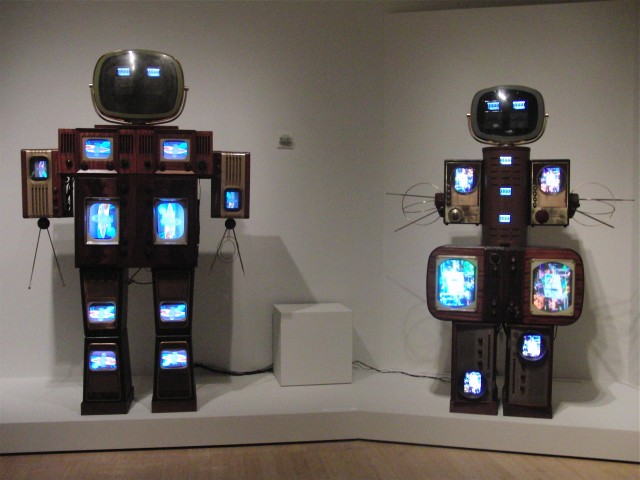
Nam June Paik, “Family of Robot: Father” and “Family of Robot: Mother,” single-channel video sculptures with vintage television and radio casings and monitors, tuner, liquid crystal display, color, silent, 1986 (photo by twi-ny/mdr)

Nam June Paik, “Family of Robot: Father” and “Family of Robot: Mother,” single-channel video sculptures with vintage television and radio casings and monitors, tuner, liquid crystal display, color, silent, 1986 (photo by twi-ny/mdr)

Asia Society Museum
725 Park Ave. at 70th St.
Tuesday – Sunday through January 4, $12, 11:00 am – 6:00 pm (free Fridays 6:00 – 9:00)
212-288-6400
www.asiasociety.org
www.paikstudios.com

I was on the subway late last week, reading one of the chapters in the “Nam June Paik: Becoming Robot” catalog for the splendid exhibition at Asia Society, when I looked up and saw an ad for a company that proclaimed, “The most powerful inventions are playful. . . . The most playful inventions are powerful,” touting a robot head, a remote pet feeder, and a synthar. The advertisement made me immediately think of the life and work of Paik, who instilled his highly technological, often futuristic sculptures, musical compositions, videos, drawings, installations, and live performances with an innate playfulness. If you’re not ready, willing, and able to have fun with the innovative, visionary Paik, then don’t bother going to Asia Society, because the exhibit, which continues through January 4, is nothing if not a whole lot of fun. The chapter I was reading on the subway was “Ok, Let’s Go to Blimpies: Talking about Nam June Paik,” a lively, informative, and, yes, playful discussion between museum director Melissa Chiu, former Paik studio manager Jon Huffman, former Paik studio assistant Stephen Vitiello, and Paik’s nephew, Ken Hakuta, that gets to the very essence of the international artist. Paik, who was born in Korea in 1932, moved to Hong Kong, studied in Japan, and lived and worked in Germany and New York, was way ahead of his time as he experimented with electronic music and images, television circuitry, and robots that could go to the bathroom, but with a unique, personal, warm touch that predated cell phones, social media, and interactive video games. “He wanted to redefine television [not as a] passive object, but [as] an object that we interact with,” Vitiello, who is a multimedia artist in his own right, says in the catalog. “We control our destiny. He was a humanist; he wanted to humanize everything, and technology was just a way of getting more time in which we could make better artwork, better software, have better lives.”
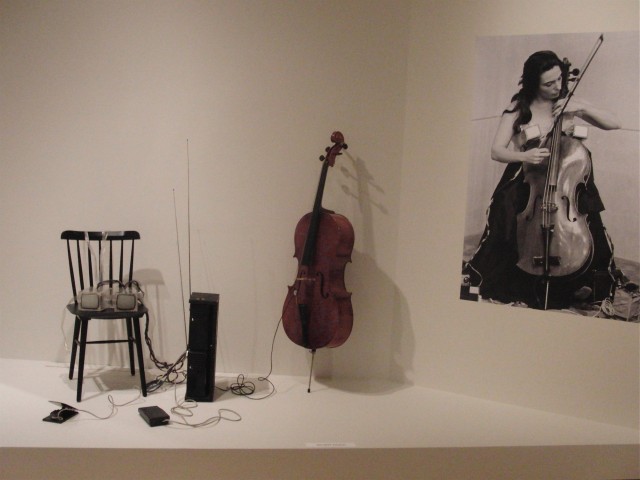
Nam June Paik, “TV Bra for Living Sculpture,” cello, two television sets, microphone, amplifiers, deflection coils, “fussbedienungsgerate,” cables, 1975 (photo by twi-ny/mdr)

Nam June Paik, “TV Bra for Living Sculpture,” cello, two television sets, microphone, amplifiers, deflection coils, “fussbedienungsgerate,” cables, 1975 (photo by twi-ny/mdr)

The exhibition consists of more than five dozen sculptures, photographs, writings, videos, and other ephemera from throughout Paik’s career. The centerpiece is “Robot K-456,” Paik’s first automated, remote-control-operated, hermaphrotidic robot, which initially could poop beans. (It seems to have lost this function after being purposely hit by a car as part of a major 1982 show at the Whitney.) Also on display is “Family of Robot,” a mother, father, and baby created out of television monitors that blast images across their screens; “Golden Buddha,” a statue watching itself on television (and on which visitors can see themselves as well); “TV Chair,” which features a surveillance camera above and a monitor on the seat; a pair of antique television cabinets on which he has drawn over the surface; a robot brain in a glass dome; and “Three Camera Participation / Participation TV,” which gets a room unto itself, inviting everyone to see colorful, psychedelic projections of themselves in a far corner.
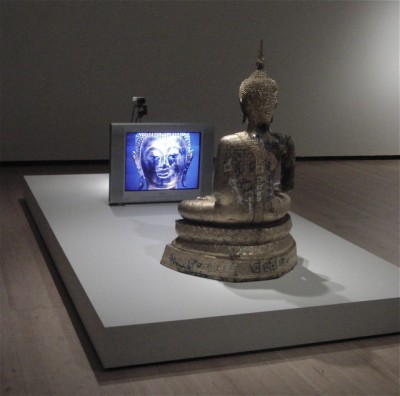
Nam June Paik, “Golden Buddha,” video installation with twenty-seven-inch monitor and closed circuit video camera, painted bronze Buddha with the artist’s additions in permanent oil marker, 2005 (photo by twi-ny/mdr)

Nam June Paik, “Golden Buddha,” video installation with twenty-seven-inch monitor and closed circuit video camera, painted bronze Buddha with the artist’s additions in permanent oil marker, 2005 (photo by twi-ny/mdr)

Perhaps most fascinatingly, “Becoming Robot” explores the artistic relationship between Paik and classically trained cellist Charlotte Moorman, who would play topless or wearing Paik’s “TV Bra for Living Sculpture” or “Light Bikini.” The show documents various performances, includes a room of many of Moorman’s outfits, and delves into her arrest for indecent exposure while playing Paik’s Opera Sextronique. Nudity also play a role in “Reclining Buddha,” a stone sculpture of a female Buddha relaxing on her side, right hand holding up her head in a classic pose, atop a pair of color monitors depicting a real naked woman in the same position; nearby is a collection of Paik’s decidedly childlike toys. And be sure to allow extra time to watch clips from Paik’s 1984 satellite installation, Good Morning, Mr. Orwell, a different kind of variety show with Moorman, Laurie Anderson, Peter Gabriel, Allen Ginsberg, Merce Cunningham, Philip Glass, and Joseph Beuys, as well as a sampling of Paik’s live performances. In his 1966 Great Bear Pamphlet, “Manifestos,” Paik declared, “Cybernated art is very important, but art for cybernated life is more important, and the latter need not be cybernated.” Eight years later, Paik coined the phrase “electronic superhighway.” As “Becoming Robot” so ably shows, Paik was at the crossroads of technology and culture long before the rest of us, predicting a world that would become obsessed with broadcasting personal information and images on handheld devices that resemble their own personal television stations. All the while, though, he remained philosophical and hopeful about the future, deeply serious about his work but intent on incorporating an intoxicating playfulness that is just plain fun — and decidedly human.
THE CHOCOLATE DANCES COSTUME PARTY TASTING PERFORMANCE

(photo by Rachel Walters)

Megan Sipe combines chocolate and dance in tasty interactive evening (photo by Rachel Walters)

The C.O.W. (Celebration of Whimsy)
21-A Clinton St.
Sunday, December 14, $45-$50, 7:00
www.thecownyc.com
www.chocolatedances.com

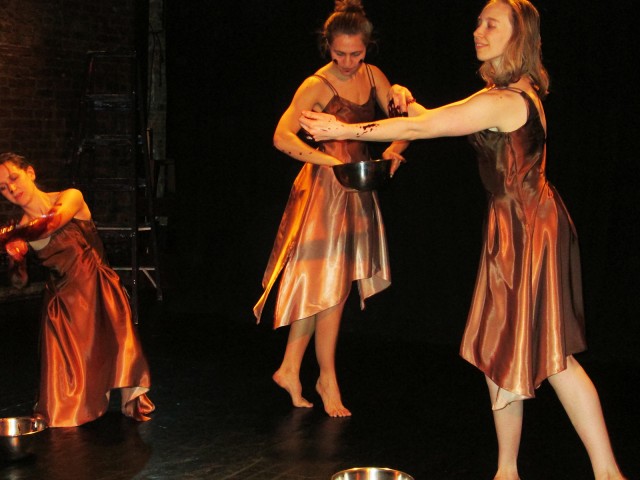
Hey, you got chocolate in my dance piece! Well, you got your dance piece in my chocolate! Chocolatier and choreographer Megan Sipe combines two great tastes that taste great together in The Chocolate Dances, and interactive performance that incorporates dance, theater, and music with handcrafted chocolate confections that are both worn and eaten. On December 14, Sipe, who hails from Idaho, will present the latest iteration of The Chocolate Dances at a dual costume party and tasting at Celebration of Whimsy on Clinton St. in Manhattan. Every audience member will be treated to a costume, a quartet of truffles/bon bons, cacao nibs, chocolate callets, a chocolate mustache, and chocolate raspberry birthday cake. Tickets are $45 general admission but only five bucks more for prime seating. There will be live music by Juana Aquerta, Giacomo Lamparelli, and Alesio Romano, dancing by Cara Heerdt, Catherine Murcek, and Maya Orchin, and special theatrics by Andrew Broaddus and Fritz Donnelly. Sipe (Hour of the Beast, ahy-duh-hoh-uhn), who is also a Pilates instructor and a creative movement teacher, “uses chocolate to bring people together, to celebrate dance and create joy,” which ain’t a bad mission in life.

INTERPRETATIONS: CHRIS BROWN, FRANK GRATKOWSKI, AND WILLIAM WINANT / FAST FORWARD: TEN

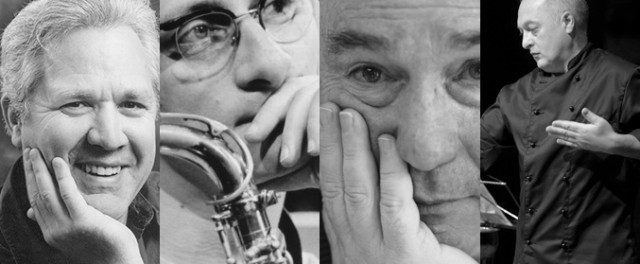
Chris Brown, Frank Gratkowski, William Winant, and Fast Forward will all take part in Interpretations program December 11 at Roulette in Brooklyn, with special guests

Chris Brown, Frank Gratkowski, William Winant, and Fast Forward will all take part in Interpretations program December 11 at Roulette in Brooklyn, with special guests

Roulette
509 Atlantic Ave. at Third Ave.
Thursday, December 11, $15-$20, 8:00
917-267-0363
www.roulette.org
www.interpretations.info

Since 1990, the Interpretations series has been developing “a community of experimental composers, their virtuoso interpreters, and an adventurous and supportive audience.” Over the past quarter-century, Interpretations has presented such avant-garde composers and musicians as Morton Subotnick, Anthony Braxton, Thomas Buckner, La Monte Young, Michiko Akao, Robert Ashley, Roscoe Mitchell, Fred Ho, and the FLUX Quartet. On December 11 at 8:00, the twenty-sixth Interpretations season continues at Roulette in Brooklyn with the trio of pianist and processor Chris Brown, alto saxophonist, clarinetist, and flutist Frank Gratkowski (whose name has been consistently misspelled as “Gratowsky” on both the Roulette and Interpretations websites), and percussionist William Winant, who specialize in creating unique, improvisational sound environments. In addition, New York-based English composer, multimedia artist, and culinarian Fast Forward (aka Paul Wilson) will present “10,” a work for ten musicians playing ten different instruments performing ten separate pieces, featuring Gelsey Bell, Tom Chiu, Chris Cochrane, Michael Evans, Miguel Frasconi, David Freeman, Grady Gerbracht, Gisburg, Dave Ruder, and Aliza Simons.

CONCERNING VIOLENCE: NINE SCENES FROM THE ANTI-IMPERIALISTIC SELF-DEFENSE

Documentary uses Swedish archival footage and the words of Frantz Fanon to tell story of colonization and decolonization

Documentary uses Swedish archival footage and the words of Frantz Fanon to tell story of colonization and decolonization

CONCERNING VIOLENCE (Göran Hugo Olsson, 2014)
IFC Center
323 Sixth Ave. at Third St.
December 5-11
212-924-7771
www.ifccenter.com
www.facebook.com/concerningviolence

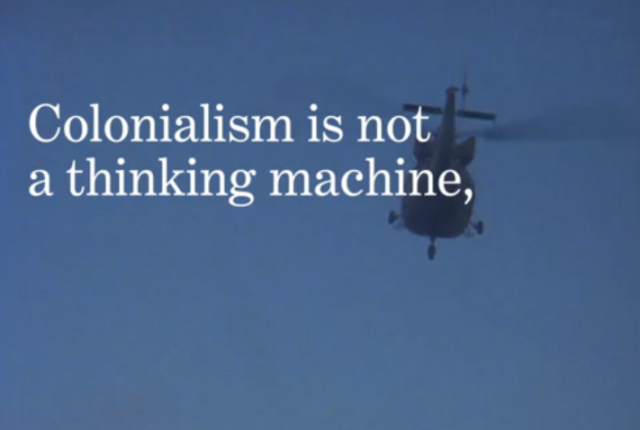
Swedish filmmaker Göran Hugo Olsson brings physician and psychiatrist Frantz Fanon’s seminal 1961 book, The Wretched of the Earth, to bold, vivid life in the empowering documentary Concerning Violence: Nine Scenes from the Anti-Imperialistic Self-Defense. “Every one of us must think for himself — always provided that he thinks at all; for in Europe today, stunned as she is by the blows received by France, Belgium, or England, even to allow your mind to be diverted, however slightly, is as good as being the accomplice in the crime of colonialism,” French philosopher Jean-Paul Sartre wrote in the lengthy preface to the book. For Concerning Violence, Olsson called on Columbia University professor Gayatri Chakravorty Spivak to provide a heavily academic introduction, setting the stage for nine examples of the relationship between settlers and natives, Europeans and Africans, in the 1960s, ’70s, and ’80s. As he did with his previous film, The Black Power Mixtape 1967-1975, Olsson uses amazing footage taken by Swedish journalists, including interviews with Christian missionaries, Zimbabwe president Robert Mugabe, reporter Gaetano Pagano, Burkina Faso president Thomas Sankara, black revolutionaries, and privileged white men, combining those stunning images with strong statements from Fanon’s treatise, read by Ms. Lauryn Hill and blasted across the screen in big letters. “Colonialism is not a thinking machine, nor a body endowed with reasoning faculties. It is violence in its natural state, and it will only yield when confronted with greater violence,” Hill states in a steady voice. “Decolonization is always a violent phenomenon. Decolonization is a historical process. It cannot be understood, it cannot become clear to itself except by the movements which give it historical form and content. Decolonization, which sets out to change the order of the world, is, obviously, a program of complete disorder.”
The nine “chapters” take viewers to Angola, Rhodesia, Liberia, Tanzania, Mozambique, Guinea-Bissau, and other current or former African nations, examining institutional racism, wealth and poverty, illegal imprisonment, guerrilla revolutions, the IMF, and the lurking “monster” that is the United States. It draws a brutal, powerful picture that pulls no punches, with expert use of archival footage never seen outside of Sweden. “There is no native who does not dream at least once a day of setting himself up in the settler’s place,” Ms. Hill reads, the words still ringing true today as riots and protests spread throughout the United States and civil wars continue in Africa and other continents. More than fifty years after its publication, The Wretched of the Earth is still a call to action, albeit one steeped in violence, as one can debate how much things have really changed. “The films in the Swedish Archive might have been part of a patronizing perspective at the time, but thirty years later, we think they reveal something important about this time to Europeans, Americans, and Africans — as well as others across the world who have been on either side of colonization, or are experiencing it now,” Olsson points out in his director’s statement. Concerning Violence opens December 5 at the IFC Center, with Olsson participating in Q&As following the 6:00 shows on Friday and Saturday.

SHE’S BEAUTIFUL WHEN SHE’S ANGRY

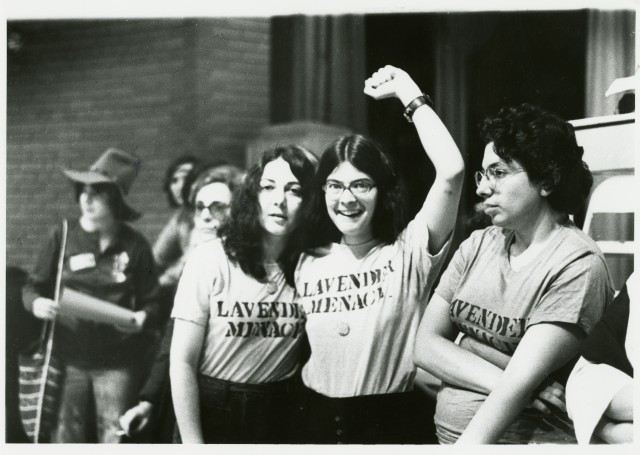
Lavender Menace

Women show their power in rousing new documentary

SHE’S BEAUTIFUL WHEN SHE’S ANGRY (Mary Dore, 2014)
Landmark Sunshine Cinema
143 East Houston St. between First & Second Aves.
Opens Friday, December 5
212-330-8182
www.landmarktheatres.com
www.fb.com/ShesBeautifulWhenShesAngry

Emboldened by the civil rights movement, antiwar rallies, and student demonstrations, women across America came together and took to the streets in the mid-to-late 1960s, fighting for liberation from long-held societal beliefs and strictures. Mary Dore’s She’s Beautiful When She’s Angry focuses in on the years 1966 to 1971, when women became activists for their own rights, reclaiming their bodies and redefining gender roles, refusing to be treated like second-class citizens anymore. “It was like all this energy had been pent up in these women for all these years and it just exploded,” says Chicago activist Mary Jean Collins at the beginning of the film. Twenty years in the making, the documentary contains new interviews with more than thirty women who describe their experiences in the women’s liberation movement, giving the inside scoop behind specific marches, strikes, protests, and organizations, as Dore cuts between the speakers today, usually interviewed in their home environment, and rare archival footage and photographs of the women in action more than forty years ago. Dore explores the importance of such books as Betty Friedan’s The Feminine Mystique and the Boston Women’s Health Book Collective’s Our Bodies, Ourselves and speaks to cofounders and early members of such groups as the National Organization for Women, the Chicago Women’s Liberation Union, Gainesville Women’s Liberation, and JANE, which provided underground abortions. All of them fully understand that the fight is far from over, especially with what is currently going on in Congress. “You’re not allowed to retire from women’s issues,” Dallas Women’s Coalition cofounder Virginia Whitehill explains. “You still have to pay attention, ’cause somebody’s gonna try to yank the rug out from under you, and that’s what’s happening now.”

Among the women who speak openly and honestly about the women’s movement, both the good and the bad, examining such topics as birth control, abortion, rape, career opportunities, education, misogyny, child care, unequal pay, sexual harassment, and more, are early organizer Chude Pamela Allen, Student Nonviolent Coordinating Committee Black Women’s Liberation Committee cofounder Fran Beal, lesbian feminist and writer Rita Mae Brown, journalists Susan Brownmiller, Marilyn Webb, and Marlene Sanders, NOW Women’s Strike Coordinator Jacqui Ceballos, Miss America protestor Carol Giardina, writer and professor Kate Millett, Congresswoman Eleanor Holmes Norton, and Redstockings cofounder Ellen Willis. No men are interviewed for the documentary, although some are shown in old footage, mostly putting women down. In fact, the film was written, directed, produced, edited, and photographed by women; the only major role filled by a man is the composer, with a score by Mark degli Antoni. Even the powerful soundtrack consists primarily of female vocalists, including Cat Power, Nico, Bikini Kill, Janis Ian, Janis Joplin, Grace Slick, Aretha Franklin, and the Chicago Women’s Liberation Rock Band. “Telling the truth and talking is very revolutionary,” historian and journalist Ruth Rosen says in the film, not only referring to the past but to the future as well.

The film, which is certainly rather talky, opens December 5 at the Landmark Sunshine, with many of the opening-weekend screenings followed by Q&As with Dore, who will be joined on December 5 at 7:15 by producer and editor Nancy Kennedy and film subjects Muriel Fox, Linda Burnham, Marlene Sanders, Nona Willis Aronowitz, Carol Giardina, Alix Kates Shulman, Marilyn Webb, and Ellen Shumsky, on December 6 at 2:30 by Kennedy and Planned Parenthood’s Diane Max and Christine Canedo, on December 6 at 7:15 by DOMA litigant Edie Windsor and Astraea Lesbian Foundation for Justice director J. Bob Alotta, December 7 at 2:30 by Sanders, former NOW VP Lucy Komisar, the NYCLU’s Katharine Bodde, and NOW’s Sonia Ossorio, and December 7 at 7:15 by Kennedy, executive producers Elizabeth Driehaus and Pamela Tanner Boll, NY Women in Film & TV’s Mirra Bank, Women Make Movies’ Debbie Zimmerman, Women in the Arts & Media Coalition’s Shellen Lubin and Avis Boone, and various other producers. America has seen more than its share of protests in recent weeks alone; can organized rebellion make a difference? She’s Beautiful When She’s Angry, which was significantly financed by a grassroots Kickstarter campaign, has the answer.

STEPHEN VITIELLO: LIGHT READINGS

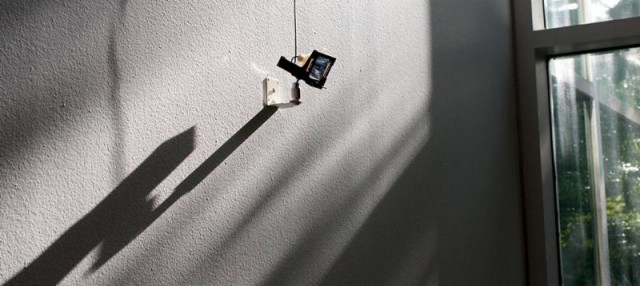
Stephen Vitiello’s site-specific “Light Readings” installation includes a performance on December 9

Stephen Vitiello’s site-specific “Light Readings” installation includes a performance on December 9

Baryshnikov Arts Center, Studio 6A
450 West 37th St. between Ninth & Tenth Aves.
December 8-18, free, various times
December 9 performance, $15, 7:00
www.bacnyc.org
www.stephenvitiello.com

Interactive multimedia artist Stephen Vitiello, whose geographic sound installation, “A Bell for Every Minute,” rang out on the High Line back in 2010-11 and was later acquired for MoMA’s sculpture garden, will be adding a glow to the Baryshnikov Arts Center with the New York premiere of “Light Readings,” translating light into sound using photocells. The unique environment will be open for free December 8-18 from 3:00 to 5:00 or 8:00 during the week and 12 noon to 6:00 on Saturday in Studio 6A, where the natural light will keep things ever changing; Vitiello, a Guggenheim Fellow and an associate professor of kinetic imaging at Virginia Commonwealth University, will also be at BAC on December 9 for a special one-time-only forty-five-minute ticketed performance.

SEBASTIÃO SALGADO: GENESIS

Genesis

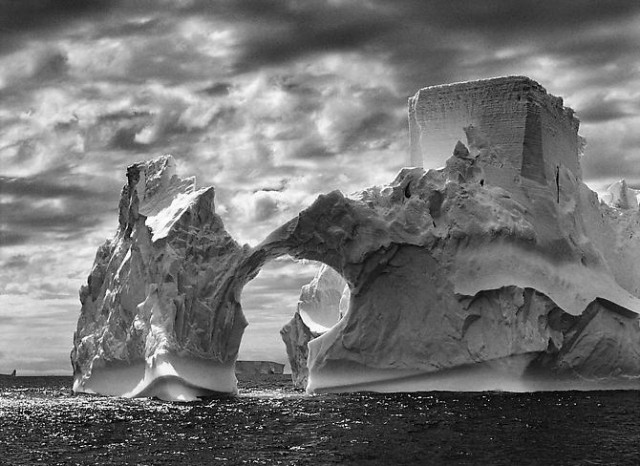
Iceberg between Paulet Island and South Shetland Islands on Weddell Sea in Antarctic Peninsula, 2005 (photo © Sebastião Salgado)

International Center of Photography
1133 Sixth Ave. at 43rd St.
Tuesday – Sunday through January 11, $10-$14 (pay what you wish Fridays 5:00 – 8:00)
212-857-0000
www.icp.org
www.institutoterra.org

In a 2003 International Center of Photography lecture about a year and a half after his “Migrations: Humanity in Transition” exhibit at ICP, Brazilian photographer Sebastião Salgado said, “I came out of ‘Migrations’ very pessimistic about the prospect, for me, of the survival of the human species because I saw so many tough things on this planet. . . . After seven years on the road, seeing these things, I was a little bit disappointed with all the relations that we create between us and this planet.” Mr. Salgado and his wife, curator Lélia Wanick Salgado, further explore this relationship in “Genesis,” going back to the beginning for his third large-scale series. The eye-opening show, which fills both floors at ICP, consists of more than two hundred fifty primarily black-and-white photos of vast landscapes and indigenous peoples and animals divided into five sections: “Amazonia and Pantanal,” “Northern Spaces,” “Africa,” “Sanctuaries,” and “Planet South.”

Genesis

Eastern part of Brooks Range in Arctic National Wildlife Refuge in Alaska, 2009 (photo © Sebastião Salgado)

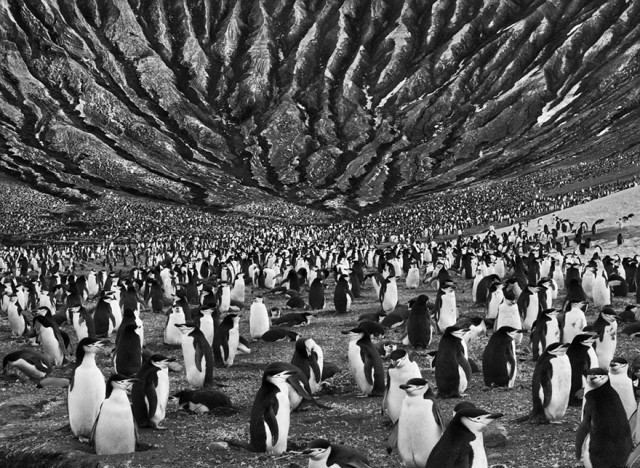
Although the Salgados primarily let the dazzlingly composed photos speak for themselves, the images have a very specific mission. “As well as displaying the beauty of nature, ‘Genesis’ is also a call to arms,” they state in the exhibition catalog. “We cannot continue polluting our soil, water, and air. We must act now to preserve unspoiled land and seascapes and protect the natural sanctuaries of ancient peoples and animals. And we can go further: We can try to reverse the damage we have done.” And these are no mere words. Like the Genesis Device in Star Trek II: The Wrath of Khan, which brought “life from lifelessness,” the Salgados are reforesting the Valley of the River Doce in Brazil, planting more than two million trees from more than three hundred different species as part of their Instituto Terra project. “‘Genesis’ is a quest for the world as it was, as it was formed, as it evolved, as it existed for millennia before modern life accelerated and began distancing us from the very essence of our being,” Ms. Salgado writes in the catalog. “And it is testimony that our planet still harbours vast and remote regions where nature reigns in silent and pristine majesty.” That “silent and pristine majesty” is on display in full force in the exhibit. Mr. Salgado, whose first large-scale series was “Workers: An Archaeology of the Industrial Age,” goes back to the land for “Genesis,” pointing out that nearly half of the Earth “is still as it was in the time of genesis.” His photos often require extended viewing, as many contain striking details that slowly emerge only as one spends time with them. He frames his images with natural horizontal, vertical, and diagonal lines that cut through the pictures like masterful brushstrokes, from a lightning-like river winding in between a mountain range in Alaska to a sweeping expanse of sand dunes in the Namib Desert in Namibia, from thousands of chinstrap penguins on an iceberg in the South Sandwich Islands to a close-up of one leg of a marine iguana in the Galápagos. Heavenly sunlight glows over a herd of lechwe in Botswana, clouds circle the Roraima Tepui in Venezuela, Zo’é women with poturu cones in their lips color their bodies with the urucum in Brazil, and a Yali man forages for food on a tree in West Papua.

Chinstrap penguins on Saunders Island in South Sandwich Islands, 2009 (photo © Sebastião Salgado)

Chinstrap penguins on Saunders Island in South Sandwich Islands, 2009 (photo © Sebastião Salgado)

“[‘Genesis’] is a visual tribute to a fragile planet that we all have a duty to protect,” Ms. Salgado points out, and after experiencing this exhibit, which includes a look at the Instituto Terra project, you’ll feel more responsible for the planet as well. In conjunction with the show, which continues through January 11, ICP will be hosting a series of special events. “Friday Evenings with Climate Scientists” features seismologist Arthur Lerner-Lam on December 5 and climate scientist William D’Andrea on December 12 examining specific parts of the exhibition, while Adam Harrison Levy will moderate “Frack Off!” on December 15, a panel discussion on fracking with photographer Nina Berman and Cornell civil and environmental engineering professor Anthony Ingraffea.