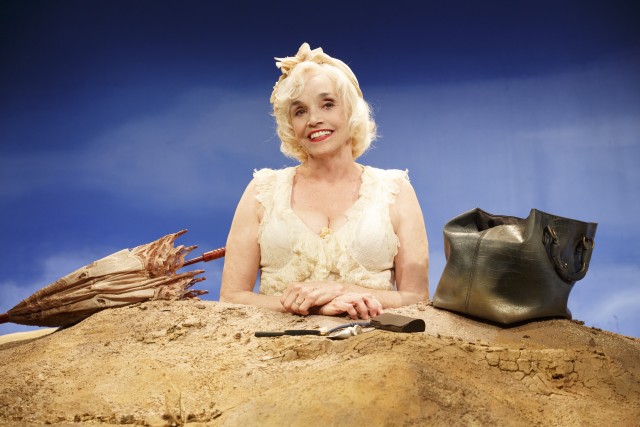
Brooke Adams is all smiles in Beckett’s HAPPY DAYS at the Flea (photo by Joan Marcus)
The Flea Theater
41 White St. between Broadway & Church St.
Through July 18, $70-$150
866-811-4111
www.theflea.org
Andrei Belgrader brings a twenty-first-century spin to Samuel Beckett’s absurdist Happy Days in this Boston Court production continuing at the Flea through July 18. Beckett’s two-act play, which premiered in 1961 at the Cherry Lane, features a husband and wife facing the passage of time and looking at the end of their lives; Beckett gives them the names Willie and Winnie, each of which comes with multiple meanings, including sexual references. Brooke Adams plays the central role of Winnie, a smiling, positive-thinking fifty-ish woman who is immobile, buried to the waist in a barren mound in the middle of nowhere, surrounded only by a painted trompe l’oeil backdrop of blue skies and white clouds. Blonde and cheerful, she is awoken each day by a loud bell, greeting the day with hope despite her predicament. “Another heavenly day,” she declares. Boasting a heavy bosom in a sexy outfit, she goes through her pocketbook and performs her morning ablutions, brushing her teeth, taking medicine, putting on lipstick, and pulling out a revolver. She wakes up the sixty-ish Willie, played by her real-life spouse, Tony Shalhoub, who unfolds his aged copy of the Liberty Tribune and reads the obituaries and the want ads out loud. Throughout the rest of the play, Winnie does nearly all of the talking, with Willie interacting only occasionally. She remembers old loves, tries to read the writing on her toothbrush (which begins, “Fully guaranteed genuine pure…”), and makes repeated references to quotes she can’t actually recall. (“What is that unforgettable line?” she says over and over again in various ways.) By the second act, she has sunk deeper into the abyss, only her neck and head aboveground, unable to use her hands. She is still smiling, claiming “great mercies,” that “it will have been a happy day, after all, another happy day,” but she also seems to recognize that her situation is a bit more serious now, especially when Willie does not respond to her calls.
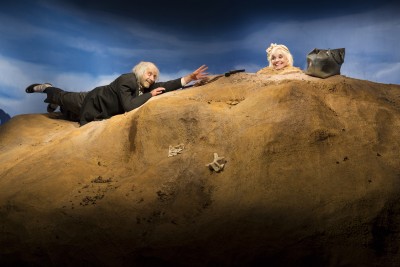
We will never know exactly what Willie (Tony Shalhoub) is reaching for in HAPPY DAYS (photo by Joan Marcus)
Adams (Days of Heaven, Invasion of the Body Snatchers) is fabulous as Winnie, her bright eyes sparkling throughout the show despite what must be physical discomfort, trapped in Takeshi Kata’s rustic set. She makes direct eye contact with the audience, spreading her charm, skillfully playing to the crowd at the start of the second act, saying, “Someone is looking at me still. Caring for me still. That is what I find so wonderful. Eyes on my eyes.” The audience spends most of the show looking into Adams’s eyes, and they radiate back a thrilling warmth, guiding us through the bizarre shenanigans and word games. Shalhoub (Act One, Monk), who displayed a wonderful propensity for physical comedy in The Mystery of Love and Sex, ups the ante here, really cutting loose, dressed in a vaudevillian-like tux and makeup that makes him nearly unrecognizable. (The splendid costumes are by Melanie Watnick.) Written in the same period in which Beckett also gave us Waiting for Godot, Krapp’s Last Tape, Act without Words, and Fragments, Happy Days is filled with playful sexual innuendo, double entendres, and allusions to life and death, God and religion as Willie and Winnie discuss eggs, formication (no, that is not a typo), prayer, masturbation, and castrated male swine in classic Beckett style. Although Beckett might have had the end of the world in mind when writing Happy Days — “Do you think the earth has lost its atmosphere?” Winnie asks, in addition to hoping “that perhaps some day the earth will yield and let me go, the pull is so great, yes, crack all round me and let me out” — he could not have known that fifty-plus years later the audience would be thinking so much about global warming and climate change as Willie and Winnie approach their potential fate, but Belgrader (Endgame, The Master Builder) wisely doesn’t force the issue. The bell that rouses Willie and Winnie in the morning and prevents them from falling asleep during the day — it also wakes up any dozing audience members — is kind of a wakeup call for all of us. But in no way would I be so bold as to claim that Happy Days is about anything specific, be it climate change, or matrimony, or aging, or love, or death, or time, or freedom, or guns, or personal hygiene, or theater itself. At intermission, three older patrons left the Flea, two stating that they would not come back for the second act. (One of them finally realized, noticing a poster on the way out, that the play was written by Beckett.) “But I want to find out what happens,” the third one said. They didn’t come back. And of course, nothing happened, except everything.
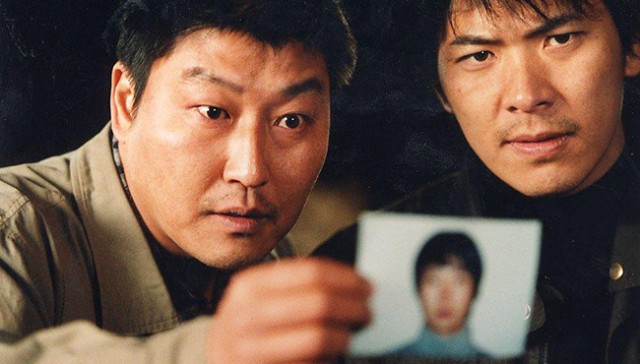
 Inspired by actual events, Bong Joon-ho’s Memories of Murder is a psychological thriller set in a rural South Korean town. With a serial killer on the loose, Seoul sends experienced inspector Suh (Kim Sang-kyung) to help with the case, which is being bungled by local detectives Park (Song Kang-ho) and Cho (Kim Roe-ha), who consistently tamper with evidence, bring in the wrong suspects, and torture them in both brutal and ridiculously funny ways. But as the frustration level builds and more victims are found, even Suh starts considering throwing away the book and doing whatever is necessary to catch the killer. Bong’s first major success, earning multiple awards at film festivals around the world, Memories of Murder is a well-paced police procedural that contains just enough surprises to overcome a few too many genre clichés. The film is beautifully shot by Kim Hyung-gu, from wide-open landscapes to a busy, crowded factory. But the film is dominated by Song’s (The Host, Snowpiercer) big, round face, a physical and emotional wonder whether he’s goofing around with a prisoner or dead-set on catching a criminal. Winner of numerous international film festival awards, Memories of Murder is screening July 18 & 25 as part of Film Forum’s “True Crime” series, which continues through August 5 with such other ripped-from-the-headlines favorites as Sidney Lumet’s Serpico and Dog Day Afternoon, Franceso Rosi’s The Mattei Affair, Fritz Lang’s M, and double features of Alfred Hitchcock’s Rope and Tom Kalin’s Swoon and Robert Wise’s The Body Snatcher and I Want to Live!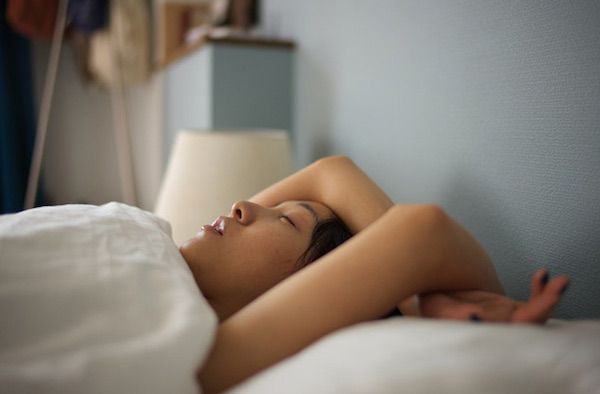
 Shingo Wakagi’s Asleep is a quiet gem of a film, a poignant drama about three women’s relationship with beds and sleep. Sakura Ando stars as Terako, a young woman who is sleeping most of her life away. The only time she wakes up and gets out of bed is when her married lover, the somewhat older Mr. Iwanaga (Arata Iura), calls her to make a date. Terako’s best friend and former roommate, Shiori (Mitsuki Tanimura), recently committed suicide shortly after complaining about the difficulties of her job as a soineya, providing companionship — but not sex — by lying in bed with strangers who do not want to sleep alone. And Terako soon discovers that Iwanaga’s wife is languishing in a hospital bed in a deep coma. As Terako cares more and more for Iwanaga, she finds it harder and harder to get out from under the covers, trying to hide from a life surrounded by loneliness and death.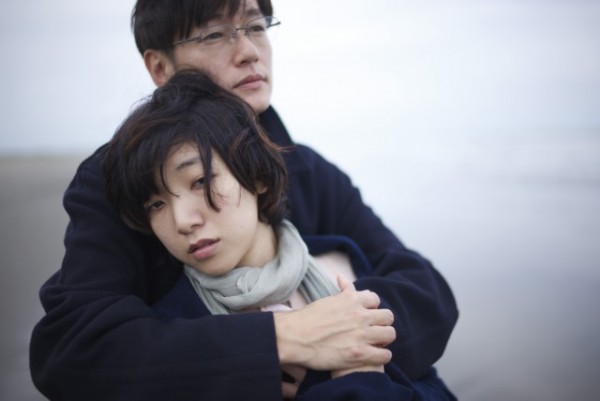
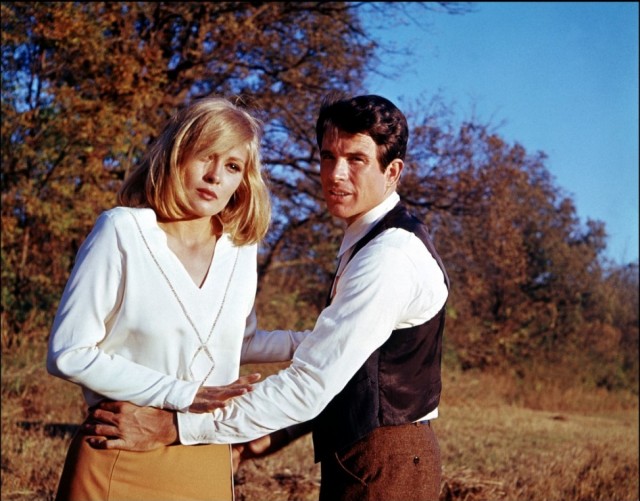
 Arthur Penn changed the course of Hollywood — and world cinema — in 1967 with Bonnie and Clyde, a film previously offered to such Nouvelle Vague luminaries as François Truffaut and Jean-Luc Godard. Cowritten by David Newman (Superman I-III) and Robert Benton (Kramer vs. Kramer), the film mythologizes the true story of depression-era bank robbers Clyde Barrow and Bonnie Parker, played magnificently by Warren Beatty and Faye Dunaway. At its heart, Bonnie and Clyde is a passionate yet unusual love story, filled with close-ups of the gorgeous Dunaway, who is first seen naked, running to her bedroom window confident and carefree, more a modern 1960s woman than a poor 1930s small-town waitress. Meanwhile, Barrow might know how to shoot a gun, but he’s a dud in bed; “I ain’t much of a lover boy,” he tells Bonnie early on, so their passion plays out in fast-moving car chases and shootouts rather than under the covers (while also playing off of Beatty’s already well-deserved reputation as a ladies’ man). They pick up an accomplice in gas-station attendant C. W. Moss (Michael J. Pollard) and are soon joined by Clyde’s brother, Buck (Gene Hackman), and his wife, Blanche (Oscar winner Estelle Parsons), and continue their rampage as heroic, happy-go-lucky hold-up artists, leading up to one of the most influential and controversial endings ever put on celluloid, an unforgettable finale of violent and poetic beauty. Penn (Little Big Man, Target), editor Dede Allen (The Hustler, Serpico), and Oscar-winning cinematographer Burnett Guffey (All the King’s Men, Birdman of Alcatraz) redefined the gangster picture with their creative use of slow motion, long takes, and crowded shots, defying Hollywood conventions in favor of unique and innovative storytelling devices, allowing the film to work on multiple levels. Nominated for ten Academy Awards, Bonnie and Clyde is screening July 17 & 18 as part of Film Forum’s “True Crime” series, which continues through August 5 with such other ripped-from-the-headlines favorites as Peter Jackson’s Heavenly Creatures, Terrence Malick’s Badlands, Leonard Kastle’s The Honeymoon Killers, and double features of John Milius’s Dillinger and Don Siegel’s Escape from Alcatraz and Richard Fleischer’s 10 Rillington Place and The Boston Strangler.